Silicon Carbide Heat Exchangers
High-purity SiC heat exchangers engineered for ultra-corrosive duty, combining superior thermal conductivity with outstanding chemical and abrasion resistance.
- Samples in 3–7 days
- Small batch in ~7 days
- 1 pc MOQ
Sic Heat Exchanger Description
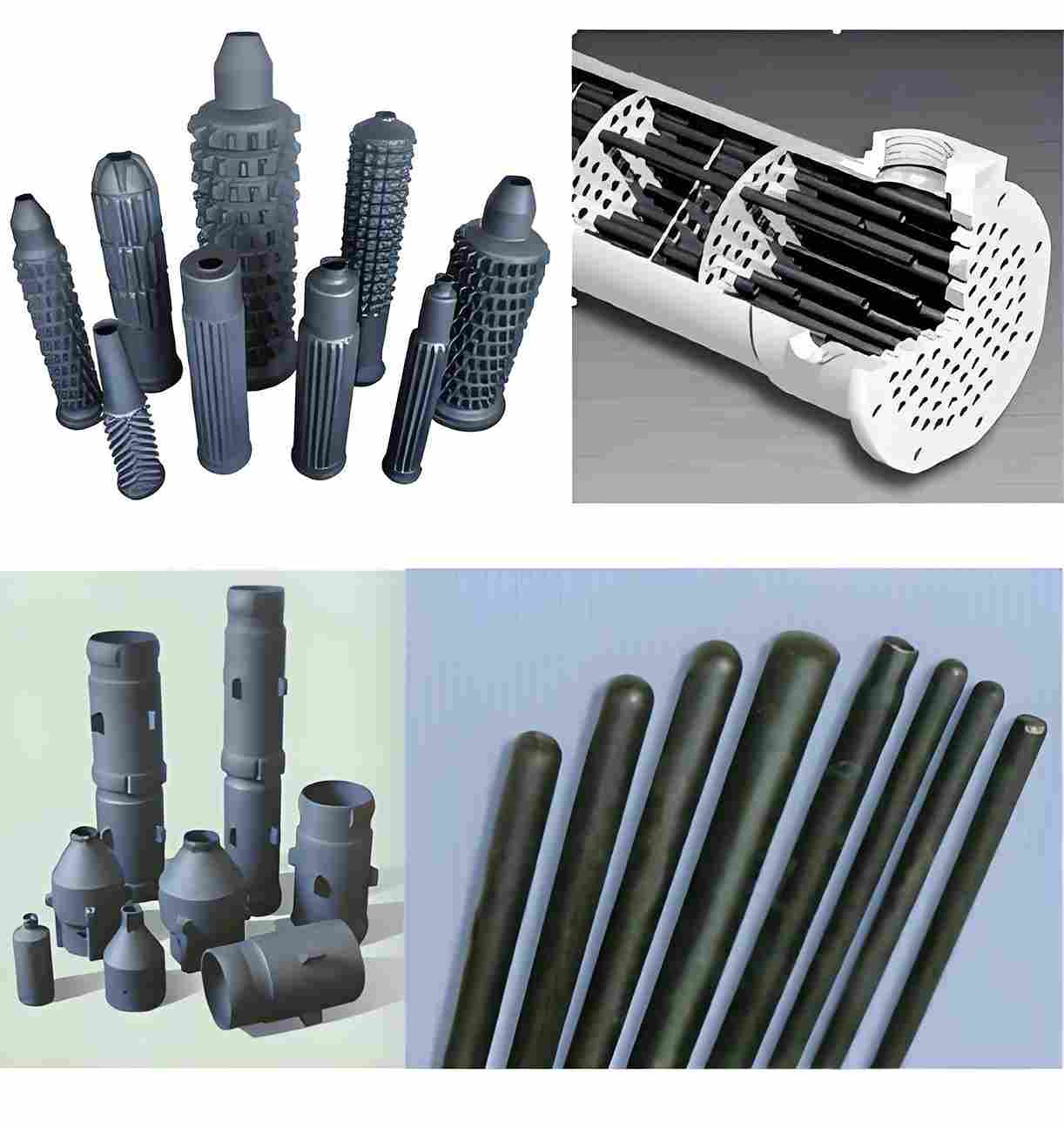
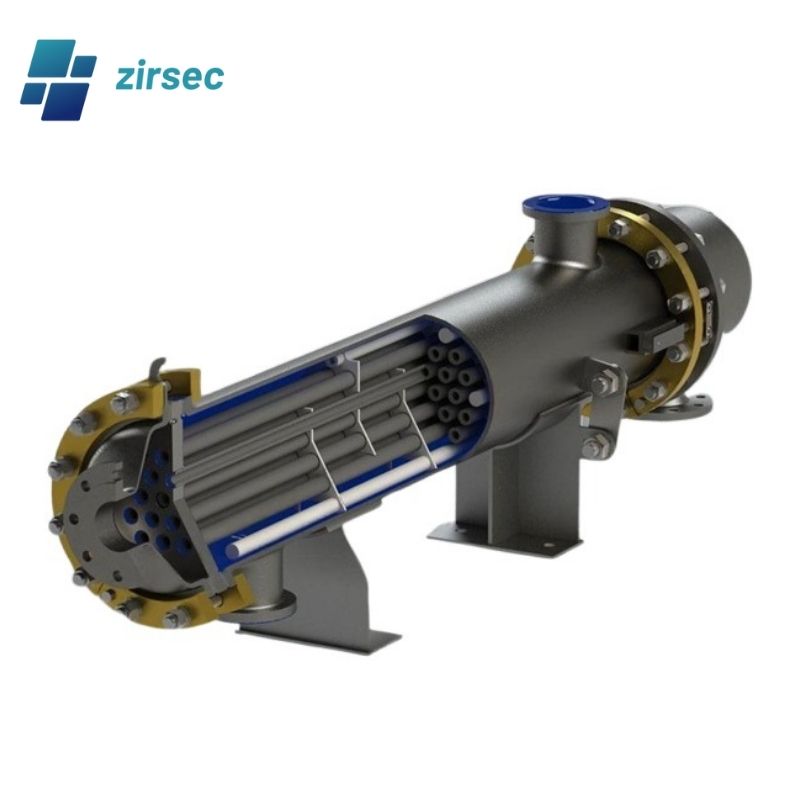
The SiC heat exchanger uses silicon carbide as the heat exchange medium, with a structure consisting of square air channels and rectangular flue gas channels.
The SiC tubes are cross-bonded to form a double-layer structure, enhancing mechanical strength and preventing leakage. The shell is made of steel, with aluminum silicate fiber insulation inside for sealing, thermal insulation, and vibration resistance.
The heat exchanger stabilizes airflow through the intake and exhaust discs and is widely used for flue gas recovery in industrial furnaces, offering excellent energy-saving performance.
Ceramic Heat Exchanger Specification
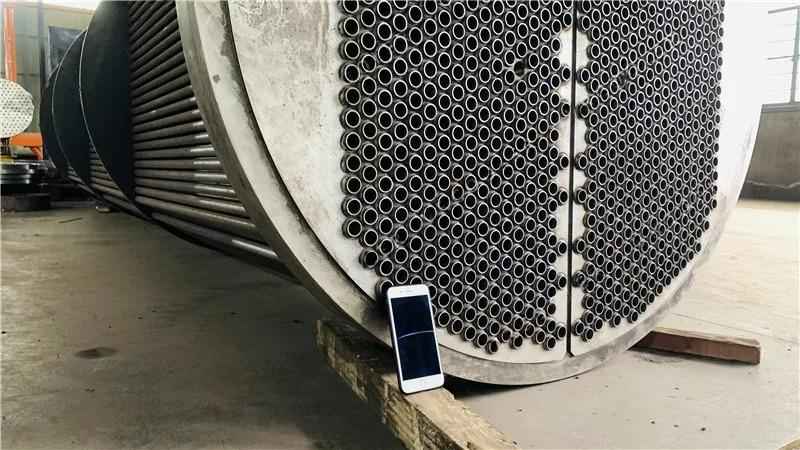
| Heat Exchange Area Calculation for 14mm SiC Tubes | |||||||
| Model | Exchanger Model | Number of SiC Tubes | L=3000mm | L=2500mm | L=2000mm | L=1500mm | L=1000mm |
| AT-THG-HRQ001 | DN100 | 7 | 0.92 | 0.77 | 0.62 | 0.46 | 0.31 |
| AT-THG-HRQ002 | DN150 | 19 | 2.51 | 2.09 | 1.67 | 1.25 | 0.84 |
| AT-THG-HRQ003 | DN200 | 31 | 4.09 | 3.41 | 2.73 | 2.05 | 1.36 |
| AT-THG-HRQ004 | DN250 | 55 | 7.26 | 6.05 | 4.84 | 3.63 | 2.42 |
| AT-THG-HRQ005 | DN300 | 76 | 10.03 | 8.36 | 6.69 | 5.01 | 3.34 |
| AT-THG-HRQ006 | DN350 | 109 | 14.38 | 11.99 | 9.59 | 7.19 | 4.79 |
| AT-THG-HRQ007 | DN400 | 140 | 18.47 | 15.39 | 12.32 | 9.24 | 6.16 |
| AT-THG-HRQ008 | DN450 | 187 | 24.67 | 20.56 | 16.45 | 12.34 | 8.22 |
| AT-THG-HRQ009 | DN500 | 230 | 30.35 | 25.29 | 20.23 | 15.17 | 10.12 |
| AT-THG-HRQ010 | DN600 | 337 | 44.47 | 37.06 | 29.64 | 22.23 | 14.82 |
| AT-THG-HRQ011 | DN700 | 454 | 59.9 | 49.92 | 39.94 | 29.95 | 19.97 |
| AT-THG-HRQ012 | DN800 | 604 | 79.7 | 66.41 | 53.13 | 39.85 | 26.57 |
| AT-THG-HRQ013 | DN900 | 769 | 101.47 | 84.56 | 67.64 | 50.73 | 33.82 |
| AT-THG-HRQ014 | DN1000 | 955 | 126.01 | 105.01 | 84.01 | 63 | 42 |
| AT-THG-HRQ015 | DN1200 | 1393 | 183.8 | 153.17 | 122.53 | 91.9 | 61.27 |
| 19mm SiC Heat Exchanger Area Calculation by Tube Length | |||||||
| Model | Exchanger Model | Number of SiC Tubes | L=3000mm | L=2500mm | L=2000mm | L=1500mm | L=1000mm |
| AT-THG-HRQ0016 | DN100 | 7 | 1.25 | 1.04 | 0.84 | 0.63 | 0.42 |
| AT-THG-HRQ0017 | DN150 | 13 | 2.33 | 1.94 | 1.55 | 1.16 | 0.78 |
| AT-THG-HRQ0018 | DN200 | 22 | 3.94 | 3.28 | 2.63 | 1.97 | 1.31 |
| AT-THG-HRQ0019 | DN250 | 38 | 6.8 | 5.67 | 4.54 | 3.4 | 2.27 |
| AT-THG-HRQ0020 | DN300 | 55 | 9.85 | 8.21 | 6.57 | 4.92 | 3.28 |
| AT-THG-HRQ0021 | DN350 | 73 | 13.07 | 10.89 | 8.71 | 6.54 | 4.36 |
| AT-THG-HRQ0022 | DN400 | 96 | 17.19 | 14.33 | 11.46 | 8.6 | 5.73 |
| AT-THG-HRQ0023 | DN450 | 126 | 22.56 | 18.8 | 15.04 | 11.28 | 7.52 |
| AT-THG-HRQ0024 | DN500 | 151 | 27.04 | 22.53 | 18.03 | 13.52 | 9.01 |
| AT-THG-HRQ0025 | DN600 | 230 | 41.19 | 34.32 | 27.46 | 20.59 | 13.73 |
| AT-THG-HRQ0026 | DN700 | 316 | 56.59 | 47.16 | 37.72 | 28.29 | 18.86 |
| AT-THG-HRQ0027 | DN800 | 421 | 75.39 | 62.82 | 50.26 | 37.69 | 25.13 |
| AT-THG-HRQ0028 | DN900 | 526 | 74.19 | 78.49 | 62.79 | 47.1 | 31.4 |
| AT-THG-HRQ0029 | DN1000 | 649 | 116.22 | 96.85 | 77.48 | 58.11 | 38.74 |
| AT-THG-HRQ0030 | DN1200 | 955 | 171.01 | 142.51 | 114.01 | 85.51 | 57 |
Advantages of SiC Shell and Tube Exchanger
 Extreme Corrosion Resistance: Meets the most demanding corrosion resistance requirements, such as acid, alkali, and oxidizing media, or mixtures of various corrosive components.
 Design Flexibility: For ultra-corrosive media, the design allows either internal or external flow of the tubes, or both sides to be resistant to ultra-corrosive environments.
 Compact and Durable Design: The excellent thermal conductivity of the material, combined with specialized design and manufacturing techniques, ensures a compact and efficient device. For example, compared to glass equipment, the use of high-efficiency, pressure-free sintered silicon carbide tubes reduces heat exchange area by up to 70%.
 High Operational Safety and Reliability: Multiple reliable and proven sealing system solutions ensure low operational and maintenance costs.
 Extreme Purity: No risk of contamination or reaction due to process limitations.
 Ease of Maintenance: Easy to clean and maintain quickly, with very low downtime costs.
Applications
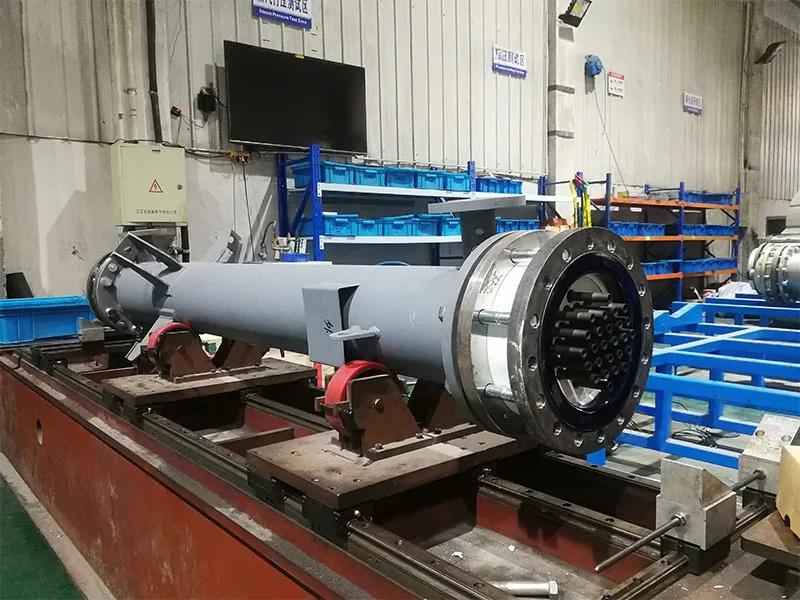
SIC Heat Exchangers are widely used in industries such as pharmaceuticals, fine chemicals, chemical engineering, metallurgy, and various acid or alkali handling processes. Their exceptional properties make them suitable for handling aggressive chemicals, including:
(1)Acids: Such as pickling acids, bromine, sulfuric acid, hydrofluoric acid, nitric acid, hydrochloric acid, and other corrosive acid solutions.
(2) Strong Alkalis: Including sodium hydroxide and other strong bases.
(3)Halogenated Compounds: Suitable for applications involving halogenated compounds.
(4)Salt Solutions: Effective in handling salt solutions that require resistance to corrosion.
(5)Organic Compounds: Particularly useful for processes involving organic chemicals that are highly corrosive.
FAQ
1) Which configuration should I choose?
Shell-and-Tube for broad duty and largest areas, Block for compact, high-pressure and ultra-corrosive service, Plate for compact high-purity processes up to ~200 °C. We’ll size to duty, fouling risk, and codes.
2) What are typical design limits?
3) Can SiC handle HF and mixed acids?
4) How does SiC compare to graphite or glass?
SiC offers higher thermal conductivity and mechanical strength, no impregnation, lower permeation risk, and better abrasion/thermal-shock resistance. This enables smaller area, higher reliability and longer life.
5) What tubing sizes are available?
Common heat-exchanger tubes are 14 mm and 19 mm OD in directly sintered SiC, lengths up to ~4.5–4.6 m. Other diameters and wall thicknesses are available per design and supplier.
6) What about cleanliness for semiconductor or pharma?
Dense SiC is non-permeable and particle-free, compatible with high-purity service. Plate designs with PTFE gaskets and SiC plates target purity-critical processes up to ~200 °C.
7) What cleaning methods are supported?
In-place chemical CIP, high-pressure water-jet, pyrolysis/bake-out, and aggressive solvents depending on the configuration. Always check compatibility of gaskets/linings with the cleaning regime.
8) Can you provide double tubesheet or leak detection?
9) How do you select between SSiC, RBSiC, or ReSiC?
SSiC for highest density/purity and non-permeation; RBSiC for robust complex shapes with strong thermal conductivity; ReSiC for certain high-temperature, lightweight parts. The exchanger type primarily dictates material and forming route.
10) What data do you need for a quote?
Duty (fluids, flow, in/out temps, pressure), fouling factors, materials constraints, design code, footprint, nozzle sizes, and any purity constraints. For shell-and-tube, tube size/length preferences help sizing speed.
11) What certifications/codes are available?
PED/AD2000 and ASME conform options are available depending on model; final stamping depends on the pressure parts scope (shell, headers) and jurisdiction.
Customization
From design to reverse engineering, we provide free technical consulting to help upgrade your equipment. We specialize in high-precision complex parts with ±0.01mm tolerances and special coatings like acid and oxidation resistance, tailored for demanding industrial applications.
FAQ
What types of silicon carbide products does Zirsec supply?
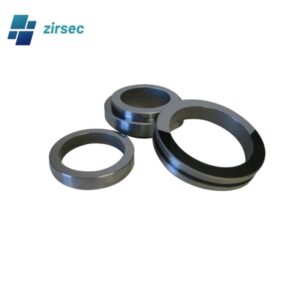
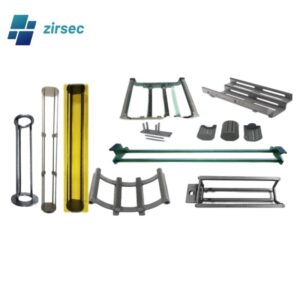
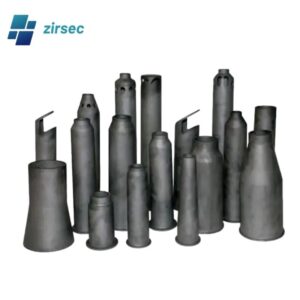
Zirsec offers a wide range of SiC components including tubes, beams, plates, crucibles, rollers, sealing rings, and custom mechanical parts for industrial, chemical, and semiconductor applications.
Can Zirsec provide customized sizes or shapes?
Yes. We support OEM and customized production based on your drawings, specifications, or working conditions.
Do you provide samples for testing?
Yes, sample orders are available for standard items. For custom-made components, small batch samples can be produced after design confirmation.
How can I request a quotation?
Simply fill out the contact form on this page with product type, quantity, and specifications. Our sales engineer will send you a detailed quotation within 24 hours.
Does Zirsec offer technical consultation or design assistance?
Absolutely. Our engineers provide material selection guidance, structural optimization, and technical support for your specific applications.
How does Zirsec ensure product quality?
All products undergo strict inspection procedures, including dimensional accuracy, density, strength, and corrosion resistance tests before delivery.
Tell us your requirements
Our technical engineer will reply with a custom solution and quotation within one working day.