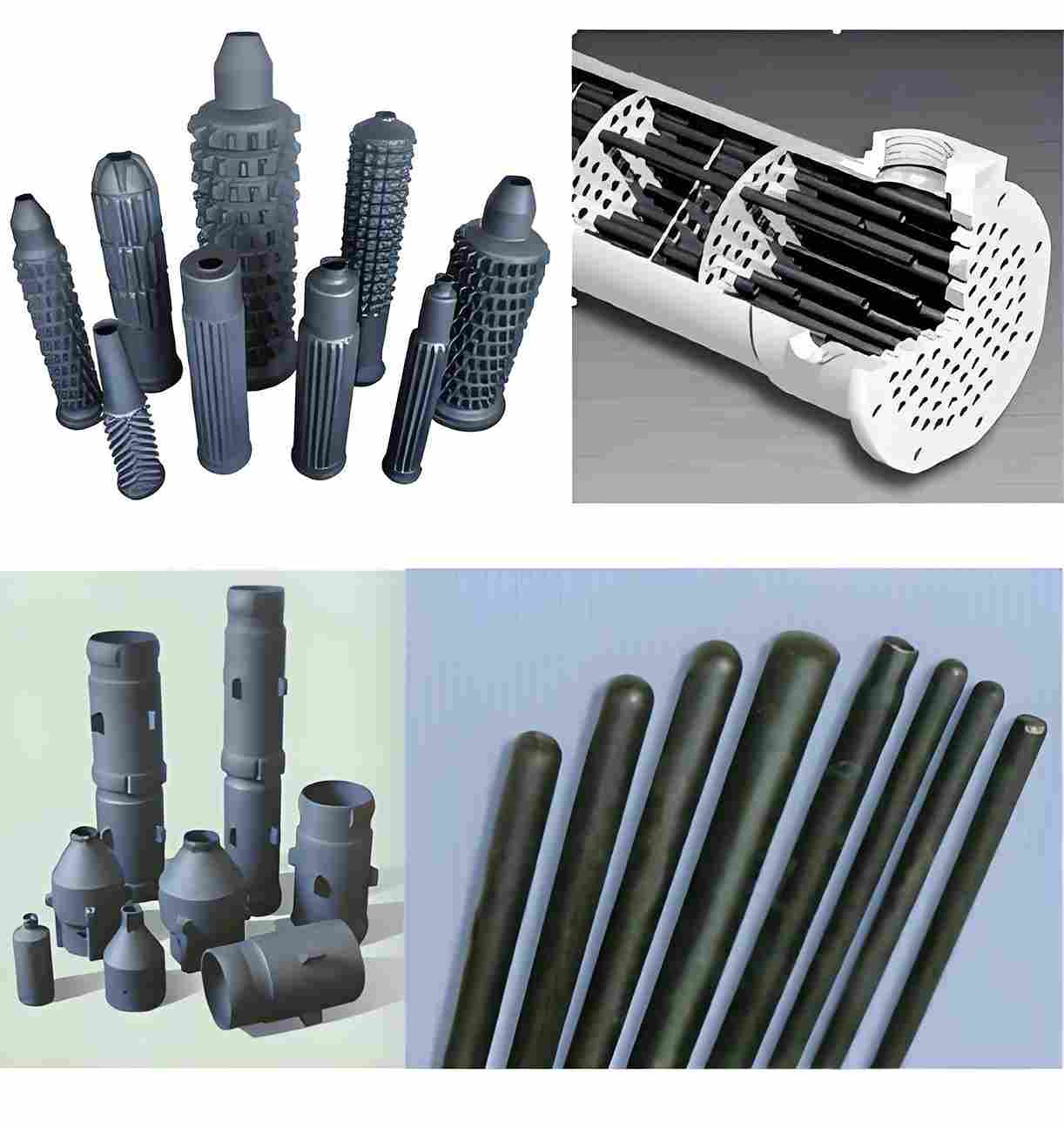
When a corrosive gas line fails, the resulting downtime can cost thousands of dollars per hour; silicon carbide (SiC) eliminates that risk by combining extreme temperature tolerance with unparalleled chemical resistance.
- SiC handles 1350‑1600 °C and resists HCl, HF, SO₂, and Cl₂.
- Typical compressive strength >130 MPa; wear life up to 5‑10× Al₂O₃.
- Design guidelines: minimum wall thickness 3 mm, expansion‑joint spacing ≤1 m, inlet/outlet fillets ≥5 mm.
- Case study: a European pump‑valve maker reduced replacement cycles by 70 % after switching to SiC seal rings.
- Choose a supplier that offers 98 %+ SiC purity, rapid prototype turn‑around, and full COA/MSDS documentation.
Why SiC Is the Preferred Material for Corrosive Gas Systems
Corrosive gases such as hydrogen chloride, fluorine, and sulfur dioxide attack most metals and even many ceramics. SiC’s crystal lattice resists acid attack, while its high thermal conductivity (≈120 W/m·K) prevents hot‑spot formation that would otherwise accelerate wear.
Compared with the next‑most‑used Al₂O₃, SiC offers:
- Temperature ceiling: 1600 °C vs. 1300 °C for alumina.
- Corrosion rate: <0.01 mm/year in 5 % HCl at 900 °C, versus 0.1 mm/year for Al₂O₃.
- Mechanical strength: 30‑40 % higher flexural strength, extending service life in high‑velocity streams.
These advantages translate directly into lower maintenance cost and higher plant availability.
Key Performance Metrics You Must Verify
1. Purity and Grain Size
Industrial SiC used for gas handling should be ≥98 % pure. Grain sizes of 5‑20 µm provide a balance between mechanical strength and machining ease. Our standard tubes use 12 µm grains, delivering consistent dimensional stability.
2. Mechanical Strength
Typical compressive strength is 200‑250 MPa; flexural strength is 350‑400 MPa. For seal rings and liners, we certify >130 MPa under ISO 10545‑3.
3. Thermal Shock Resistance
We test ΔT = 800 °C in water quench (ASTM C1499). SiC parts survive >30 cycles without cracking, a critical factor for start‑up/shut‑down cycles in gas reformers.
4. Chemical Compatibility
Long‑term immersion tests (720 h) in 10 % HCl, 10 % HF, and 5 % Cl₂ at 900 °C show weight loss <0.02 %.
Common Failure Modes and How SiC Solves Them
Metal‑oxide scale spallation – SiC does not form brittle oxide layers, preventing flakes that could block flow.
Wear from high‑velocity particles – The hardness of SiC (≈9.5 Mohs) wears down coal‑dust or silica particles rather than being eroded.
Thermal fatigue – Low coefficient of thermal expansion (≈4.5 × 10⁻⁶ K⁻¹) reduces stress buildup at temperature swings.
Design and Installation Guidelines
Following proven design rules reduces the risk of premature failure:
- Wall Thickness: Minimum 3 mm for tubes under 150 mm OD; increase to 5 mm for diameters >300 mm.
- Fillet Radii: Provide ≥5 mm radii on all internal bends to avoid stress concentration.
- Support Spacing: Place ceramic supports every 0.8–1.0 m for long runs; use compliant metal springs to absorb differential expansion.
- Sealing: Pair SiC seal rings with metal housings that have gold‑plated or PTFE‑lined faces to prevent galvanic corrosion.
- Cleaning: Use ultrasonic baths with neutral pH detergents; avoid abrasive pads.
Case Studies
European Pump‑Valve Manufacturer
Problem: Frequent seal‑ring failure in a chlorine‑processing line caused eight‑day shutdowns, costing ≈$15,000 per incident.
Solution: Replaced 30 mm‑OD Al₂O₃ rings with custom‑machined SiC rings (98 % purity, ±0.2 mm tolerance). The new rings survived 12 months of continuous operation with <0.5 % wear.
Result: Downtime reduced by 90 %, annual savings ≈$120,000.
U.S. Steel Refinery Furnace Liner
Problem: Al₂O₃ liners cracked after 2,000 h at 1,500 °C in a sulfur‑rich atmosphere.
Solution: Installed SiC liners (12 mm thickness, 4‑edge clamped design) fabricated from our high‑purity batch.
Result: Liner life extended to >7,000 h, decreasing replacement cost by 65 %.
Selecting a SiC Supplier – What to Look For
Not every SiC producer can meet the stringent requirements of corrosive gas systems. Evaluate potential partners on these criteria:
- Material Certification: ISO 10545 compliance, complete COA and MSDS for each batch.
- Production Capability: Ability to ship standard sizes within 24 h and prototype custom parts within 3–4 weeks.
- Engineering Support: In‑house ceramic engineers who can convert CAD drawings into manufacturable tolerances.
- Quality Control: Full dimensional inspection (CMM) and non‑destructive testing (ultrasonic, X‑ray).
- Logistics: Experience with export documentation, HS‑Code 1810 classification, and DAP/DDP terms.
Our factory in China has been producing SiC components for over 20 years, offering both stocked standard parts and rapid custom tooling. Learn more about our product range at Silicon Carbide Tubes.
FAQ
- Can SiC be welded to metal flanges?
- Direct welding is not recommended. Use indexed ceramic‑to‑metal housings with a compliant metal spring or a high‑temperature epoxy (e.g., Hysol 2850).
- What is the typical lead time for a custom SiC seal ring?
- Prototype samples are ready in 2‑3 weeks; production batches of 100‑500 pieces ship in 4‑6 weeks, depending on size.
- How does SiC perform in acidic environments below 500 °C?
- Even at 200 °C, SiC shows negligible mass loss in 30 % HCl; it remains the most stable ceramic option.
- Is there a price premium compared with Al₂O₃?
- Yes, roughly 20‑30 % higher per kilogram, but the extended service life and reduced downtime typically offset the initial cost.
Next Steps
Identify the most critical sections of your gas handling train – tubes, liners, or seal rings – and request a free engineering review. Our technical team will verify material suitability, provide a cost‑benefit analysis, and supply CAD‑ready drawings within 48 hours. Contact us at info@zirsec.com or use the inquiry form on our website to start the process.