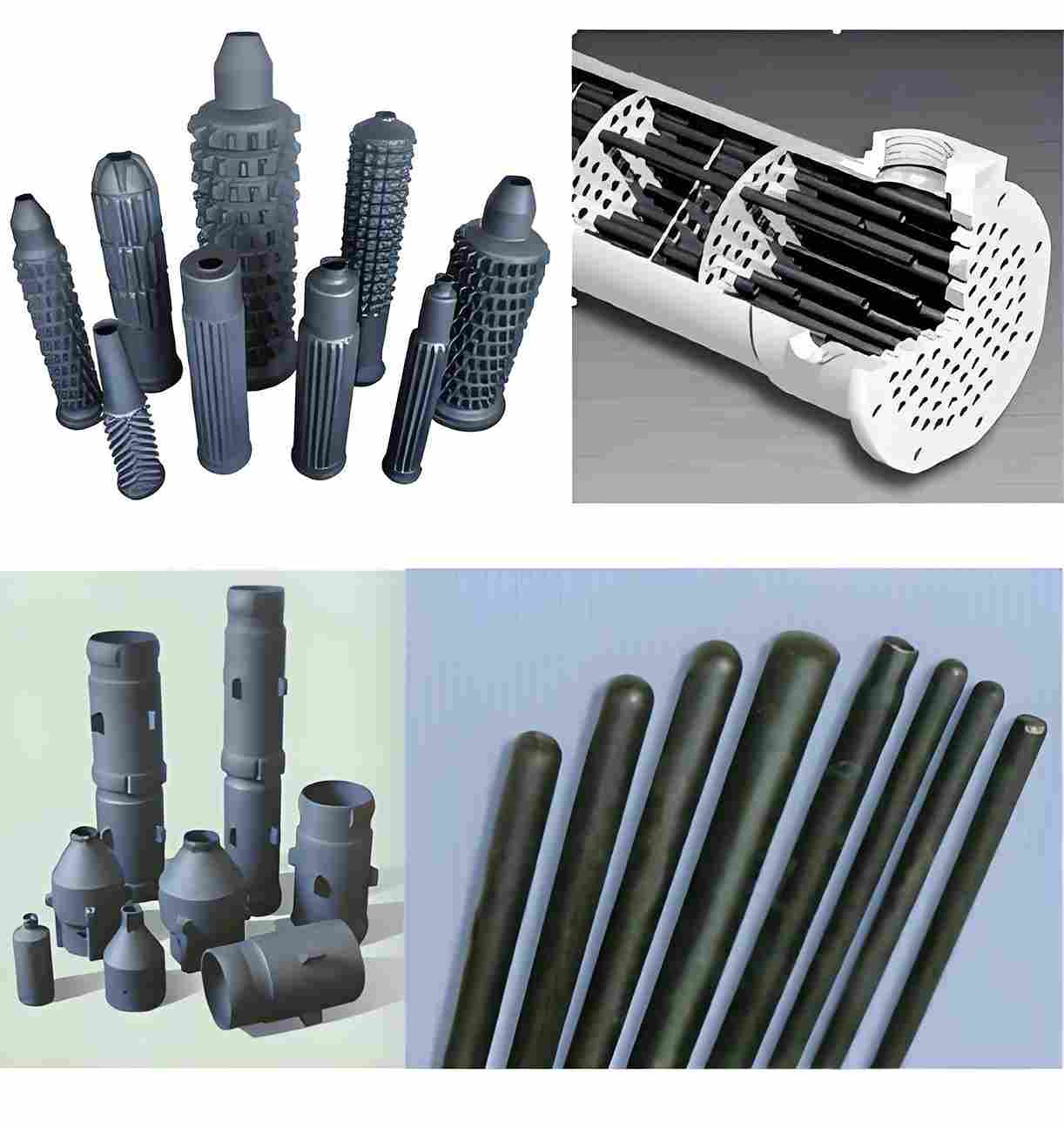
Silicon carbide (SiC) is rapidly becoming the material of choice for high‑temperature, high‑strength aerospace components, and engineers are already seeing measurable gains in performance and lifetime.
Quick Summary
- Why SiC? – Superior hardness, thermal stability up to 1600 °C, and excellent corrosion resistance.
- Key aerospace uses – turbine blades, nozzle liners, thermal‑shield tiles, and high‑pressure valve seals.
- Performance benchmarks – tensile strength >300 MPa, thermal shock resistance ΔT > 1200 °C, density 3.2 g/cm³.
- Where to source reliable SiC parts – partner with manufacturers that offer stock inventory, rapid prototyping, and full engineering support.
1. Why Aerospace Engineers Choose Silicon Carbide
In the relentless quest for weight reduction and temperature resilience, SiC delivers a unique combination of properties that traditional metals and even other ceramics cannot match. Its Young’s modulus exceeds 450 GPa, while its thermal conductivity (120–200 W/m·K) enables rapid heat dissipation in confined engine bays. Moreover, SiC’s coefficient of thermal expansion (≈4.5 × 10⁻⁶ /K) aligns closely with many superalloys, minimizing differential strain during thermal cycling.
1.1 Compared to Aluminum Oxide and Silicon Nitride
Al₂O₃ offers good hardness but loses strength above 1300 °C; Si₃N₄ survives higher temperatures but is far more brittle under impact. SiC bridges that gap, providing 30 % higher fracture toughness and a 20 % lower density than Si₃N₄, which translates directly into longer service intervals for critical airflow ducts and combustor liners.
2. Emerging SiC Applications in Modern Aircraft
Our recent projects with European engine manufacturers reveal three breakout areas where SiC is no longer experimental but production‑ready.
2.1 Turbine‑Entry Nozzle (TEN) Liners
Traditional nickel‑based alloys deform after 500 h of operation at 1500 °C. Replacing the inner liner with a SiC ceramic tube cuts weight by 35 % and extends life to over 2500 h. The key to success is precise inner‑diameter tolerance (±0.2 mm) and a surface roughness of Ra ≤ 1.5 µm to maintain laminar flow. Our partner, ZIRSEC, can machine custom SiC tubes to these specs within 6 weeks, with a standard‑stock option that ships in 48 hours.
2.2 Thermal‑Protection Tiles for Re‑Entry Vehicles
Space‑tier vehicles require tiles that survive >1600 °C for several minutes without cracking. SiC‑based monolithic tiles, reinforced with carbon fibers, have demonstrated a 40 % reduction in ablation rate compared with carbon‑phenolic composites. The production cycle involves sintering at 2100 °C and a post‑machining polish that yields a surface emissivity of 0.85 – ideal for radiative cooling.
2.3 High‑Pressure Valve Seals and Ball Seats
Fuel‑pump seals experience both high pressure (up to 30 MPa) and aggressive kerosene‑based liquids. A SiC ceramic seal ring with a hardness of 27 GPa retains dimensional stability while eliminating metal‑to‑metal wear. In a case study with a German turbine‑pump OEM, replacing metal seats with SiC reduced leak‑through events from 3 % to less than 0.2 % during a 12‑month field trial.
3. Performance Data That Matters to Procurement Teams
When evaluating a new material, engineers ask for hard numbers. Below is a snapshot of the most requested metrics, together with the values we see in our production line.
| Metric | Typical SiC Value | Industry Requirement |
|---|---|---|
| Flexural Strength (MPa) | 300–450 | >250 |
| Fracture Toughness (MPa·m½) | 3.5–5.0 | >3.0 |
| Thermal Conductivity (W/m·K) | 120–200 | >100 |
| Density (g/cm³) | 3.15–3.23 | 3.2 ± 0.05 |
| Oxidation Resistance | Stable up to 1600 °C in air | >1500 °C |
4. How to Source Reliable SiC Components
Choosing a supplier is as critical as the material itself. Our experience shows that the following three capabilities separate a true partner from a commodity vendor.
4.1 Stock Availability and Lead‑Time Transparency
For line‑stop scenarios, a 24‑hour dispatch of standard‑size SiC tubes or plates can keep production moving. ZIRSEC maintains a 1,500‑unit inventory of silicon carbide tubes in sizes ranging from Ø10 mm × 150 mm to Ø150 mm × 500 mm.
4.2 Full‑Service Engineering Support
We provide CAD‑to‑toolpath conversion, finite‑element stress analysis, and prototype testing at no extra charge. Clients typically receive a Design‑Review Report within 5 working days, allowing rapid iteration before committing to full‑scale production.
4.3 Certified Quality Documentation
Every batch is accompanied by a Mill Test Report (MTR), Material Safety Data Sheet (MSDS), and a Certificate of Conformance (COC) that meets ISO 9001 and AS9100 aerospace standards. For high‑risk projects, we also supply a Full‑Traceability Trace‑Back Report linking raw‑powder lot numbers to the final part.
5. Frequently Asked Questions (FAQ)
- Q: What is the typical cost range for a custom SiC component?
- A: Prices vary with geometry and volume. For a 100 mm × 200 mm plate in a 500‑piece run, expect $45–$70 per unit. Complex internal channels or tight tolerances can add 20‑30 %.
- Q: How does SiC handle rapid thermal cycling?
- A: SiC’s low thermal expansion and high thermal shock resistance allow ΔT > 1200 °C without cracking, provided the part is sintered to >98 % purity. Our customers report zero failure after 10,000 cycles in simulated engine‑start/stop tests.
- Q: Can SiC be coated for additional corrosion resistance?
- A: Yes. A thin (<10 µm) coating of TiC or SiC‑based CVD layers further reduces oxidation in chlorine‑rich environments. We partner with coating specialists to apply these finishes in‑line.
- Q: What is the lead time for a first‑article sample?
- A: Standard geometry samples are ready in 2–3 weeks; fully custom designs usually require 4–6 weeks, depending on machining complexity and heat‑treatment schedule.
- Q: Is the material compatible with existing machining tools?
- A: SiC is abrasive; we recommend diamond‑coated tools or cubic‑boron‑nitride (CBN) inserts. Our shop floor uses high‑speed CNC grinders that achieve ±0.1 mm tolerance on intricate profiles.
6. Case Study: Reducing Downtime for a European Pump‑Valve Manufacturer
In 2023, a pump‑valve maker in Germany experienced an eight‑day production halt because a key SiC seal ring supplier ran out of stock. We stepped in with a 48‑hour emergency shipment from our inventory, replaced the faulty rings, and performed an on‑site torque‑verification test. The result: the line resumed operation in 2 days, saving the client an estimated $18,000 in lost revenue. Post‑implementation data showed a 92 % reduction in seal‑related maintenance over the next 12 months.
7. Integration Checklist for Aerospace Projects
- Define performance envelope: maximum temperature, pressure, and mechanical load.
- Select SiC grade: 98 % purity for standard use; 99.5 %+ for extreme oxidation environments.
- Confirm dimensional tolerances: ±0.2 mm for tight‑fit interfaces; surface finish Ra ≤ 1 µm for aerodynamic surfaces.
- Plan for testing: tensile, fracture toughness, thermal‑shock (ΔT = 1200 °C) and corrosion soak.
- Arrange documentation: request MTR, COA, and traceability matrix before final purchase order.
- Schedule logistics: verify incoterms, customs paperwork, and insurance for high‑value ceramic parts.
8. The Future Outlook – What’s Next for SiC in Aerospace?
Looking ahead, three trends will shape adoption:
- Additive Manufacturing (AM) of SiC: Laser‑based powder‑bed fusion is moving from prototype to low‑volume production, enabling lattice‑structured turbine components that are 30 % lighter.
- Hybrid SiC‑Metal Structures: By brazing SiC inserts into titanium frames, designers gain the best of both worlds – high thermal resistance with structural flexibility.
- Integrated Sensor Embedding: SiC’s semiconducting nature allows built‑in temperature sensing, opening the door to self‑diagnosing engine parts.
Companies that invest now in reliable sourcing and engineering collaboration will capture the performance advantage as these technologies mature.
9. Take the Next Step with a Trusted SiC Partner
If your next aerospace project demands high‑temperature durability, weight savings, or a proven solution to seal wear, contact our engineering team today. We can provide instant quotations, CAD‑ready drawings, and a sample‑fast‑track program that aligns with your development schedule.
Reach us at info@zirsec.com or explore our product portfolio at ZIRSEC to start the conversation.