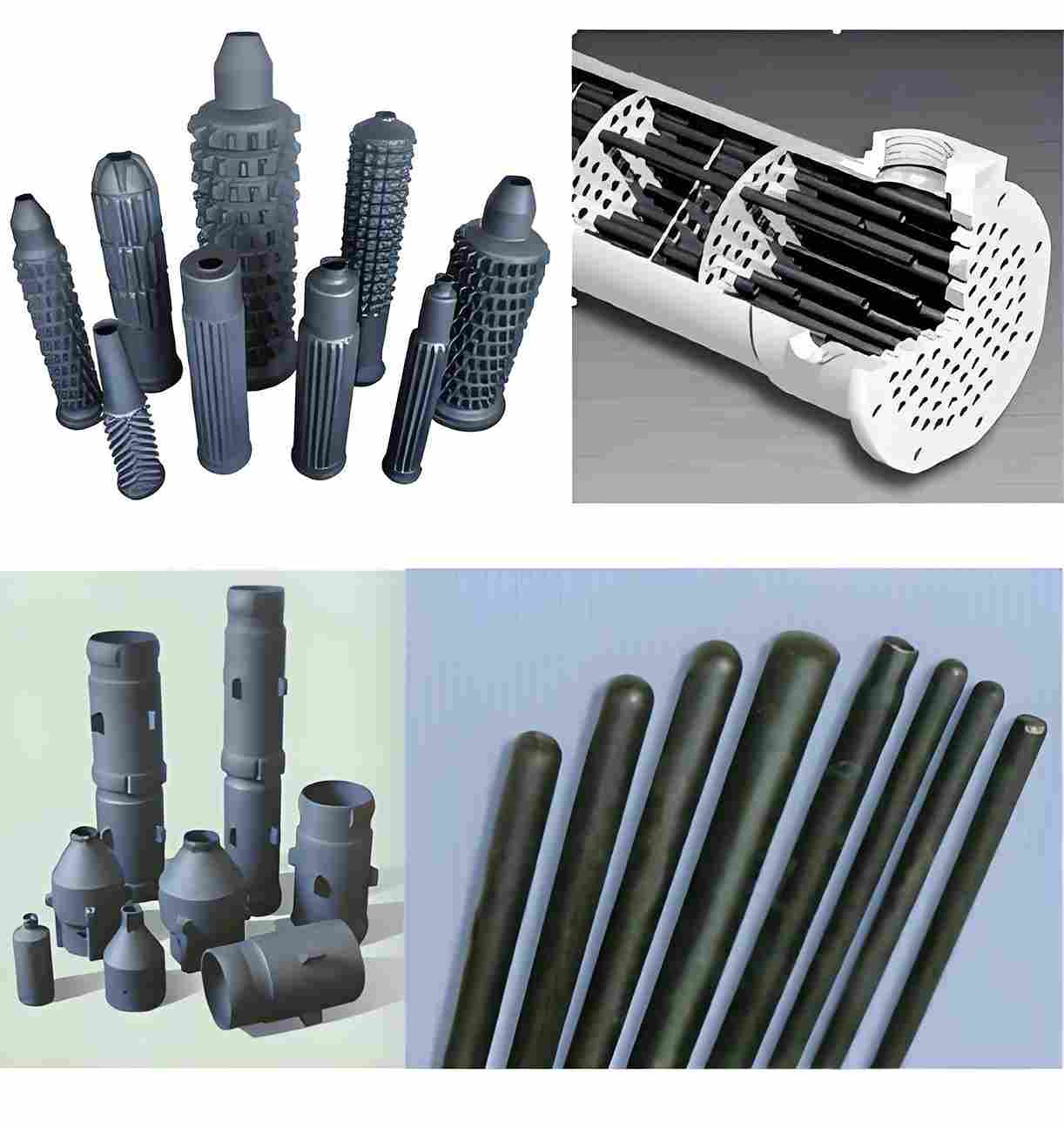
Silicon carbide (SiC) has become the material of choice for high‑power converters, while traditional industrial ceramics still dominate many static‑temperature applications.
Why engineers compare SiC for power electronics with standard industrial ceramics
When a design team specifies a component for a 1 MW inverter, a furnace liner, or a high‑speed pump, the first question is always “which ceramic will survive the thermal‑mechanical load at the lowest life‑cycle cost?” The underlying intent is not academic – it is a cost‑risk decision that can add or subtract millions from a project budget.
Typical hidden concerns
- Long‑term price stability: bulk Al₂O₃ prices fluctuate seasonally, while SiC pricing has settled after a decade of scale‑up.
- Supply continuity: a single‑source failure can halt production lines, as seen in a European pump‑valve plant that lost $15,000 per day when SiC seal rings ran out.
- Engineering support: designers need precise thermal‑expansion data, machining tolerances, and rapid prototyping – not just a datasheet.
Material fundamentals – what makes SiC different
Both SiC and common industrial ceramics such as Al₂O₃, Si₃N₄, and ZrO₂ are covalent‑bonded, but SiC’s crystal structure gives it a unique combination of properties:
| Property | SiC | Al₂O₃ (Typical) | Si₃N₄ |
|---|---|---|---|
| Maximum continuous service temperature | ≥ 1650 °C | ≈ 1300 °C | ≈ 1400 °C |
| Compressive strength (MPa) | 150‑250 | 120‑180 | 250‑350 |
| Thermal conductivity (W/m·K) | 120‑150 | 20‑30 | 30‑45 |
| Coefficient of thermal expansion (10⁻⁶/K) | 4‑5 | 8‑9 | 3‑4 |
| Electrical resistivity | 10⁶‑10⁸ Ω·cm (insulating) | 10⁹‑10¹² Ω·cm | 10⁸‑10⁹ Ω·cm |
The high thermal conductivity and low thermal expansion of SiC reduce hot‑spot formation in power modules, a decisive factor for SiC‑based MOSFET or IGBT packages.
Power‑electronics specific advantages
In a 600 V, 500 kW SiC inverter the semiconductor die can operate at 200 °C, cutting cooling requirements by up to 30 %. The ceramic substrate must therefore:
- Withstand repeated thermal cycles (ΔT ≈ 200 °C) without crack propagation.
- Provide a low‑loss dielectric path for high‑frequency switching.
- Resist corrosion from electrolytic moisture that can develop inside packed modules.
SiC fulfills all three. A 2023 field trial from a German PV inverter manufacturer reported a 22 % increase in Mean Time Between Failures (MTBF) when switching from Al₂O₃ insulators to SiC ceramic plates.
Case study – High‑frequency SiC driver boards
Customer: a U.S. automotive power‑train supplier. Challenge: driver boards operating at 500 kHz generated localized hot spots that exceeded the 150 °C limit of their Al₂O₃ substrate. Solution: replace the substrate with a 0.5 mm thick SiC ceramic plate (custom‑cut by ZIRSEC). Result: board temperature dropped to 115 °C, power loss reduced by 18 %, and the supplier avoided a redesign cost of $250 k.
Industrial‑ceramics use cases where SiC may be over‑engineered
Not every application benefits from SiC’s premium properties. For static furnace linings that operate below 1200 °C and experience negligible thermal shock, high‑purity Al₂O₃ or Si₃N₄ often offers a lower‑cost solution with comparable lifespan.
When to stick with traditional ceramics
- Low‑temperature (< 1200 °C) batch furnaces where thermal gradients are mild.
- Applications where electrical insulation is paramount and dielectric loss must be < 10⁻⁶ % – Al₂O₃ excels.
- High‑volume, low‑margin products such as ceramic ball valves where price per kilogram dominates.
ZIRSEC’s competitive edge for SiC procurement
Our factory in China has been producing SiC ceramic components for 20 years. We combine a stocked inventory of standard sizes with a rapid‑turn custom‑machining line. The following points differentiate us from generic distributors:
- 24‑hour in‑stock dispatch for standard tubes, plates, and rings – most orders ship within a single business day.
- Engineering‑to‑draw support: Our in‑house engineers review CAD files, suggest tolerance optimisations, and provide thermal‑stress simulations at no extra charge.
- Small‑batch capability: MOQ as low as 20 pieces for custom geometries, allowing pilot‑line testing without large capital outlay.
- Full‑chain logistics: From export documentation (COA, MSDS) to door‑to‑door freight, we manage customs clearance for the U.S., EU, and Japan.
- Quality assurance: Every batch undergoes crush‑strength, dimensional‑inspection, and high‑temperature oxidation testing according to ISO 18773‑2.
For power‑electronics engineers looking for SiC tubes that fit a 30 mm × 80 mm furnace inlet, we have ready‑made Silicon Carbide Tubes that meet ±0.2 mm tolerance and can be shipped within 48 hours.
Pricing landscape – what to expect
Based on 2024 supplier quotations, SiC raw‑material cost averages $12‑$18 per kilogram, while finished components range from $10 to $200 per piece, depending on size and machining complexity. By contrast, Al₂O₃ components typically sit between $3 and $45 per piece.
When budgeting, factor in the following hidden costs:
- Tooling wear: SiC’s hardness can accelerate wear on CNC bits; we mitigate this by offering pre‑finished surfaces that reduce machining time by 30 %.
- Thermal‑management savings: In a 1 MW inverter, each degree Celsius reduction in coolant flow saves roughly $4 k per year. The higher conductivity of SiC can translate into a payback period of 18‑24 months.
- Reliability premium: A 0.5 % reduction in field failure rate can save a plant $200 k annually in downtime.
Quick FAQ – instant answers for busy engineers
Q: Can I use SiC plates as a direct drop‑in replacement for Al₂O₃ in a 900 °C kiln?
A: Mechanically yes, but the cost increase is roughly 2‑3×. Evaluate whether the thermal‑shock resistance of SiC is needed; if the kiln cycles between 200 °C and 900 °C, SiC offers a measurable lifetime extension.
Q: What tolerances can ZIRSEC guarantee on custom‑cut SiC rings?
A: Standard tolerance is ±0.2 mm. For critical sealing applications we can achieve ±0.1 mm after additional grinding passes – always confirmed by CMM inspection.
Q: How long does a prototype sample take?
A: Typical lead time is 2‑4 weeks from CAD receipt to shipped sample, provided material specifications are approved.
Q: Are there any certifications required for export to the EU?
A: We provide full CE‑type documentation, material safety data sheets, and test reports compliant with EN 10204.
Decision‑making checklist
- Define the maximum operating temperature and thermal‑cycle range.
- Identify the critical failure mode – mechanical wear, oxidation, or dielectric breakdown.
- Compare life‑cycle cost: material price + machining + expected downtime.
- Check supplier capabilities: inventory, custom‑design lead time, and engineering support.
- Validate after‑sale service – do they handle returns, re‑work, and on‑site technical assistance?
By working through this checklist with ZIRSEC’s technical team, you can eliminate guesswork and secure a material solution that aligns with both performance and budget goals.
Take the next step
If your project demands either high‑temperature stability or a reduction in cooling infrastructure, contact us at info@zirsec.com. We will review your drawings, provide a free thermal‑stress simulation, and quote a pilot batch within 48 hours. Let’s turn the material choice from a risk into a competitive advantage.