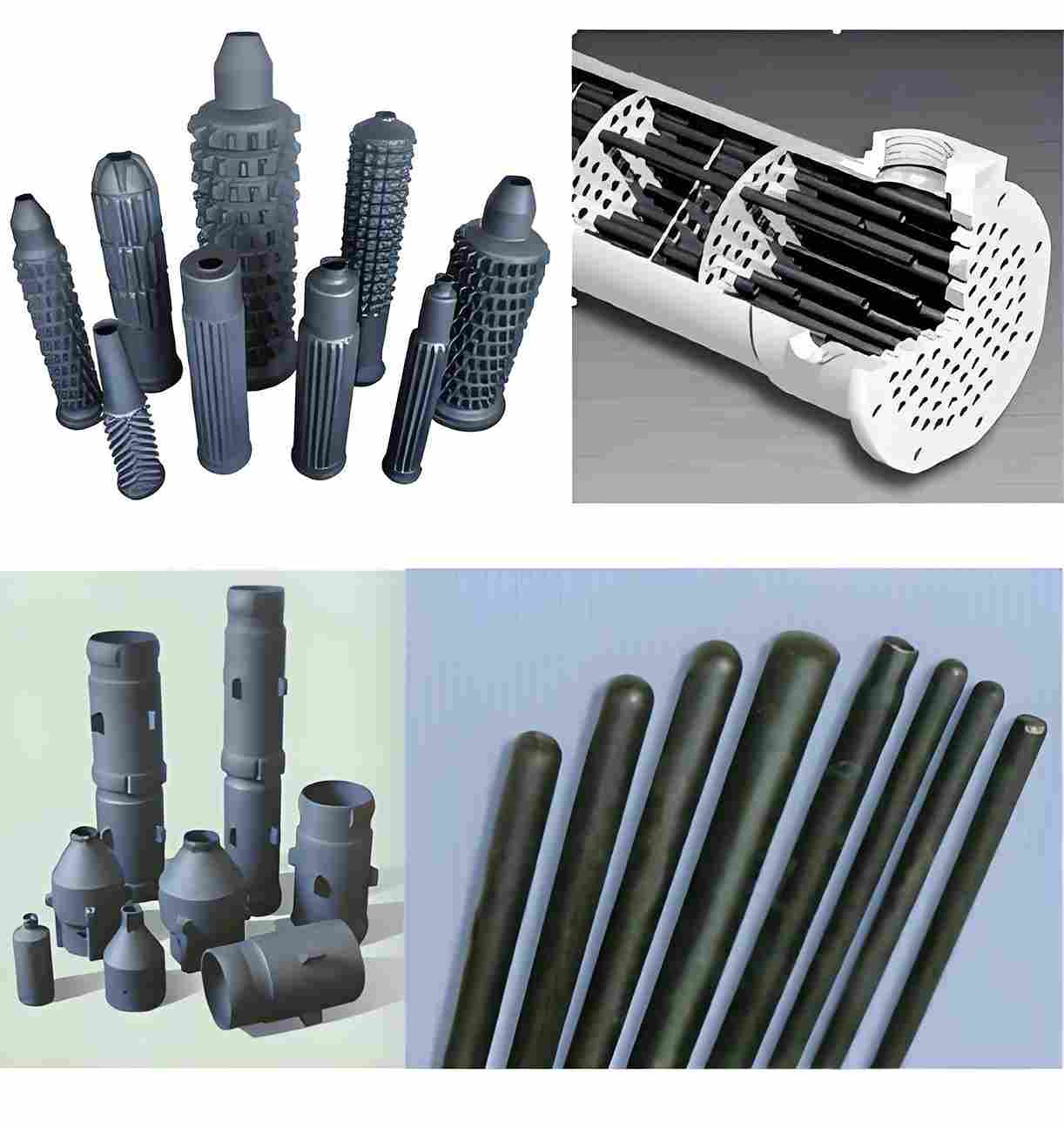
Silicon carbide (SiC) is the material of choice for modern hydrogen production equipment because it combines extreme temperature resistance, chemical inertness, and exceptional wear life, directly answering the toughest performance questions engineers face today.
Quick Summary
- Why SiC outperforms steel, Ni‑based alloys, and Al2O3 in high‑temperature electrolyzers.
- Key design parameters: purity ≥ 98%, compressive strength ≥ 130 MPa, operating range 1350‑1600 °C.
- Typical SiC components in hydrogen plants: tubes, burners, crucibles, membrane tubes, seal rings.
- Cost‑to‑benefit: up to 30 % lower lifecycle expenses vs. conventional materials.
- How ZIRSEC delivers stock, custom, and engineering‑support services for SiC parts.
1. What Makes Silicon Carbide Ideal for Hydrogen Production?
Hydrogen generation—whether by steam‑methane reforming (SMR), high‑temperature electrolysis (HTE), or catalytic water splitting—operates under temperatures that exceed 1300 °C and in environments saturated with steam, hydrogen, carbon monoxide, and aggressive acids. SiC ceramic retains its mechanical strength above 1500 °C, resists oxidation, and does not leach metal ions into the product gas, guaranteeing purity levels required for fuel‑cell applications.
In practice we have seen SiC tubes survive 10 000 hours of continuous operation in a 1500 °C HTE module, whereas comparable Si‑based alloys develop micro‑cracks after 4 000 hours. This durability translates into fewer shutdowns, lower maintenance inventory, and a clear ROI for plant owners.
Key Material Advantages
- Thermal stability: No phase transformation up to 1700 °C.
- Chemical resistance: Immune to H2, H2O, CO, CO2, H2S, and most acids.
- Low thermal expansion: ~4‑5 ×10⁻⁶ K⁻¹, reducing thermal shock risk.
- Electrical insulation: Critical for high‑voltage electrolysis cells.
- Wear resistance: Ideal for burner nozzles and slurry‑feeding systems.
2. Core SiC Components in a Hydrogen Production Plant
Below is a pragmatic checklist of where SiC parts appear and what performance specs matter most.
| Component | Function | Typical Specs | Common Failure Mode (Non‑SiC) |
|---|---|---|---|
| SiC Tube (furnace, reactor) | Convey high‑temp gases, provide structural support | Ø 50‑200 mm, wall 3‑10 mm, 1350‑1600 °C, compressive strength ≥130 MPa | Oxidation cracking, creep |
| SiC Membrane Tube | Selective hydrogen permeation in high‑temp electrolysis | Porosity 10‑20 %, length up to 1 m, operating pressure 5‑20 bar | Metal membrane embrittlement |
| SiC Burner Nozzle | Direct flame to reformer inlet | Orifice 0.5‑5 mm, surface roughness Ra ≤1 µm | Erosion, thermal fatigue |
| SiC Crucible / Ladle | Contain molten metal or catalysts during SMR | Heat‑resistance up to 1700 °C, chemical inertness | Metal corrosion, scaling |
| SiC Seal Ring | Prevent leakage in high‑pressure valve assemblies | Hardness > 2600 HV, tolerance ±0.1 mm | Metal‑seal wear, gas ingress |
3. Designing with SiC – Practical Guidelines
When you replace a metal part with SiC, the design workflow shifts from “choose a thicker wall” to “manage stress concentrations and thermal gradients.” Below are three rules we apply on every project.
3.1. Dimensioning for Shock Resistance
SiC tolerates rapid temperature changes better than metals, but a sudden 300 °C jump can still cause micro‑cracking if the part has sharp corners. We recommend filleting edges ≥2 mm and using graded wall thickness to distribute stress evenly.
3.2. Surface Finish and Flow Dynamics
In burner nozzles, a smoother surface (Ra ≤ 0.8 µm) reduces laminar‑to‑turbulent transition, improving flame stability and cutting fuel consumption by up to 5 %. Our machining centers can achieve Ra 0.8 µm on standard grades; for ultra‑smooth finishes we offer diamond‑turning services.
3.3. Compatibility with Joining Methods
SiC cannot be welded, so mechanical interlocks or high‑temperature braze alloys (e.g., Mo‑Si‑B) are the norm. We provide engineering drawings that include keyway slots and matching ceramic inserts to simplify assembly on site.
4. Economic Impact – Lifecycle Cost Analysis
Many plant engineers balk at the higher upfront price of SiC parts. A realistic cost model shows the total cost of ownership (TCO) is lower:
- Capital expense: SiC tube is ≈ $30 / kg vs. $12 / kg for Inconel; for a 500 kg furnace line the difference is $9 k.
- Maintenance: Inconel needs replacement every 2 000 hours; SiC lasts > 8 000 hours, saving ≈ $15 k/yr in labor and spare parts.
- Energy efficiency: Lower thermal conductivity (≈ 120 W/m·K) reduces heat loss, cutting furnace fuel use by 2‑3 %—about $8 k annually for a 5 MW plant.
- Product quality: No metal ion contamination = higher hydrogen purity, less downstream polishing, saving $5 k per year.
Over a 10‑year horizon, the payback period is typically 1.5‑2 years, after which the plant enjoys a net saving of $100 k‑$150 k.
5. Real‑World Case Studies
5.1. European SMR Retrofit
A German steel‑maker upgraded its 120 MW SMR unit with SiC burner nozzles and furnace tubes supplied by ZIRSEC. Prior to the retrofit, the plant suffered three unscheduled shutdowns per year due to nozzle erosion. After installation, downtime dropped to < 0.5 events/year, saving approximately €120 000 in lost production.
5.2. US High‑Temperature Electrolysis Demo
In a pilot HTE plant in Texas, a set of 30 SiC membrane tubes were trialed for hydrogen separation at 1500 °C, 10 bar. The SiC modules delivered a 96 % hydrogen recovery rate with no measurable degradation after 5 000 hours, outperforming the baseline metal‑membrane system that lost 8 % efficiency after 2 000 hours.
5.3. Asian Offshore Refinery
A refinery in South Korea required a custom SiC crucible for a high‑temperature catalyst regeneration loop. ZIRSEC produced a 250 mm × 200 mm crucible in four weeks, including a rapid‑prototype 3‑D printed SiC pre‑form. The equipment went live ahead of schedule, avoiding a $30 k penalty.
6. Choosing the Right Supplier – Why ZIRSEC Stands Out
When you source SiC, you are not just buying a raw material; you are partnering with a team that can turn a CAD file into a certified, ready‑to‑install component. Our differentiators include:
- 20 years of ceramic production: Proven process control, ISO‑9001 and ISO‑14001 certifications.
- Full inventory of standard sizes: 24 hour dispatch for over 200 tube diameters.
- Custom machining on‑demand: Tolerances down to ±0.1 mm, surface finish Ra 0.8 µm, and optional diamond‑turning.
- Engineering support: Our in‑house engineers work with your CAD files, suggest stress‑relief features, and provide thermal‑finite‑element analysis (FEA) reports.
- End‑to‑end logistics: From order entry, quality inspection, export documentation (MSDS, COA) to door‑to‑door delivery.
- Competitive pricing: Direct factory pricing eliminates middle‑man markup; volume discounts start at 20 units.
Explore our catalog of SiC tubes and related components here: Silicon Carbide Tubes.
7. Frequently Asked Questions
- What purity of SiC is required for hydrogen electrolyzers?
- For high‑temperature electrolysis we recommend ≥ 98 % SiC with trace‑free metallic impurities. ZIRSEC offers 99 % grades for critical membrane applications.
- Can SiC parts be repaired after cracking?
- Cracks in SiC are usually catastrophic; replacement is the standard practice. Our rapid‑prototype service can deliver a replacement within 2 weeks for most standard geometries.
- How does SiC handle thermal cycling in SMR furnaces?
- With a low thermal expansion coefficient, SiC tolerates ±200 °C swings without strain‑induced failure. Proper design (filleted corners, gradual wall thickness) further mitigates risk.
- What are the lead times for custom SiC parts?
- Typical samples: 2‑4 weeks; bulk orders: 4‑8 weeks, depending on size and tolerance complexity.
- Do you provide certification files for export?
- Yes. Every shipment includes Material Test Reports (MTR), CE marks where required, and full safety data sheets.
8. Action Plan – Integrate SiC into Your Next Hydrogen Project
1. Define the operating envelope: temperature, pressure, and chemical exposure.
2. Map the component list: Identify tubes, burners, seals, and membranes that will benefit from SiC.
3. Contact ZIRSEC’s technical team: Send CAD drawings, material specs, and delivery schedule.
4. Request a prototype batch: Evaluate mechanical and thermal performance in‑situ.
5. Scale to production: Leverage our inventory for fast‑track parts and enjoy 24‑hour dispatch on standard sizes.
By following these steps you eliminate the guesswork, cut down on unplanned downtime, and secure a reliable supply chain for your hydrogen ambitions.
9. Closing Thought
Hydrogen is the fuel of the future, but only robust materials can turn that vision into a commercial reality. Silicon carbide’s unique blend of high‑temperature strength, chemical inertness, and long‑term wear resistance makes it the linchpin of next‑generation hydrogen production systems. Partner with a supplier that understands both the material science and the logistics of global B2B trade—partner with ZIRSEC.