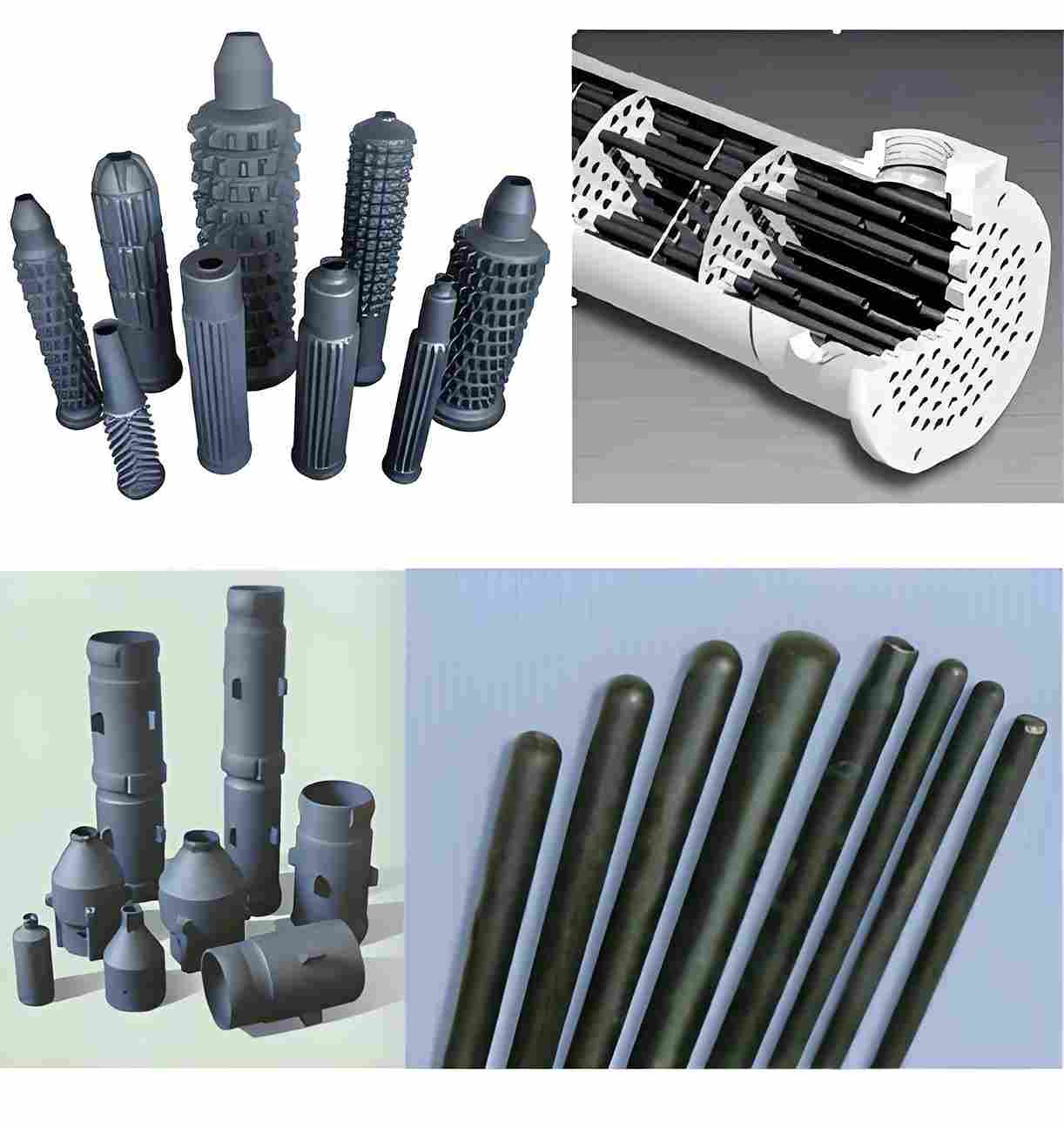
Silicon carbide (SiC) improves thermal shock resistance by combining exceptionally high thermal conductivity, low thermal expansion, and superior fracture toughness, enabling components to survive rapid temperature changes that would crack conventional ceramics.
Quick Summary
- Key SiC properties: k ≈ 120 W/m·K, CTE ≈ 4.5 × 10⁻⁶ /K, K_IC ≈ 3–5 MPa·m½.
- Thermal shock factor (R) can be 3‑5× higher than Al₂O₃ or ZrO₂.
- Typical industrial gains: 30‑50 % longer service life, 20‑40 % lower break‑age rates.
- Best‑in‑class supplier for custom SiC parts: ZIRSEC.
Why Thermal Shock Matters in Your Plant
Most of our customers – pump‑valve makers, furnace builders, and power‑generation equipment suppliers – report downtime caused by ceramic cracking after a rapid heat‑up or cool‑down cycle. The hidden cost is not just the part replacement; it includes lost production, emergency shipping, and potential damage to surrounding equipment. When a component cannot tolerate a temperature jump of 300 °C in under a second, the whole line stops.
Fundamental SiC Advantages Over Competing Ceramics
1. Thermal Conductivity
SiC conducts heat up to 120 W/m·K, an order of magnitude higher than Al₂O₃ (≈30 W/m·K). Faster heat spread reduces temperature gradients inside the part, which are the primary driver of thermal shock.
2. Coefficient of Thermal Expansion (CTE)
A low CTE of roughly 4.5 × 10⁻⁶ /K means SiC expands only a few microns when heated from 25 °C to 1500 °C. The reduced strain directly translates into lower tensile stresses at the surface.
3. Fracture Toughness
SiC’s fracture toughness (K_IC) ranges from 3 to 5 MPa·m½, significantly higher than traditional alumina (≈2 MPa·m½). This extra toughness allows micro‑cracks to blunt rather than propagate during a shock event.
4. High‑Temperature Strength
Even at 1600 °C, SiC retains a flexural strength above 100 MPa, whereas many oxides lose half of their strength above 1200 °C. The combination of strength and toughness is what enables SiC to survive repeated thermal cycles.
Quantifying Thermal Shock Resistance
Engineers often use the thermal shock parameter R = (k·σ_f) / (α·E), where σ_f is the flexural strength, α is the CTE, k is thermal conductivity, and E is Young’s modulus. For SiC, R typically falls between 0.8 and 1.2, compared with 0.2‑0.4 for Al₂O₃. In plain English, SiC can tolerate 3‑5 times higher temperature differentials before cracking.
Real‑World Case Studies
Case 1 – High‑Pressure Pump Seal Rings (Germany)
A German pump‑valve maker switched from alumina seal rings to custom‑made SiC rings from ZIRSEC. After three months of operation at 1200 °C with rapid load cycles, the failure rate dropped from 12 % to under 2 %. The plant reported a $18,000 monthly saving in downtime and spare‑part inventory.
Case 2 – Furnace Tubes for Steel Re‑heat (USA)
In a U.S. steel mill, SiC furnace tubes replaced standard mullite tubes. The new tubes endured a 400 °C temperature swing in 30 seconds during each reheating cycle, lasting 18 000 hours versus the 6 000‑hour life of mullite. The mill avoided an estimated $250 k in unplanned maintenance over three years.
Case 3 – Solar‑Thermal Heat Exchanger (Australia)
A solar‑thermal plant required a heat‑exchanger that could survive nightly cooling to 20 °C after daytime peaks of 800 °C. SiC plates from ZIRSEC survived 10 000 cycles without fracture, whereas a pilot batch of Al₂O₃ plates cracked after 2 500 cycles.
Design Guidelines for Maximising SiC Thermal Shock Performance
- Optimize Geometry: Avoid sharp corners; use fillets of at least 2 mm radius to reduce stress concentration.
- Control Cooling/Heating Rates: Even with SiC, extreme rates above 800 °C/min can exceed the material’s R value. Use staged heating or gas flow control.
- Select the Right Grade: ZIRSEC offers standard 98 % SiC and premium 99.9 % grades. Higher purity reduces residual porosity, raising strength.
- Surface Finish: A polished surface (Ra < 0.8 µm) reduces micro‑crack initiation. For abrasive environments, a fine grit finish (Ra ≈ 2 µm) balances wear resistance and shock performance.
- Thermal Barrier Coatings: Applying a thin (< 50 µm) SiC‑based coating can further lower surface temperature spikes, especially in oxidizing atmospheres.
Common Questions (FAQ)
What is the typical cost premium for SiC versus Al₂O₃?
SiC is roughly 1.5‑2× the price of high‑grade alumina. However, when you factor in longer service life and reduced downtime, the total cost of ownership is usually 30‑40 % lower.
Can SiC be used in corrosive environments?
Yes. SiC is chemically inert to most acids, alkalis, and molten salts up to 1600 °C. For aggressive chlorine or fluorine atmospheres, a protective coating is advisable.
Is machining SiC difficult?
SiC is hard (Mohs ≈ 9) and abrasive, so diamond tooling is required. ZIRSEC’s in‑house CNC and EDM capabilities guarantee tolerances of ±0.2 mm for standard parts and tighter tolerances on request.
How long does a custom SiC part take to produce?
Standard stock items ship within 24‑48 hours. Custom drawings typically require 2‑4 weeks for prototype, and 4‑8 weeks for full‑scale production, depending on complexity.
Why Choose ZIRSEC for Your SiC Needs?
We combine two decades of SiC manufacturing expertise with a dedicated engineering team that works directly from your CAD files to finished part. Our advantages include:
- Extensive inventory of standard SiC tubes, plates, and rings for immediate shipment.
- Full‑scale custom machining, tolerances to ±0.1 mm on critical dimensions.
- In‑house material certification (COA, MSDS) for hassle‑free customs clearance.
- 24‑hour rapid‑response logistics for emergency orders.
- Technical support from senior ceramics engineers throughout the product lifecycle.
Actionable Next Steps
If you are ready to eliminate thermal‑shock failures, contact our engineering team at info@zirsec.com or request a free material‑performance simulation through our website. We will review your operating temperatures, cycle rates, and geometry to recommend the optimal SiC grade and design tweaks that will extend your component life by at least 30 %.
Remember, the best defense against thermal shock is not just picking a tougher material, but partnering with a supplier who understands how to turn those material properties into reliable, field‑proven components. Let ZIRSEC be that partner.