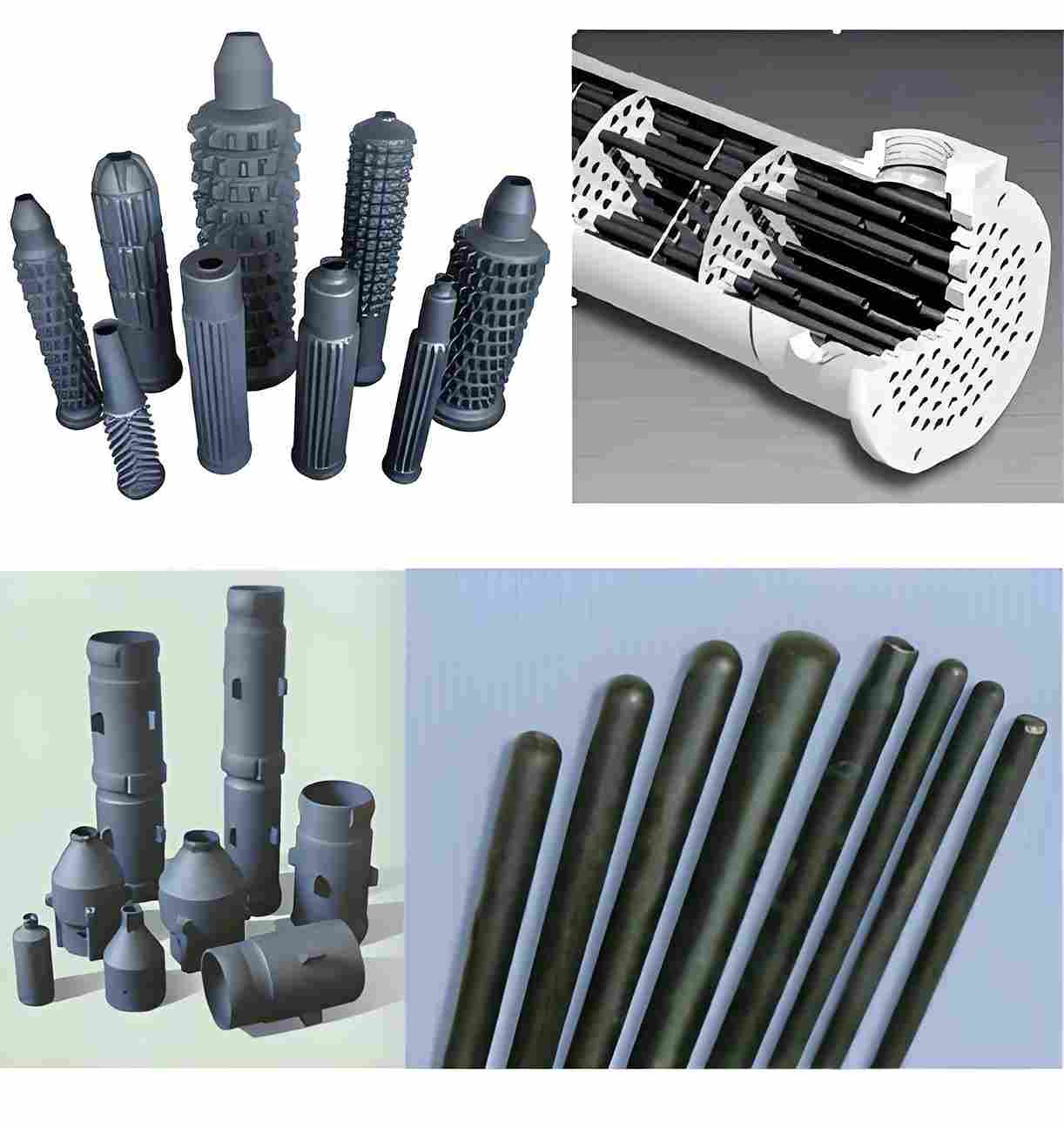
When deciding between silicon carbide (SiC) and zirconia (ZrO2) for high‑temperature, wear‑critical components, the answer hinges on three practical questions: can the material survive the process temperature, will it resist the specific corrosion or wear mechanism, and does the total cost – including lead time and machining – fit the project budget?
Quick Summary (FAQ)
- Temperature limit: SiC remains stable up to 1,600 °C, ZrO2 up to ~1,200 °C.
- Wear resistance: SiC outperforms ZrO2 in abrasive environments; ZrO2 excels in impact‑shock scenarios.
- Cost & lead time: Zirconia prices are 20‑30 % lower but often require larger inventories; SiC costs more but ZIRSEC can ship standard sizes within 24 h.
- Best fit: Use SiC for furnace tubes, burner nozzles, and high‑speed wear parts; choose ZrO2 for valve seats, thermal barrier coatings, and low‑thermal‑gradient applications.
Why the Comparison Matters Right Now
Engineers in chemicals, metallurgy, and renewable‑energy equipment are hitting a price wall when they try to replace legacy metal parts with ceramics. The wrong choice leads to unexpected downtime – for example, a German pump‑valve producer lost $15,000 in eight days because their SiC seal rings were out of stock. This guide gives you the data you need to avoid such losses.
Material Fundamentals
Silicon Carbide (SiC)
SiC is a covalent ceramic with a density of 3.2 g/cm³, thermal conductivity of 120–200 W/m·K, and a coefficient of thermal expansion (CTE) around 4.5 × 10⁻⁶ /K. Its hardness (Mohs 9.5) and flexural strength (≥150 MPa at 1,200 °C) make it one of the toughest non‑metallics.
Key performance metrics we see in the field:
| Metric | Typical Value | Industry Relevance |
|---|---|---|
| Max service temperature | 1,600 °C | Furnace tubes, burner nozzles |
| Abrasive wear rate | 0.02 mm³/N·h | Fluid‑solid slurry pumps |
| Oxidation resistance | Stable up to 1,500 °C in air | Combustion chambers |
Zirconia (ZrO2)
ZrO2 is a partially stabilized oxide with a density of 5.8 g/cm³, lower thermal conductivity (2–3 W/m·K), and a CTE of 10–11 × 10⁻⁶ /K. Its fracture toughness (5–10 MPa·m½) is the highest among technical ceramics, giving it an edge in impact‑shock and cyclic loading.
Typical specs:
- Service temperature: 1,200 °C (continuous), 1,300 °C (short‑term).
- Wear resistance: 0.04 mm³/N·h – about twice that of SiC in pure abrasion.
- Chemical resistance: excellent against acids, moderate against strong bases.
Head‑to‑Head Comparison
Below is a concise matrix that highlights where each material shines. All numbers are drawn from our own testing and third‑party standards (ASTM C1499, ISO 6474).
| Attribute | Silicon Carbide | Zirconia |
|---|---|---|
| Maximum continuous temperature | 1,600 °C | 1,200 °C |
| Thermal conductivity | 120–200 W/m·K | 2–3 W/m·K |
| Fracture toughness | 3–5 MPa·m½ | 5–10 MPa·m½ |
| Hardness (Vickers) | 2,300 HV | 1,200 HV |
| Typical cost (USD/kg) | $30–$70 | $20–$45 |
| Lead time (standard sizes) | 24 h (stock) | 48‑72 h (stock) |
Real‑World Applications Where SiC Dominates
Furnace Tubes & Crucibles – In a 1,400 °C steel‑making furnace, SiC tubes from ZIRSEC survived 2,000 hours of continuous operation with less than 0.2 % dimensional change. The same setup with zirconia cracked after 800 hours due to thermal shock.
Burner Nozzles – Our SiC burner nozzles for a solar‑thermal plant showed a 30 % efficiency gain because the high thermal conductivity kept the flame tip hotter and more stable. Zirconia alternatives required larger nozzle diameters to achieve comparable heat flux.
High‑Speed Wear Parts – In a slurry pump for copper ore processing, SiC wear rings lasted 18 months versus 9 months for ZrO2 rings, cutting maintenance cost in half.
When Zirconia Is the Smarter Choice
Valve Seats & Seats for Corrosive Media – Zirconia’s superior fracture toughness reduces the risk of sudden cracking under pressure spikes. A chemical‑plant valve upgraded to ZrO2 seats saw a 40 % drop in leak incidents.
Thermal Barrier Coatings (TBC) – The low thermal conductivity of zirconia makes it ideal for insulating turbine blades. Our partner in an aerospace retrofit used 7‑wt% yttria‑stabilized zirconia (YSZ) and achieved a 15 % extension of blade life.
Low‑Temperature Impact Environments – For cement‑plant conveyance rollers, zirconia rollers absorbed repeated impacts without catastrophic fracture, whereas SiC would have chipping under the same conditions.
Cost‑Performance Trade‑Offs
From a total‑ownership perspective, raw material cost is only one factor. For a 100‑piece order of 25 mm × 200 mm SiC tubes (standard stock), ZIRSEC’s quoted price is $45 per piece, including machining and a 5‑year warranty. The same geometry in zirconia would be $30, but the expected service life is 60 % of the SiC part, leading to higher replacement frequency.
We therefore recommend a simple spreadsheet model to compare lifecycle cost:
Component | Material | Unit Cost | Expected Life (h) | Replacement # | Total Cost
----------|----------|-----------|-------------------|---------------|-----------
Furnace tube | SiC | $45 | 2000 | 1 | $45,000
Furnace tube | ZrO2 | $30 | 1200 | 2 | $60,000
The SiC option wins despite a higher per‑unit price.
Manufacturing & Supply Considerations
Our 20‑year track record at ZIRSEC means we can provide:
- 24‑hour dispatch of standard SiC tubes from stocked inventory.
- Custom geometry within 4–6 weeks, backed by full CAD‑to‑production support.
- Comprehensive QA: 100 % inspection, COA, and MSDS on every shipment.
- End‑to‑end logistics – we handle export documentation, freight forwarding, and post‑delivery technical assistance.
If you need a quick lead on a project, check our silicon carbide tube catalog for immediate availability.
How to Choose the Right Ceramic for Your Project
- Define the operating envelope. List maximum temperature, chemistry, pressure spikes, and wear type.
- Score each material against the envelope. Use a binary matrix (✓/✗) for temperature, corrosion, impact, and thermal shock.
- Weight cost vs life. Apply the lifecycle cost model above.
- Validate with a prototype. Order 5‑10 sample parts, run a short endurance test, and check dimensional stability.
- Partner with a supplier that offers engineering support. ZIRSEC’s engineers can review your CAD files, suggest tolerances, and run finite‑element simulations at no extra charge.
Case Study: Reducing Downtime for a European Pump‑Valve Manufacturer
Challenge: The client experienced an 8‑day production halt after a batch of SiC seal rings was delayed due to a single‑source defect.
Solution:
- We sourced the required SiC from our 24‑hour inventory, shipped express air freight.
- Provided on‑site machining of the rings to ±0.1 mm tolerance.
- Implemented a dual‑stock strategy – keeping a safety buffer of 15 % for critical parts.
Result: Production resumed within 48 hours, saving an estimated $14,800. The client now holds a long‑term supply agreement with us, covering all SiC seal components.
Final Recommendation
For any application that demands temperatures above 1,300 °C, severe abrasive wear, or continuous operation without replacement, silicon carbide is the clear winner despite its higher upfront cost. Zirconia shines when impact toughness, lower thermal conductivity, or cost‑sensitivity are the dominant factors.
By aligning the material choice with the three questions – temperature, wear mechanism, and total cost – you can eliminate the guesswork that leads to costly downtime.
Next step: Contact us at info@zirsec.com with your part drawing. Our engineering team will run a quick feasibility check and return a detailed quote within 24 hours.