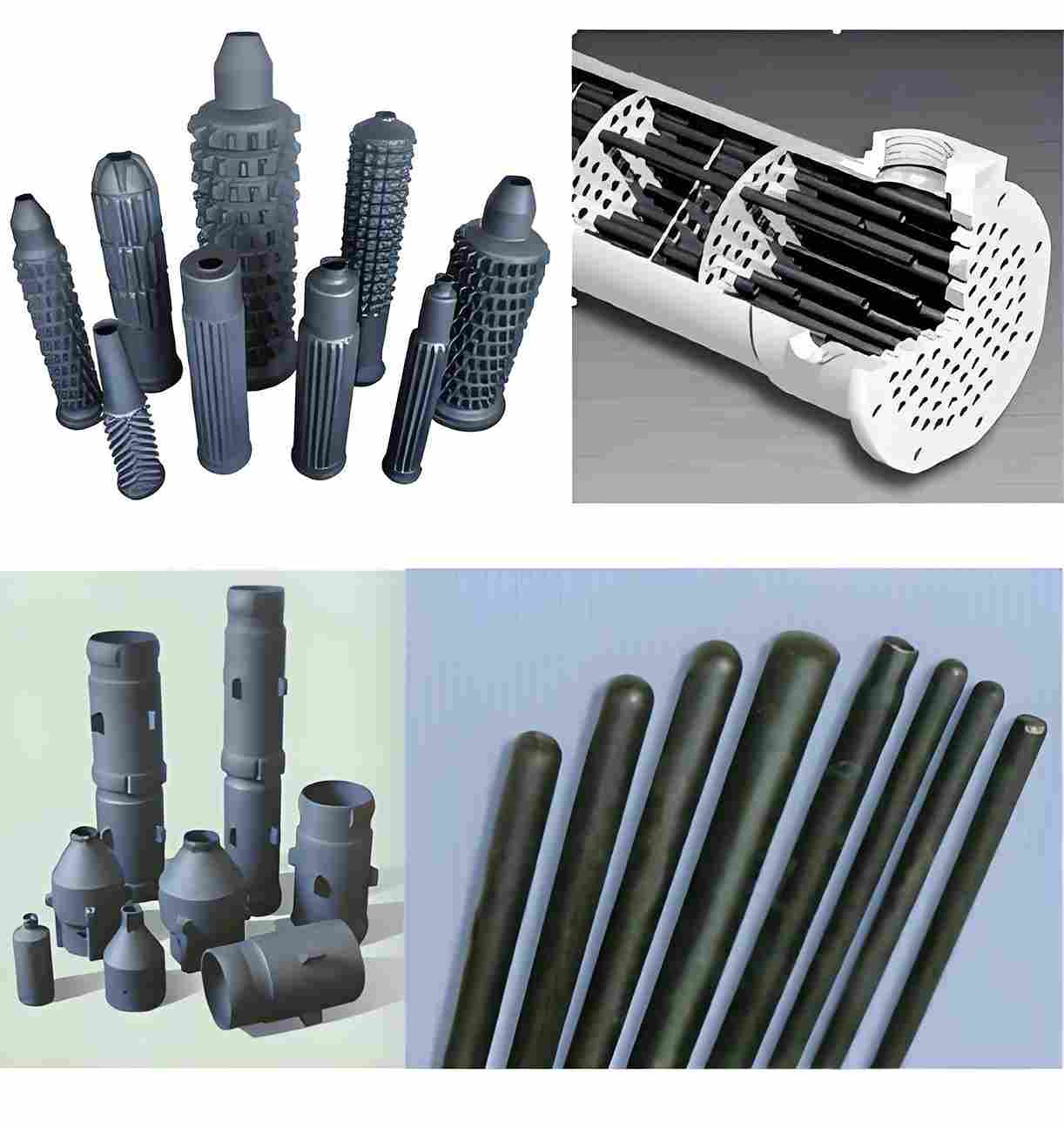
When you need a component that can survive 1500 °C and aggressive chemistry, the choice between silicon carbide (SiC) and graphite becomes the make‑or‑break decision for your project.
Quick Comparison at a Glance
| Property | Silicon Carbide (SiC) | Graphite |
|---|---|---|
| Maximum Continuous Temperature | ≈ 1650 °C (in inert atmosphere) | ≈ 3000 °C (in vacuum) |
| Thermal Shock Resistance | Very high (ΔT > 1000 °C in 0.1 s) | Excellent, but surface oxidation limits shock survival in oxidative environments |
| Oxidation Resistance | Forms protective SiO₂ layer up to 1500 °C; stable in oxidizing gases | Rapid oxidation above 600 °C unless coated |
| Mechanical Strength (flexural) | 130–170 MPa typical; retains >80 % at 1200 °C | 30–50 MPa; drops sharply beyond 800 °C |
| Wear Resistance | Hardness ~ 2600 HV, excellent abrasive wear | Hardness ~ 500 HV, prone to gouging |
| Electrical Conductivity | Semiconductor (10⁻⁶ – 10⁻³ S/m) | Conductive (10³ – 10⁴ S/m) |
| Typical Cost (USD/kg) | 10–200 (depends on purity, size) | 5–80 (high‑grade grade) |
Why Engineers Keep Asking: SiC or Graphite?
Most inquiries arise from three pain points:
- Unexpected downtime. A furnace seal ring cracked at 1350 °C because the chosen graphite was not coated.
- Excessive wear. Pump housings ripped after 300 h when graphite‑lined bearings were used in a silica‑rich slurry.
- Cost‑performance trade‑off. Customers over‑pay for graphite that never reaches its temperature ceiling, while cheaper SiC grades deliver longer life.
Below we answer those concerns with data, not marketing fluff.
Fundamental Material Properties
Crystal Structure and Purity
SiC is a covalently bonded ceramic with a hexagonal or cubic lattice. Commercial grades from ZIRSEC contain ≥ 98 % SiC purity, and the remaining phase is typically free carbon, which actually improves fracture toughness. Graphite is layered sp² carbon; its quality is defined by the degree of crystallite alignment (ISO 2359). Impurities such as silicon or oxygen can dramatically lower oxidation resistance.
Thermal Conductivity
At 1000 °C, dense SiC conducts ~ 120 W/m·K, whereas uncoated graphite ranges 90–150 W/m·K depending on density. The key difference is that SiC’s conductivity remains stable in oxidizing atmospheres; graphite’s drops as the surface oxidizes, creating hot spots and accelerating failure.
High‑Temperature Performance
Oxidation Behavior
In air, SiC forms a thin SiO₂ glass layer that self‑heals, allowing continuous operation up to ~ 1500 °C. Graphite, however, forms CO and CO₂ at temperatures above 600 °C, eroding the surface at rates of 0.1 mm/h unless protected by SiC‑CVD coating or boron nitride.
Thermal Shock
Thermal shock resistance is quantified by the Fracture Toughness (KIC) and thermal expansion coefficient (α). SiC’s KIC ≈ 4 MPa·m½ and α ≈ 4.5 × 10⁻⁶ K⁻¹ give it a ΔT resistance of > 1000 °C. Graphite’s KIC ≈ 1 MPa·m½, combined with higher anisotropic expansion, limits safe ΔT to ~ 300–400 °C unless the part is machined thin and pre‑stressed.
Mechanical Strength and Wear
For shafts, rollers, and furnace tubes the flexural strength of SiC stays above 130 MPa even at 1200 °C, while graphite often drops below 30 MPa. In abrasive environments (silica sand blasting, metal powders) SiC’s hardness translates to a wear rate < 0.1 mm/10 000 cycles, compared with graphite’s 0.5 mm/10 000 cycles. The result is a 3–5× longer service life for SiC‑based components.
Cost, Availability, and Lead Times
Graphite is cheaper per kilogram but requires additional processing (coatings, sealed atmospheres) to reach the same service level as SiC. ZIRSEC can ship standard‑size SiC tubes from stock within 24 h, while custom graphite liners often need weeks of machining and coating. For a typical 100 mm‑diameter furnace tube, total cost of ownership over a 2‑year period is usually 20‑30 % lower with SiC because of fewer replacements and less downtime.
Case Studies
Case 1 – Aluminum Smelting Furnace
A European aluminum producer replaced 300 kg of graphite furnace tubes with ZIRSEC’s SiC tubes (Silicon Carbide Tubes). After six months the furnace achieved a 12 % energy saving due to lower radiative losses and uninterrupted operation. No tube‑related shutdowns were logged, saving an estimated $45,000 in lost production.
Case 2 – Petrochemical Pump Seal
In a high‑temperature, acidic stream (300 °C, 10 % H₂SO₄), graphite seal rings corroded after 800 h, causing a leak that forced the plant to shut down for 3 days. Switching to a custom SiC seal ring from ZIRSEC eliminated corrosion, extended the service interval to > 4000 h, and reduced maintenance cost by 70 %.
Case 3 – Solar‑Thermal Receiver
A solar‑thermal company in the US needed a receiver tube that could survive 1500 °C solar flux. Graphite was considered, but the engineering team rejected it due to oxidation risk. ZIRSEC supplied a SiC tube with a protective SiO₂ glaze; the tube operated for 18 months with no performance loss, validating the selection.
How ZIRSEC Helps You Choose
We start with a brief technical review of your process—temperature profile, chemical environment, mechanical load. Our engineers then provide a CAD‑ready 3‑D model, a cost‑breakdown, and a lead‑time schedule. For custom geometries we can mill, laser‑cut, or CNC‑turn SiC to ±0.2 mm tolerance; tighter tolerances are possible on request.
All shipments include full documentation (MSDS, COA, inspection report) to expedite customs clearance. Our logistics partners handle door‑to‑door delivery to North America, Europe, or Japan within 5‑10 working days for stock items.
Decision Guide – When to Pick SiC Over Graphite
- Operating temperature > 1200 °C in oxidizing atmosphere. SiC’s protective oxide layer wins.
- Exposure to abrasive or corrosive media. SiC’s hardness and chemical inertness reduce wear.
- Long service life is a cost driver. Fewer replacements lower total cost.
- Dimensional stability matters. SiC’s low thermal expansion ensures tight clearances.
- Electrical insulation is required. SiC acts as a semiconductor, unlike conductive graphite.
If your criteria fall primarily on low‑temperature (< 600 °C) and you need high electrical conductivity, graphite may still be the better choice. Otherwise, SiC is the material that delivers reliability and efficiency.
FAQ – Quick Answers
- Can SiC be coated with graphite? Yes, but the coating adds cost and the underlying SiC still dictates oxidation behavior.
- What is the typical lead time for a custom SiC tube? 4‑6 weeks for most sizes; stock tubes ship within 24 h.
- Is SiC safe for food‑grade applications? ZIRSEC produces high‑purity grades that meet FDA 21 CFR 184.1750 for inert contact.
- How do I verify material quality? Request a certificate of analysis (COA) and arrange a third‑party inspection if needed.
Take the Next Step
Ready to eliminate unplanned downtime and boost high‑temperature performance? Contact our technical sales team at info@zirsec.com or request a free sample through the ZIRSEC website. We’ll run a thermal‑cycle test on your design and show you the real ROI of switching to silicon carbide.