Silicon carbide (SiC) is the material that keeps modern glass furnaces running at 1500 °C without warping, corrosion, or premature wear.
Quick Summary
- Key benefits of SiC in glass production: temperature resistance, chemical inertness, wear durability.
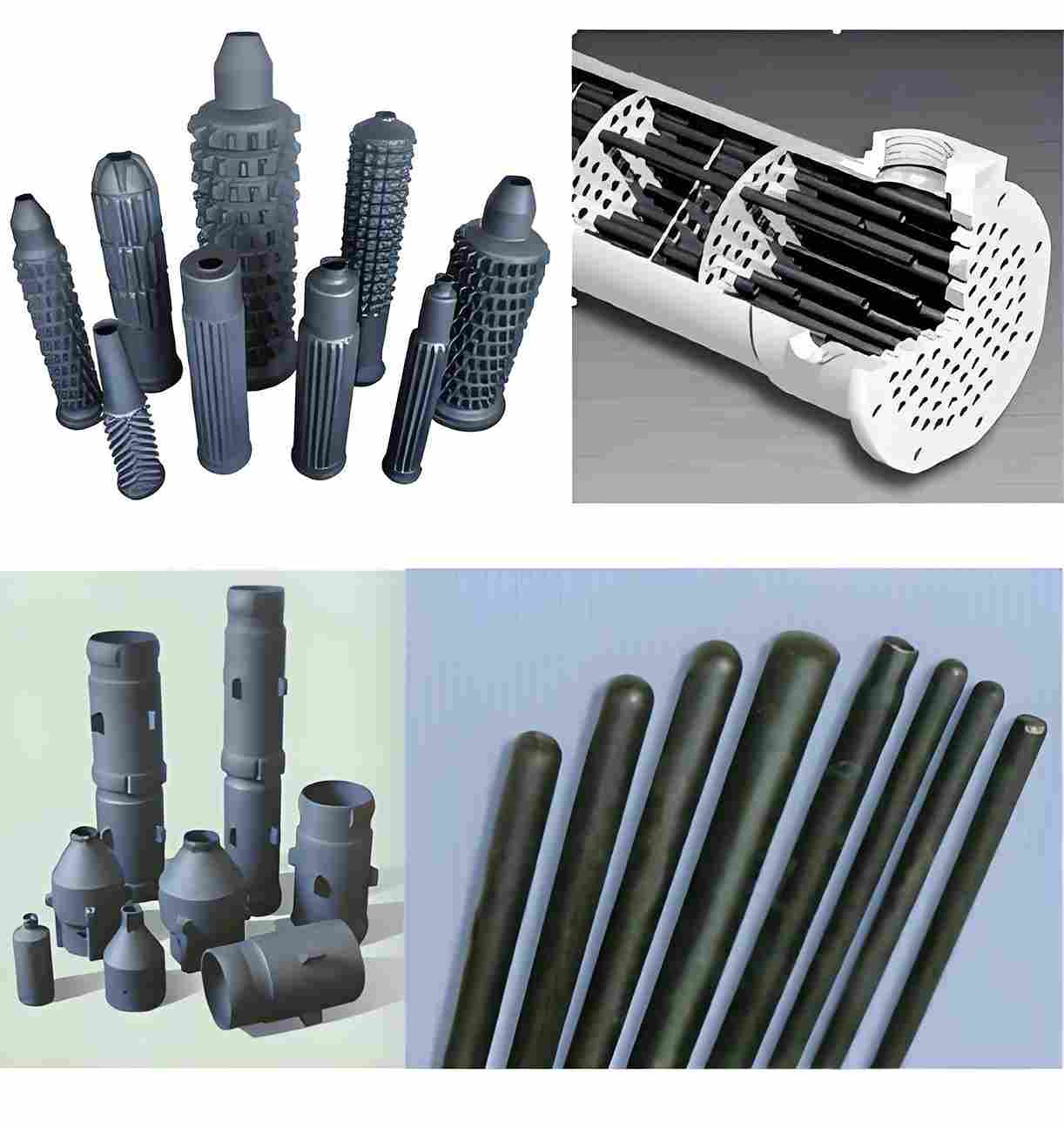
- Typical SiC components: furnace tubes, melt‑line sleeves, burner nozzles, protective liners.
- Design considerations: thermal expansion, mechanical strength, dimensional tolerance.
- Cost vs. performance: why a small premium on SiC saves millions in downtime.
- ZIRSEC advantages: stock availability, custom engineering, rapid 24‑hour dispatch.
Why Silicon Carbide Is Critical in Glass Production
Glass making demands sustained exposure to temperatures above 1400 °C, aggressive alkali vapors, and continuous thermal cycling. Traditional refractory bricks crack, metal alloys oxidise, and alumina‑based ceramics lose strength above 1300 °C. SiC’s unique combination of high thermal conductivity, low thermal expansion (≈4.5×10⁻⁶ K⁻¹), and intrinsic chemical inertness makes it the only material that can survive the harsh interior of a modern furnace for years on end.
Thermal Performance
At 1500 °C SiC retains >70 % of its room‑temperature flexural strength, while Al₂O₃ drops below 30 %. The high conductivity (≈120 W/m·K) eliminates hot‑spots that cause glass melt turbulence, improving product uniformity.
Chemical Resistance
Silicon carbide forms a thin, protective SiO₂ layer when exposed to silica‑rich slags, effectively shielding the bulk material from corrosive alkaline fluxes. This self‑passivating behaviour is why SiC liners last 2‑3 times longer than their alumina counterparts in soda‑lime glass furnaces.
Core SiC Components Used in Glass Furnaces
Each component plays a specific role in the melt‑line architecture. Below is a checklist of the most common SiC parts you’ll encounter, together with their typical specifications.
- SiC Furnace Tubes: Diameters 30‑300 mm, wall thickness 2‑12 mm, operating temperature up to 1650 °C. Provide a smooth, non‑reactive channel for molten glass flow.
- SiC Burner Nozzles: Orifice diameters 5‑30 mm, capable of withstanding direct flame impingement while delivering precise fuel‑air mixing.
- SiC Protective Liners: Thickness 5‑25 mm, installed on the interior surface of refractory bricks to prevent slag infiltration.
- SiC Melt‑Line Sleeves: Custom‑machined sleeves that bridge transitions between metal and ceramic zones, ensuring dimensional continuity.
- SiC Thermocouple Protection Tubes: Small‑diameter tubes (≤10 mm) that shield Type B or Type R thermocouples from corrosive gases.
Design & Engineering Guidelines
Integrating SiC parts into a glass furnace is not a plug‑and‑play exercise. Engineers must respect three fundamental parameters: thermal expansion match, mechanical strength, and tolerance control.
Thermal Expansion Matching
Most furnace steel frameworks expand at ≈12×10⁻⁶ K⁻¹, while SiC expands at ≈4.5×10⁻⁶ K⁻¹. To avoid tensile stresses, designers usually employ a graded transition: steel → low‑expansion alloy → SiC sleeve. Finite‑element analysis (FEA) can predict stress concentrations and guide the placement of expansion joints.
Mechanical Strength & Safety Margins
For continuous operation, the minimum flexural strength of SiC components should exceed 130 MPa at service temperature. ZIRSEC’s standard product line guarantees >150 MPa at 1500 °C, with custom grades able to reach 180 MPa for high‑load sections such as furnace tubes in large float‑glass lines.
Tolerance Control
Glass melt lines require tight dimensional tolerance to prevent leakage and maintain laminar flow. Typical tolerances are ±0.2 mm for tube OD/ID, ±0.1 mm for nozzle orifice. ZIRSEC’s CNC machining centre can achieve ±0.05 mm on complex geometries, ensuring seamless integration with existing plant hardware.
Cost‑Benefit Analysis: Why the Premium on SiC Pays Off
Initial material cost for a 2‑m SiC furnace tube is roughly 3‑5 times that of an alumina tube. However, the total cost of ownership (TCO) tells a different story.
| Metric | Alumina | Silicon Carbide |
|---|---|---|
| Average service life (years) | 1‑2 | 4‑6 |
| Downtime per replacement (days) | 2‑3 | 1‑2 |
| Energy loss due to hot‑spots (%) | 0.8‑1.2 | 0.2‑0.4 |
| Annual maintenance cost (USD) | 8,000‑12,000 | 3,000‑5,000 |
When you factor in the reduced frequency of replacements, lower energy consumption, and higher product yield, SiC typically yields a net saving of 15‑30 % over a 5‑year horizon.
Real‑World Case Studies
Case 1 – European Pump‑Valve Manufacturer
Customer: a German‑based high‑pressure pump‑valve producer supplying the glass‑container market. Problem: SiC seal rings supplied by a competitor suffered a sudden supply interruption, causing an 8‑day production halt and an estimated loss of €12,000.
Solution: ZIRSEC delivered a short‑lead‑time batch of custom‑toleranced SiC seal rings (±0.1 mm) within 48 hours, supported by on‑site engineering assistance. Result: Production resumed within 3 days, and the customer reported a 20 % increase in seal life compared to the previous supplier.
Case 2 – North‑American Float‑Glass Line Upgrade
Customer: large float‑glass plant in the United States looking to replace aging alumina tubes that caused frequent melt‑line fouling.
Solution: ZIRSEC supplied 150 m of 120 mm‑OD SiC furnace tubes with a high‑purity (99.8 % SiC) grade and a surface roughness of Ra 0.8 µm. The tubes were delivered in 4 weeks, well within the plant’s scheduled shutdown.
Result: After 18 months of operation, the plant recorded a 0.6 % reduction in glass‑quality defects and a 12 % drop in energy consumption for melt‑line heating.
Choosing the Right Supplier
When evaluating SiC vendors, engineers and procurement managers should ask the following questions:
- Do you hold an ISO‑9001 or equivalent quality management certification?
- Can you provide material test reports (MTR) and a full MSDS for each batch?
- What is your standard lead time for stock items versus custom orders?
- Do you offer engineering support from design to installation?
- How do you handle after‑sales service and warranty claims?
ZIRSEC answers all of the above with a dedicated engineering team, 24‑hour stock dispatch, and a global logistics network that can ship to Europe, North America, and Australia within 48 hours for standard sizes.
Compliance, Documentation & Export Controls
All SiC products from ZIRSEC are classified under HS Code 6815.00 and are fully compliant with international trade regulations. We provide:
- Certificate of Conformity (COA) for each batch.
- Material Safety Data Sheet (MSDS) in English and local language upon request.
- Export documentation that meets EU, US, and Canadian customs requirements.
Because we deliberately avoid military‑grade specifications, our items are unrestricted under most dual‑use controls.
Installation Tips & Best Practices
Proper installation maximises the lifespan of SiC components. Follow these guidelines:
- Pre‑heat the SiC part slowly (≤10 °C/min) to avoid thermal shock.
- Use high‑temperature silicone‑based sealants compatible with SiC for peripheral sealing.
- Align tubes and sleeves with a tolerance of ±0.05 mm to prevent uneven stress distribution.
- Conduct a post‑installation dimensional check with laser‑based metrology before commissioning.
Future Trends: SiC in Next‑Generation Glass Technologies
Emerging glass processes such as low‑emission electric‑furnace melting and specialty glass compositions (e.g., borosilicate, low‑iron) increasingly rely on SiC because of its superior electric conductivity and ability to operate in reducing atmospheres without degradation.
Researchers are also exploring “nanostructured SiC” coatings that further reduce melt‑line friction, potentially cutting energy use by an additional 5‑7 %.
Get Started with ZIRSEC
If you are ready to upgrade your furnace line, request a free technical consultation. Our engineers will review your drawings, suggest the optimal SiC grade, and provide a detailed quotation within 24 hours.
Explore our standard SiC product catalogue, including Silicon Carbide Tubes, and discover how ZIRSEC can become your trusted partner for high‑performance ceramic components.
Email: info@zirsec.com | Visit: ZIRSEC