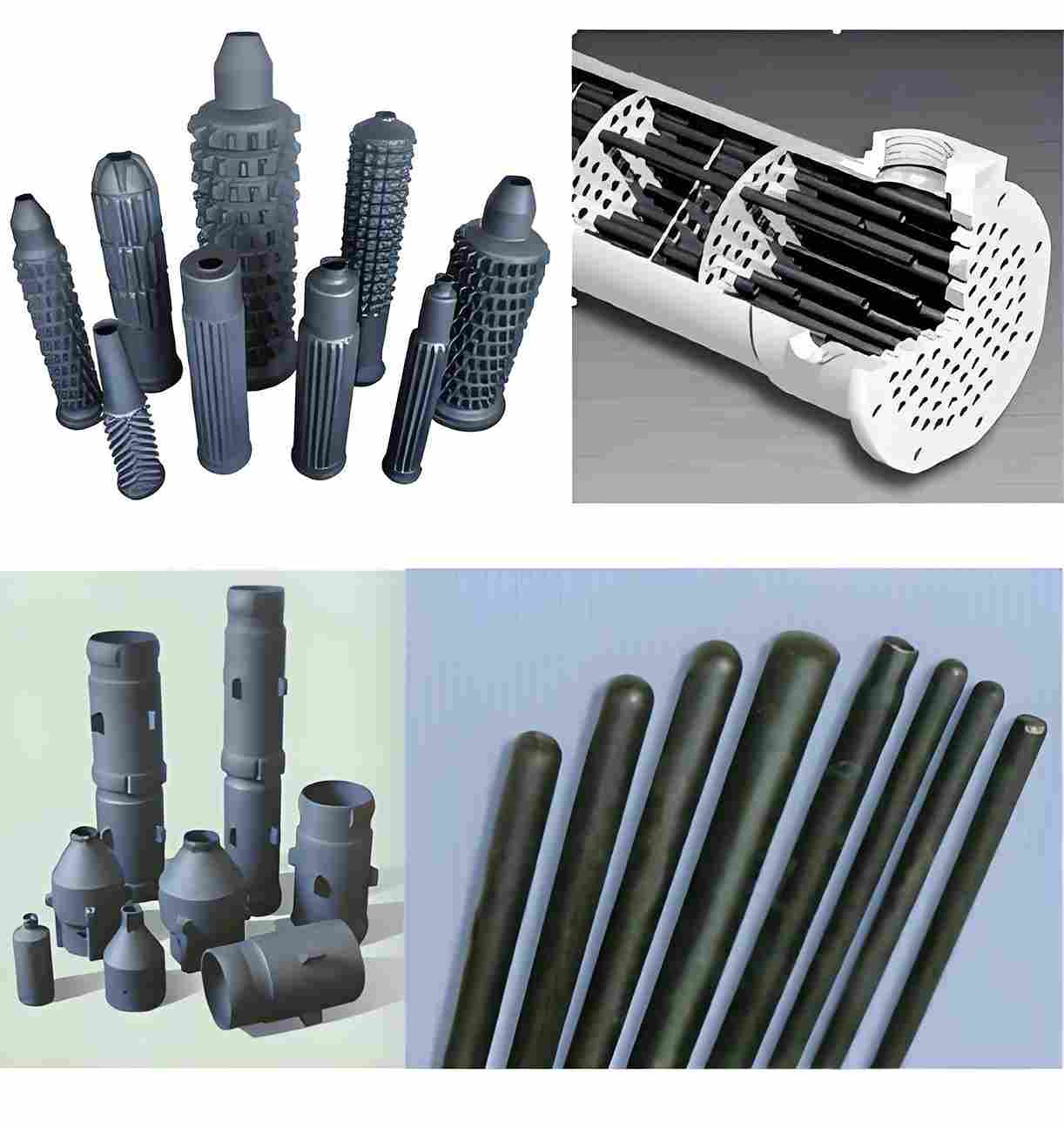
Standard vs Custom SiC Components is a decision that can make or break the reliability of high‑temperature industrial equipment.
Quick Summary
- When to choose standard: Immediate inventory, low‑to‑moderate volume, well‑defined dimensions, cost‑sensitive projects.
- When to choose custom: Unique geometry, tight tolerances (±0.1 mm), extreme operating conditions, or integration with proprietary equipment.
- Pricing gap: Standard parts $10‑$80/unit; custom parts $30‑$200/unit depending on complexity.
- Lead‑time difference: 24‑48 h for stocked standard items vs 4‑8 weeks for one‑off custom runs.
- ZIRSEC advantage: 20 years of SiC manufacturing, 24 h in‑stock dispatch, engineering support from concept to shipment.
Why the Choice Matters
Industrial users—whether they are building a furnace for steelmaking or a pump for a chemical plant—rely on silicon carbide (SiC) for its unrivaled high‑temperature strength, chemical resistance, and wear resistance. Selecting the wrong form of SiC can lead to premature failure, costly downtime, and even safety incidents. Below we break down the technical, economic, and operational factors that decide whether a standard catalog part or a bespoke component best fits your needs.
Technical Comparison
| Criterion | Standard SiC Components | Custom SiC Components |
|---|---|---|
| Typical Dimensions | OD 10‑200 mm, length 20‑500 mm (stock inventory) | Any dimension within 5‑500 mm, non‑cylindrical shapes, complex internal channels |
| Tolerance | ±0.5 mm (industrial grade) | ±0.1 mm or tighter on request; surface roughness Ra 0.5‑1.5 µm achievable |
| Mechanical Strength (bending) | 120‑150 MPa | Up to 180 MPa with optimized grain size and densification |
| Maximum Continuous Service Temperature | 1350 °C | 1600 °C (special high‑purity powder, tailored sintering) |
| Corrosion Resistance | Excellent against acids, alkalis, molten salts | Identical baseline; can apply surface coatings for aggressive fluorides |
| Lead‑time | 24‑48 h from order (stock) | 4‑8 weeks for prototype, 6‑12 weeks for full batch |
| Unit Cost (typical) | $10‑$80 | $30‑$200 (depends on geometry & tolerance) |
Economic Factors You Can’t Ignore
Many engineers think price is the only driver, but the total cost of ownership (TCO) tells a richer story. A cheaper standard part might require secondary machining, extra inspection, or even a redesign of the assembly to accommodate its dimensions. Those hidden costs can quickly outweigh the initial savings.
Conversely, a custom‑made SiC component often eliminates downstream machining, reduces assembly steps, and extends service intervals. For a high‑value furnace that runs 5000 h per year, a 10 % increase in component life translates to millions saved over the equipment lifespan.
Risk Management: Reliability and Compliance
Standard parts are produced in high volumes, meaning statistical process control is mature and failure rates are well‑documented. However, they may not meet specific industry certifications (e.g., ASME N‑Stamps, IEC 61738) without additional testing.
Custom parts can be engineered to the exact certification standard your client demands. We at ZIRSEC provide full documentation packages: material test reports, mill‑test certificates, and MSDS in English, facilitating seamless customs clearance and audit compliance.
Case Study: Reducing Downtime for a European Pump Manufacturer
Background: A German pump‑valve maker experienced recurring seal failures in a high‑pressure chlorinated solvent line. The off‑the‑shelf SiC seal rings they sourced had a tolerance of ±0.5 mm, causing uneven load distribution and premature cracking.
Solution: ZIRSEC engineered a custom seal ring with a tolerance of ±0.1 mm, optimized the grain structure for higher fracture toughness, and added a micro‑textured surface to improve lubrication retention.
Result: After installation, the pump ran 12 months without a repeat failure. The customer reported a $22,000 reduction in unplanned maintenance costs and praised the 4‑week lead‑time, well within their project schedule.
When Standard Wins
- High‑volume production where the part geometry is common (e.g., 25 mm Ø SiC tube for furnace heating zones).
- Projects with tight budget constraints and flexible performance envelope.
- Rapid‑prototyping phases where design iteration is still ongoing.
- When you need immediate spares to avoid line shutdowns.
When Custom Wins
- Unique equipment design that cannot accommodate standard dimensions.
- Applications demanding ultra‑tight tolerances, such as semiconductor gas‑flow manifolds.
- Environments exceeding 1400 °C where standard SiC may start to oxidize.
- Projects requiring integrated features—e.g., built‑in coolant channels or tailored porosity for filtration.
How ZIRSEC Supports Both Paths
Our 20‑year track record in SiC ceramic production gives us the flexibility to keep a broad inventory of standard tubes, plates, and seals ready for next‑day shipment. At the same time, our in‑house design team works directly with your CAD files, runs finite‑element simulations, and offers prototype runs within two weeks.
For standard parts, you can browse our catalogue and place an order in minutes. For custom work, simply upload your drawing, and we’ll return a 3‑D model, cost estimate, and a realistic timeline. Throughout the process we provide:
- Technical consultation (material selection, tolerance feasibility).
- Rapid prototyping on our 5‑axis CNC and laser‑cutting stations.
- Full‑scale production with ISO‑9001 quality management.
- Documentation package for export compliance.
Explore our range of Silicon Carbide Tubes to see the breadth of standard sizes we keep in stock.
FAQ
- Can I order a custom part with a quantity as low as 10 pieces?
- Yes. ZIRSEC accepts small‑batch custom orders (minimum 10 units) and will still provide the same engineering support as larger runs.
- What certifications do your SiC components carry?
- All products meet ISO‑9001, and we can supply additional certificates (e.g., ASTM C1353, ASME N‑Stamps) on request.
- How do you ensure dimensional accuracy for tight‑tolerance custom parts?
- We employ laser‑based metrology and statistical process control to maintain ±0.1 mm tolerance; critical dimensions are inspected with Coordinate Measuring Machines (CMM) before shipment.
- What is the typical shipping method for international orders?
- Air freight for urgent small orders (≤50 kg) and sea freight for bulk shipments. We handle all export paperwork, including MSDS and COA.
- Do you offer after‑sales support if a component fails early?
- Our warranty covers material defects for 12 months. Our service team works with you to diagnose failure modes and can provide replacement or redesign recommendations.
Bottom Line – Pick the Right Path for Your Project
If your application fits a common geometry, needs fast delivery, and you are comfortable with a standard tolerance, start with a stocked SiC component and enjoy lower unit costs. If your design demands a unique shape, tight tolerances, or performance beyond the nominal 1350 °C ceiling, invest in a custom part that eliminates downstream machining and maximizes equipment uptime.
Either way, ZIRSEC’s combination of extensive inventory, rapid engineering response, and global logistics gives you the confidence to choose the right SiC solution without compromising on quality, schedule, or cost.