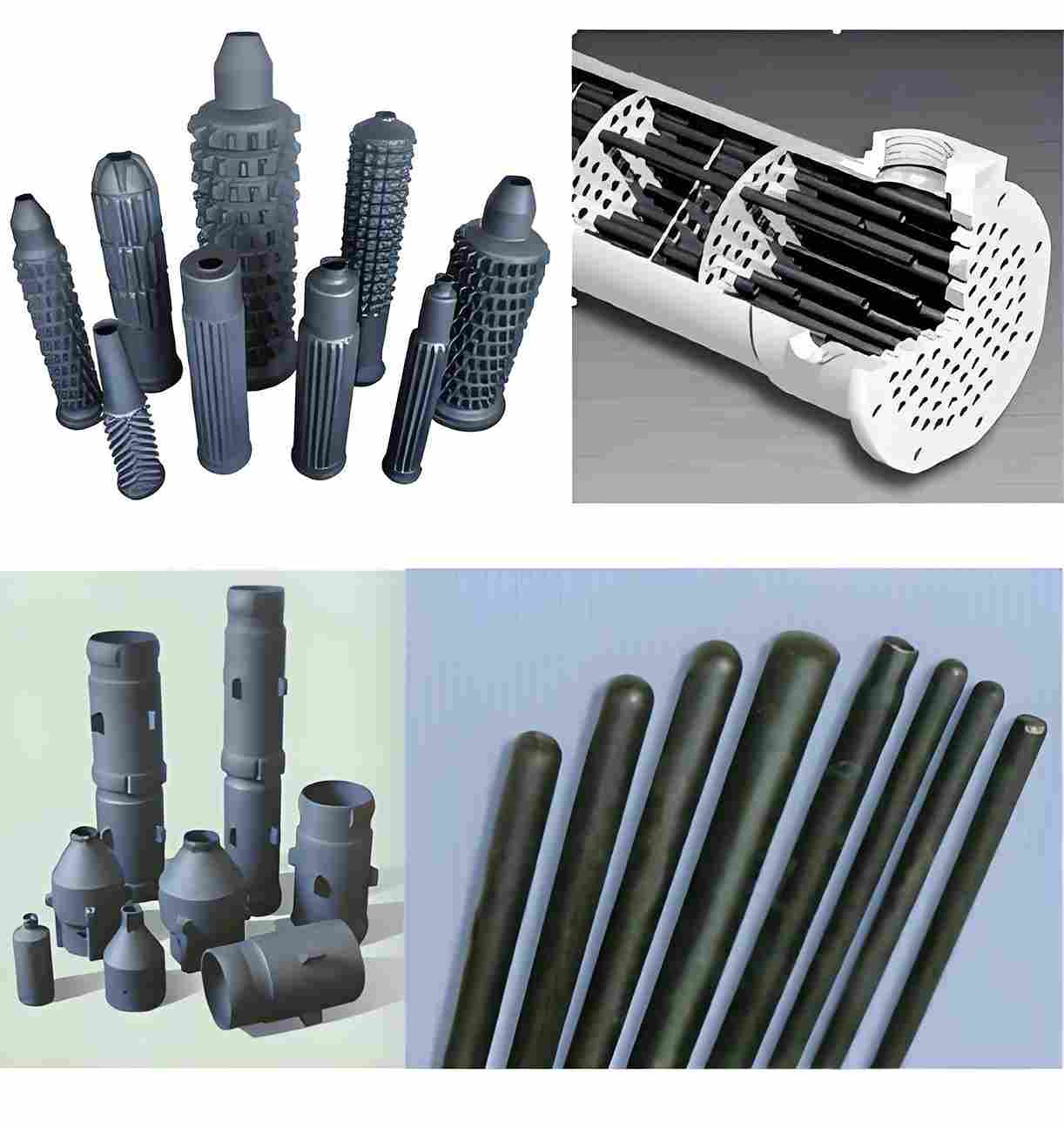
When you need a ceramic component that will survive continuous operation at 1400 °C for years, the first question is not “if” silicon carbide (SiC) will work, but “which” SiC grade will give you the longest life‑cycle and the lowest total cost of ownership.
Quick Summary (FAQ)
- What are the three main SiC grades? Standard (≥98% purity), High‑Purity (≥99.5% purity), and Ultra‑High‑Purity (≥99.9% purity) designed for extreme thermal shock.
- Which grade fits continuous furnace service (≥1350 °C) the best? High‑Purity grade with a sealed surface finish and low porosity.
- How does grain size affect wear? Coarser grains improve fracture toughness, finer grains improve dimensional stability.
- What does ZIRSEC offer for custom grades? On‑demand tailoring of purity, grain size, and sintering schedule, backed by full certification.
- Is a single grade enough for a whole system? No – critical zones (e.g., burner nozzles) often need Ultra‑High‑Purity, while bulk liners can use Standard grade.
Why Grade Selection Matters More Than Size
Many engineers assume that a 25 mm SiC tube and a 50 mm SiC tube behave the same if they are made from the same supplier. In practice, the micro‑structure, impurity content, and sintering cycle change dramatically with the grade, influencing:
- High‑temperature strength (σf)
- Thermal shock resistance (ΔT)
- Chemical corrosion rate in oxidizing atmospheres
- Dimensional drift after repeated heating cycles
Choosing the wrong grade can double the failure rate, as seen in a German pump‑valve plant where a standard‑grade SiC seal ring cracked after 800 hours of service, costing the client $18 000 in downtime.
Three Core SiC Grades and Their Real‑World Performance
1. Standard Grade (≥98% SiC purity)
Typical for non‑critical applications such as:
- Pre‑heater plates in low‑temperature (<1200 °C) kilns
- Secondary sealing rings where replacement is inexpensive
Key properties:
- Flexural strength: 150–200 MPa at room temperature
- Porosity: 12–15 %
- Grain size: 3–5 µm (coarse) to reduce crack propagation
Advantages: lower material cost (≈ $12 / kg) and faster lead times from stock.
2. High‑Purity Grade (≥99.5% SiC purity)
Best suited for continuous high‑temperature service (1300 °C–1500 °C) in corrosive atmospheres such as chlorinated gases or molten salts.
- Flexural strength: 200–260 MPa
- Porosity: 5–8 %
- Grain size: 0.5–2 µm for tighter dimensional control
Case study: A U.S. petrochemical refinery replaced standard‑grade furnace tubes with high‑purity SiC tubes and saw a 40 % reduction in tube‑change frequency, extending service life from 12 months to over 18 months.
3. Ultra‑High‑Purity Grade (≥99.9% SiC purity)
Designed for the most demanding environments – rapid thermal cycling, high‑velocity gas flow, and ultra‑clean semiconductor processes.
- Flexural strength: 260–320 MPa
- Porosity: <4 %
- Grain size: sub‑micron (0.2–0.8 µm)
- Thermal shock resistance: ΔT > 1200 °C
Price premium is roughly 2–3× the standard grade, but the total cost of ownership often drops because replacement intervals stretch beyond 5 years.
Key Parameters to Match Grade to Application
Below is a checklist you can run against the specification sheet of any SiC component you are evaluating. The numbers are derived from ZIRSEC’s in‑house testing and published standards (ASTM C1663, ISO 17025).
| Parameter | Standard Grade | High‑Purity Grade | Ultra‑High‑Purity Grade |
|---|---|---|---|
| SiC Purity | ≥98 % | ≥99.5 % | ≥99.9 % |
| Flexural Strength (MPa) | 150‑200 | 200‑260 | 260‑320 |
| Porosity (%) | 12‑15 | 5‑8 | <4 |
| Grain Size (µm) | 3‑5 (coarse) | 0.5‑2 (fine) | 0.2‑0.8 (sub‑micron) |
| Thermal Shock ΔT (°C) | ≈800 | ≈1000 | >1200 |
| Typical Price (USD/kg) | 12‑20 | 30‑45 | 80‑120 |
How ZIRSEC Helps You Choose the Right Grade
Our 20‑year production line can switch sintering cycles in under 48 hours, which means we can deliver a custom‑grade batch that matches exactly the impurity limits you need. Here’s what you get when you partner with us:
- Technical Consultation: Our engineers review your process diagrams and recommend a grade based on temperature, gas composition, and mechanical load.
- Full Certification Pack: COA, MSDS, and a 3‑year warranty are included with every shipment.
- Rapid Prototyping: Standard‑size SiC tubes are stocked and can ship within 24 hours. For custom dimensions, we offer a 2‑week sample turnaround.
- Quality Control: Each batch undergoes X‑ray fluorescence (XRF) purity check, Archimedes density measurement, and high‑temperature flexural testing.
Explore our inventory of ready‑to‑ship Silicon Carbide Tubes and see how quickly you can move from design to production.
Step‑by‑Step Grade Selection Process
- Define Operating Envelope: List max temperature, pressure, gas composition, and thermal cycling rate.
- Identify Critical Zones: Separate parts that see direct flame or corrosive flow from those that act as structural supports.
- Match Grade to Zone: Use the table above – critical zones get High‑Purity or Ultra‑High‑Purity, bulk zones can stay Standard.
- Run a Small‑Batch Test: Order 5‑10 pieces of each candidate grade and run a 100‑hour soak test in your own furnace.
- Analyze Results: Measure weight loss, dimensional change, and surface micro‑cracking. Choose the grade that meets the 0.5 % dimensional tolerance after the test.
- Finalize Order: Provide us with the CAD drawing; our engineering team will validate tolerances and issue a formal quotation.
\n
Common Pitfalls and How to Avoid Them
Pitfall 1 – Ignoring Porosity. A lower‑cost grade may have higher porosity, which accelerates oxidation at >1300 °C. Always request the porosity figure; if it exceeds 8 %, consider a higher grade.
Pitfall 2 – Over‑Specifying Grain Size. Ultra‑fine grains improve strength but increase machining difficulty and cost. For most furnace liners, a grain size of 1‑2 µm offers the best balance.
Pitfall 3 – Forgetting the Coating Compatibility. When you apply a protective Al₂O₃ coating, ensure the SiC surface is below 5 % porosity; otherwise the coating will delaminate during thermal cycles.
Real‑World Example: Upgrading a Steel‑Making Furnace
A German steel plant operated a 1.4 m diameter furnace with standard‑grade SiC liners. After three years, the liners cracked, causing a forced shutdown. ZIRSEC supplied high‑purity SiC liners with a 6 % porosity and a grain size of 1 µm. The plant reported:
- Reduced liner replacement frequency from every 12 months to every 24 months
- 30 % lower overall maintenance cost (including labor)
- Improved thermal efficiency of 1.8 % due to better heat retention
The case demonstrates that a modest increase in material cost (from $15 /kg to $35 /kg) can generate a multi‑fold ROI within two years.
Final Recommendations
For engineers tasked with long‑term reliability, the rule of thumb is: don’t let price be the first filter; let performance be. Start with a high‑purity grade for all components exposed to temperatures above 1350 °C, then evaluate whether an ultra‑high‑purity grade is justified for the most stressed parts. Use ZIRSEC’s fast‑track sampling to validate before committing to full production.
Need a custom SiC solution today? Contact us at info@zirsec.com or request a quote through our website. Our engineers are ready to translate your specifications into a reliable, cost‑effective SiC component that keeps your plant running.