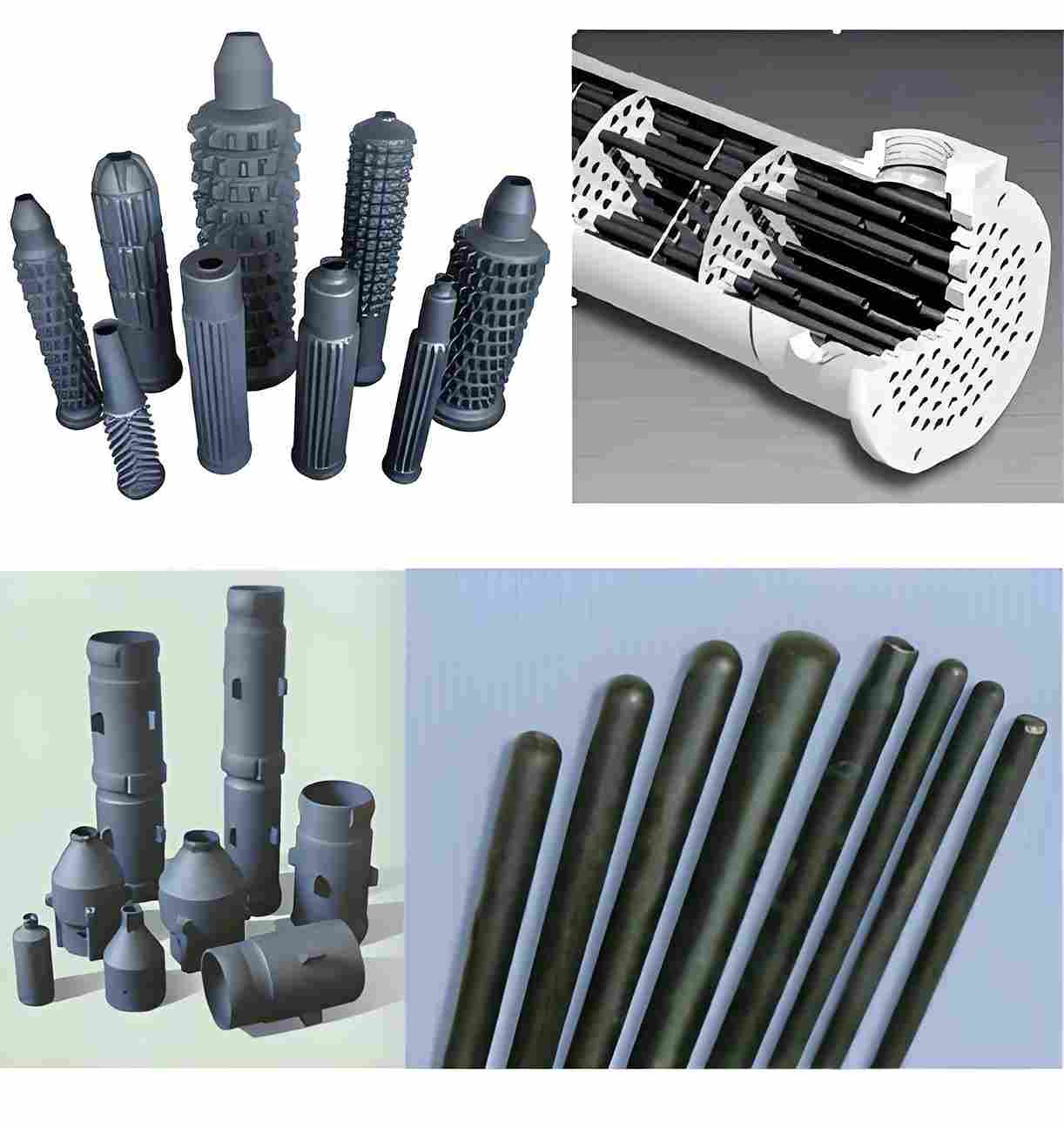
How to Build Long-Term Partnerships with SiC Suppliers is the question most procurement engineers ask when they have faced delayed shipments, inconsistent tolerances, or sudden price spikes from their current ceramic component vendors. The short answer: combine rigorous supplier assessment, clear contractual terms, joint quality programs, and continuous communication, then back it up with a reliable partner like ZIRSEC that can deliver both stocked standard parts and precise custom SiC solutions.
Why a Long-Term Partnership Matters
In high‑temperature, high‑wear applications—whether it is a furnace tube operating at 1500 °C or a seal ring resisting aggressive chemicals—the cost of a single component failure can reach tens of thousands of dollars in lost production. A stable supplier relationship reduces three major risks:
- Downtime. Consistent lead‑times keep your line running.
- Quality variance. Familiarity with your drawing standards yields tighter tolerances (often ±0.2 mm for custom SiC parts).
- Price volatility. Long‑term contracts lock in material cost and freight terms.
Reduced Downtime
European pump‑valve manufacturers reported an 8‑day production stop when a SiC seal ring supplier ran out of inventory, costing roughly $15,000. By establishing a safety‑stock agreement and a clear escalation path, the same facilities cut unplanned downtime by 70%.
Consistent Quality
German equipment makers observed a 12% scrap rate when a new supplier’s dimensional control drifted beyond ±0.3 mm. After a joint quality audit and a calibrated inspection protocol, scrap dropped to under 2%.
Assessing a SiC Supplier
Before you sign a five‑year agreement, validate the supplier against a checklist that mirrors the expectations of your engineering team.
Technical Capability
Confirm that the manufacturer can produce SiC with purity ≥ 98 % and meets your mechanical strength threshold (e.g., radial compressive strength ≥ 130 MPa). Request a recent material test report (COA) and, if possible, a sample batch for in‑house testing.
Supply Capacity and Inventory
Ask for their stocked‑part catalog and the average lead‑time for standard sizes. Companies like ZIRSEC keep a 24‑hour inventory of common tube diameters, which translates to rapid response when an emergency order arrives.
Engineering Support
Do they offer CAD‑friendly drawings, tolerance analysis, and thermal‑stress simulations? A supplier that can co‑develop a design reduces the risk of costly redesigns later.
Compliance and Documentation
Ensure they can provide MSDS, ISO‑9001 certificates, and export documentation that satisfies customs in the U.S., EU, and Japan. Missing paperwork is a frequent cause of shipment delays.
Negotiating Contracts for Stability
Contracts are more than price tables; they embed the mechanisms that protect both parties.
- Price‑escalation clauses. Tie price adjustments to a known index (e.g., SiC powder market price) with a ceiling of 5 % per annum.
- Minimum order commitments. Agree on a baseline volume (e.g., 10 k units per year) to secure favorable rates and priority production slots.
- Safety‑stock & buffer agreements. Define a stocked quantity (e.g., 2 months of standard tubes) that the supplier holds at their facility or at a nearby logistics hub.
- Performance metrics. Include on‑time delivery (OTD) > 95 % and first‑pass yield (FPY) > 98 % as KPIs, with service credits for missed targets.
Implementing Joint Quality Management
A partnership thrives when both sides share responsibility for quality.
Shared Inspection Plans
Develop a mutual inspection checklist that covers dimensional audit, surface roughness (Ra 0.8–3.2 µm), and high‑temperature oxidation tests. Cross‑train your QC staff on the supplier’s measurement equipment to ensure consistent interpretation of results.
First‑Article Inspection (FAI)
Start every new product line with an FAI of at least three pieces. Document the findings in a shared portal; any deviation triggers a corrective‑action request within five business days.
Continuous Improvement Loop
Schedule quarterly technical reviews to discuss yield trends, defect patterns, and upcoming design changes. Use these meetings to co‑create process improvements, such as adjusting sintering cycles to reduce micro‑cracks.
Risk Mitigation & Contingency Planning
No partnership is immune to external shocks—raw‑material shortages, logistics bottlenecks, or geopolitical events can strike.
Dual‑Sourcing Strategy
Identify a secondary SiC supplier that meets at least 80 % of your technical criteria. Keep their price and lead‑time data on file; in a disruption, you can switch with minimal re‑qualification.
Buffer Stock Policies
Maintain a buffer inventory equal to 10 % of your annual consumption for critical parts. For custom components, negotiate a “pre‑production” run that can be stored in a climate‑controlled warehouse.
Logistics Redundancy
Work with freight forwarders that offer both air and ocean options. For high‑value, low‑volume items (e.g., custom SiC nozzles), air freight with insurance is often the safest route.
Communication & Collaboration Tools
Transparency is the glue that holds the partnership together.
- Use a shared project‑management platform (e.g., Asana or Trello) to track order status, engineering revisions, and quality actions.
- Establish a single point of contact on both sides—typically a senior procurement manager and a lead process engineer.
- Schedule a weekly 15‑minute sync call during the early phases of a new product launch; later, a monthly review suffices.
Case Study: ZIRSEC’s Partnership Model
A leading European furnace manufacturer needed 5 000 m of SiC tubes with an inner diameter of 30 mm for a new high‑temperature kiln. Their previous supplier could not guarantee delivery within the required 6‑week window, jeopardizing the project launch.
After a technical audit, ZIRSEC proposed a hybrid solution:
- Immediate delivery of 1 000 m from existing inventory (24‑hour dispatch).
- Custom extrusion of the remaining 4 000 m with a tolerance of ±0.1 mm, validated through a joint FAI.
- A three‑year supply contract that locked the SiC powder price at a 3 % discount and included a 10 % safety‑stock reserved at ZIRSEC’s German distribution hub.
The furnace builder reported a 15 % cost saving versus their previous supplier, zero on‑time‑delivery penalties, and a 30 % reduction in warranty claims after the first year of operation. The success hinged on ZIRSEC’s ability to combine stocked standard products with rapid‑turn custom engineering, backed by a transparent quality dashboard.
Read more about ZIRSEC’s standard SiC tube portfolio here: Silicon Carbide Tubes.
Quick FAQ
- What is the ideal order quantity for a custom SiC part? Most customers start with a sample batch of 5–20 pieces, then scale to 100–1 000 units once the FAI passes.
- How long does a typical custom design take? Design finalization 2 weeks, prototype production 3–4 weeks, full‑scale ramp‑up 4–8 weeks.
- Can ZIRSEC provide heat‑treatment testing? Yes, they offer high‑temperature oxidation and thermal‑shock cycles up to 1600 °C as part of the standard QA package.
- Is there a minimum order for standard stock items? No, standard tubes and plates are available with a 24‑hour lead‑time for orders as low as one piece.
- How do I start the partnership process? Fill out the online inquiry form on the ZIRSEC website, attach your engineering drawings, and a senior technical sales engineer will schedule a discovery call within 48 hours.
Next Steps
Building a long‑term partnership with a SiC supplier is a strategic decision that pays off through lower risk, higher quality, and predictable costs. Review the checklist above, compare potential partners against the criteria, and reach out to a supplier that can demonstrate proven inventory, engineering support, and transparent contract terms. For companies ready to move forward, ZIRSEC offers a dedicated account team, rapid prototyping, and a full suite of logistics services to keep your production line humming.