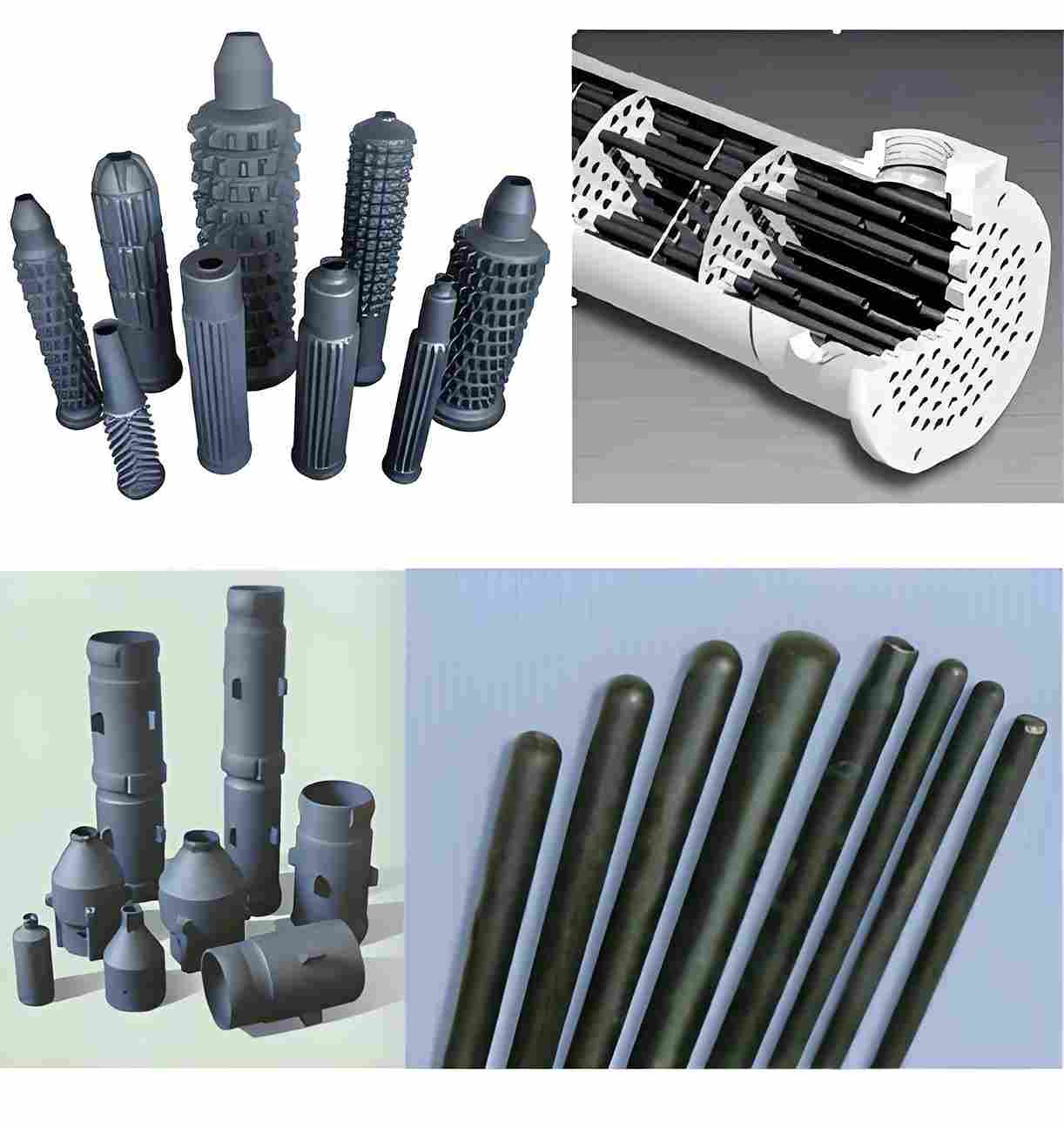
If you need to decide whether silicon carbide or a conventional ceramic will survive your process, here is the answer you have been waiting for.
Quick Summary
| Aspect | Silicon Carbide (SiC) | Traditional Ceramics (Al2O3, ZrO2, Si3N4) |
|---|---|---|
| Max Continuous Temp. | 1350‑1600 °C | 800‑1300 °C (depends on type) |
| Flexural Strength | 300‑500 MPa | 200‑350 MPa |
| Thermal Shock | Excellent (ΔT > 300 °C) | Moderate‑Good (ΔT ≈ 150‑250 °C) |
| Chemical Resistance | Outstanding vs acids, bases, molten salts | Good but limited against fluorides, hot alkalis |
| Density | 3.1‑3.3 g/cm³ | 3.9‑6.0 g/cm³ (Al2O3 ≈3.9, ZrO2 ≈6) |
| Typical Cost (USD/kg) | $120‑$250 | $60‑$150 |
Fundamental Material Differences
Silicon carbide is a covalent‑bonded compound of silicon and carbon. Its crystal lattice gives it a combination of high Young’s modulus, low thermal expansion, and a very low fracture toughness that paradoxically translates into superior wear resistance when the part is correctly designed.
Traditional ceramics such as alumina (Al2O3), zirconia (ZrO2) and silicon nitride (Si3N4) rely on ionic or mixed bonding. They excel in hardness and compressive strength but usually suffer from higher thermal expansion and lower oxidation resistance at temperatures above 1200 °C.
Mechanical Properties that Matter on the Shop Floor
Strength and Hardness
In a furnace‑borne pump housing, the bearing‑ring sees repeated contact stresses. SiC delivers a Vickers hardness of 2100‑2400 HV, roughly 40 % higher than alumina. Its flexural strength stays above 350 MPa even after 1500 °C exposure, whereas alumina drops below 250 MPa after just 1000 °C.
Fracture Toughness
While SiC’s fracture toughness (3‑4 MPa·m½) is lower than zirconia (≈7 MPa·m½), its ability to dissipate energy through micro‑crack deflection and its low thermal expansion (4‑5 ×10⁻⁶ /K) mean that in high‑temperature cycling the effective crack growth rate is slower than in Al2O3.
Wear Resistance
Case studies from chemical‑process plants show SiC seal rings lasting 2‑3 times longer than Al2O3 rings when handling abrasive slurry at 1200 °C. The key is the material’s intrinsic self‑lubricating surface after oxidation, which reduces friction coefficients from 0.35 to 0.15.
Thermal Performance
Two metrics dominate: continuous operating temperature and thermal shock resistance.
Continuous Temperature
SiC can sustain 1500 °C in air for dozens of hours without catastrophic oxidation, thanks to the formation of a protective SiO₂ layer. Traditional alumina begins to soften near 1300 °C, while zirconia maintains strength only up to about 1100 °C before phase transformation compromises dimensional stability.
Thermal Shock
For rapid start‑up furnaces, the ΔT rating matters more than absolute temperature. SiC’s low expansion coefficient lets it tolerate a temperature jump of 300 °C within seconds, whereas Al2O3 typically cracks beyond 150 °C.
Chemical Resistance in Aggressive Environments
In a molten‑salt reactor, the inner liner sees molten fluorides at 900 °C. SiC’s inertness to fluorine allows weeks of service, while alumina corrodes, forming AlF₃ vapor that eventually breaches the seal.
Acidic environments (H₂SO₄, HCl) and hot alkali (NaOH at 500 °C) also prove less damaging to SiC. The material’s dense microstructure and lack of grain‑boundary phases block ion diffusion.
Cost, Availability and Lead Times
Budget constraints often drive the initial choice. SiC raw powder is more expensive, and machining requires diamond tools, raising part costs by 30‑50 %. However, when the life‑cycle cost is calculated—factoring replacement, downtime, and waste—SiC frequently wins.
Our factory in China maintains a 24‑hour ready‑stock for standard diameters (e.g., 10‑200 mm) and can ship 50 kg of SiC tubes within two days. Custom orders (tolerances ±0.2 mm, complex geometry) typically need 4‑6 weeks, a timeline that aligns with most project schedules in Europe and North America.
When to Choose Silicon Carbide
- Continuous operation above 1300 °C.
- High‑velocity abrasive or corrosive flows (e.g., molten salts, aggressive gases).
- Applications where downtime costs exceed material price (pump seals, furnace tubes, burner nozzles).
- Designs demanding thin‑wall sections with high strength‑to‑weight ratios.
For these scenarios we often recommend our Silicon Carbide Tubes because they combine tight dimensional control with the material’s intrinsic heat resistance.
When Traditional Ceramics Still Make Sense
- Maximum operating temperature below 900 °C.
- Static loads where wear is minimal (electrical insulators, sensor housings).
- Projects with extremely tight cost ceilings and short life‑cycles.
- Situations where a high fracture‑toughness ceramic (e.g., zirconia) is required for impact resistance.
Real‑World Case Studies
Case 1 – European Pump‑Valve Manufacturer
The client experienced an 8‑day production halt because a batch of alumina seal rings fractured during a high‑temperature start‑up. Switching to SiC rings supplied by ZIRSEC reduced the failure rate to 0 % and cut annual maintenance cost by $120,000.
Case 2 – North‑American Steel‑Making Furnace
Replacing standard Al2O3 furnace tubes with SiC tubes extended the service interval from 10 000 h to 28 000 h. The ROI was achieved in 18 months when accounting for reduced furnace shutdowns.
Case 3 – Solar‑Thermal Power Plant (Germany)
SiC burner nozzles maintained stable flame geometry at 1500 °C for six months, whereas the original Si3N4 nozzles showed micro‑cracking after three months. The plant reported a 4 % efficiency gain due to consistent heat transfer.
Frequently Asked Questions
- Q: Is silicon carbide safe to machine?
- A: Yes, but it generates fine silica dust. Proper ventilation and water‑based coolant are mandatory.
- Q: How do I verify the purity of a SiC batch?
- A: Request a Certificate of Analysis (COA) that lists SiC ≥ 98 % and impurity limits (Fe, Al < 0.05 %).
- Q: Can SiC be heat‑treated after machining?
- A: A post‑sinter anneal at 1200 °C for 2 h relieves residual stresses and improves fracture toughness.
- Q: What is the typical lead time for a custom‑shaped SiC component?
- A: For orders under 100 units, 4‑6 weeks from approved CAD drawing. Larger batch runs may benefit from our 24‑hour stock‑holding program.
- Q: Does ZIRSEC offer testing services?
- A: Yes, we provide dimensional inspection, hardness testing, and high‑temperature oxidation trials per ISO 10545.
How ZIRSEC Helps You Make the Right Choice
Our 20‑year track record in SiC production means we understand both the material science and the supply‑chain challenges. When you contact us, you receive:
- Free design review of your CAD files, with recommendations on wall thickness, tolerances, and surface finish.
- Rapid prototyping – we can produce a 5‑piece sample batch in 2‑4 weeks.
- Full quality package – COA, MSDS, and ISO‑9001‑compliant inspection reports.
- Logistics support – air‑freight for urgent orders, sea‑freight for bulk shipments, and customs documentation assistance.
By partnering with ZIRSEC you eliminate the guesswork that often leads to costly downtime. Whether you need a standard SiC seal ring or a fully custom burner nozzle, we have the engineering resources to get you from concept to production without delay.
Bottom Line
Silicon carbide outperforms traditional ceramics whenever temperature, wear, or chemical aggressiveness push the limits of conventional materials. The higher upfront cost is outweighed by longer service life and lower total‑ownership expense. For low‑temperature, low‑stress, or cost‑driven projects, alumina, zirconia, or silicon nitride remain viable options.
Take the next step—download our technical datasheet, request a free sample, or contact our engineering team directly through the website. The right material choice can shave weeks off your project schedule and save thousands of dollars in maintenance.