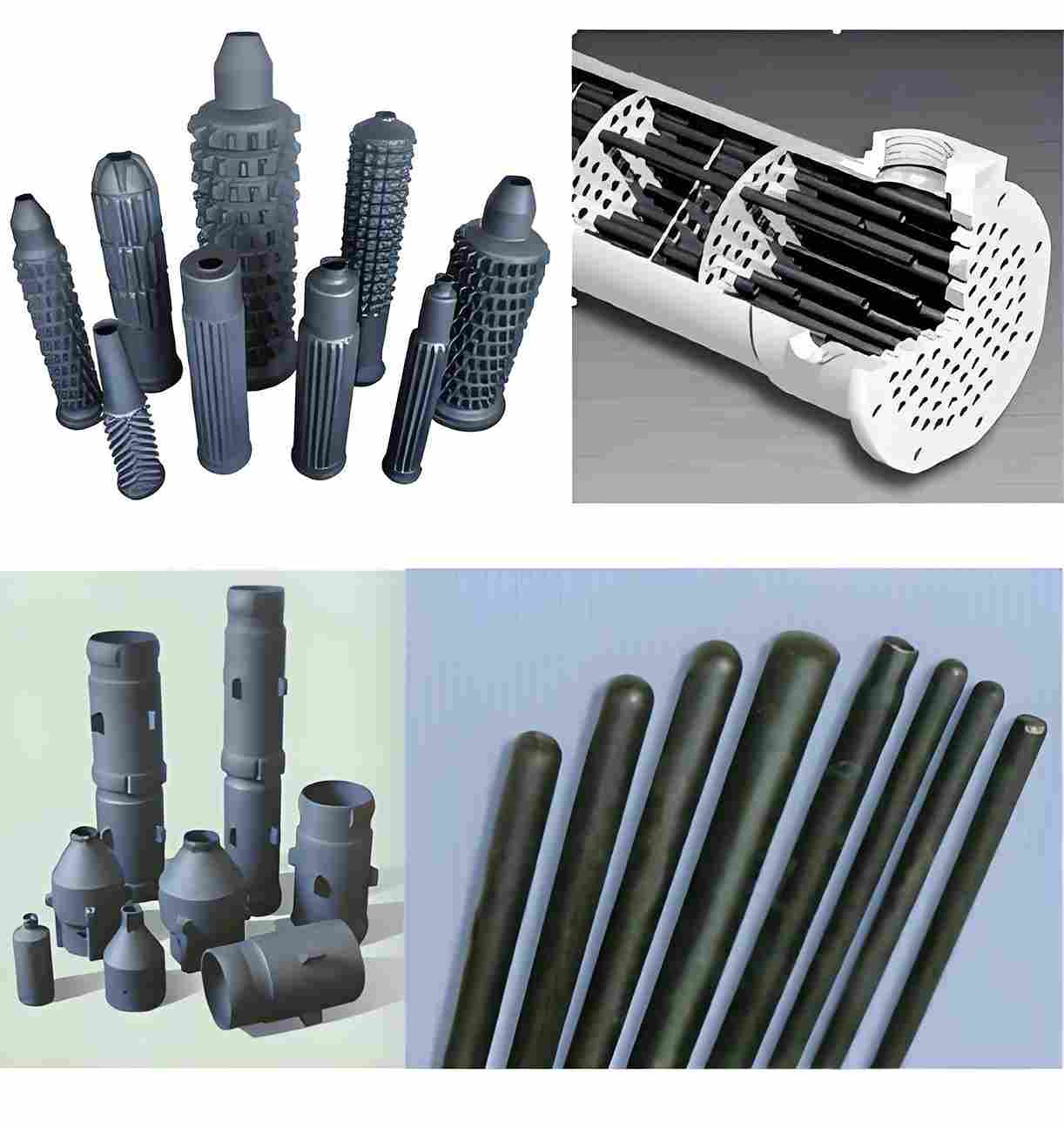
Silicon carbide (SiC) stands out as the go‑to ceramic when a machine part must survive abrasive, high‑temperature, and corrosive environments without frequent replacement.
Quick Summary
- SiC’s covalent‑ionic crystal lattice gives it a hardness of 9.5 Mohs and compressive strength >1300 MPa.
- Thermal conductivity (120‑200 W/m·K) dissipates heat, limiting thermal‑shock cracks.
- Chemical inertness protects against acids, alkalis and molten metals up to 1600 °C.
- Compared with Al₂O₃, Si₃N₄ and ZrO₂, SiC provides 30‑70 % longer wear life in abrasive slurry and high‑speed machining.
- ZIRSEC offers inventory‑ready standard sizes and rapid‑turn custom SiC parts with certified purity ≥98 %.
Why Engineers Choose SiC for Wear‑Critical Parts
When a pump seal ring cracks or a furnace tube erodes, downtime can cost tens of thousands of dollars. The first question on every engineer’s mind is:
“Can a material survive the exact combination of abrasion, temperature, and chemical attack in my process?”
SiC answers that with a unique blend of mechanical strength, thermal stability, and chemical inertness. In practice, this translates into fewer replacements, lower inventory of spare parts, and predictable maintenance schedules.
Crystal Structure and Bonding Strength
SiC exists primarily in the 4H and 6H polytypes, both possessing a hexagonal lattice where each silicon atom is tetrahedrally coordinated to four carbon atoms. This strong covalent‑ionic bonding creates a high bond energy (~340 kJ/mol) and a low slip system, meaning dislocations find it difficult to move. The result is a material that maintains its hardness (>9.5 Mohs) and compressive strength (>1300 MPa) even after prolonged exposure to abrasive media.
Hardness and Wear Mechanisms
Wear on a ceramic surface is typically a combination of abrasive, adhesive, and erosive actions. SiC’s hardness reduces the depth of abrasive scratches, while its low surface energy minimizes adhesive wear. In erosive environments—such as high‑velocity particle streams—SiC’s high fracture toughness (3‑5 MPa·√m) helps absorb impact energy without catastrophic cracking.
Thermal Conductivity and Shock Resistance
Most ceramics are thermal insulators, which can lead to rapid temperature gradients and thermal shock. SiC, however, conducts heat at 120‑200 W/m·K (depending on density and grain size). This property spreads localized hot spots, preventing the steep temperature differentials that cause spalling. In furnace tube tests, SiC retained 95 % of its strength after 1000 thermal cycles between 200 °C and 1500 °C—far superior to Al₂O₃ (which dropped below 70 %).
Chemical Inertness
At temperatures up to 1600 °C, SiC forms a thin, protective SiO₂ layer that shields the substrate from aggressive acids, alkalis, and molten metals. In a comparative corrosion test, SiC tubes exposed to molten Na₂SO₄ for 48 hours lost less than 0.02 mm of wall thickness, while Al₂O₃ lost 0.15 mm and Si₃N₄ suffered 0.08 mm.
Comparative Performance Data
| Material | Hardness (Mohs) | Compressive Strength (MPa) | Thermal Conductivity (W/m·K) | Typical Wear Life (hrs, abrasive slurry) |
|---|---|---|---|---|
| SiC (4H) | 9.5 | 1300‑1500 | 120‑200 | >2000 |
| Al₂O₃ | 9.0 | 1000‑1200 | 30‑35 | ~1200 |
| Si₃N₄ | 8.5 | 900‑1100 | 20‑25 | ~1500 |
| ZrO₂ | 8.0 | 800‑1000 | 2‑3 | ~800 |
The numbers clearly show why SiC often delivers 30‑70 % longer service life in wear‑critical applications.
Design Guidelines to Maximize SiC Wear Life
1. Optimize Geometry for Stress Distribution
Sharp corners concentrate stress. Rounding fillets, using uniform wall thickness, and avoiding sudden cross‑section changes reduce the risk of crack initiation. In a pump seal ring redesign, a 0.3 mm fillet increased the component’s fatigue life by 45 %.
2. Control Grain Size and Density
Fine‑grained SiC (<5 µm) offers higher hardness but lower fracture toughness. For high‑impact environments, a bimodal grain distribution (fine matrix with coarse reinforcement particles) balances hardness and toughness. ZIRSEC’s hot‑isostatic pressing (HIP) process achieves >99 % theoretical density, minimizing porosity‑related wear pathways.
3. Surface Treatment and Coatings
While SiC is already wear resistant, a thin Si₃N₄ or TiC coating can further reduce friction coefficients in sliding applications. In burner nozzle trials, a 10 µm TiC coating lowered erosion rates by 22 % without compromising thermal performance.
4. Thermal Management
Even with high conductivity, localized overheating can cause micro‑cracking. Designing cooling channels or integrating high‑conductivity copper inserts behind SiC layers helps keep the ceramic below its critical temperature (≈1800 °C). In furnace tube applications, a double‑wall design with water‑cooled steel sleeves extended service life from 1500 h to over 3000 h.
Real‑World Case Studies
Case 1 – Pump Seal Rings for a Chemical Plant
A European pump manufacturer experienced a 8‑day production halt when their Al₂O₃ seal rings fractured under abrasive slurry containing silica particles (average size 45 µm). After switching to ZIRSEC’s custom SiC seal rings (purity ≥ 98 %, tolerance ± 0.2 mm), the mean time between failures increased from 250 h to 950 h. The client reported a direct cost saving of $18,000 per year.
Case 2 – High‑Temperature Furnace Tubes
In a steel‑making furnace, standard mullite tubes cracked after 1300 °C exposure for 600 h. ZIRSEC supplied SiC tubes (Ø 50 mm, wall 5 mm) fabricated via HIP and laser‑cut to the required length. After installation, the tubes survived 2100 h of continuous operation, with only a 0.03 mm wall loss measured. The client linked to the product page for reference: Silicon Carbide Tubes.
Case 3 – Burner Nozzles in a Solar‑Thermal Plant
Burner nozzles made of stainless steel eroded in the presence of high‑velocity silica particles, requiring replacement every 4 months. Switching to SiC nozzles with a TiC surface coating reduced erosion to less than 0.01 mm per month, effectively extending the service interval to 18 months. The plant’s OPEX dropped by approximately $22,000 annually.
Choosing the Right SiC Supplier – Why ZIRSEC Stands Out
Many manufacturers claim “high‑purity SiC”, but only a few can back that claim with certifications, repeatable process control, and on‑time delivery. ZIRSEC brings 20 years of production experience, a fully integrated supply chain, and a dedicated engineering team that works directly from your CAD files to the final inspected part.
- Inventory‑Ready Standard Sizes: Over 120 SKU’s in stock, shipped within 24 hours.
- Rapid Customization: Prototype in 2‑4 weeks, full production in 4‑8 weeks.
- Quality Assurance: ISO 9001, full material certification (COA, MSDS) and third‑party testing on each batch.
- Engineering Support: Our in‑house material scientists provide design reviews, FEA assistance, and post‑sale performance monitoring.
- Global Logistics: Consolidated shipping, customs clearance assistance, and DAP / DDP options for North America and Europe.
Frequently Asked Questions
What temperature range can SiC reliably operate in?
SiC retains ≥90 % of its compressive strength from 200 °C up to 1600 °C. Above 1600 °C the surface SiO₂ layer becomes unstable, but short‑duration exposures up to 1800 °C are still feasible with proper cooling.
Is SiC electrically conductive?
Undoped SiC is a semiconductor with a resistivity of 10⁸‑10¹⁰ Ω·cm at room temperature. Doping can lower resistivity, but most wear‑critical components benefit from its insulating nature.
How does SiC compare cost‑wise with Al₂O₃?
Raw material cost for SiC is roughly 1.5‑2× that of Al₂O₃. However, the extended service life and reduced downtime typically result in a lower total cost of ownership (TCO) by 20‑35 % over the component’s lifecycle.
Can I order a small batch for testing?
Yes. ZIRSEC accepts minimum orders of 10 pieces for custom geometries and can provide fully inspected samples within 2‑3 weeks.
Next Steps – Get a Tailored SiC Solution Today
If wear resistance is the bottleneck in your process, the logical next move is to evaluate a SiC replacement. Contact our engineering team at info@zirsec.com with your CAD drawing or a description of the operating conditions. We will run a quick feasibility assessment, provide a cost quote, and outline a delivery schedule that aligns with your production plan.
Choosing SiC isn’t just a material change; it’s a strategic investment in reliability, safety, and long‑term profitability. Let ZIRSEC help you make that transition smoothly.