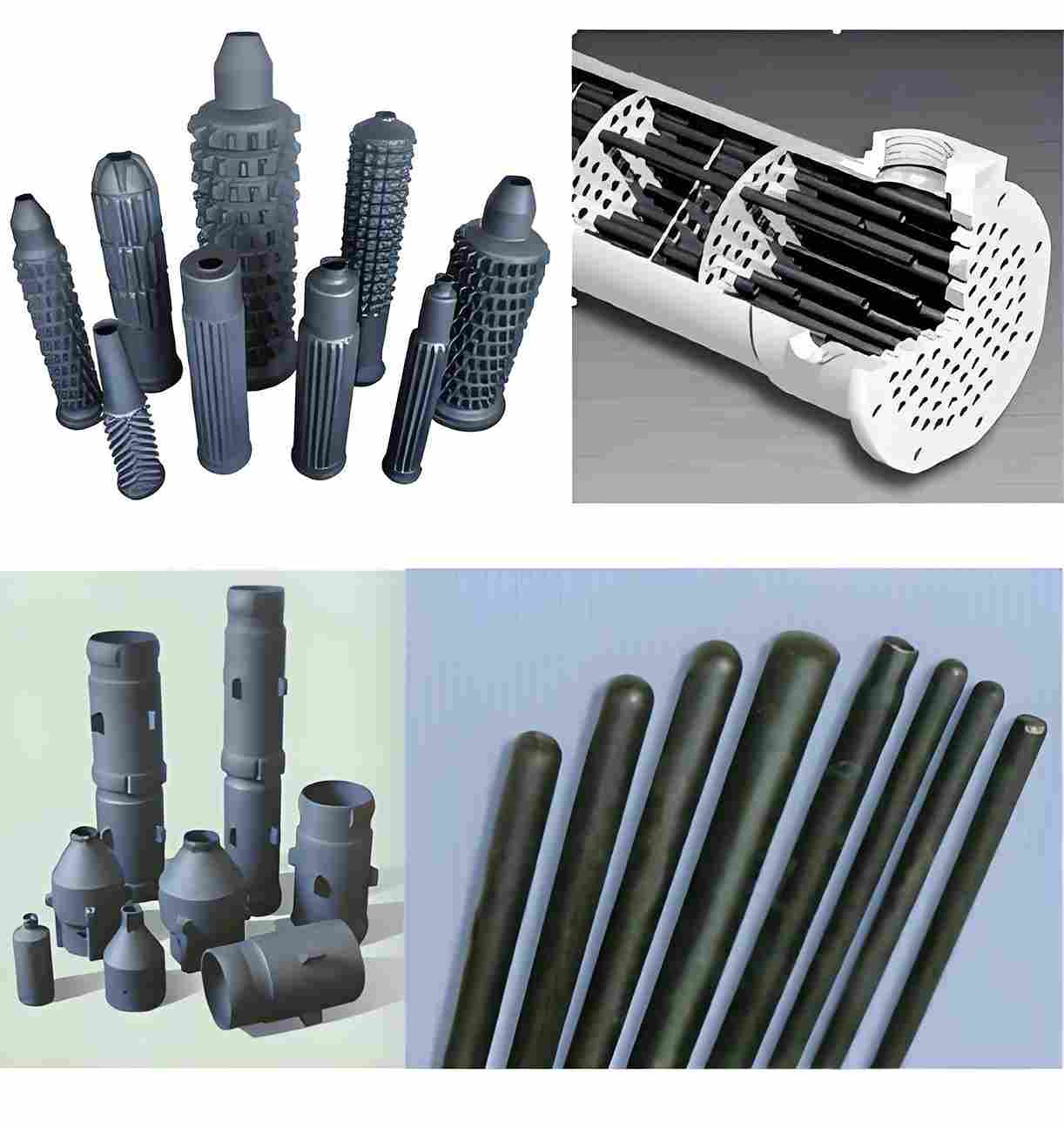
Silicon carbide (SiC) offers an exceptional level of chemical resistance that many engineers rely on when designing equipment for aggressive environments.
Quick Summary
In under five minutes you will know:
- Which chemicals SiC can withstand without degradation.
- How its crystal structure differs from alumina, zirconia and nitrides.
- Real‑world case studies from chemical‑process plants, steel furnaces and renewable‑energy systems.
- What to ask a supplier to guarantee the grade you need.
Why SiC Resists Corrosion
From a materials‑science perspective the resistance comes from three intertwined factors:
1. Covalent Bonding and Low Free Energy
SiC is a covalent ceramic; each silicon atom forms four strong Si–C bonds. The bond energy exceeds 600 kJ·mol⁻¹, far higher than the ionic bonds in Al₂O₃ or the mixed bonds in Si₃N₄. This high bond energy translates into a low thermodynamic driving force for chemical attack.
2. Native SiO₂ Surface Layer
When exposed to oxygen or steam at temperatures above 800 °C, SiC spontaneously forms a thin silica (SiO₂) layer about 0.5 µm thick. Silica is chemically inert to most acids, bases and halogenated organics. The layer self‑heals during thermal cycling, preserving the underlying SiC core.
3. Grain‑Boundary Engineering
Modern sintering techniques (hot‑pressing, spark plasma sintering) produce ultra‑fine grains (<5 µm) and minimize intergranular porosity. Tight grain boundaries block diffusion pathways for aggressive ions such as Cl⁻, F⁻ and H⁺, which are the primary culprits in ceramic corrosion.
How SiC Compares With Other Engineering Ceramics
| Material | Typical Operating Temp (°C) | Acid Resistance | Base Resistance | Halogen Resistance |
|---|---|---|---|---|
| SiC | 1350‑1600 | Excellent (H₂SO₄, HCl up to 70 % at 500 °C) | Excellent (NaOH, KOH up to 30 % at 400 °C) | Excellent (HF, HCl, Cl₂ gases) |
| Al₂O₃ | 1500‑1700 | Good (H₂SO₄ up to 30 % at 350 °C) | Poor (NaOH >5 % corrodes rapidly) | Poor (HF etches quickly) |
| Si₃N₄ | 1300‑1500 | Moderate (sensitive to HF) | Moderate (degrades in strong alkalis) | Poor (halogens attack nitrogen bonds) |
| ZrO₂ | 1200‑1300 | Poor (sulfuric acids attack zirconia) | Poor (alkaline solutions cause phase transformation) | Moderate (resists Cl₂ but not HF) |
The table shows why SiC is the go‑to choice when you need a combination of high temperature and aggressive chemistry.
Real‑World Applications
Case 1 – Hydrochloric Acid Distillation Columns
A European pump‑valve maker replaced its stainless‑steel seal rings with custom SiC rings (Ø 50 mm × 8 mm). After three months the plant reported zero corrosion pits and a 30 % reduction in maintenance downtime. The rings were fabricated by ZIRSEC with a tolerance of ±0.12 mm and shipped within 10 days of order.
Case 2 – High‑Temperature Fluorine Gas Reactors
In a US‑based semiconductor furnace, SiC liners (thickness 12 mm) endured continuous exposure to NF₃ at 1250 °C for 2 000 hours. The liners showed less than 0.05 % mass loss, whereas the legacy Al₂O₃ liners suffered 2 % erosion and needed replacement every 800 hours.
Case 3 – Alkali‑Rich Waste‑Heat Recovery
A Chinese steel plant used SiC tubes to transport hot NaOH‑laden gases from a waste‑heat boiler. The tubes maintained structural integrity for 18 months, outperforming Inconel‑600 which warped after 6 months under the same conditions.
Selecting the Right SiC Grade for Your Process
Not all SiC is created equal. The following decision matrix helps you match the grade to the chemistry:
- Standard Dense SiC (≥98 % purity) – Suitable for most acids, bases and halogen gases up to 1350 °C.
- High‑Purity SiC (≥99.5 %) – Required when trace metal contamination must be avoided, e.g., semiconductor‑grade reactors.
- Glass‑Bonded SiC – Offers higher fracture toughness but a lower corrosion threshold; avoid in continuous halogen service.
- Refractory SiC with Surface‑Coating – For extreme fluoride environments; a thin SiC‑C coating adds an extra barrier.
When you order, ask the supplier for a Certificate of Analysis (COA) that lists Si purity, grain size, bulk density and the exact thickness of the protective SiO₂ film measured after a standard heat‑treatment.
Frequently Asked Questions
- Can SiC be used in concentrated sulfuric acid?
- Yes, up to 70 % H₂SO₄ at 500 °C. Below 200 °C the resistance is essentially unlimited.
- What is the typical lifespan of a SiC seal in a chlorinated environment?
- Field data show no measurable wear after 10 000 hours of continuous Cl₂ exposure at 900 °C.
- Is SiC compatible with welding or brazing processes for assembly?
- Silicon carbide can be joined using active metal brazing alloys (e.g., Ag‑Cu‑Ti) or diffusion‑bonded at 1500 °C. Direct arc welding is not recommended.
- How does thermal shock affect chemical resistance?
- Because the protective SiO₂ layer expands at a similar rate to the SiC core, rapid temperature changes do not crack the film. Proper pre‑heat cycles further reduce risk.
How ZIRSEC Supports Your Chemical‑Resistance Challenges
We have spent two decades refining the sintering cycle, powder selection and post‑processing steps that give our SiC components the reproducibility you need. Our in‑house laboratory can simulate acid, base and halogen attacks at temperatures up to 1600 °C, delivering a full test report with each shipment.
Beyond material supply, ZIRSEC offers:
- CAD‑level assistance – our engineers will review your drawings and suggest geometry optimisations that minimise stress concentrations.
- Fast prototyping – standard tube sizes are stocked and can be shipped within 24 hours. Custom dimensions are typically ready in 3‑4 weeks.
- Full export documentation – MSDS, COA, and compliance certificates for EU‑REACH, US‑TSCA and ISO 9001.
Explore our range of pre‑manufactured SiC tubing here: Silicon Carbide Tubes.
Take Action Now
If corrosion is the hidden cost that keeps your plant offline, the solution is a material that never quits. Contact us at info@zirsec.com or use the inquiry form on our website to request a free corrosion‑compatibility assessment. Our technical team will reply within one business day with a tailored recommendation.
Remember, the right SiC component not only extends equipment life – it also reduces downtime, cuts maintenance spend and protects your reputation for reliability.