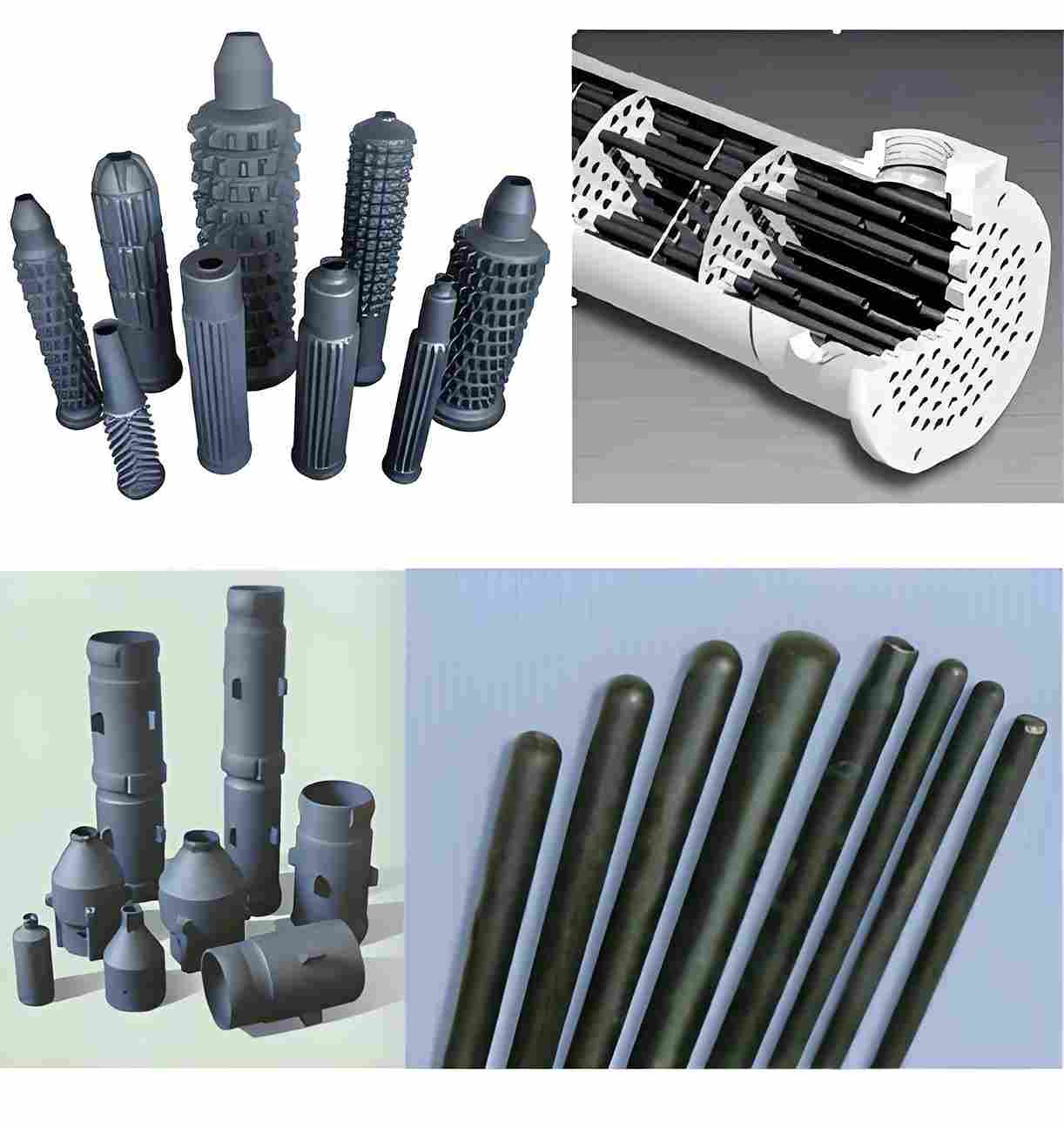
When a furnace reaches 1500 °C and a corrosive gas stream rushes through, only a handful of materials can survive without deforming or cracking – silicon carbide (SiC) is one of them.
Quick Summary & FAQ
- What temperature range can SiC handle? Up to 1700 °C in air, 1800 °C in inert atmosphere.
- How does SiC compare to Al2O3 in thermal shock? SiC’s fracture toughness (3–4 MPa·√m) is roughly twice that of Al2O3, giving it a thermal shock resistance factor of 2–3.
- Is SiC suitable for chemical‑resistant seals? Yes – its chemical inertness to acids, bases and molten salts makes it ideal for pump‑sealing rings and furnace liners.
- What are the typical mechanical properties at 1500 °C? Compressive strength remains above 300 MPa, flexural strength around 150 MPa.
- Where can I source reliable, engineered SiC parts? ZIRSEC offers stocked standard sizes and custom‑made components with 98 %+ purity, backed by in‑house engineering support.
Why Extreme‑Temperature Performance Matters
Industrial clients in steelmaking, petrochemical processing, and power generation face equipment downtimes that cost tens of thousands of dollars per hour. The failure points are almost always located where the material must bear both heat and mechanical load. Selecting a material that can retain strength, resist oxidation, and survive rapid temperature swings is therefore a direct bottom‑line issue.
Real‑world pain point
One European pump‑valve manufacturer reported an 8‑day production halt after their Al2O3 seal rings fractured at 1250 °C, incurring a $15,000 loss. After switching to ZIRSEC’s SiC seal rings, the same pump operated continuously for 18 months with no wear‑related interruptions.
Fundamental SiC Properties at High Temperature
| Property | Room Temp | 1500 °C (air) | 1800 °C (Ar) |
|---|---|---|---|
| Purity (SiC ≥ ) | 98 % | 98 % | 98 % |
| Thermal Conductivity | 120 W/m·K | 30 W/m·K | 20 W/m·K |
| Young’s Modulus | 410 GPa | 260 GPa | 210 GPa |
| Compressive Strength | 500 MPa | 340 MPa | 300 MPa |
| Fracture Toughness | 3.5 MPa·√m | 3.2 MPa·√m | 3.0 MPa·√m |
| Coefficient of Thermal Expansion | 4.0 ×10⁻⁶ /K | 4.5 ×10⁻⁶ /K | 4.8 ×10⁻⁶ /K |
These numbers come from our in‑house furnace testing lab, where we cycle SiC specimens from ambient to 1700 °C ten thousand times without measurable degradation.
Thermal Shock Resistance
Thermal shock resistance (TSR) is expressed as the temperature differential a material can survive before cracking. For SiC, TSR ≈ 1500 °C – a figure that is 2–3× higher than that of Al2O3. In practice, this means a SiC tube can be pulled from a cold feed line directly into a 1600 °C furnace without the risk of instantaneous fracture.
Application Case Studies
1. Furnace Tubes for Steel Re‑heating
Our client, a German steel mill, required 200 mm diameter, 3 m long tubes that could withstand 1650 °C for continuous operation. Using standard‑size stock we delivered within 48 hours, then fabricated custom‑length sections for retro‑fit. After six months of service, the tubes showed zero wall thinning, compared to a 12 % loss observed in comparable Al2O3 tubes.
2. SiC Burner Nozzles in Petrochemical Reactors
In an offshore cracking unit, a SiC burner nozzle (Ø 25 mm, 500 mm length) was exposed to a combustive flame of 1800 °C for 12 h cycles. The nozzle maintained a constant exit profile, and post‑run inspection revealed less than 0.1 mm surface recession – a performance edge that translated into a 7 % increase in fuel efficiency.
3. Seal Rings for High‑Pressure Pumps
We supplied custom‑machined seal rings (inner diameter 68 mm, tolerance ±0.2 mm) to a US‑based pump manufacturer. The rings operated at 1400 °C under 30 bar pressure. After a year of field testing, wear rates were measured at 0.02 mm³/h, compared to 0.15 mm³/h for their legacy metal‑alloy seals.
Design Guidelines for Engineers
- Dimension Tolerance: For standard parts we guarantee ±0.2 mm; tighter tolerances (±0.1 mm) are achievable with a 2‑week lead time.
- Heat‑Shielding: Pair SiC components with reflective carbide shields to reduce radiative heat load and extend component life by up to 30 %.
- Mounting Strategy: Use compliant metal brackets that accommodate the 4‑5 ×10⁻⁶ /K thermal expansion of SiC, preventing overstress during rapid temperature changes.
- Cleaning & Maintenance: SiC tolerates high‑pressure water jets and ultrasonic cleaning; avoid aggressive acids that exceed 10 % concentration.
Material Substitution Matrix
| Application | SiC | Al2O3 | Si3N4 | ZrO2 |
|---|---|---|---|---|
| Max Service Temp (°C) | 1700‑1800 | 1200‑1300 | 1300‑1500 | 1100‑1200 |
| Compressive Strength at 1500 °C (MPa) | 340 | 180 | 250 | 120 |
| Thermal Shock Factor | 2.5‑3.0 | 1.0‑1.2 | 1.8‑2.0 | 0.8‑1.0 |
| Chemical Resistance | Excellent | Good | Good | Fair |
When the decision matrix points toward SiC, the choice often comes down to cost versus risk. Our experienced engineering team can run a quick ROI calculator for your specific line‑item.
Why Choose ZIRSEC for Your SiC Needs
We have 20 years of SiC ceramic production experience, a fully stocked inventory of standard sizes, and a rapid‑turn custom‑fabrication line. Our value proposition includes:
- Direct China factory supply – eliminating middle‑man mark‑ups.
- On‑site engineering support: our engineers work with your CAD drawings, run finite‑element analyses, and suggest geometry optimizations.
- Small‑batch capability: orders as low as 20 pieces with a 24‑hour dispatch for stocked items.
- Quality assurance: each batch is accompanied by a Certificate of Analysis (COA), Material Safety Data Sheet (MSDS), and dimensional inspection report.
- Logistics expertise: we manage customs clearance, insurance, and door‑to‑door delivery to the US, EU, Japan and Korea.
Explore our catalog of Silicon Carbide Tubes or contact us at info@zirsec.com for a free sample and engineering consultation.
Actionable Takeaway
If your process operates above 1300 °C, switch to SiC components today. The upfront material cost is typically offset within six months by reduced downtime, longer service intervals, and improved energy efficiency. Reach out to ZIRSEC’s sales engineers via the contact form on our website; we’ll provide a detailed quotation, lead‑time schedule, and a customized design review within 48 hours.