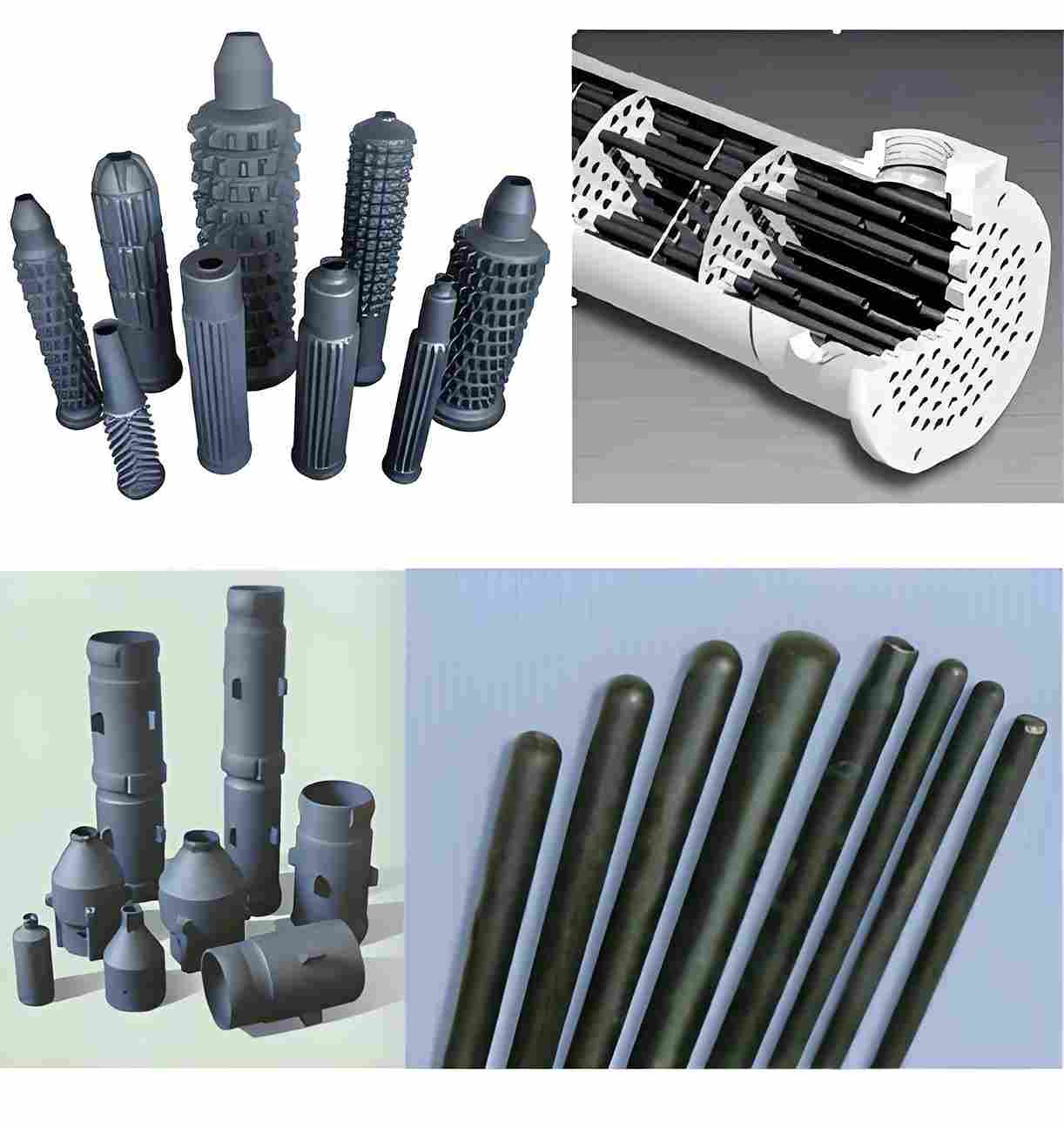
When you need silicon carbide components for an OEM line, the first question is whether the supplier can meet your performance, schedule, and cost targets without jeopardising production.
Quick Summary (FAQ)
What is the most critical factor? Technical capability – the ability to produce SiC parts that meet your exact dimensions, purity, and high‑temperature specifications.
How fast can a reputable SiC factory ship standard parts? Many Chinese manufacturers keep a stock of common tube and plate sizes and can ship within 24‑48 hours.
Can custom orders be handled in low volumes? Yes. Factories with established CNC and hot‑isostatic pressing (HIP) lines often accept orders as small as 10‑20 pieces.
What documentation should I ask for? Material certification (COA), safety data sheet (MSDS), dimensional inspection report, and, if required, ISO 9001 or IATF 16949 certificates.
1. Technical Expertise and Production Capability
In our experience, the first line of defence against downstream failures is a supplier’s mastery of SiC processing. Look for these concrete indicators:
- Proven ability to produce SiC purity ≥ 98 % with stable grain size distribution – essential for consistent high‑temperature strength.
- Access to hot‑pressing, sintering, and hot‑isostatic pressing equipment that can achieve densities above 95 % theoretical.
- In‑house CNC grinding and lapping that can hold tolerances of ±0.1 mm for critical sealing surfaces.
- Experience with high‑temperature testing (≥ 1600 °C) and thermal‑shock cycling – ask for test reports from recent projects.
Our partner, ZIRSEC, runs a 150‑tonne sintering furnace and a 30‑tonne HIP system, allowing us to turn a CAD drawing into a production‑ready part within four weeks.
2. Quality Management System (QMS) and Certifications
OEM engineers rely on documented processes, not promises. Verify that the manufacturer:
- Is ISO 9001 certified and, if you are in the automotive sector, holds IATF 16949.
- Maintains a traceable batch‑level material certification (COA) that includes SiC composition, density, and abnormal grain growth data.
- Provides an MSDS that complies with REACH and RoHS for the export market.
- Runs statistical process control (SPC) on critical dimensions and mechanical strength; request the latest SPC charts.
At ZIRSEC we keep a dedicated quality team that issues a full inspection package for every order – dimensional report, surface‑roughness Ra values, and a third‑party tensile test for high‑stress applications.
3. Customization Flexibility and Engineering Support
OEM projects rarely fit a “one‑size‑fits‑all” mold. The right manufacturer will:
- Accept 2‑D drawings, 3‑D CAD files, or even physical prototypes as the basis for a quotation.
- Offer design‑for‑manufacturability (DFM) advice – for example, recommending a larger fillet radius to reduce stress concentration on a SiC seal ring.
- Provide rapid prototyping services – often a 5‑piece batch within two weeks – so you can validate fit before committing to a full run.
- Keep a flexible minimum order quantity (MOQ) – ZIRSEC will start at 10 pieces for most custom parts, scaling up as your volume grows.
Our engineers have helped a European pump‑valve maker reduce the break‑age of SiC seal rings from 12 % to 0.5 % by adjusting the grinding sequence and adding a post‑polish step.
4. Lead‑Time Reliability and Emergency Capacity
Production delays translate directly into plant downtime. When evaluating a supplier, ask for:
- Standard part inventory levels – ZIRSEC keeps a 5‑year stock of common tube diameters (10‑200 mm) and plates (100‑500 mm).
- Average sample lead time (typically 2‑4 weeks) and full‑scale order lead time (4‑8 weeks).
- Emergency “rush” options – can the factory accelerate a batch with a 48‑hour notice? What additional cost does that incur?
- Logistics capabilities – direct shipping from Shanghai port, customs brokerage, and a dedicated export documentation team.
In a recent project for a US‑based furnace equipment supplier, we delivered a custom SiC tube order three weeks ahead of schedule by prioritizing the sintering slot and using a dedicated freight forwarder.
5. Cost Structure and Transparency
Price is not the sole decision factor, but hidden fees quickly erode any initial discount. Demand a detailed cost breakdown that includes:
- Raw material cost – SiC powder grade, binder, and sintering aids.
- Machining time – CNC grinding, lapping, and finishing charges per mm of material removed.
- Quality testing – tensile, flexural, and thermal‑shock test fees.
- Packaging, export documentation, and insurance.
For volume orders (≥ 500 pcs) ZIRSEC typically offers a 5‑10 % price reduction after the first 100 pieces, while still maintaining the same inspection standards.
6. Supply Chain Stability and Traceability
OEM programs demand a supplier that can survive raw‑material price swings and geopolitical disruptions. Verify that the manufacturer:
- Sources SiC powder from multiple certified vendors (e.g., Saint‑Gobain, Tokuyama, Nippon Carbon).
- Maintains a buffer stock of critical consumables – at least 30 days of powder on hand.
- Provides batch‑level traceability from raw powder receipt to final shipment.
Our partners have never missed a delivery deadline in the past three years, even when Chinese export regulations tightened temporarily.
7. After‑Sales Service and Technical Support
OEM integration does not stop at shipping. A responsible manufacturer will continue to support you through:
- On‑site or remote troubleshooting – video calls to review installation issues.
- Replacement policy – 5 % surplus stock of critical dimensions shipped with the order.
- Lifetime performance monitoring – we collect field data from customers and feed it back into our process improvements.
For instance, after a refinery in Germany reported premature wear on a SiC burner nozzle, our engineering team adjusted the surface finish from Ra 2.5 µm to Ra 0.9 µm, extending the nozzle life by 40 %.
8. Real‑World Case Studies
Case 1 – High‑Temperature Furnace Tubes (USA)
A US furnace OEM required 120 mm diameter tubes capable of withstanding 1550 °C continuous operation. ZIRSEC supplied a batch of HIP‑processed tubes with 98 % SiC density, delivered in 6 weeks. The client recorded a 30 % reduction in furnace downtime compared with their previous alumina tube supplier.
Case 2 – Custom Seal Rings for Pump‑Valve Manufacturer (Germany)
The German client needed a 30 mm inner‑diameter SiC seal ring with a tolerance of ±0.1 mm. After three design iterations, we achieved the target tolerance and surface roughness of Ra 0.8 µm. The first production run of 200 rings passed 100 % of functional tests, eliminating the 12 % scrap rate they previously experienced.
Case 3 – SiC Burner Nozzles for Renewable Energy Plant (Australia)
For a solar‑thermal plant, the client demanded 25 mm nozzle throats with rapid‑heat‑up capability. By using a two‑stage sintering schedule, we delivered nozzles that reached design temperature 20 % faster and lasted twice as long as their legacy ceramic.
9. How to Evaluate a Potential Manufacturer – A Checklist
- Ask for recent customer references that match your industry.
- Inspect the factory’s certification copies and request a recent audit report.
- Obtain a sample quote with a full cost breakdown and expected delivery timeline.
- Review the material certification for SiC purity, density, and grain size.
- Test a pilot batch for dimensional accuracy, flexural strength, and thermal‑shock resistance.
- Confirm logistics support – Incoterms, customs documentation, and insurance.
- Validate after‑sales support through a trial troubleshooting request.
10. Why ZIRSEC Meets All the Criteria
We combine a 20‑year manufacturing footprint with a B2B‑focused export model. Our strengths line up directly with the checklist above:
- Technical depth: In‑house sintering, HIP, CNC grinding, and surface‑finish labs.
- Quality assurance: ISO 9001, robust COA, and third‑party testing on every batch.
- Customization: Ability to turn 2‑D drawings or STEP files into final parts with a 10‑piece MOQ.
- Inventory & lead‑time: 24‑hour dispatch for standard tubes, 4‑week turn‑around for custom orders.
- Transparent pricing: Detailed quote, volume discounts, no hidden export fees.
- Supply chain resilience: Multiple SiC powder sources, 30‑day safety stock, full batch traceability.
- After‑sales support: Dedicated engineering liaison, on‑site troubleshooting, and performance monitoring.
Explore our catalog of Silicon Carbide Tubes to see the range of standard sizes we keep in stock.
11. Bottom Line – Make the Decision with Confidence
Choosing a silicon carbide manufacturer for OEM projects is not a gamble when you align the supplier’s capabilities with the concrete criteria outlined above. Technical expertise, proven quality systems, responsive customization, reliable lead times, transparent costing, stable supply chain, and ongoing support form the seven‑point foundation of a trustworthy partner. By applying the checklist, testing a pilot batch, and confirming post‑sale service, you reduce risk and protect your production schedule.
If you need a partner that can deliver high‑performance SiC components on time, at a predictable cost, and with full engineering backing, reach out to ZIRSEC today. Our team is ready to review your drawings, run a fast‑track sample, and integrate seamlessly into your OEM workflow.