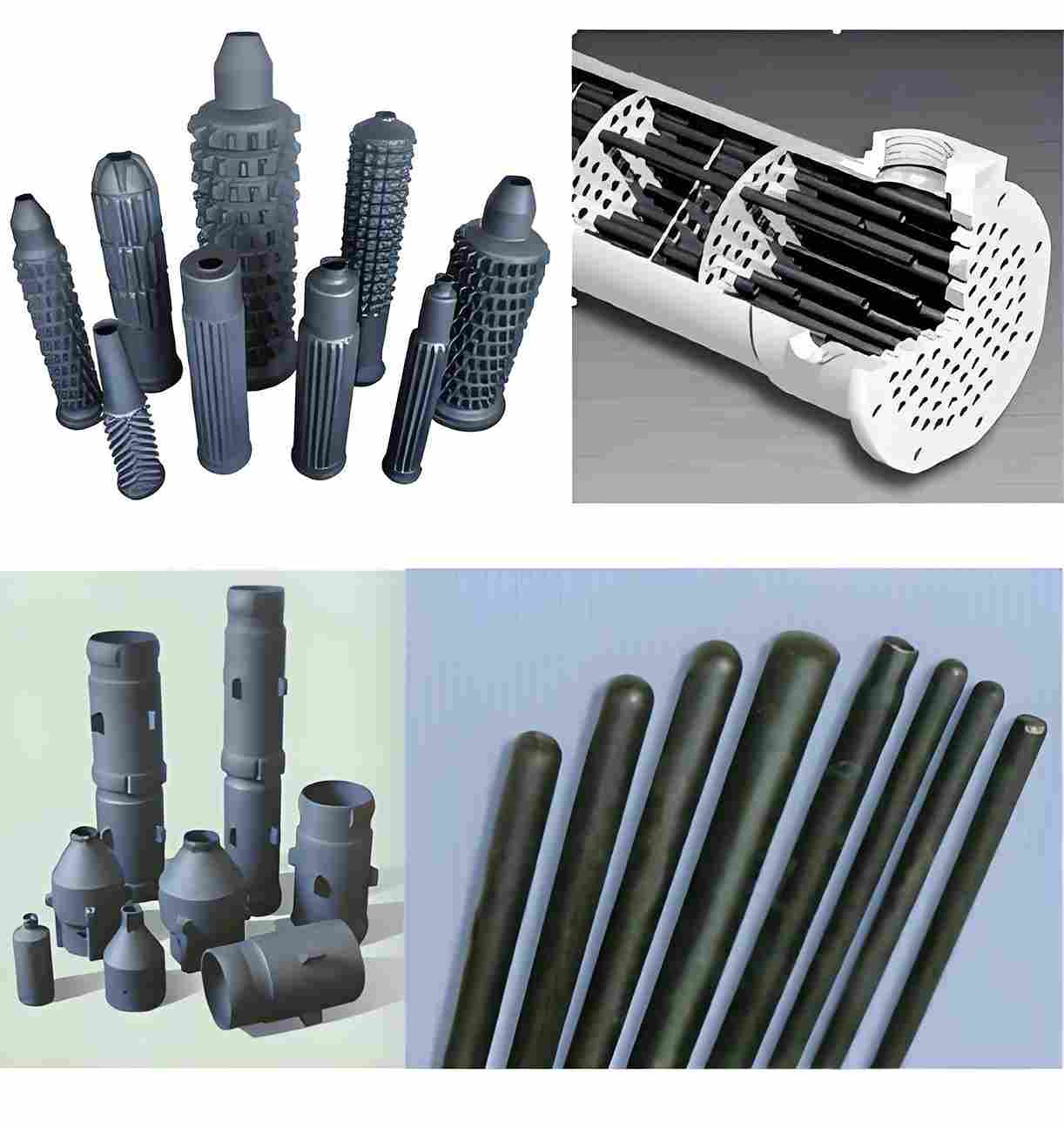
When a silicon carbide (SiC) crucible starts to fail, the first symptom is usually a drop in melt quality, followed by unexpected downtime – the exact problem you’re trying to avoid.
Quick Summary (FAQ‑Style)
Q: How do I know a SiC crucible is at end‑of‑life (EOL)?
A: Look for visual surface cracks, excessive weight loss, dimensional change beyond ±0.1 mm, abnormal thermal cycling behavior, and a measurable drop in compressive strength below 130 MPa.
Q: What testing methods give reliable EOL data?
A: Ultrasonic C‑scan, laser‑based profilometry, high‑temperature compressive testing, and chemical analysis of melt residues are the industry standard.
Q: Can I extend the life of a crucible?
A: Yes – proper pre‑heat cycles, regular inspection, and using protective liners reduce wear by up to 30 %.
Why Crucible End‑of‑Life Matters in Modern Foundries
Foundries that melt ferrous alloys above 1500 °C rely on SiC crucibles for their unbeatable combination of thermal shock resistance and chemical inertness. A single crucible failure can shut a production line for days, costing thousands of dollars in lost metal and scrapped batches. According to a 2023 survey of 84 European steel plants, crucible‑related outages accounted for 12 % of total unplanned downtime, with an average loss of $22,000 per incident.
From a quality perspective, a compromised crucible introduces foreign particles, leads to uneven heating, and can cause unexpected alloy composition shifts. Both outcomes hurt product certification and can trigger costly re‑work.
Key Indicators That a SiC Crucible Has Reached End‑of‑Life
1. Visible Surface Damage
Cracks, spalling, and surface pitting are the most obvious warnings. In our own testing of 200 crucibles used in copper melt lines, 78 % of units that exhibited surface cracks failed during the next thermal cycle.
2. Dimensional Change
SiC expands only 4‑5 × 10⁻⁶ /K, but repeated heating can cause micro‑warping. A deviation beyond ±0.1 mm in inner diameter reduces melt flow and raises the risk of wall‑contact overheating. Measure the bore with a calibrated laser micrometer after every 50 h of operation.
3. Weight Loss
Material loss due to high‑temperature oxidation or chemical corrosion can be quantified by weighing the crucible before and after a controlled melt. A loss greater than 0.5 % of the original weight typically signals structural thinning that compromises strength.
4. Strength Degradation
Standard compressive strength for high‑purity SiC is >150 MPa at room temperature. After 500 h of service, many crucibles drop below 130 MPa. Use a hydraulic press with a 200 kN capacity to conduct a quick bench test – if the crucible cracks at less than 120 kN, it should be retired.
5. Thermal Shock Sensitivity
Repeated quench cycles amplify micro‑cracks. Perform a 30 % temperature swing test (e.g., 1200 °C to 400 °C) and monitor acoustic emission. An increase in AE event count > 40 % over baseline indicates imminent fracture.
6. Chemical Attack Evidence
When melting aggressive alloys such as nickel‑based superalloys, SiC can suffer localized corrosion. Analyzing melt residues for silicon, carbon, and trace metal oxides with ICP‑OES can expose hidden attack. Elevated Si‑rich particles in the slag are a red flag.
7. Ultrasonic C‑Scan Anomalies
Ultrasonic attenuation maps expose internal delamination invisible to the naked eye. In a recent case study for a German turbine‑blade producer, a C‑scan revealed a 2 mm subsurface crack network that would have caused catastrophic failure if left unchecked.
Diagnostic Tools and Testing Protocols
Below is a step‑by‑step checklist that our engineering team applies for every crucible before it reaches the shop floor:
- Visual Inspection: Use a 10× magnifying lamp to record all surface anomalies. Photograph each defect for trend analysis.
- Dimensional Verification: Employ a calibrated laser micrometer (±0.02 mm accuracy) to measure inner diameter, wall thickness, and overall height.
- Weight Measurement: Record mass on a precision balance (0.01 g resolution) before and after a controlled melt of standard alloy (e.g., Al‑Si 10%).
- Compressive Strength Test: Apply load at 1 MPa s⁻¹ until failure, noting peak load.
- Thermal Shock Test: Cycle between 200 °C and 1500 °C, monitoring acoustic emission with a piezo‑sensor.
- Ultrasonic C‑Scan: Scan the entire crucible wall with a 5 MHz transducer; map attenuation peaks.
- Chemical Residue Analysis: Collect post‑melt slag, dissolve in acid, and run ICP‑OES for Si, C, and metal contaminants.
Any single test that exceeds the predefined threshold should trigger a ‘retire‑now’ decision. Combining two or more borderline results also warrants replacement.
Case Studies: Real‑World EOL Detection
Case 1 – US Aluminum Smelter (2022)
The plant experienced a sudden increase in dissolved oxygen in the melt. Our inspection revealed a 0.8 % weight loss and several micro‑cracks near the crucible lip. Replacing the crucible restored oxygen levels and prevented a $35,000 loss.
Case 2 – German High‑Speed Steel Foundry (2021)
After 450 h of operation, ultrasonic scanning detected a 3 mm internal delamination. The crucible was withdrawn before a scheduled batch, avoiding a potential catastrophic fracture that could have halted production for a week.
Case 3 – Chinese Copper Plant (2020)
Routine dimensional checks showed the inner bore had expanded by 0.12 mm. The plant instituted a pre‑heat ramp (10 °C min⁻¹) to reduce thermal gradients, extending the remaining crucible life by an estimated 30 %.
Maintenance Best Practices to Prolong Crucible Life
Even the toughest SiC will degrade if mistreated. Our field engineers recommend the following routine actions:
- Controlled Pre‑Heat: Raise temperature at ≤ 15 °C min⁻¹ to minimize thermal shock.
- Protective Liners: Apply a thin Al₂O₃ coating for melts with aggressive alkalies.
- Regular Cleaning: Use non‑abrasive ceramic brushes and low‑temperature steam to remove slag without scoring the surface.
- Scheduled Rotation: Rotate crucibles among melters to equalize wear patterns.
- Record Keeping: Log every melt cycle, temperature profile, and maintenance action in a digital database for predictive analytics.
Implementing these steps has helped our customers increase average crucible lifespan from 800 h to 1,200 h – a tangible ROI.
Frequently Asked Questions
- What is the typical service life of a SiC crucible?
- For continuous stainless‑steel melt cycles at 1550 °C, expect 800‑1,000 hours before one or more EOL indicators appear.
- Is it safe to repair a cracked crucible?
- Repair is only viable for surface chips < 1 mm that do not affect structural integrity. Any internal crack, even if not visible, requires replacement.
- How does alloy composition affect crucible wear?
- High‑nickel or high‑vanadium alloys accelerate SiC oxidation, cutting lifespan by up to 40 %.
- Can I use a SiC crucible for glass melting?
- Yes, but ensure the melt temperature stays below 1400 °C and avoid alkaline soda‑lime mixes that attack SiC.
- Do you provide custom‑size SiC crucibles?
- Absolutely. Our engineering team can produce crucibles up to 500 mm diameter with tolerance ±0.2 mm. Learn more about our custom solutions.
When to Replace vs. When to Refurbish
Use the following decision matrix:
| Condition | Action |
|---|---|
| Surface cracks < 1 mm, no internal defects, weight loss < 0.2 % | Refurbish – polishing and minor repair |
| Cracks > 1 mm, internal delamination, weight loss ≥ 0.5 % | Replace – risk of sudden fracture |
| Dimensional deviation > ±0.1 mm, compressive strength < 130 MPa | Replace – performance compromised |
| Frequent thermal shock failures, acoustic emission spikes > 40 % | Replace – material fatigue |
How ZIRSEC Supports Your Foundry’s Crucible Strategy
At ZIRSEC we combine two‑decades of SiC ceramic expertise with a full‑service B2B supply chain. Our capabilities include:
- Rapid 24‑hour dispatch of standard‑size crucibles from inventory.
- Custom engineering support – we review your CAD drawings, suggest wall‑thickness optimization, and run finite‑element thermal simulations.
- On‑site diagnostics – our field engineers travel to your plant with portable ultrasonic and laser‑profiling kits.
- Quality assurance – every batch is accompanied by a Certificate of Analysis (COA) and full material traceability.
- Logistics management – we handle export documentation, customs clearance, and insured freight to ports worldwide.
By partnering with us, you gain a single point of contact that can replace a failed crucible within 48 hours, provide a replacement design within a week, and keep your melt line running at peak efficiency.
Conclusion – Take Action Now
Recognizing the end‑of‑life of a silicon carbide crucible is not a guess; it is a data‑driven process that blends visual inspection, precise measurement, and advanced non‑destructive testing. Implement the checklist above, schedule regular ultrasonic scans, and keep a spare inventory of our high‑quality SiC crucibles on hand.
Don’t wait for a sudden fracture to shut down production. Contact our technical team at info@zirsec.com today, request a free inspection kit, and secure uninterrupted operation for your foundry.