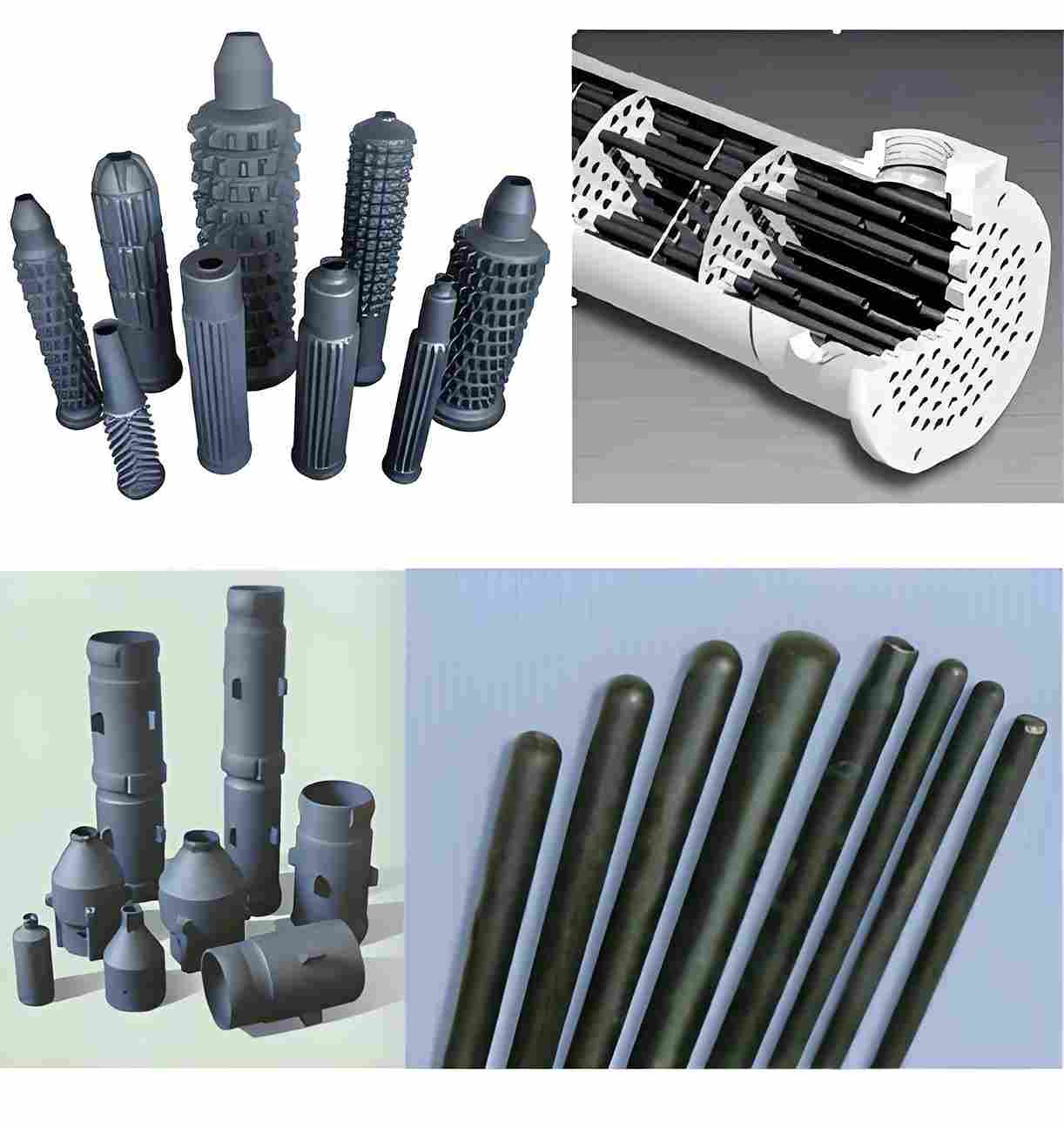
Choosing between a catalog‑size silicon carbide (SiC) component and a tailor‑made part is a decision that directly impacts project cost, lead time, and long‑term reliability.
Quick FAQ – What You Need to Know Right Now
- When should I buy a standard SiC part? When the required dimensions, material grade, and performance specs match any item stocked in a reputable supplier’s inventory.
- When is a custom SiC component unavoidable? When the application demands non‑standard geometry, tighter tolerances (±0.1 mm or better), or special surface finishes that no off‑the‑shelf product can provide.
- What are the cost implications? Standard parts typically cost 30‑50% less and can ship within 24‑48 hours; custom parts add tooling, programming, and additional QA steps, raising unit price by 1.5‑3×.
- How does lead time compare? Stock items: 1–3 days. Small‑batch custom (10‑50 pcs): 4‑8 weeks. Large‑batch custom (≥200 pcs): 10‑14 weeks, depending on machining complexity.
- Can ZIRSEC help with both? Yes – we keep a full range of Silicon Carbide Tubes in inventory while offering rapid prototyping and engineering support for bespoke projects.
1. Understanding the Core Decision Drivers
In practice, three pillars define whether standardization or customization makes sense: application requirements, volume economics, and risk tolerance. Ignoring any one of these leads to either over‑engineered inventory or premature failures in the field.
1.1 Application Requirements – Geometry, Temperature, and Chemistry
Silicon carbide excels at temperatures above 1350 °C, chemical resistance to acids, bases, and halogens, and wear resistance exceeding 10 000 hours in abrasive environments. However, the material’s brittleness means that stress concentrations must be minimized. When a component’s shape is simple (cylindrical tube, flat plate, standard seal ring) and the operating temperature falls within the 1500 °C limit, a standard part is usually sufficient. Complex, multi‑step geometries – for instance, a tapered burner nozzle with internal cooling channels – demand a custom‑machined SiC piece.
1.2 Volume Economics – MOQ, Tooling, and Unit Cost
Standard parts benefit from economies of scale. Our 20‑year production line can produce up to 10 000 pcs of 25 mm SiC tube per month, driving the unit price down to $12 compared with $45 for a custom‑cut 27 mm tube. If your order exceeds the supplier’s economic MOQ (typically 100‑200 units for custom work), the cost differential shrinks, and customization may become justified.
1.3 Risk Tolerance – Downtime, Quality Assurance, and Certification
Industries like petrochemical processing and steel reheating plants cannot afford a single component failure that shuts down a 24/7 line. In such high‑risk environments, a custom‑qualified SiC part that meets exact dimensional tolerances (±0.1 mm, surface roughness Ra ≤ 0.8 µm) is often the only safe choice. Conversely, a low‑risk water‑treatment pump can tolerate a standard seal ring with a broader tolerance band (±0.5 mm) and still meet the required MTBF.
2. Real‑World Case Studies – When Standard Parts Saved Money, When Custom Saved Time
2.1 Case A – Chemical Pump Manufacturer Saves 40% with Stock SiC Seal Rings
Company XYZ, a European pump supplier, faced recurring lead‑time spikes for a 30 mm SiC seal ring used in chlorine‑resistant pumps. The original design matched a standard part we keep in inventory (part #SC‑R30‑STD). By switching to the stock item, XYZ reduced procurement time from 6 weeks to 2 days and cut unit cost from $68 to $38. The only engineering change required was a minor adjustment to the housing bore, which fell within the ±0.5 mm tolerance window.
2.2 Case B – Custom SiC Burner Nozzle Prevented a 7‑Week Project Delay
A UK renewable‑energy firm ordered a high‑temperature burner for a 1 MW furnace. The nozzle required a 12 mm inlet, a 6 mm orifice, and an internal spiral cooling channel. No standard nozzle met these specs; a custom SiC nozzle was fabricated in 6 weeks, including CNC grinding and post‑machining laser polishing. The project stayed on schedule, and the custom nozzle achieved a 20% longer service life compared with a conventional Al₂O₃ alternative.
2.3 Case C – Hybrid Approach: Standard Tubes + Custom End Caps
An American steel mill needed a 150 mm furnace tube with a proprietary flange geometry. We supplied standard 150 mm SiC tubes from stock and machined custom end caps in‑house. This hybrid solution cut total cost by 25% versus a fully custom tube and delivered the entire assembly in 5 weeks, well under the client’s 8‑week deadline.
3. Decision‑Making Framework – A Step‑by‑Step Checklist
- Define Critical Parameters. List temperature, pressure, corrosion agents, and mechanical load. For each, note the acceptable tolerance.
- Map Geometry to Existing Catalog. Use our online catalog (search “SiC tube”, “SiC seal ring”, etc.). If a part matches within 5% of dimensions, flag it as a candidate.
- Run a Cost‑Benefit Spreadsheet. Include base price, tooling cost (if any), expected volume, and risk cost (downtime, warranty claims).
- Consult Engineering Support. Our engineers can run a finite‑element analysis (FEA) on both the standard and proposed custom design to verify stress distribution.
- Make a Go/No‑Go Decision. If the total landed cost for the standard part is < 80% of the custom solution **and** the risk assessment shows < 5% probability of failure, choose standard. Otherwise, proceed with custom.
4. How ZIRSEC Enables Both Paths Seamlessly
With two decades of silicon carbide manufacturing experience, ZIRSEC offers a unique blend of large‑scale inventory and fast‑track custom engineering:
- 24‑Hour Stock Dispatch. Over 200 standard SKUs, from 10 mm tubes to 300 mm plates, ready for immediate shipment.
- Rapid Prototyping. Turn‑key service from CAD review to first‑article inspection in 2‑4 weeks.
- Full‑Traceability Documentation. COA, MSDS, and dimensional inspection reports accompany every shipment.
- End‑to‑End Supply‑Chain Management. Order tracking, customs clearance assistance, and door‑to‑door logistics are handled by our dedicated team.
5. Pricing and Lead‑Time Benchmarks (2024 Data)
| Component Type | Standard Unit Price (USD) | Custom Unit Price (USD) | MOQ (pcs) | Typical Lead‑Time |
|---|---|---|---|---|
| SiC Tube 25 mm × 1 m | $12 | $32 | 50 (stock) / 100 (custom) | 1‑3 days / 4‑8 weeks |
| SiC Seal Ring Ø30 mm | $38 | $78 | 20 (stock) / 30 (custom) | 2‑4 days / 3‑6 weeks |
| Custom Burner Nozzle | – | $145‑$210 | 10‑50 | 6‑9 weeks |
| SiC Plate 100 mm × 100 mm | $24 | $58 | 30 (stock) / 50 (custom) | 2‑5 days / 4‑7 weeks |
6. Risk Mitigation Strategies for Custom SiC Parts
Even with the best design, custom SiC components can encounter unexpected issues. Below are proven tactics:
- First‑Article Inspection (FAI). Verify dimensions, surface finish, and mechanical strength on the first batch.
- Accelerated Life Testing. Simulate 10× service temperature for 100 hours to catch latent micro‑cracks.
- Redundant Stock. Keep a small buffer of the selected standard part in case the custom part needs redesign.
- Clear Documentation. Include GD&T charts and material certificates in the purchase order.
7. Frequently Overlooked Factors
Many engineers focus only on temperature and corrosion, but there are subtle parameters that can tip the scale toward customization:
- Thermal Expansion Matching. When the SiC component is bonded to a metal housing, a mismatch in CTE can cause seal leaks; a custom design can incorporate compliant features.
- Electrical Insulation. For high‑voltage furnace monitoring, SiC parts may need a specific surface resistivity; standard parts are usually not graded for this.
- Machining Accessibility. Deep‑draw features may require multi‑axis CNC; stock items are limited to basic turning and grinding.
- Regulatory Certification. Some European projects demand CE‑type certification on the component; custom runs can be certified on demand.
8. Action Plan – What to Do Next
If you are evaluating a new SiC component, follow this short road‑map:
- Step 1: Search our catalog for a matching part number.
- Step 2: Download the datasheet and compare tolerance, temperature, and chemical resistance against your spec sheet.
- Step 3: Email info@zirsec.com with your dimensions and performance targets. Our engineers will reply within 24 hours with a feasibility report.
- Step 4: Request a quotation for both the standard SKU and a custom prototype. Use the side‑by‑side cost table to justify the decision internally.
- Step 5: Place a small‑batch order for the chosen solution. For custom parts, we recommend a pilot run of 10‑20 units to validate performance before full scale production.
By applying the framework above, you can avoid costly over‑engineering, reduce inventory holding, and keep your project on schedule.
9. Closing Thought
The choice between standard and custom silicon carbide components isn’t binary; it’s a spectrum where cost, risk, and performance intersect. Leveraging a partner that offers both deep inventory and agile engineering, like ZIRSEC, ensures you land on the optimal point of that spectrum every time.