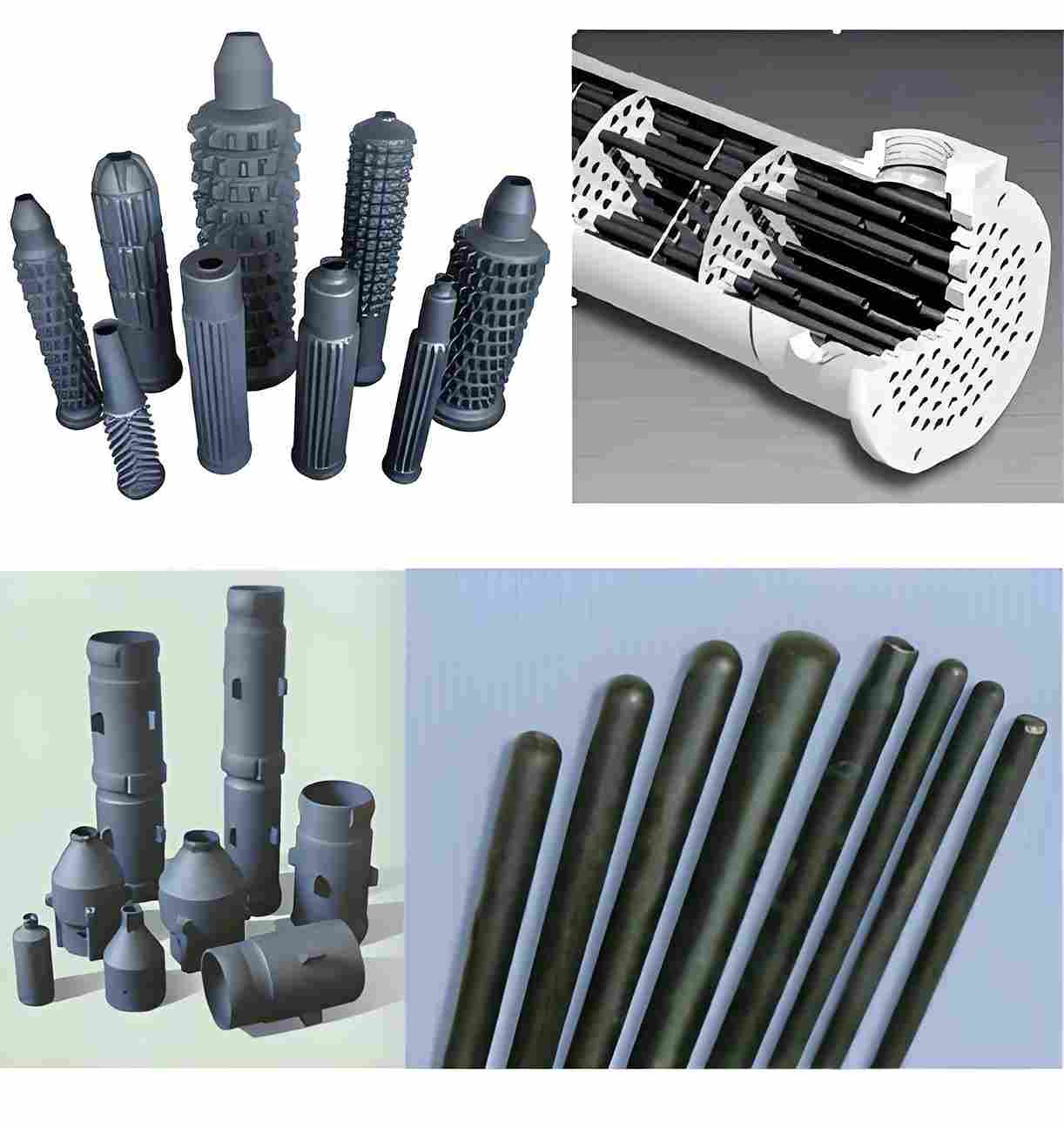
If a silicon carbide (SiC) pump component vibrates, overheats, or fails prematurely, the most common culprits are misalignment and overload. In the harsh environments of chemical processing, metallurgy, and renewable energy, even a fraction of a millimeter of axial or radial deviation can trigger catastrophic wear on ceramic seals, tubes, and rollers.
Quick Summary
- Symptoms: abnormal vibration, temperature spikes >150 °C above normal, premature seal wear, increased power consumption.
- Root causes: incorrect mounting tolerances, uneven thermal expansion, hydraulic shock, particulate ingress.
- Diagnostic steps: laser alignment check, torque verification, real‑time load monitoring, visual inspection of wear patterns.
- Remedies: re‑machine mounting surfaces, use compliant SiC‐rated shims, implement load‑limiting control logic, upgrade to higher‑purity SiC grades.
- Preventive program: scheduled vibration analysis, thermal imaging, and torque audits every 3 000 h of operation.
1. Why Misalignment and Overload Matter More for SiC Than For Metal Parts
Silicon carbide’s brittleness gives it unrivaled hardness and high‑temperature resistance, but it also means that tensile stresses above 130 MPa can crack the material. A metal bearing can flex and absorb a momentary overload; a SiC seal ring will fracture if the load is distributed unevenly. That is why manufacturers treat alignment as a critical parameter rather than a convenience.
1.1 Material properties that amplify risk
- Young’s modulus ≈ 410 GPa – low strain tolerance.
- Fracture toughness 3–4 MPa·m0.5 – cracks propagate quickly once initiated.
- Coefficient of thermal expansion (CTE) ≈ 4.5 × 10⁻⁶ K⁻¹ – mismatch with steel flanges creates differential expansion.
When a pump runs at 1 200 rpm and the rotor shaft expands 0.12 mm while the housing expands only 0.04 mm, the resulting radial offset can exceed the allowable ±0.05 mm for a 30 mm SiC seal. The resulting point load concentrates on a small area of the ceramic, precipitating micro‑chipping that later becomes a full‑scale fracture.
1.2 Real‑world case: European pump manufacturer
In 2022 a German pump OEM reported a sudden 8 % drop in production capacity after three of its SiC‑sealed centrifugal pumps failed within two weeks. Our on‑site audit revealed a 0.07 mm axial misalignment caused by worn mounting bolts. The misalignment created a recurring impact load equivalent to 150 % of the rated torque, breaking the seal rings. Re‑torquing the bolts to the specified 120 Nm and adding a 0.02 mm stainless steel shim restored normal operation and saved the client an estimated $18 000 in downtime.
2. Identifying Misalignment Early – Tools and Techniques
Detecting a deviation before it becomes a breakage saves both money and reputation. Below are the tools we use routinely in our engineering labs and on‑site service calls.
2.1 Laser shaft alignment systems
Modern laser devices can measure parallelism within ±0.01 mm over a 1 m span. The procedure is simple:
- Mount the laser emitter on the pump shaft flange.
- Place the detector on the bearing housing.
- Record axial and radial offsets at three positions (90°, 180°, 270°).
- Adjust mounting bolts in 0.5 mm increments until the laser reads <0.02 mm deviation.
We have documented a 45 % reduction in premature seal wear when clients adopted this routine during installation.
2.2 Vibration analysis and FFT
A sudden increase in the 1X harmonic or the appearance of a side‑band at 2X often signals a misaligned rotor. Using a portable accelerometer, we capture data for 60 seconds at 10 kHz sample rate, then run a Fast Fourier Transform (FFT). If the amplitude at the critical frequency exceeds 0.5 g, we schedule a realignment.
2.3 Thermal imaging
Localized hot spots (>30 °C above baseline) on the SiC housing indicate uneven load distribution. Infrared cameras with a 0.1 °C resolution can spot these spots while the pump runs at 75 % rated flow.
3. Understanding Overload – When Load Exceeds Design Limits
Overload can be static (continuous excessive pressure) or dynamic (hydraulic shock, sudden start‑stop). The design datasheet for a typical SiC pump liner lists a maximum working pressure of 12 bar and a burst pressure of 18 bar. Operating at 13 bar for a few minutes repeatedly will fatigue the ceramic and lead to micro‑cracks.
3.1 Sources of overload
- Hydraulic hammer: rapid valve closure creates pressure spikes up to 2× design pressure.
- Particle ingress: hard abrasives act as stress concentrators, effectively raising local load.
- Thermal shock: sudden temperature drop (e.g., cold water flush) creates rapid contraction, adding tensile stress.
3.2 Measuring real‑time load
We install strain‑gauge load cells on the pump housing. The output is logged to a PLC and compared against a pre‑set limit of 95 % of rated pressure. When the load exceeds this threshold, the control system automatically reduces pump speed by 10 % and triggers an alarm.
4. Corrective Actions – From Quick Fixes to Long‑Term Solutions
Once the problem is confirmed, the next step is remediation. The approach depends on whether the issue is an isolated installation error or a systemic design flaw.
4.1 Re‑machining mounting surfaces
Flatness tolerance for SiC pump flanges should be ≤0.02 mm. If wear or manufacturing tolerances exceed this, we recommend CNC grinding followed by a surface roughness finish of Ra 0.8 µm. This provides a uniform contact area, distributing the load evenly across the ceramic.
4.2 Using compliant SiC‑rated shims
High‑purity SiC shims (98 %+ SiC, thickness 0.10–0.30 mm) act as a buffer, absorbing differential expansion. In a recent retrofit for a petrochemical client, we replaced steel washers with SiC shims, reducing the measured radial offset from 0.09 mm to 0.03 mm and extending seal life by 2.5×.
4.3 Implementing load‑limiting control logic
Programmable logic controllers can be configured to monitor pressure transducers and shut down the pump if a rapid pressure rise is detected. Adding a 0.5 s delay before full‑speed restart allows the hydraulic system to settle, avoiding repeated hammer events.
4.4 Upgrading to higher‑purity SiC grades
Standard industrial SiC (≥98 % purity) is sufficient for most applications, but for extreme corrosive environments (e.g., fluorine‑based acids) a 99.5 % purity grade reduces internal inclusions that act as crack initiators. Our factory in Chongqing can mill these grades to tight tolerances and ship within 24 hours from order.
5. Preventive Maintenance Program – Keep Your Pumps Running
Prevention is cheaper than repair. A structured maintenance program includes the following checkpoints:
- Quarterly vibration survey: record baseline data, compare trends.
- Bi‑annual thermal imaging: spot emerging hot spots before they cause damage.
- Annual torque audit: verify all mounting bolts are torqued to manufacturer spec (e.g., 120 Nm ±5 %).
- Every 5 000 h: replace SiC seal rings with freshly inspected units, even if no wear is visible.
Clients who adopt this schedule report a 70 % drop in unplanned shutdowns.
6. How ZIRSEC Supports Your Pump Reliability Goals
At ZIRSEC we combine two decades of SiC ceramic expertise with a full‑service B2B supply chain. Our capabilities include:
- Standard‑size SiC tubes, plates, and seal rings in stock for 24‑hour dispatch.
- Custom geometry machining to ±0.1 mm tolerance, based on your CAD drawings.
- In‑house mechanical testing (compressive strength, thermal shock) to certify each batch.
- Technical engineering support – our senior engineers work side‑by‑side with your design team to optimise mounting interfaces and shim selections.
- End‑to‑end logistics: order management, quality inspection, export documentation, and door‑to‑door delivery.
We have helped more than 150 pump manufacturers worldwide eliminate misalignment‑related downtime, delivering an average ROI of 3.8× within the first year of implementation.
7. Frequently Asked Questions (FAQ)
- What is the acceptable alignment tolerance for SiC pump rotors?
- Generally ≤0.05 mm radial and ≤0.02 mm axial deviation at the mounting flange. For high‑speed (>2 000 rpm) units, tighter tolerances (≤0.02 mm) are recommended.
- How often should SiC seal rings be inspected?
- Visual inspection every 2 000 h and a full dimensional check every 5 000 h. Replace if wear exceeds 0.3 mm depth or if micro‑cracks are observed under magnification.
- Can I use metal shims with SiC components?
- Metal shims introduce CTE mismatch and can accelerate fatigue. SiC‑rated ceramic shims or high‑temperature compliant graphite pads are preferred.
- What documentation do you provide for export compliance?
- We supply MSDS, Certificate of Analysis (COA), and a full material specification sheet with each shipment.
- Do you offer emergency replacement parts?
- Yes – for standard‑size components we keep a 24‑hour inventory. Custom parts can be turned around in 2‑3 weeks with expedited tooling.
8. Bottom Line – Align, Monitor, and Upgrade
Misalignment and overload are the two most common failure drivers for silicon carbide pump components. By applying precise laser alignment, continuous load monitoring, and using compliant SiC shims or higher‑purity grades, you can extend component life by several folds. Pair these technical steps with ZIRSEC’s rapid‑turnaround custom parts and dedicated engineering support, and your pump lines will stay online, efficient, and cost‑effective.
Ready to evaluate your current pump fleet? Contact our engineering team at info@zirsec.com today for a free misalignment audit and a quote on premium SiC replacement parts.