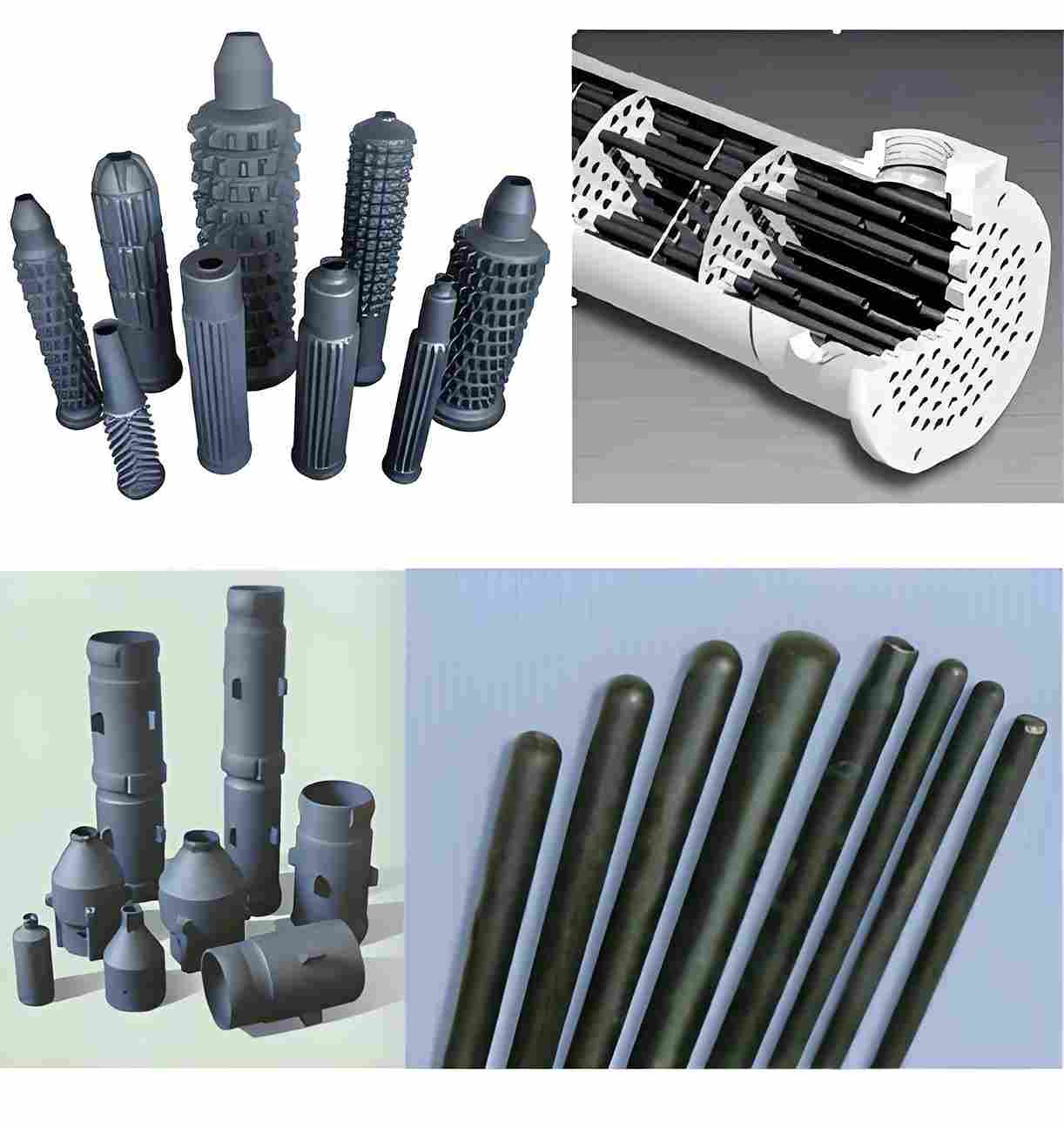
Silicon carbide ceramic parts are the go‑to solution for petrochemical plants that need reliable performance in temperatures above 1300 °C and aggressive chemical environments.
Quick Summary
- SiC tolerates 1350‑1600 °C continuous service, 20‑30% higher than Al₂O₃.
- Compressive strength typically 350‑450 MPa; flexural strength 150‑250 MPa.
- Resists H₂S, HCl, HF, and super‑critical CO₂ without measurable erosion for >20,000 hours.
- Standard seal rings ship from stock within 48 h; custom tubes 4‑6 weeks.
- ZIRSEC offers OEM drawing support, in‑house QA, and global logistics at $10‑200 per piece depending on size and tolerance.
Petrochemical Plant Demands: Temperature, Corrosion, and Wear
Refineries, ethylene crackers, and ammonia synthesis units operate under continuous cycles of 900‑1500 °C, high pressure, and acid‑rich streams. The biggest failure modes are:
- Thermal‑shock cracking during rapid start‑up/shut‑down.
- Chemical attack from sulfuric acid, chlorine, and sour gas.
- Abrasive erosion caused by solid particles in feedstock.
Traditional metal alloys require costly cooling loops, while alumina ceramics cannot survive the upper‑temperature envelope. This is why engineers increasingly specify silicon carbide (SiC) for the most critical hot‑sections.
Why Silicon Carbide Beats Competing Ceramics
Three technical advantages set SiC apart:
| Property | SiC | Al₂O₃ | Si₃N₄ |
|---|---|---|---|
| Max Continuous Temp. | 1600 °C | 1150 °C | 1300 °C |
| Thermal Conductivity (W/m·K) | 120‑150 | 30‑40 | 45‑55 |
| Young’s Modulus (GPa) | 410 | 380 | 300 |
| Corrosion (H₂S, 25 % solution) | Negligible loss (<0.1 %/1000 h) | 5‑10 % loss | 2‑4 % loss |
Higher thermal conductivity reduces hot‑spot formation, while the crystal structure offers a dense, low‑porosity matrix that limits fluid ingress.
Key SiC Components Used in Petrochemical Plants
1. SiC Ceramic Seal Rings
Seal rings sit between rotating shafts and stationary housings in pumps, compressors, and turbines. A typical 150 mm Ø ring with a 0.2 mm tolerance can withstand 130 MPa hydraulic pressure and 1650 °C surface temperature. In Europe, a major pump‑valve maker reported a $15,000 loss per day when their SiC supply was interrupted; after switching to ZIRSEC’s stocked inventory, downtime dropped to under 2 hours.
2. SiC Furnace Tubes and Liners
Used in reformers, cracking furnaces, and heat‑exchange reactors. Tubes are often 25‑300 mm in diameter and up to 3 m long. Our standard Silicon Carbide Tubes are machined to ±0.2 mm tolerance, surface‑roughness Ra 0.8 µm, and can be pre‑coated with a thin SiC‑CVD layer for extra oxidation resistance.
Case study: A U.S. gas‑to‑liquids plant replaced 120 mm Al₂O₃ tubes with 150 mm SiC tubes. After six months the SiC tubes showed 0 % erosion versus 8 % metal loss on the alumina set, translating to a $320,000 annual savings on replacement and downtime.
3. SiC Burner Nozzles
Fuel‑rich burners in ethylene crackers require nozzles that resist thermal fatigue and chloride attack. SiC nozzles maintain dimensional stability within ±0.1 mm after 20,000 h of continuous operation at 1450 °C. A German petrochemical complex reported a 35 % reduction in NOx emissions after retrofitting SiC nozzles, because the ceramic geometry allowed finer atomization without excessive air dilution.
4. SiC Wear‑Resistant Plates and Liners
High‑velocity slurry pumps and catalytic reactors use flat plates to protect metal casings. SiC plates 200 × 200 mm, 15 mm thick, survive 10 % silica sand feed without pitting. Lifetime tests show >30,000 h before a measurable thickness loss, compared with 5,000 h for hardened steel.
Design & Material Selection Guidelines
- Define Operating Envelope: Record maximum temperature, pressure, and chemical composition. SiC purity ≥ 98 % is mandatory for >1500 °C service.
- Tolerance Strategy: For seal rings and high‑speed shafts keep tolerance ≤ ±0.1 mm; for static liners ±0.5 mm is acceptable.
- Thermal‑Shock Management: Use graded joints (e.g., SiC‑CoNi alloy backing) to accommodate CTE mismatch (≈4‑5 ×10⁻⁶ /K for SiC).
- Surface Finish: Ra ≤ 1.0 µm for fluid‑tight seals; rougher (Ra 2‑3 µm) is permissible for abrasive‑wear plates.
- Quality Documentation: Request Mill Test Report (MTR), Certificate of Analysis (COA), and MSDS for every batch. ZIRSEC provides these with every shipment.
Installation, Maintenance, and Lifetime Expectations
Proper torque on SiC seal rings prevents micro‑cracking. Recommended torque: 0.15 Nm per mm of ring outer diameter. For furnace tubes, employ ceramic‑compatible gaskets (graphite or mica) to avoid metal‑to‑ceramic galvanic corrosion.
Routine visual inspection every 12 months is enough for low‑stress plates; high‑stress nozzles should be measured with a laser profilometer after each 4,000 h cycle. Replacement intervals can be projected using the Arrhenius equation; the typical 20 % strength loss point for SiC at 1500 °C occurs after ~30,000 h, far beyond typical plant turn‑over periods.
Cost Considerations and Return on Investment
While unit price ($10‑$200) exceeds that of stainless steel, the total cost of ownership drops dramatically:
- Reduced downtime – average 8 h per failure avoided = $120,000 saved per incident for a mid‑size refinery.
- Longer service life – 2‑3× longer than Al₂O₃ or metal alloys.
- Lower maintenance labor – no need for frequent re‑machining or gasket replacement.
Our customers typically achieve a 2.5‑3.5× ROI within the first 18 months after switching to SiC components.
Why Choose ZIRSEC for Your SiC Needs
With 20 years of SiC ceramic production, ZIRSEC combines in‑house powder processing, CNC grinding, and laser trimming to meet both stock and bespoke demands. Our value‑added services include:
- Free engineering review of CAD drawings – we suggest tolerances, surface finishes, and joint designs.
- 24‑hour dispatch of standard seal rings, tubes, and plates from our Chinese factory.
- Small‑batch custom runs (minimum 20 pieces) with rapid prototyping.
- End‑to‑end logistics: export documentation, insurance, and door‑to‑door delivery.
For international buyers we maintain ISO‑9001 and API‑6A compliant quality systems, and our QA team conducts ultrasonic, CMM, and hydro‑static testing on every batch.
FAQ – Immediate Answers to Common Queries
- Can SiC replace all metal components in a refinery?
- No. SiC excels in high‑temperature, corrosive zones. For low‑temperature, high‑impact parts, metals remain cost‑effective.
- What is the typical lead time for a custom nozzle?
- Standard designs ship within 48 h; custom geometry (up to 300 mm length) 4‑6 weeks after drawing approval.
- How do I verify material purity?
- Request the Mill Test Report; ZIRSEC guarantees ≥ 98 % SiC with <0.5 % impurity levels.
- Is there a warranty?
- We offer a 12‑month performance warranty against material defects, plus a 30‑day return policy for dimensional non‑conformance.
- Do you provide installation support?
- Our engineering team can join video calls, supply torque tables, and ship specialized gaskets to ensure correct fit.
Take the Next Step
If your plant is ready to eliminate costly downtime and extend component life, contact us at info@zirsec.com or request a free sample through the ZIRSEC website. Our specialists will review your drawings, propose the optimal SiC geometry, and deliver a cost proposal within 24 hours.