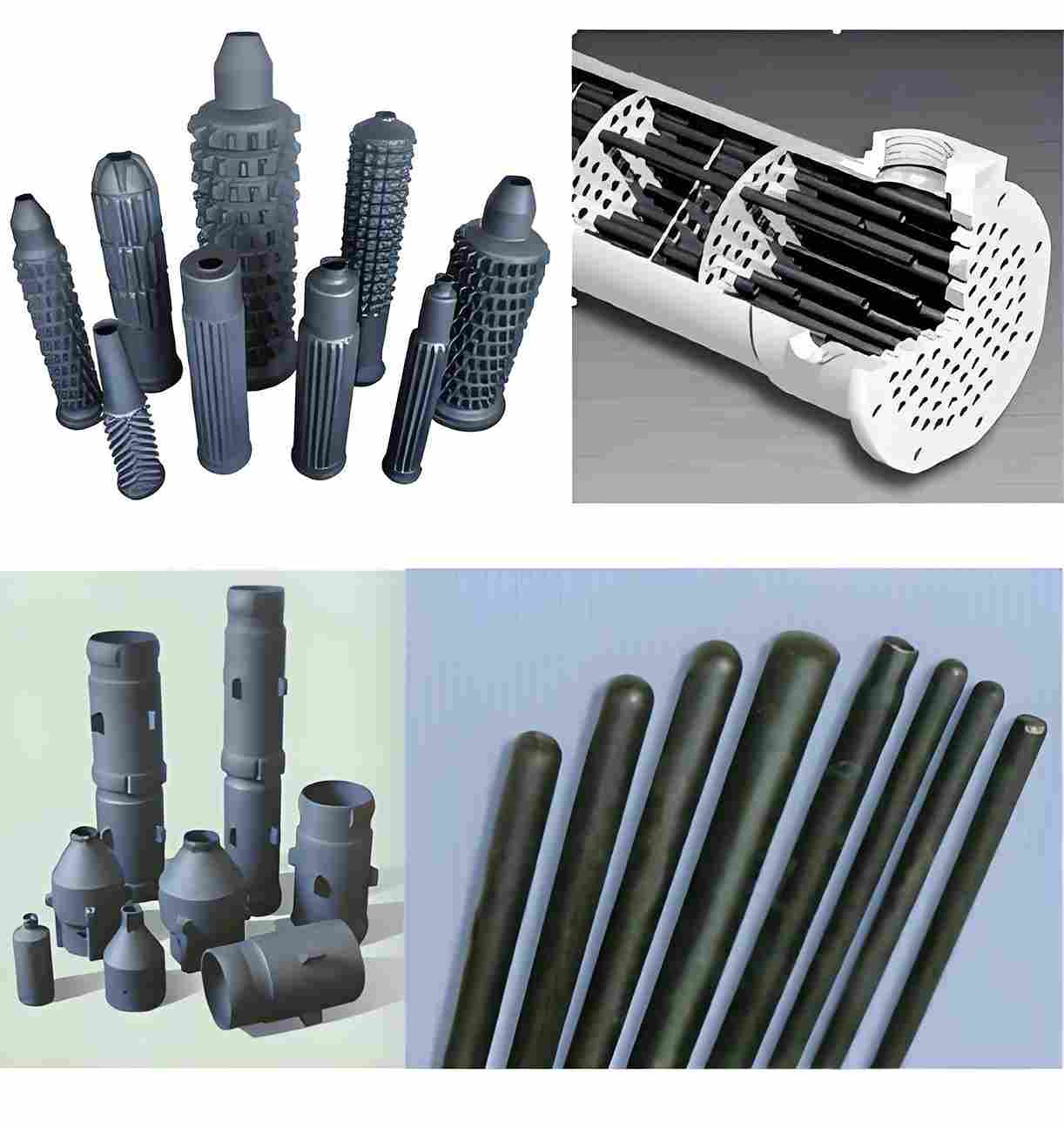
Silicon carbide (SiC) wear failure usually shows up as premature cracking, dimensional loss, or surface roughening that forces an unexpected shutdown.
Quick Summary
- Common culprits: improper grade, thermal shock, corrosive media, and design stress concentrations.
- Early detection: visual inspection, precision metrology, ultrasonic/NDT.
- Fixes: grade selection, surface treatment, geometry redesign, process control.
- Why ZIRSEC? 20 years of SiC expertise, stocked standard sizes, fast custom tooling, and full engineering support.
1. Common Causes of SiC Wear Failure
1.1 Improper Material Grade
Not all SiC is created equal. Low‑purity powder (< 95% SiC) contains more residual silicon and porosity, which accelerates oxidation at 1200 °C and leads to grain boundary spalling. In high‑temperature furnaces we see a 30‑40% faster wear rate when the grade drops from 99.5% to 97% purity.
1.2 Thermal Shock and Rapid Temperature Cycling
SiC’s low thermal expansion (≈4.5×10⁻⁶ K⁻¹) is an advantage, but sudden temperature jumps create high tensile stress on the surface layer. A furnace ramp of 300 °C per minute can produce micro‑cracks that propagate under load, cutting component life by half.
1.3 Corrosive or Abrasive Media
Molten salts, fluorinated gases, and silica‑laden slurries chemically attack SiC. For example, alumina‑based slurries increase wear depth by 0.08 mm/h at 1300 °C, compared with inert argon environments. The abrasive particles act like sandpaper, abrading the ceramic surface.
1.4 Design Stress Concentrations
Sharp corners, abrupt diameter changes, or undersized wall thickness concentrate stress. Finite‑element analysis of a typical SiC tube shows peak stress 2.5× higher at a 90° corner versus a 30° fillet, directly correlating with observed crack initiation sites.
1.5 Manufacturing Defects
Inclusions, lamination defects, or uneven sintering create weak planes. Even a 0.2 mm internal void can become a crack nucleation point under cyclic load, especially in high‑pressure applications.
2. Diagnosing Wear Early
2.1 Visual Inspection
Regularly scheduled visual checks using a 10× magnifier reveal surface pitting, discoloration, or edge chipping. A simple colour shift from gray to light amber often signals oxidation onset.
2.2 Dimensional Measurement
Laser‑based profilometry with ±0.02 mm resolution tracks wall‑thickness loss. When wear exceeds 0.15 mm on a 10 mm tube, replace the part before pressure‑induced failure.
2.3 Non‑Destructive Testing (NDT)
Ultrasonic pulse‑echo can detect internal delamination down to 0.1 mm. In a recent steel‑plant case, ultrasonic scanning caught a 0.3 mm subsurface crack three weeks before it broke during operation, saving $120 000 in downtime.
3. Effective Fixes and Mitigation Strategies
3.1 Optimize Material Grade
Select a high‑purity SiC grade (≥ 99.5%) with controlled grain size (0.5‑2 µm) for critical wear zones. Add a small amount (0.5‑1 wt %) of boron carbide to enhance oxidation resistance without sacrificing hardness.
3.2 Surface Treatments
Polishing to Ra ≤ 0.5 µm reduces abrasive wear by up to 40 %. For aggressive environments, apply a thin (< 20 µm) SiC‑coated Al₂O₃ barrier via plasma spraying; field tests show a 2‑fold life extension in molten‑salt reactors.
3.3 Design Modifications
Replace sharp transitions with radius‑filleted geometry (≥ 2 mm radius). Increase wall thickness by 15‑20 % in high‑pressure sections, or use a double‑wall construction with an inner SiC liner and an outer stainless‑steel jacket for thermal buffering.
3.4 Process Control
Limit temperature ramp rates to ≤ 150 °C/min and maintain a protective inert atmosphere (argon or nitrogen) whenever possible. Monitor furnace atmosphere composition with an O₂ sensor; keeping O₂ < 100 ppm cuts oxidation‑driven wear dramatically.
3.5 Regular Maintenance Schedule
Implement a predictive‑maintenance program based on wear‑rate data. Replace components after a predetermined wear threshold (e.g., 0.12 mm loss) rather than waiting for a catastrophic failure.
4. Real‑World Case Studies
Case Study 1: Pump‑Seal Ring Failure in a Chemical Plant
A European pump‑valve manufacturer experienced unexpected downtime because a SiC seal ring cracked after only 2 months. Investigation revealed a low‑purity grade (96% SiC) and exposure to a chlorinated solvent at 1050 °C. Switching to a 99.7% SiC grade with a 0.5 µm polishing finish eliminated the issue, extending the seal’s service life from 2 months to over 18 months.
Case Study 2: Furnace Tube Wear in a Steel Mill
In a U.S. steel reheating furnace, a SiC tube showed 0.3 mm wall loss after 4 000 hours of operation. The root cause was rapid temperature cycling during start‑up/shut‑down. By redesigning the tube with a 3 mm fillet at each end and adopting a controlled ramp‑up procedure (≤ 120 °C/min), wear dropped to 0.08 mm per 4 000 hours. The mill saved an estimated $85 000 in replacement costs annually.
5. Selecting the Right SiC Supplier
When you partner with a supplier that combines material expertise, quick turn‑key capabilities, and engineering support, you reduce risk dramatically. ZIRSEC has been producing SiC ceramics for two decades, offering both stocked standard sizes and fast custom tooling. Our engineering team works directly with your CAD files to optimise geometry, material grade, and surface finish. For high‑temperature conduit applications, explore our Silicon Carbide Tubes—available in standard dimensions with 24‑hour dispatch or fully custom solutions delivered within 4‑6 weeks.
6. Frequently Asked Questions
- Q: How often should I inspect SiC components?
- A: For continuous‑process equipment, schedule visual and dimensional checks every 1 000 hours of operation; for batch‑type equipment, inspect after each major run.
- Q: Can I retrofit an existing component with a protective coating?
- A: Yes, plasma‑sprayed SiC/Al₂O₃ coatings are compatible with most existing geometries and can be applied in‑situ if the part is removable.
- Q: Does a higher purity grade always cost more?
- A: Premium grades are about 20‑30% higher per kilogram, but the extended life often results in a lower total cost of ownership.
- Q: What documentation does ZIRSEC provide?
- A: Full material certificates (COA), MSDS, dimensional inspection reports, and custom design verification reports are supplied with every order.
7. Actionable Takeaway
Start by auditing your existing SiC components: verify the grade, check for thermal‑shock exposure, and measure wear against the thresholds listed above. If any of the red flags appear, contact a seasoned supplier—such as ZIRSEC—to discuss grade upgrades, surface‑finishing options, or design refinements. A short engineering consultation can identify the most cost‑effective fix and get you back on line faster than a costly emergency replacement.