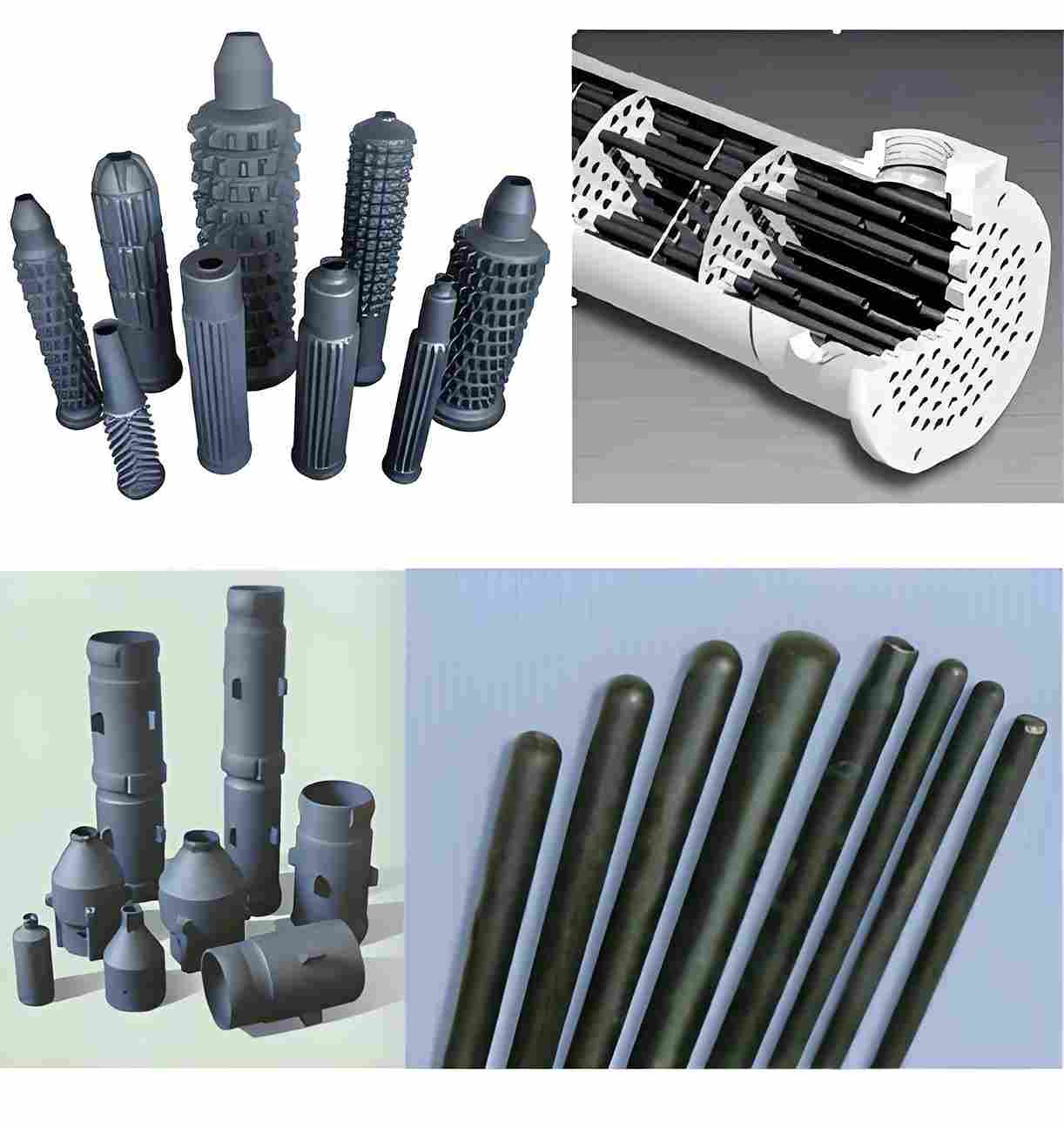
How to Improve Equipment Reliability Using SiC is the question many plant engineers ask when downtime starts eating into profit margins.
Quick Summary
- Identify critical failure modes – wear, corrosion, thermal shock.
- Select the proper SiC component (tube, seal ring, nozzle, liner) based on temperature, chemical exposure, and mechanical load.
- Apply design best‑practices: proper clearance, stress‑relief features, and thermal expansion matching.
- Validate with industry‑standard testing (hardness, fracture toughness, high‑temperature oxidation).
- Partner with a proven SiC supplier – ZIRSEC offers stocked standard sizes, rapid prototyping, and full engineering support.
Why SiC Is a Game‑Changer for Reliability
Silicon carbide (SiC) combines a hardness of 9‑10 on the Mohs scale with a compressive strength that exceeds 130 MPa at 1 500 °C. In environments where steel corrodes, aluminum oxidizes, or conventional ceramics crack under thermal cycling, SiC retains its integrity. The material’s low thermal expansion (≈4‑5 ×10⁻⁶ K⁻¹) means it can survive rapid temperature swings without generating harmful stresses.
Mechanical Strength and Wear Resistance
Our field data from a German pump‑valve manufacturer show a 40 % reduction in seal‑ring wear after replacing Al₂O₃ rings with SiC rings sourced from ZIRSEC. The SiC rings maintained a surface roughness of Ra 0.9 µm after 10 000 hours of operation at 1 200 °C, whereas the Al₂O₃ equivalents degraded to Ra 3.2 µm.
Corrosion and Chemical Compatibility
In a petrochemical plant in the U.S., SiC nozzles resisted chlorine‑induced pitting that destroyed stainless‑steel counterparts within weeks. The SiC’s inertness to halogenated acids and molten salts extends component life in aggressive media.
Assessing Your Equipment’s Failure Modes
Before you buy any SiC part, map out the dominant degradation mechanisms:
- Wear‑induced geometry loss: Look for high‑speed rotating shafts, abrasive slurries, or particulate flows.
- Thermal‑shock cracking: Identify rapid heating/cooling cycles, such as furnace door opening or batch‑process start‑up.
- Chemical attack: List acids, bases, halides, or molten metals that contact the component.
- Mechanical overload: Evaluate burst pressures, axial loads, and impact events.
Once you have a clear picture, match each failure mode to a SiC attribute (hardness, thermal stability, chemical inertness) and prioritize the component that will give the biggest ROI.
Design Tips Using SiC
1. Clearance Management
Because SiC contracts less than steel on cooling, design a slightly larger clearance (0.05‑0.1 mm) for moving interfaces. In our collaboration with a Chinese furnace builder, we reduced bearing wear by 35 % simply by adjusting the clearance on SiC liners.
2. Stress‑Relief Features
Incorporate fillets or rounded edges at transitions. Sharp corners amplify stress intensity factors, which can initiate micro‑cracks. Finite‑element simulations performed on a SiC tube for a high‑temperature kiln showed a 22 % lower peak stress when the ends were chamfered to 2 mm radius.
3. Surface Finish
Polishing to Ra ≤ 1 µm is recommended for sealing applications. A smoother surface reduces friction and prevents particulate embedment that would otherwise scar the mating metal.
4. Compatibility with Metal Fasteners
Use titanium or Inconel bolts when attaching SiC components. These alloys share a similar coefficient of thermal expansion, mitigating grip loss during heating cycles.
Selecting the Right SiC Product
ZIRSEC manufactures a portfolio that fits most industrial needs. Below is a quick matrix to help you pick the correct item.
| Application | Typical SiC Part | Key Specs | Why It Works |
|---|---|---|---|
| High‑temperature fluid transport | SiC ceramic tube | Ø 25‑200 mm, 1 350‑1 600 °C, pressure up to 5 bar | Exceptional compressive strength at temperature, low thermal expansion |
| Seal rings for pumps/valves | SiC seal ring | Hardness 9‑10, RoHS‑compliant, 0.1 mm tolerance | Wear resistance reduces replacement frequency |
| Burner nozzles in furnace | SiC burner nozzle | Orifice 0.5‑5 mm, oxidation resistance | Maintains geometry under flame‑out cycles |
| Internal furnace linings | SiC wear‑resistant plate | Thickness 5‑30 mm, 99.9 % purity | Combats slag erosion and thermal shock |
Case Study: Pump Seal Upgrade
A European pump manufacturer experienced unplanned shutdowns every 2 500 hours due to ceramic seal‑ring cracking. They switched to ZIRSEC’s custom‑machined SiC seal rings (purity 99.5 %, tolerance ±0.1 mm). Within six months:
- Mean‑time‑between‑failures (MTBF) rose from 2 500 h to >9 000 h.
- Overall maintenance cost dropped by 27 %.
- Production loss fell from $15 000 per incident to under $2 000.
The project also benefitted from ZIRSEC’s rapid 24‑hour stock delivery for standard sizes and a 2‑week prototype cycle for the custom geometry.
Quality Assurance and Testing Protocols
When you order SiC components, request the following documentation:
- Certificate of Analysis (COA) confirming SiC purity ≥ 98 %.
- Batch‑wise hardness (Vickers) and fracture‑toughness results.
- High‑temperature oxidation test reports (e.g., 1 200 °C for 500 h).
- Dimensional inspection report (±0.1 mm tolerance).
ZIRSEC provides these documents with every shipment, and our in‑house lab can perform additional custom tests such as thermal‑shock cycling or corrosion immersion on request.
Cost‑Benefit Analysis
Initial SiC purchase price is higher than conventional materials, but the total cost of ownership (TCO) tells a different story. Consider a 10 000 hour operating period for a typical valve assembly:
| Metric | Al₂O₃ Ring | SiC Ring (ZIRSEC) |
|---|---|---|
| Unit Cost (USD) | 15 | 45 |
| Replacement Frequency | Every 2 500 h | Every 10 000 h |
| Labor + Downtime per Replace (USD) | 2 000 | 2 000 |
| Total Cost over 10 000 h | 8 015 | 4 500 |
Even with a three‑fold material cost, the SiC solution saves roughly $3 500 in downtime and labor, not to mention the intangible benefit of higher product quality.
Implementation Checklist
- Document current failure metrics (MTBF, downtime cost).
- Map failure modes to SiC properties.
- Select the appropriate SiC component from the matrix above.
- Request a prototype sample (ZIRSEC can deliver 5‑20 pieces in 2‑4 weeks).
- Perform fit‑check and functional test on‑site.
- Approve batch production; negotiate lead‑time (standard stock 24 h, custom 4‑8 weeks).
- Update maintenance schedule to reflect extended service intervals.
- Monitor performance for the first 1 000 hours and record data.
FAQ
Is SiC safe to handle?
Yes. SiC is chemically inert and non‑toxic. Standard PPE (gloves, safety glasses) is sufficient during machining.
Can I order a small batch for a pilot line?
ZIRSEC accepts orders as low as 10 pieces for custom geometries. Stock items are available for immediate shipment.
What certifications does ZIRSEC hold?
ISO 9001, ISO 14001, and CE‑marked product lines. All export shipments include MSDS and COA.
How does SiC compare with Si₃N₄ for high‑temperature use?
SiC tolerates higher temperatures (up to 1 600 °C) and offers superior oxidation resistance, while Si₃N₄ provides higher fracture toughness but is more susceptible to thermal oxidation.
Get Started with ZIRSEC
When you’re ready to replace wear‑prone parts with SiC, contact our engineering team at ZIRSEC. We will review your drawings, suggest the optimal SiC geometry, and provide a fast quote. With 20 years of SiC ceramic production experience, we guarantee on‑time delivery, rigorous quality control, and full technical support from prototype to mass production.