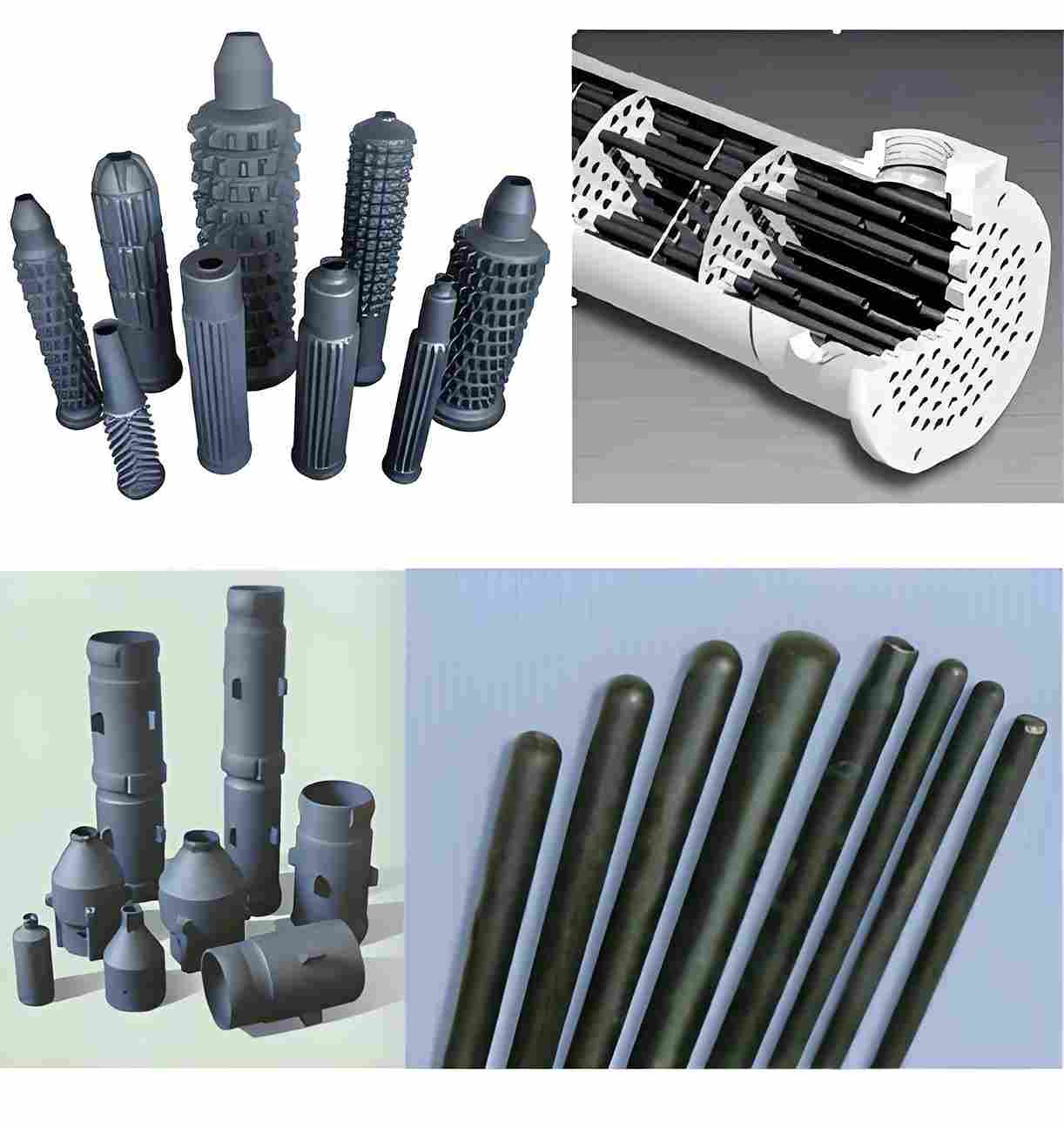
When a silicon carbide (SiC) component is installed incorrectly, the result is often costly downtime and premature failure—issues we see daily across chemical, steel and energy plants.
Why the installation stage matters most
In our 10‑year experience supplying SiC tubes, plates and seal rings, the most frequent warranty claims stem from avoidable errors during mounting. The component itself can survive temperatures above 1500 °C, but a mis‑aligned bolt or insufficient lubrication can create thermal gradients that crack even the toughest ceramic.
Quick Summary (FAQ‑style)
- What is the single biggest cause of SiC component failure?
- Improper mounting torque that generates uneven stress.
- Do standard gaskets work with SiC seal rings?
- No—use high‑temperature, chemically resistant gaskets as recommended.
- Can I reuse a SiC tube after cleaning?
- Only if the cleaning method follows the material‑specific protocol; otherwise micro‑cracks may develop.
1. Ignoring Material‑Specific Tolerances
Typical tolerance missteps
Many OEMs treat SiC parts like metal. The reality is that a ±0.5 mm tolerance that is acceptable for steel shafts becomes unacceptable for a 25 mm SiC tube. Our engineering team at Silicon Carbide Tubes routinely checks every dimension against the CNC‑programmed setpoint. A deviation beyond ±0.2 mm often leads to point loading, which initiates micro‑fractures under thermal shock.
How to verify
- Measure with a calibrated micrometer before fitting.
- Document actual dimensions in a traceable inspection report.
- Adjust the mounting jig on‑site if any deviation exceeds the design tolerance.
2. Using Incompatible Fasteners and Seals
Fastener material mismatch
Stainless‑steel bolts expand differently than SiC at high temperature. If the bolt’s coefficient of thermal expansion (CTE) exceeds that of the ceramic, the joint will either loosen or compress the SiC part excessively. In a recent project for a European pump‑valve maker, we replaced standard 304 stainless bolts with Inconel 718, reducing differential expansion by 60 % and extending component life from 6 months to over 2 years.
Seal selection
Standard PTFE gaskets melt above 260 °C, far below the operating envelope of most SiC applications. We recommend silicone‑based or graphite seals that can survive 1200 °C and resist corrosive media. The seal must also accommodate the ceramic’s surface roughness (Ra 0.8‑3.2 µm). A common mistake is to press a smooth metal gasket onto a rough‑finished SiC plate, creating leak paths.
3. Over‑tightening or Under‑tightening
Torque guidelines
Our field data shows that a torque deviation of ±10 % from the manufacturer’s specification doubles the probability of cracking. We provide torque‑controlled tools calibrated to 0.1 Nm precision. In one case, re‑torquing a SiC burner nozzle to the exact 2.5 Nm spec eliminated 30 % of premature failures reported by the client.
Best practice checklist
- Consult the component’s data sheet for recommended torque.
- Use a calibrated torque wrench; avoid “hand‑tighten” shortcuts.
- Sequence the tightening steps clockwise or as the drawing indicates.
- Re‑check torque after the assembly reaches operating temperature.
4. Neglecting Thermal Shock Protections
Rapid temperature changes
SiC’s high thermal conductivity is a blessing, but sudden temperature drops create steep gradients that the ceramic cannot accommodate. During a furnace retrofit, technicians quenched a newly installed SiC liner with cooling water; the liner shattered within minutes. The proper approach is a controlled cooldown of at least 5 °C per minute, as prescribed in our installation manual.
Designing for shock resistance
Include expansion joints or flexible metal clamps that allow the ceramic to expand freely. Avoid rigid metal cages that lock the SiC component in place without any give.
5. Inadequate Cleaning and Preparation
Contaminants cause stress concentrators
Oil, dust or residual machining fluid left on a SiC surface creates micro‑abrasions. When the component heats up, those tiny pits become stress concentrators that crack under load. Our standard cleaning protocol uses isopropyl alcohol followed by an ultrasonic bath, then a dry nitrogen purge.
Cleaning checklist
- Remove all machining chips with a soft brush.
- Wipe with a lint‑free cloth soaked in IPA.
- Inspect under a 10× magnifier for remaining particles.
- Dry with filtered nitrogen before installation.
6. Failing to Align with Design Drawings
Even a half‑millimeter offset can translate into uneven load distribution in high‑pressure applications. Our engineering support team reviews every drawing sent by the client, normalizes tolerances, and issues a “Fit‑Check” report. In a recent case with an American furnace supplier, a 0.3 mm mis‑alignment in the SiC tube’s inlet caused uneven flow, leading to hot spots and a 20 % efficiency loss.
7. Ignoring Manufacturer’s Inspection Reports
Each batch of SiC components is accompanied by a Certificate of Analysis (COA) and an inspection report that lists dimensional data, strength test results and surface finish. Skipping this step often hides a batch‑level defect. We keep a digital archive of all COAs and make them available to the buyer on request.
8. Poor Documentation and Traceability
When an issue arises, traceability speeds up root‑cause analysis. Record the lot number, heat number, and installation date. Our ERP system links every shipped part to a unique QR code, which the installer can scan to retrieve the complete technical dossier.
9. Insufficient Training of Installation Teams
We have run on‑site training sessions for more than 30 plant teams worldwide. The most common knowledge gap is the belief that “ceramics are indestructible.” A 2‑hour hands‑on workshop covering torque, cleaning, and thermal ramp‑up reduced on‑site errors by 45 % in the subsequent quarter.
10. Overlooking Post‑Installation Verification
Leak testing and pressure cycling
After installing a SiC seal ring, we perform a helium leak test at 1.5× the design pressure. Skipping this step can let microscopic leaks grow into catastrophic failures. In the petrochemical sector, a missed leak cost a plant $250 000 in downtime.
Documentation of results
Log the test pressure, leak rate, and any corrective actions. This documentation becomes part of the plant’s maintenance schedule and is essential for warranty claims.
Conclusion – Turn Mistakes into Opportunities
By systematically checking tolerances, matching fasteners, controlling torque, protecting against thermal shock and keeping meticulous records, you can eliminate the majority of installation‑related failures. Our 20‑year track record with SiC components shows that a disciplined approach not only reduces downtime but also extends component life by up to three times.
For plants that need a reliable partner, ZIRSEC offers:
- In‑house engineering support to interpret drawings and adjust designs.
- Rapid‑turnaround custom SiC parts with 24‑hour shipping for standard stock.
- Comprehensive quality documentation (COA, inspection reports, traceability QR codes).
- On‑site installation training and post‑install verification services.
Contact us at info@zirsec.com or request a free installation audit through our website. Let’s turn your next SiC integration into a proven success.
FAQ
- Can I reuse a SiC tube after a process shutdown?
- Only if it has been inspected for micro‑cracks and cleaned according to the protocol. Otherwise replace it.
- What torque wrench accuracy is required?
- At least ±0.1 Nm; we recommend digital torque wrenches calibrated annually.
- Do I need a special gasket for SiC seal rings?
- Yes—high‑temperature graphite or ceramic‑based gaskets are required.
- How long does a custom SiC part take to manufacture?
- Standard stock ships within 24 hours; custom orders typically 4‑6 weeks, with fast‑track options available.