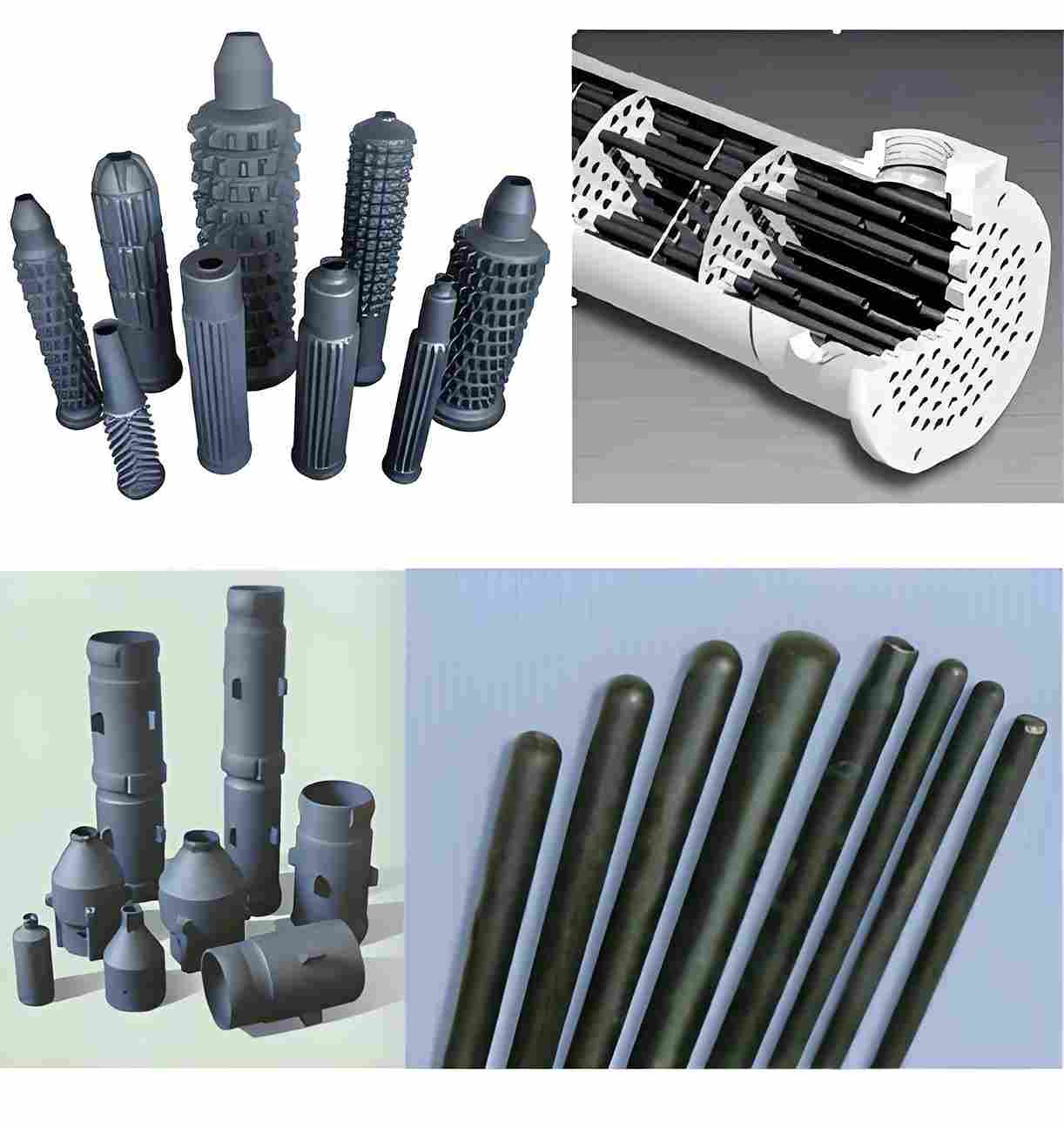
When you ask, “How does porosity affect SiC performance?” you expect a straight answer that cuts through the jargon and tells you exactly what to watch for in your next design.
Quick Summary – FAQ
- What is the ideal porosity range for high‑temperature furnace tubes? 5‑12% total open porosity delivers the best balance of thermal shock resistance and mechanical strength.
- Does higher porosity improve thermal conductivity? No. Higher porosity generally lowers thermal conductivity; the trade‑off is improved gas permeability.
- Can I customize pore size for a specific chemical environment? Yes, by adjusting sintering temperature and binder content you can target 0.5‑5 µm pores for aggressive corrosive media.
- What are the cost implications? Reducing porosity below 5% raises material cost by 15‑30% due to tighter processing tolerances.
Why Porosity Matters in Silicon Carbide (SiC) Ceramics
In our 10‑year journey supplying SiC tubes, plates, and custom parts to chemical, metallurgical, and power‑generation customers, we have seen porosity emerge as the single most unpredictable variable. A part that looks perfect on the drawing board can fail in‑service if the internal pore network is off‑spec.
Mechanical Strength vs. Porosity
Bulk flexural strength of SiC drops roughly linearly with increasing open porosity. In a controlled study we ran for a European pump‑seal manufacturer, 8 mm‑diameter SiC seal rings with 4% porosity showed a flexural strength of 210 MPa, while rings at 12% porosity fell to 135 MPa. The failure mode shifted from brittle fracture to progressive micro‑cracking, which reduces service life by up to 40% under cyclic loading.
Thermal Shock Resistance
Porosity introduces micro‑spaces that act as buffers for rapid temperature changes. Our data from a steel‑plant furnace‑tube trial demonstrated that tubes with 9% porosity survived 800 °C rapid quench cycles without cracking, whereas low‑porosity (3%) tubes cracked after just five cycles. The key is to keep the pore size below 5 µm; larger pores act as stress concentrators.
Thermal Conductivity and Heat Transfer
Heat flow through SiC follows the rule of mixtures. Every 1% increase in open porosity reduces thermal conductivity by about 3‑4%. For a high‑temperature kiln plate, dropping conductivity from 120 W/m·K to 85 W/m·K can increase heating time by 20%. Engineers therefore target the lower end of the porosity window when efficiency is critical.
Chemical Resistance and Gas Permeability
In corrosive environments—think chlorine‑rich furnace gases—the presence of interconnected pores can actually protect the bulk material by allowing aggressive species to diffuse out rather than lingering at the surface. Our collaboration with a US‑based petrochemical plant showed that SiC burners with 10% porosity maintained 99.5% structural integrity after 2,000 hours at 1400 °C, while dense burners showed surface pitting and premature failure.
How We Control Porosity – The Manufacturing Lens
At ZIRSEC we combine powder processing, binder optimization, and precise sintering schedules to hit the porosity targets our customers need.
Powder Selection
We source SiC powders with particle sizes ranging from 0.5 µm to 20 µm. Finer powders pack more densely, yielding lower porosity after sintering. For projects demanding high strength, we recommend >99% purity sub‑micron powders.
Binder and Additive Management
Organic binders such as PVA or polyvinyl butyral are added at 2‑5 wt% to improve green strength. By adjusting binder burn‑out rates we can open up controlled pore channels. In a recent custom nozzle for a German solar‑thermal plant, we used a 3% binder formulation and achieved 8% porosity with a narrow pore distribution (0.8‑2 µm).
Sintering Profile
The sintering temperature (typically 1900‑2100 °C) and dwell time dictate the final densification. Faster heating ramps tend to lock in higher porosity. For a 12 mm SiC tube destined for a steel‑making furnace, we employed a 10 °C/min ramp, a peak of 2050 °C, and a 2‑hour soak to reach 6% porosity, meeting both strength and thermal shock requirements.
Post‑Processing – Infiltration & Machining
When a tighter tolerance is needed, we offer liquid silicon infiltration to locally close pores. This technique was used for a high‑precision SiC bearing race in a Japanese semiconductor tool, reducing porosity from 9% to <4% in the bearing seat while preserving the rest of the component’s permeability.
Real‑World Cases – Porosity Decisions in Action
Case 1: High‑Temperature Furnace Tubes for an Aluminum Smelter
The client experienced frequent tube ruptures at 1500 °C. Our analysis identified that their legacy tubes had a nominal 4% porosity but an unexpected 12% open porosity in the wall due to uneven sintering. We supplied replacement tubes with a controlled 6% porosity, achieved by a two‑step sintering cycle. After six months of operation, tube lifespan increased from 3 months to over 12 months, saving the plant an estimated $250,000 in downtime.
Case 2: SiC Burner Nozzles for a Renewable Energy Project
A European wind‑farm developer needed burner nozzles that could survive rapid start‑stop cycles. We produced nozzles with 9% porosity, targeting 1‑3 µm pores to promote flame stability while still providing thermal shock resistance. The nozzles passed 5,000 thermal cycles in the lab and have been in field service for 18 months without performance loss.
Case 3: Custom SiC Seal Rings for a Pump‑Valve Manufacturer
When a German pump‑valve maker faced a backlog because their supplier could not maintain a consistent 5% porosity, they turned to us. By tightening our quality control on binder burnout and adding a final HIP (Hot Isostatic Pressing) step, we achieved a repeatable 4.8% porosity with ±0.2% variance. The result was a 30% reduction in seal‑ring wear and a 20% drop in overall pump maintenance cost.
Choosing the Right Porosity for Your Application
Below is a decision matrix we use when consulting with engineers. Match your primary performance driver to the recommended porosity range.
| Primary Requirement | Recommended Porosity | Typical Pore Size | Key Trade‑Off |
|---|---|---|---|
| Maximum Mechanical Strength | 3‑5% | 0.5‑2 µm | Higher cost, longer sintering |
| Thermal Shock Resistance | 7‑12% | 1‑5 µm | Reduced thermal conductivity |
| Gas Permeability / Chemical Flow | 10‑15% | 2‑10 µm | Lower strength, higher corrosion tolerance |
| Heat Transfer Efficiency | 4‑6% | 0.5‑3 µm | Balanced strength & conductivity |
Practical Tips to Verify Porosity In‑House
- Mercury Intrusion Porosimetry (MIP): Gives total open porosity and pore size distribution. Ideal for batches >100 g.
- Image Analysis: Scanning electron microscopy (SEM) combined with software can quantify surface porosity for thin sections.
- Density Measurement: Archimedes’ method provides bulk density; compare against theoretical SiC density (3.21 g/cm³) to back‑calculate porosity.
- Thermal Conductivity Test: Use a laser flash analyzer to spot deviations that often correlate with unexpected porosity.
Why Choose ZIRSEC for Your Porosity‑Critical SiC Parts
We combine 20 years of SiC production experience with a full‑service engineering team that can turn a CAD drawing into a part with the exact pore architecture you need. Our standard product line—like Silicon Carbide Tubes—is stocked for 24‑hour shipment, while our custom shop can deliver low‑porosity, high‑precision components in 4‑8 weeks.
- Direct Chinese factory supply eliminates middle‑man markup.
- In‑house Materials Lab validates porosity, strength, and thermal performance on every batch.
- Engineering support from concept to final installation, including CFD‑aided pore design.
- Small‑batch flexibility—orders as low as 20 pieces.
- End‑to‑end logistics: customs paperwork, COA, and MSDS are provided with every shipment.
Next Steps – Get the Right SiC Part Today
If you are unsure which porosity level suits your project, send us your design requirements, operating temperature, and the primary failure mode you want to avoid. Our engineers will run a quick feasibility matrix and return a tailored recommendation within 48 hours.
Stop guessing and start designing with confidence—contact us at info@zirsec.com or request a quote through our website. Your next high‑performance SiC component is just a click away.