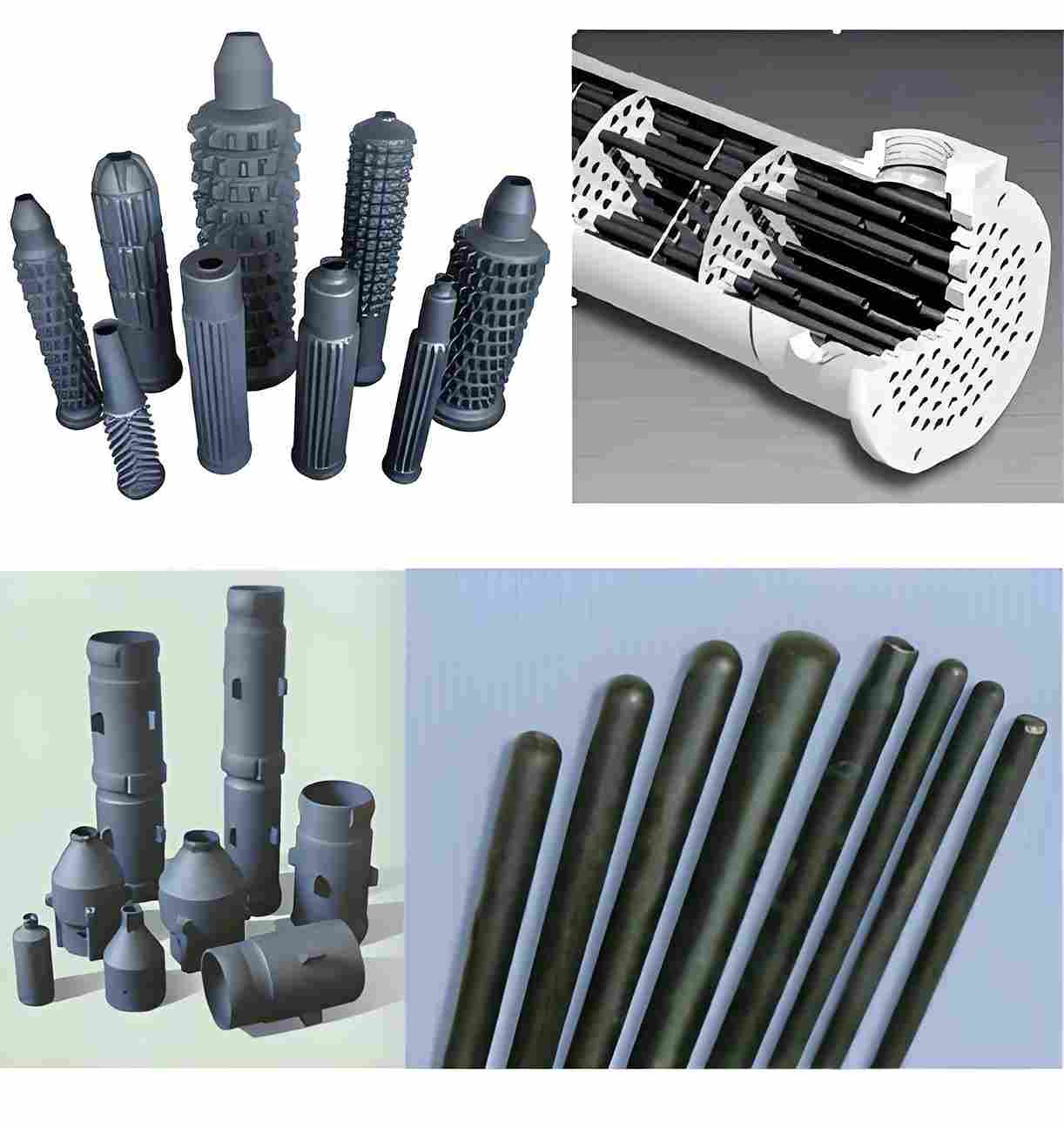
Silicon carbide (SiC) ceramic components thrive where most materials fail – high‑temperature furnaces, corrosive reactors, abrasive slurry lines and other harsh environments that demand durability and precision.
Quick Summary
- Operating temperature up to 1600 °C with minimal strength loss.
- Exceptional corrosion resistance to acids, bases and molten metals.
- Hardness > 2600 HV and wear rates 10‑30× lower than alumina.
- Mechanical strength > 130 MPa in radial bending, even after thermal shock.
- Custom dimensions, tolerances ±0.2 mm (standard) – ±0.1 mm on request.
- Fast 24‑hour stock delivery; prototype in 2‑4 weeks; full production 4‑8 weeks.
Why SiC Matters in Extreme Conditions
Engineers often ask, “Can SiC really survive my process at 1500 °C while handling aggressive chemicals?” The answer is a confident Yes, backed by data from decades of field experience. SiC’s crystal lattice gives it a unique combination of thermal, mechanical and chemical stability that no single metal or conventional ceramic can match.
Thermal Resistance
SiC retains > 90 % of its flexural strength at 1300 °C and only drops to ~ 70 % at 1600 °C. Its low coefficient of thermal expansion (4‑5 ×10⁻⁶ K⁻¹) reduces stress during rapid heating or cooling, making it ideal for furnace tubes, crucibles and burner nozzles that experience frequent thermal cycling.
Chemical Resistance
Inhaled gases, molten salts or strong acids do not attack a properly sintered SiC surface. Tests show negligible mass loss after 100 h immersion in 30 % H₂SO₄ at 800 °C, and the material remains inert to liquid sodium, molten aluminum and phosphoric acid. This makes SiC the go‑to choice for chemical‑process reactors, corrosion‑resistant linings and thermocouple protection tubes.
Wear Resistance
With a Vickers hardness of 2600‑2800 HV, SiC outperforms alumina (≈ 1800 HV) and most engineered steels. In abrasive slurry pumps the wear rate of a SiC seal ring can be 20 % of a comparable Al₂O₃ part, extending service life from 6 months to over 3 years under identical operating conditions.
Mechanical Strength
Standard SiC tubes from ZIRSEC exhibit a radial bending strength of 140 MPa and a compressive strength over 350 MPa. Even after a 100 °C / – 100 °C thermal shock test (10 s dwell), the strength loss remains under 5 %. This reliability is critical for high‑pressure gas lines and rotating kiln rollers where sudden pressure spikes occur.
Comparative Analysis with Competing Materials
When the selection committee asks, “Should we use SiC or Al₂O₃?” the decision hinges on three practical metrics:
| Metric | SiC | Al₂O₃ | Si₃N₄ |
|---|---|---|---|
| Max Continuous Temp. | 1600 °C | 1300 °C | 1400 °C |
| Corrosion (Acid) | Negligible | Moderate | Low |
| Hardness (HV) | 2600‑2800 | 1800‑1900 | 1500‑1600 |
| Thermal Shock | Excellent | Fair | Good |
| Cost (per kg) | $$ | $ | $$$ |
For projects where temperature, corrosion and wear intersect, SiC provides the only balanced solution; attempting to substitute Al₂O₃ or Si₃N₄ often forces a redesign or results in premature failure.
Industrial Applications that Rely on SiC
Chemical Processing
Large‑scale petrochemical plants use SiC seal rings and furnace tubes to handle hydrofluoric acid, chlorination streams and high‑temperature reforming gases. A German pump‑valve maker reported a 30 % reduction in downtime after switching to custom SiC seal rings from ZIRSEC, saving roughly $20,000 per month.
Metallurgy and Steelmaking
In electric arc furnaces, SiC crucibles and shaft sleeves survive molten steel at 1550 °C while resisting slag attack. Their low thermal conductivity (≈ 120 W/m·K) also helps maintain a stable temperature profile, improving metal quality.
Power and Energy
Solar‑thermal receivers, gas turbines and waste‑heat recovery units employ SiC ceramic plates and tubes to capture heat without degrading. The material’s high emissivity (0.7‑0.9) maximises radiative transfer, boosting overall system efficiency by up to 5 %.
Wear‑Critical Machinery
Grinding mills, sand‑blasting nozzles and high‑speed rollers benefit from SiC’s abrasion resistance. A UK water‑treatment plant replaced steel nozzles with SiC burners and observed a 12‑month extension in service life, eliminating the need for quarterly part swaps.
Selecting the Right SiC Part
When a procurement manager asks, “What tolerance do I need for a furnace tube?” the answer depends on installation geometry and thermal expansion allowances. Our engineering team follows these guidelines:
- Standard stock: OD tolerance ±0.5 mm, wall thickness ±0.2 mm.
- Precision series: OD tolerance ±0.2 mm, wall thickness ±0.1 mm – suitable for tight‑fit bearings and high‑speed rotors.
- Surface finish: Ra 0.8 µm for fluid‑tight seals, Ra 3.2 µm for non‑critical wear surfaces.
- Material purity: SiC ≥ 98 % for most applications; 99.5 % available for ultra‑high‑temperature or gas‑sensing environments.
Providing a CAD drawing or a 3‑D model enables us to generate a full‑process inspection plan (dimensional CMM, ultrasonic testing, X‑ray if required) before manufacturing begins.
Why Choose ZIRSEC for Your SiC Needs
We have spent two decades mastering SiC sintering, machining and quality control. Below are the concrete benefits you receive:
- Direct factory supply: No middle‑man markup, price stability even for small batch orders (MOQ 20 pieces).
- Fast stock delivery: Over 30 standard tube sizes and 50 seal‑ring dimensions ready for 24‑hour dispatch.
- Custom engineering support: Our in‑house engineers work with your CAD files, suggest design optimisations and provide thermal‑stress simulations.
- Full supply‑chain management: From order confirmation, ISO‑9001 quality checks, to export documentation (COA, MSDS) and DDP logistics.
- Risk‑free prototyping: First‑article samples shipped within 2 weeks, with a no‑charge redesign policy if dimensions miss the target.
Explore our catalog of ready‑made SiC tubes here: Silicon Carbide Tubes.
Frequently Asked Questions
1. What is the maximum continuous temperature for a SiC tube?
Typical commercial grades operate safely up to 1600 °C. For special high‑purity grades we have verified performance at 1700 °C for limited durations.
2. Can SiC parts be welded or brazed?
Conventional metal welding is not applicable. However, we offer ceramic‑compatible brazing alloys (Ag‑Cu, Ni‑based) and can perform the joint in‑house under controlled atmosphere.
3. How do I verify the material quality before purchase?
We provide a full certificate of analysis (COA), X‑ray diffraction report and, on request, a sample of the raw powder used for the batch.
4. What lead times should I expect for a custom 200 mm Ø×500 mm tube?
Prototype: 2‑4 weeks after CAD approval. Full production (≥ 100 units): 4‑8 weeks, with expedited 3‑week option available at a surcharge.
5. Is there a minimum order for custom parts?
Our standard MOQ is 20 pieces. For highly specialised geometries we can start at 10 pieces, subject to a setup fee.
Take the Next Step
Stop guessing which material will survive your next high‑temperature run. Contact our technical sales team at info@zirsec.com or request a free engineering quote through the website. With ZIRSEC’s ready stock and rapid custom service, you’ll have the right SiC component in hand before your production line feels the impact of a delay.