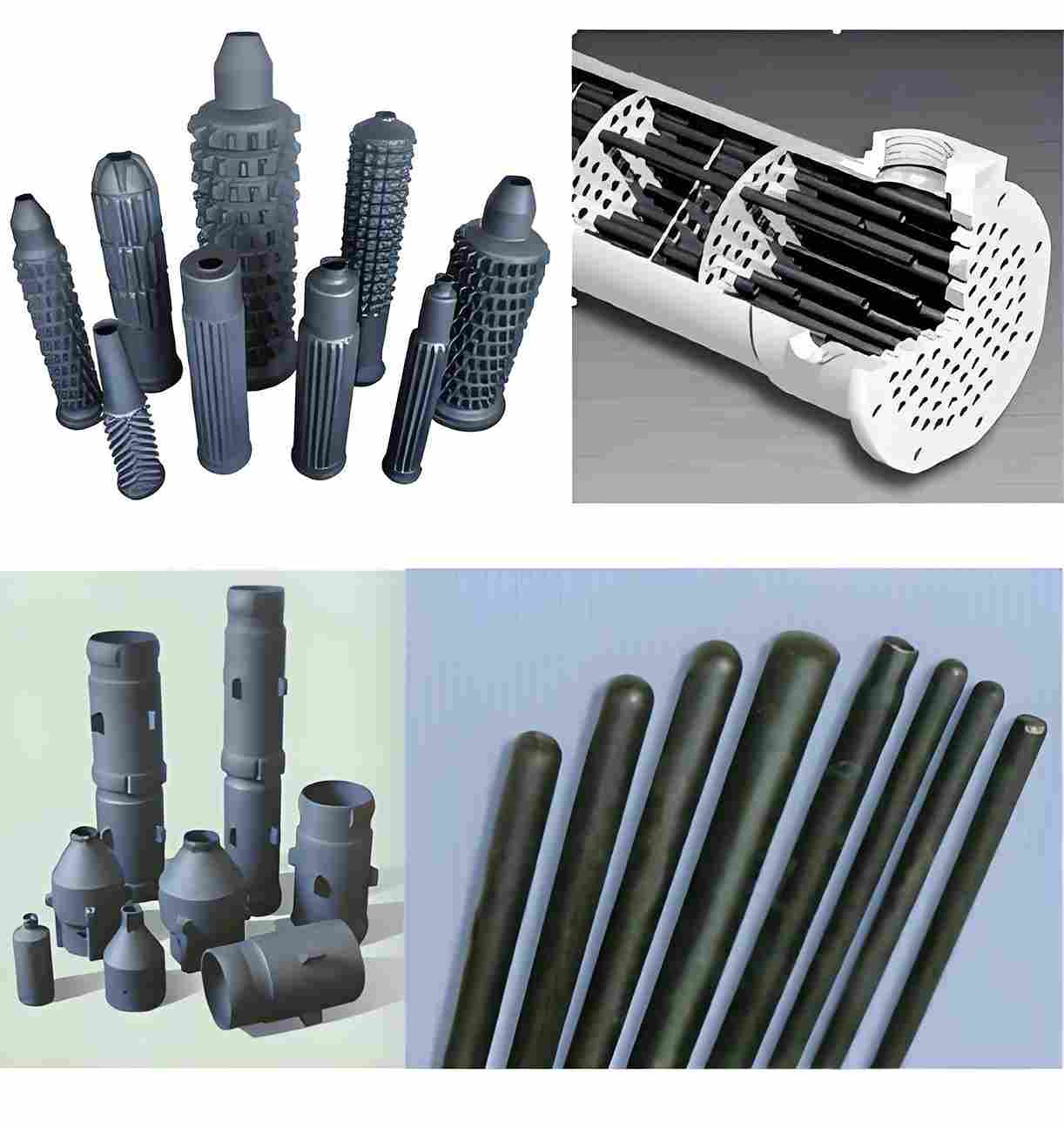
Choosing the proper SiC grade can mean the difference between a furnace that lasts five years and one that fails after the first thermal cycle. In this guide we answer the most pressing questions engineers face when selecting silicon carbide ceramics for harsh industrial environments.
Quick FAQ – Get the Answers in Seconds
- Which SiC grade handles 1600 °C continuous operation? Grade A (≥99.5% purity) with a 1650 °C rating.
- What grade should I specify for corrosive chlorine gas? Grade C with enhanced oxidation resistance (Al₂O₃‑coated).
- Can I order a custom dimension without a full‑scale tool run? Yes – ZIRSEC can mill to ±0.2 mm tolerance from a standard stock bar.
- Typical lead time for a 200 mm SiC tube? 4 weeks for stock, 6‑8 weeks for custom.
- Is there a cost advantage to buying bulk? Unit price drops 12‑18% beyond 500 pcs.
What Are SiC Grades?
Silicon carbide (SiC) isn’t a single material; it spans a spectrum of purity, microstructure, and surface treatment. Manufacturers label this spectrum with grades that map directly to performance metrics such as flexural strength, thermal shock resistance, and chemical stability.
Grade A – High‑Purity, Ultra‑High‑Temp
Grade A ceramic contains ≥99.5% SiC, minimal residual silicon, and a dense, nearly grain‑free microstructure. Typical specs:
- Flexural strength: 300‑350 MPa at 20 °C
- Thermal shock resistance: ΔT ≈ 1200 °C (water quench)
- Maximum continuous use temperature: 1650 °C
- Oxidation rate: <0.01 mg·h⁻¹·cm⁻² at 1500 °C
Industries: high‑temperature furnaces, aerospace hot‑section components, and semiconductor process chambers.
Grade B – Standard Industrial
With 98‑99% purity, Grade B balances cost and performance. It is the workhorse for most chemical‑process equipment.
- Flexural strength: 250‑300 MPa
- Max continuous temperature: 1500 °C
- Typical applications: SiC burner nozzles, pump‑sealing rings, and medium‑size ceramic tubes.
Grade C – Chemically Hardened
Grade C starts from a Grade B base and receives a surface coating (often Al₂O₃ or Si₃N₄) to guard against aggressive media such as chlorine, fluorine, or molten salts.
- Oxidation resistance: up to 1800 °C in oxidizing atmospheres
- Corrosion test: <0.2 mm loss after 100 h in 20% HCl gas at 1200 °C
- Cost premium: roughly 15‑20% over Grade B
How to Match Grade to Application
Below is a practical decision matrix we use when a client contacts us with a rough requirement. The matrix eliminates guesswork and shortens the specification cycle.
| Application | Temperature Range | Corrosive Media? | Recommended Grade | Typical Lead Time |
|---|---|---|---|---|
| High‑temp furnace tube (continuous) | 1400‑1600 °C | No | Grade A | 4‑6 weeks |
| Silicon melt crucible | 1300‑1450 °C | Molten Si | Grade B (high‑purity) + Si‑rich surface | 6‑8 weeks |
| Chlorine‑gas reactor liner | 900‑1100 °C | Cl₂, HCl | Grade C (Al₂O₃‑coated) | 5‑7 weeks |
| Industrial pump‑seal ring | 200‑600 °C | Hydrocarbon, acids | Grade B (standard) | 2‑4 weeks (stock) |
| Burner nozzle for waste‑heat recovery | 800‑1200 °C | Flue gas (SO₂, NOₓ) | Grade C (Si₃N₄‑coated) | 4‑6 weeks |
Real‑World Cases – Why Grade Selection Matters
Case 1 – European Pump‑Valve Manufacturer
The client was using a generic Grade B seal ring sourced from a low‑cost supplier. After three months, the rings showed micro‑cracks and a 12% scrap rate in final assembly. Switching to our Grade A‑plus ring (tight tolerance ±0.1 mm, flexural strength 340 MPa) reduced the scrap rate to <1% and saved the customer an estimated $22,000 per year in re‑work.
Case 2 – US Steel‑Plant Furnace Upgrade
A 3‑meter‑long furnace tube failed after 18 months of operation at 1550 °C. The root cause was oxidation due to a slight silicon deficiency (97% purity). We supplied a custom‑cut Grade A tube with 99.8% purity and a surface‑densified layer. The new tube has logged 25,000 hours with no measurable wear, extending the plant’s maintenance interval from 12 months to 36 months.
Case 3 – German Chemical Reactor Liner
The reactor processed chlorine gas at 1050 °C. The original liner (uncoated Grade B) corroded at a rate of 0.45 mm·h⁻¹, causing an unscheduled shutdown. After a rapid redesign, we delivered a Grade C liner coated with Al₂O₃. Corrosion dropped to 0.06 mm·h⁻¹, keeping the plant online and avoiding a $150,000 loss.
Pricing – What Drives Cost?
SiC grade price is a function of three variables:
- Purity level: Each 0.1% increase in SiC purity adds roughly 2‑3% to the base price.
- Surface treatment: Coatings (Al₂O₃, Si₃N₄) introduce a 12‑20% premium.
- Customization: Non‑standard dimensions, tight tolerances, or special heat‑treatment cycles add 5‑15% depending on complexity.
Our standard catalogue prices range from $12 / kg for bulk Grade B stock to $180 / kg for premium Grade A‑plus with custom geometry. Volume discounts kick in at 500 pcs, and we can structure payment terms to align with your project cash‑flow.
How ZIRSEC Supports Your Grade Selection
We combine 20 years of SiC production experience with an on‑site engineering team that can read your CAD files, run finite‑element thermal‑stress simulations, and suggest the optimal grade before you place an order. Our service flow looks like this:
- Initial consultation – We discuss operating temperature, media, and mechanical load.
- Technical assessment – Our engineers deliver a grade recommendation and a cost‑benefit analysis within 48 hours.
- Sample production – A pilot piece (typically 5‑20 units) is machined and delivered for your approval.
- Full‑scale order – Once the sample passes your QA, we schedule production and arrange logistics.
- After‑sale support – We provide installation guidelines, performance monitoring templates, and a one‑year warranty on material defects.
Need a quick reference? Check out our Silicon Carbide Tubes product page for typical dimensions, grade options, and downloadable CAD files.
Key Takeaways – Your Action Checklist
- Identify the maximum continuous temperature and any corrosive media.
- Map those requirements to the grade matrix above; lean toward Grade A for >1500 °C or high‑stress applications.
- Request a ZIRSEC technical quote with a sample prototype before committing to large volumes.
- Factor in the total cost of ownership – an $800 / kg premium grade often yields a 3‑5× reduction in downtime.
- Validate tolerance requirements early; our standard ±0.2 mm can be tightened to ±0.05 mm for an additional 7% fee.
By following this guide you can eliminate the guesswork that stalls engineering projects and secure a reliable SiC component that keeps your plant running smoothly for years. If you have a specific part or performance target in mind, reach out to our engineering team at info@zirsec.com – we’re ready to turn your specification into a finished product.