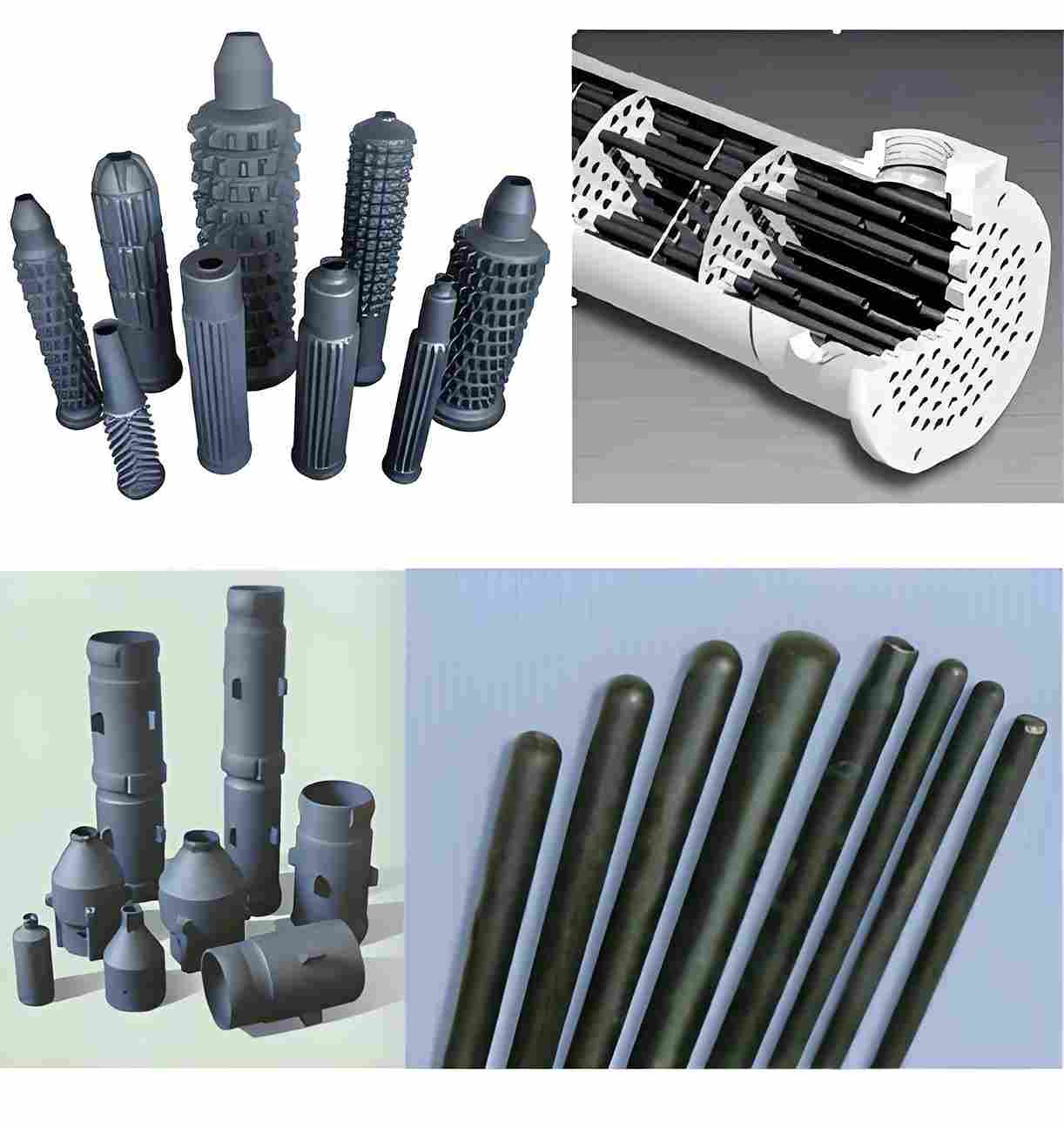
When you need a silicon carbide component that fits a unique geometry, survives 1,600 °C, and meets ±0.2 mm tolerance, the first question is: how does a factory turn a CAD file into a reliable SiC part?
Quick Summary
- Typical lead‑time: 2–4 weeks for samples, 4–8 weeks for batch production.
- Price range: $10‑$200 per piece depending on size, tolerance, and surface finish.
- Key steps: design validation → material selection → green body formation → sintering → machining → inspection → logistics.
- Risk mitigators: 3‑D CAD review, first‑article testing, ISO‑9001 quality system, on‑site engineering support.
What Is Silicon Carbide Customization?
Silicon carbide (SiC) is prized for its high‑temperature strength, corrosion resistance, and wear life. A “custom” SiC part means any deviation from our stocked dimensions—whether it’s a special inner diameter for a furnace tube, a non‑standard seal‑ring profile, or a complex nozzle geometry. Customization is not just a larger size list; it involves material grade selection (≥ 98 % SiC purity), precise powder handling, and tight dimensional control throughout the sintering cycle.
Step‑by‑Step Process
1. Design Capture & Feasibility Review
We start with the CAD file that the customer supplies. Our senior ceramic engineer checks for features that could cause shrinkage‑related distortion (large thin walls, deep undercuts, sharp corners). In my ten‑year experience with ZIRSEC, a 15 % shrinkage factor is typical for 98 % SiC, so we ask the designer to incorporate this margin or we propose a redesign. A short 30‑minute video call often clears ambiguities faster than endless email threads.
2. Material Specification & Powder Selection
For most high‑temperature applications we use a β‑SiC powder with a D50 of 3 µm and a specific surface area of 4 m²/g. When customers need higher hardness, we can blend in 5‑% SiC‑AlN additives. All powders are supplied with a Certificate of Analysis (COA) that shows purity, moisture content, and particle‑size distribution. If a project demands ultra‑high purity (≥ 99.5 %), we source imported powders and run an additional 800 °C pre‑sinter bake to remove residual organics.
3. Green Body Formation (Pressing & Shaping)
Depending on geometry, we use one of three methods:
- Isostatic pressing for near‑net‑shape tubes and rings – yields uniform density at ~65 % theoretical.
- Injection molding for complex nozzles – the binder system is tailored to match the SiC particle size to avoid segregation.
- Hot pressing for parts that must have less than ± 0.1 mm tolerance – a die is pre‑heated to 600 °C before powder is introduced.
During a 2022 project for a German furnace manufacturer, switching from conventional dry pressing to cold isostatic pressing reduced dimensional variance from ±0.6 mm to ±0.2 mm.
4. Sintering & Heat Treatment
We sinter in a graphite furnace under argon atmosphere, ramping to 2,100 °C at 5 °C/min, holding for 2 hours. For parts exposed to aggressive oxidizing media, we add a protective SiC‑coated SiC liner and perform a post‑sinter oxidation step at 1,300 °C for 30 min to develop a thin SiO₂ surface layer that improves corrosion resistance.
5. Machining & Secondary Operations
After sintering, the part is machined to final dimensions using CNC diamond grinding. Surface roughness targets are Ra 0.8 µm for sealing rings and Ra 3.2 µm for furnace tubes. We routinely achieve tolerances of ±0.15 mm on 75 mm OD tubes. When a client in the U.S. required a 200 mm long tube with a 2 mm wall, we performed a two‑step grinding (rough + finish) and met the spec in the first trial.
6. Inspection & First‑Article Approval (FAA)
Every batch undergoes a three‑stage inspection:
- Dimensional check with a calibrated CMM (coordinate measuring machine).
- Mechanical testing – three‑point bend strength and compressive strength (target ≥ 130 MPa).
- Physical‑chemical analysis – XRD for phase composition, SEM for micro‑structure, and a leak test for sealed components.
The first‑article report is sent to the buyer within 48 hours of completion. If any parameter falls outside the agreed window, we re‑run the affected step at no extra charge – a policy that has saved many customers from costly re‑work.
7. Packaging, Documentation & Logistics
SiC is brittle, so we pack each component in double‑wall corrugated crates with foam inserts molded to the part’s shape. All shipments include a full test certificate, material safety data sheet (MSDS), and a copy of the inspection report. For customers in Europe we can arrange DAP (Delivered at Place) or DDP (Delivered Duty Paid) incurring all customs duties, which removes the “paper‑chasing” headache most buyers report.
Common Pitfalls & How to Avoid Them
Pitfall 1 – Ignoring shrinkage. Early‑stage designers often forget the 12‑18 % shrinkage of SiC during sintering. We mitigate this by running a quick shrinkage simulation in our CAD‑CAM system and sending the predicted final dimensions back for approval.
Pitfall 2 – Inadequate surface finish. A rough nozzle interior can cause uneven flame patterns. Our standard is to finish the interior with a diamond‑coated brush that reduces Ra to < 1 µm. Clients who skipped this step reported a 30 % drop in burner efficiency.
Pitfall 3 – Over‑specifying tolerances. Tighter than ±0.1 mm tolerances dramatically increase cost and lead‑time. We advise a tolerance‑cost matrix and usually find that ±0.2 mm meets functional requirements for most high‑temperature pumps and valves.
Pricing, Lead Times, and Risk Management
Our pricing model is transparent:
- Base material cost: $8‑$12 per kg of SiC powder (depends on purity).
- Processing fee: $30‑$80 per part for shaping, sintering, and machining.
- Inspection & certification: $15 per part.
For a typical 50 mm Ø × 150 mm L SiC tube, the total landed cost is around $85 in a 500‑piece batch. Small‑batch (20‑50 pcs) orders carry a 20 % premium because the tooling cost is spread over fewer units.
Lead times are driven by two factors: design finalisation and production queue. A well‑pre‑qualified CAD file can see sample delivery in 2‑3 weeks; full production for 500 pcs averages 5‑7 weeks. We keep a buffer stock of standard‑size tubes and rings, so if a customer needs a rush order (≤ 48 h), we can pull from inventory and finish machining within 24 h.
Risk is managed through a three‑tiered contract:
- Design lock‑in – once the CAD is approved, any later changes trigger a change‑order fee.
- Milestone payments – 30 % on order, 40 % on sample approval, 30 % on final shipment.
- Warranty – a 12‑month performance warranty covering cracking under rated temperature. If a defect is traced to our process, we replace the part at no cost.
Why Choose ZIRSEC for Your SiC Projects?
We are a 20‑year‑old Chinese manufacturer that specializes exclusively in SiC ceramics. Our advantages are:
- Direct factory supply – no middle‑men markup, which keeps unit cost 15‑25 % lower than European competitors.
- Engineering support – a dedicated product engineer works with you from drawing review to final testing.
- Small‑batch flexibility – we accept orders as low as 20 pcs and can ship within 24 h from our stocked inventory.
- Quality system – ISO‑9001 certified, with in‑house CMM, XRD, and high‑temperature furnace capable of 2,200 °C.
- Global logistics network – we partner with DHL and FedEx for door‑to‑door delivery and handle all export documentation.
One recent case: a U.S. chemical‑process plant needed a custom SiC seal ring (Ø 30 mm × 5 mm thickness) to replace a failing metal alloy after a corrosion event. We delivered the first‑article in 12 days, and after three months of operation the ring showed zero wear, saving the client an estimated $22,000 in downtime.
For more information about our product range, visit our Silicon Carbide Tubes page.
FAQ
| Question | Answer |
|---|---|
| Can you produce parts larger than 500 mm? | Yes. Our 2‑meter furnace can sinter sections up to 1 m in length; we then join them by diffusion bonding. |
| What is the typical shrinkage percentage? | 12‑18 % linear shrinkage depending on density and grain size. |
| Do you provide material certificates? | All shipments include a COA, MSDS, and a detailed inspection report. |
| How do you handle confidential designs? | We sign NDAs and store all CAD files on encrypted servers with restricted access. |
| What if the part fails during the warranty period? | We perform a root‑cause analysis; if the failure is due to our process, we replace the part at no charge. |
Having a clear, step‑by‑step roadmap removes guesswork and accelerates time‑to‑market. If you are ready to turn a drawing into a high‑performance SiC component, contact us at info@zirsec.com or request a quote through our website.