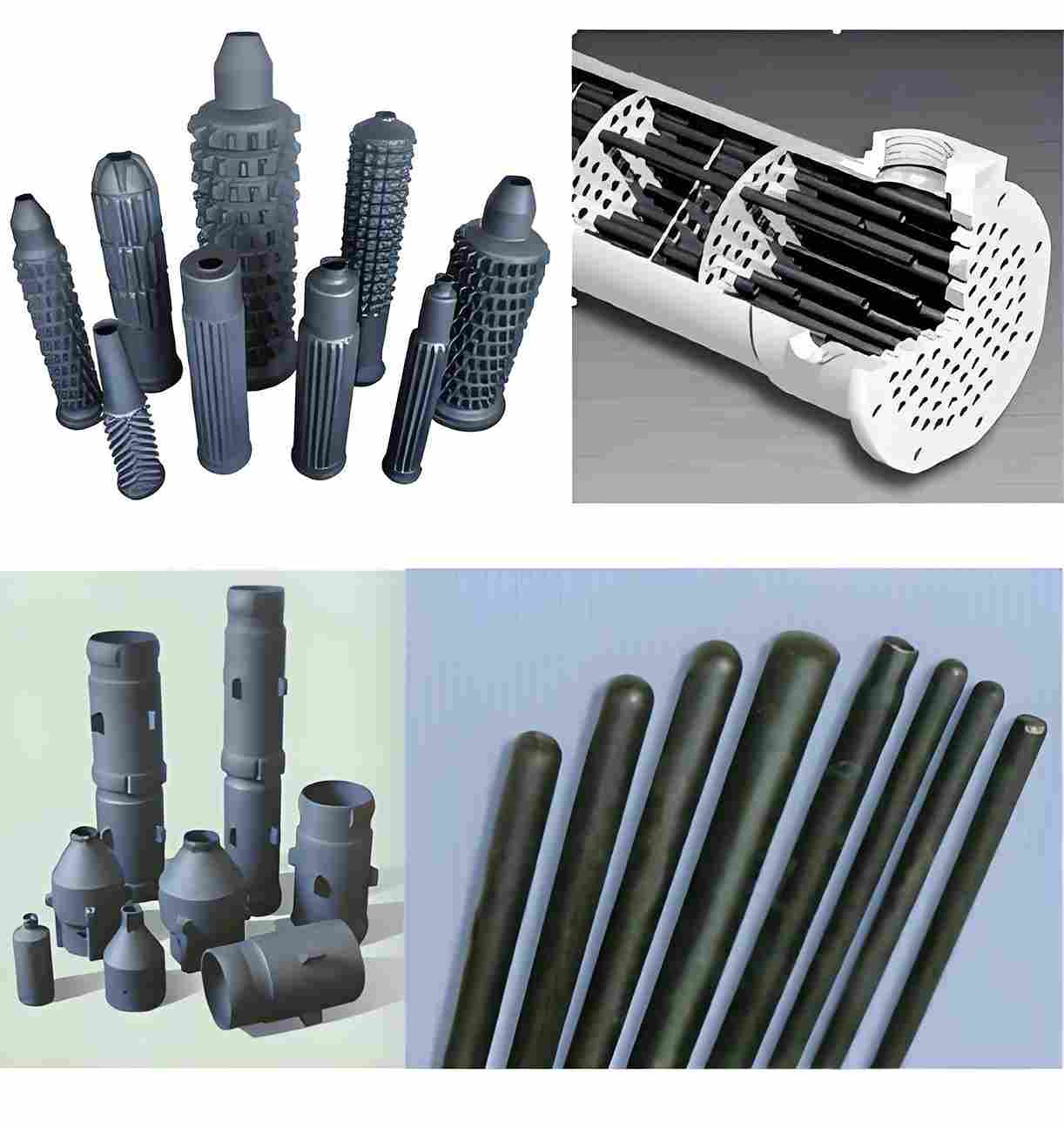
When you need a silicon carbide (SiC) component for a new furnace, pump, or burner, every day of waiting translates into lost revenue and delayed market entry.
Why prototyping speed matters in high‑temperature industrial applications
Engineers in chemicals, metallurgy, and renewable energy are under pressure to validate designs in weeks, not months. A single SiC prototype that arrives late can stall a whole production line. The most common complaints we hear from our clients are:
- Unpredictable lead times from overseas vendors.
- Dimension drift that forces redesign cycles.
- Insufficient technical support during the design‑to‑production handoff.
Reducing these pain points is not a luxury; it is a competitive requirement.
Typical bottlenecks when working with SiC part suppliers
1. Limited inventory of standard sizes
Most SiC manufacturers keep only a handful of stock items – usually 10 mm, 20 mm, and 30 mm tubes or plates. When you need a 45 mm custom bore, the supplier must start a new melt, adding weeks to the schedule.
2. Lengthy qualification cycles
Because SiC is used in harsh environments, many customers demand a full material certificate (COA), MSDS, and even a third‑party test report before a sample is accepted. Gathering these documents can add another 5–10 days.
3. Inconsistent tolerances
Industrial tolerances for SiC parts are typically ±0.2 mm for standard items and ±0.1 mm for precision components. A supplier that cannot reliably hit ±0.1 mm will force you to redesign the mating flange or add costly post‑machining.
4. Communication gaps
Engineering drawings often contain nuanced surface‑finish specifications (Ra 0.8 µm vs. Ra 2.5 µm) that are lost in translation if the supplier lacks a dedicated technical liaison.
How to pick a SiC supplier that accelerates your prototype timeline
We have distilled the supplier selection process into four decisive criteria.
- Inventory breadth and rapid‑ship capability. A partner that holds a wide range of standard tube, plate, and ring dimensions can ship within 24‑48 hours. Look for the phrase “in‑stock” on product pages.
- Engineering support from design to delivery. The best suppliers assign a senior ceramic engineer to each project, review your CAD files, and suggest geometry tweaks that reduce shrinkage or machining time.
- Transparent quality documentation. Immediate access to COA, batch number, and material‑test certificates eliminates downstream compliance delays.
- Flexibility for low‑volume custom runs. Many manufacturers require a 500‑piece minimum; you need a partner comfortable with 10‑20 piece pilot orders.
Using these criteria, we evaluated the top 10 global SiC manufacturers and found that only a handful consistently meet all four. One of them is ZIRSEC, a China‑based factory with 20 years of ceramic experience.
Leveraging ZIRSEC’s strengths to fast‑track your SiC prototype
Our own experience with ZIRSEC shows that the company’s operational model aligns perfectly with rapid prototyping needs.
- Extensive in‑stock catalog. Over 150 standard tube and plate sizes are kept in a temperature‑controlled warehouse, enabling 24‑hour dispatch for most items.
- Dedicated engineering desk. Every technical inquiry is routed to a senior ceramic engineer who can review your GD&T annotations within a business day.
- Rapid custom tooling. For non‑stock dimensions, ZIRSEC can produce a prototype mold in under two weeks thanks to its in‑house CNC grinding and hot‑press capacity.
- Full traceability. Each batch ships with a digital COA, MSDS, and a PDF of the sintering curve, satisfying ISO 9001 and CE requirements.
- Small‑batch flexibility. Minimum order quantity (MOQ) for custom parts is 10 pieces, and the factory can ship a 12‑piece pilot run within 4 weeks.
For example, a German pump‑seal manufacturer needed a SiC seal ring with a 58.2 mm inner diameter and Ra 0.8 µm surface finish. ZIRSEC delivered ten qualified samples in 18 days, allowing the customer to start on‑line testing in the same month the design was approved.
Step‑by‑step workflow to shrink prototype lead time
The following workflow combines best‑practice project management with ZIRSEC’s process capabilities.
Step 1 – Define functional requirements in one page
Summarize the operating temperature (e.g., 1550 °C), chemical environment (e.g., molten NaOH), mechanical load (e.g., 120 MPa), and dimensional tolerances. Include a CAD drawing with GD&T annotations.
Step 2 – Run a quick feasibility check with the supplier
Send the one‑page brief to the supplier’s technical liaison. Request a “pre‑qualification envelope” that includes material grade (SiC ≥ 98 %), typical shrinkage factor, and a quotation for a 10‑piece pilot.
Step 3 – Review the supplier’s feedback and adjust design
If the supplier notes a 0.15 mm shrinkage, incorporate that into the CAD model now rather than after the first trial.
Step 4 – Place a low‑volume order with clear documentation
Use a purchase order that references the COA number, required surface finish, and delivery date. Ask the supplier to attach the COA, MSDS, and test report to the shipping invoice.
Step 5 – Perform a rapid qualification test
Set up a bench test that mirrors the final application. Record temperature ramp‑up, mechanical load, and any crack formation. The test should be completed within 3‑5 days of receiving the parts.
Step 6 – Iterate or scale up
If the prototype passes, issue a bulk order (e.g., 200 pcs) using the same supplier to benefit from the same line run. If it fails, feed the test data back to the supplier for a second‑generation pilot.
Risk mitigation and quality control tactics
Even with a reliable partner, unexpected issues can surface. Adopt these safeguards:
- Sample‑first policy. Never start full production without at least one qualified sample.
- Dual‑source critical parts. For high‑volume projects, qualify a secondary supplier (e.g., a European SiC specialist) as a backup.
- Third‑party inspection. Use an ISO‑17025 lab to verify hardness, fracture toughness, and thermal shock resistance on the first batch.
- Digital traceability. Store all COAs, test reports, and inspection certificates in a cloud folder linked to the ERP system.
Pricing strategy to keep costs in check
SiC parts are expensive because of raw‑material purity and high‑temperature sintering. However, you can control spend by:
- Consolidating orders. Combine multiple part numbers into a single melt run; the per‑part cost drops by 10‑15 %.
- Negotiating tooling amortization. Ask the supplier to spread die‑making cost over a minimum of 50 parts.
- Leveraging inventory. When a standard size matches your requirement, choose the stocked option to avoid tooling fees.
- Planning for scrap. Account for a 2‑3 % post‑machining scrap rate in the budget; over‑ordering the raw material can reduce per‑unit machining time.
Quick FAQ – Rapid Answers for Busy Engineers
| Question | Answer |
|---|---|
| What is the typical lead time for a custom SiC tube? | Between 12‑18 days for a 10‑piece pilot if the supplier has in‑house sintering capacity. |
| Can I get a COA and MSDS on the same day as shipment? | Yes, reputable suppliers like ZIRSEC upload the documents to a secure portal at the moment the shipping label is generated. |
| Is it possible to order a small batch of SiC plates with ±0.1 mm tolerance? | Only if the supplier offers precision grinding; ZIRSEC can meet ±0.1 mm for orders as low as 10 pieces. |
| How do I verify the material purity? | Request an X‑ray fluorescence (XRF) report in the COA – SiC ≥ 98 % is standard for industrial grades. |
| What warranty does a SiC supplier provide? | Most offer a 90‑day crack‑free guarantee; the warranty is tied to proper handling and installation per the supplied data sheet. |
Take Action – Your 7‑Day Sprint Plan
- Day 1: Draft a one‑page requirement sheet and attach CAD files.
- Day 2: Email the sheet to ZIRSEC’s technical liaison (info@zirsec.com) with the subject line “Rapid Prototype Request”.
- Day 3: Review the pre‑qualification envelope they send back; adjust dimensions if needed.
- Day 4: Place a 10‑piece order, explicitly requesting COA, MSDS, and a full sintering curve PDF.
- Day 7: Receive the samples, run your bench test, and decide whether to scale up.
Following this sprint, you will have a verified SiC component in less than two weeks, cutting the typical 4‑6‑week prototype cycle by more than half.
For more details on stock SiC tubes and the full range of ceramic products, visit ZIRSEC Silicon Carbide Tubes.