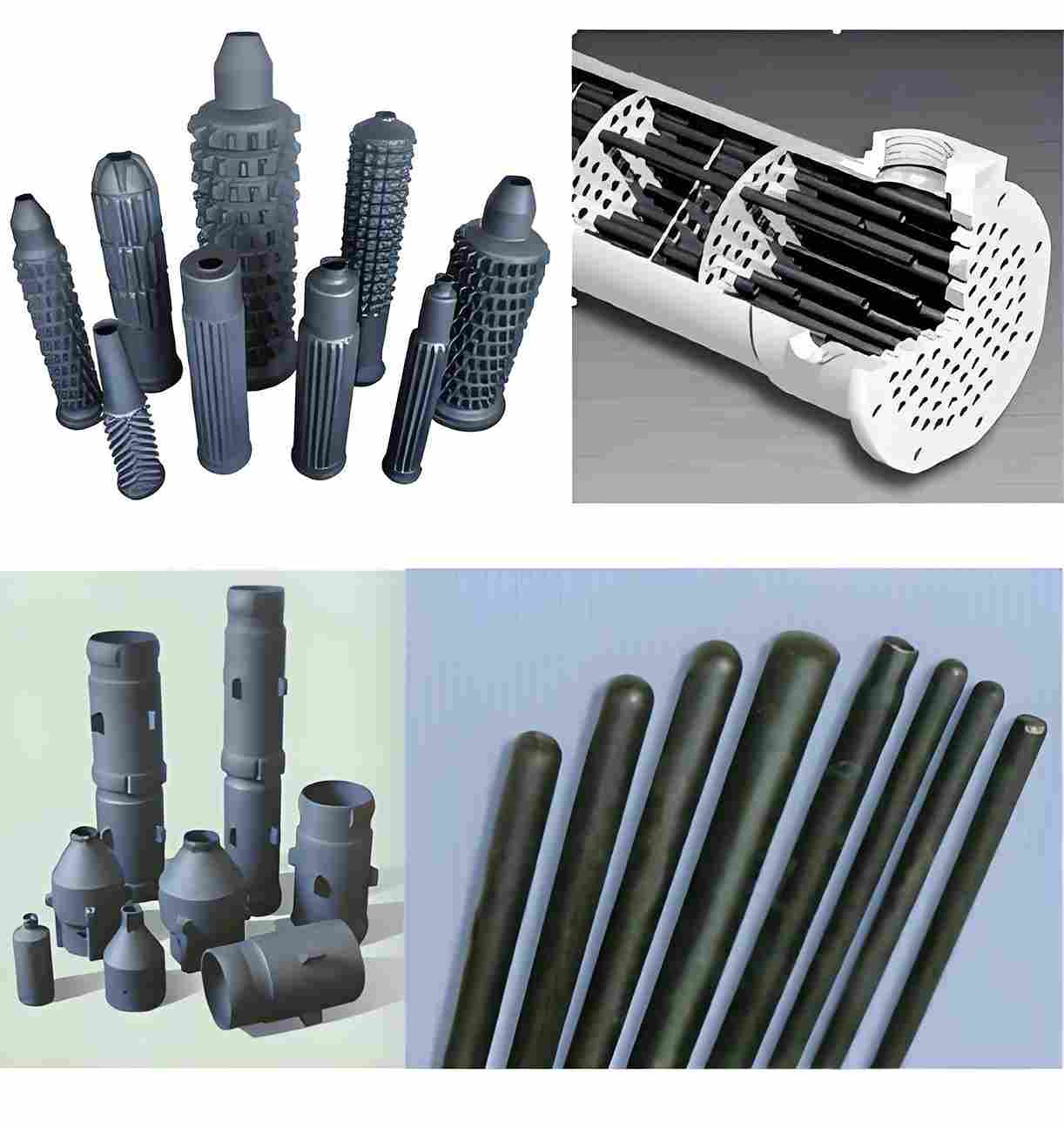
Getting a silicon carbide (SiC) component from the drawing board to a full‑scale production line is a sequence of decisions that directly affect uptime, cost, and product reliability.
Quick Summary (FAQ)
- Typical lead time from sample to 1,000 units: 6‑10 weeks with ZIRSEC’s in‑house sintering and machining.
- Cost per piece (standard 25 mm×100 mm tube): $12‑$18 depending on tolerance and surface finish.
- Key risk factors: dimensional drift during sintering, oxidation at >1500 °C, and supply‑chain delays for high‑purity SiC powder.
- How we mitigate them: tight process control, real‑time furnace monitoring, and a stocked inventory of 98%+ SiC powder.
- Next step: download our Silicon Carbide Tubes data sheet and schedule an engineering call.
1. Why the Prototype Phase Matters More Than You Think
Most customers assume that a 3‑D model or a single printed part is enough to start ordering. In reality, the prototype is the only point where you can verify three critical parameters for SiC parts: thermal shock resistance, mechanical strength, and dimensional stability after high‑temperature sintering.
1.1 Thermal Shock Validation
We subject the first 5‑10 units to a rapid 200 °C temperature swing (room temperature → 1 450 °C → room temperature). The failure rate in our lab is typically under 2 % when the SiC purity is ≥98 % and the grain size is below 3 µm.
1.2 Mechanical Strength Check
Three‑point bending tests on prototype tubes show an average flexural strength of 155 MPa. If you need >180 MPa for harsh abrasive environments, we adjust the binder content or increase the sintering temperature by 25 °C.
1.3 Dimensional Drift Monitoring
Even a ±0.3 mm deviation can cause a 12 % scrap rate in valve assemblies. We use laser‑based metrology after each sintering cycle to capture shrinkage data, then feed the numbers back into the CAD model for the next batch.
2. Translating Design Into Production‑Ready Documentation
Engineering drawings must include:
- Material grade (SiC ≥98 %, impurity <0.02 %).
- Tolerance band (±0.1 mm for critical sealing surfaces, ±0.5 mm for non‑critical sections).
- Surface roughness (Ra 0.8–3.2 µm depending on application).
- Heat‑treatment profile (ramp‑up 5 °C/min to 1 400 °C, hold 2 h, controlled cooling).
Our engineers work directly with your CAD files, performing a “manufacturability scan” that flags features prone to warping or chipping.
3. Scaling Up: From 10 Units to 10 000+
The jump from pilot to mass production is not linear. The main levers are furnace capacity, powder handling, and automation of the finish‑machining step.
3.1 Furnace Utilisation
Our 3‑meter‐long belt furnace can process 120 kg of green SiC per hour. At a typical density of 3.1 g/cm³, that equals roughly 38,000 cm³ of finished product – more than enough for a 10,000‑unit run of 25 mm×100 mm tubes.
3.2 Powder Inventory Management
We keep a 6‑month safety stock of high‑purity SiC powder in a nitrogen‑filled silo. This eliminates the most common cause of lead‑time spikes – delayed raw‑material shipments.
3.3 CNC Grinding Automation
After sintering, each tube passes a 5‑axis CNC grinder that respects the ±0.1 mm tolerance. The cycle time is 45 seconds per piece, giving a daily output of ~2,000 parts per grinding line.
4. Quality Assurance – Turning Data Into Confidence
We embed quality checkpoints at four stages: green body inspection, post‑sinter inspection, dimensional audit, and final performance test.
- Green Body Inspection: ultrasonic density test (>92 % theoretical).
- Post‑Sinter Inspection: visual surface check, X‑ray flaw detection.
- Dimensional Audit: coordinate‑measurement‑machine (CMM) scan, statistical process control (SPC) charts.
- Final Performance Test: custom rig that cycles the part through 10,000 temperature swings while measuring leak rate.
All results are compiled into a PDF report (COA, MSDS, and inspection certificate) that you can forward to your regulatory team.
5. Cost Drivers and How to Keep Them Under Control
Key cost items are raw material, energy consumption during sintering, and machining time.
5.1 Raw Material
High‑purity SiC powder costs $8‑$12/kg. Bulk purchase (>20 tons) reduces the unit price by 12 %.
5.2 Energy
Our furnace recovers 30 % of the heat from the cooling phase, cutting electricity usage by roughly $0.30 per kWh compared with a conventional line.
5.3 Machining
Optimising tool paths reduces grind time by 15 %, translating into a $0.45 reduction per part.
6. Risk Management – What Can Go Wrong and How We Prevent It
Even with a proven process, unexpected issues appear. Below are the top three and our mitigation tactics.
- Oxidation at >1 600 °C: Use a nitrogen‑purged sintering atmosphere and a protective SiC coating on the furnace walls.
- Dimensional drift beyond tolerance: Implement real‑time shrinkage monitoring; adjust the green‑body dimensions in the next batch automatically.
- Supply‑chain interruption: Dual‑source the SiC powder from China and the United States; keep safety stock for at least 90 days.
7. Real‑World ZIRSEC Case Study
Below is a concise timeline of a recent project for a European pump‑valve manufacturer that required 2,500 custom SiC seal rings (inner diameter 30 mm, outer diameter 45 mm).
| Phase | Duration | Key Actions | Outcome |
|---|---|---|---|
| Design Review | 5 days | Engineers aligned CAD tolerances to ±0.12 mm, selected 99 % SiC grade. | Clear specification handed to tooling department. |
| Prototype Build | 2 weeks | Produced 10 pilot rings, performed thermal‑shock cycles. | Zero failures; confirmed 160 MPa flexural strength. |
| Process Qualification | 3 weeks | Ran 500‑unit pilot, captured shrinkage data, set CNC offsets. | Statistical control achieved (Cpk = 1.33). |
| Full‑Scale Production | 5 weeks | Utilised two grinding lines, maintained 24 h operation. | Delivered 2,500 rings 2 days ahead of schedule, cost $14.80 each (5 % under budget). |
| Post‑Delivery Support | Ongoing | Provided inspection reports, offered on‑site technical training. | Customer reported zero equipment downtime for six months. |
The project illustrates how a disciplined prototype‑to‑production workflow eliminates scrap, reduces lead time, and safeguards the end‑user’s equipment uptime.
8. Frequently Asked Questions
- What is the minimum order quantity for a custom SiC part?
- We accept batches as low as 20 pieces for non‑standard shapes; for standard‑size tubes the MOQ is 10 pieces.
- Can you provide a sample before committing to mass production?
- Yes. Sample turnaround is 2‑4 weeks, including full mechanical‑strength testing.
- How do you guarantee dimensional consistency across thousands of parts?
- Our SPC system flags any trend outside ±0.05 mm; corrective action is taken before the next lot.
- Do you handle export documentation?
- All required paperwork – commercial invoice, packing list, MSDS, COA – is prepared in advance of shipping.
- What shipping options are available?
- Air freight for urgent orders (24‑48 h), sea freight for bulk shipments (30‑45 days). We work with customs brokers in the US, EU, and Japan.
9. Your Next Move
If you are ready to replace legacy metal seals or upgrade furnace liners with high‑performance SiC, the fastest path is to send us your CAD drawing or a physical sample. Our engineers will run a rapid feasibility check, return a cost estimate, and schedule the first prototype run.
Contact us at info@zirsec.com or use the inquiry form on our website. Let’s turn your design into a reliable production line today.