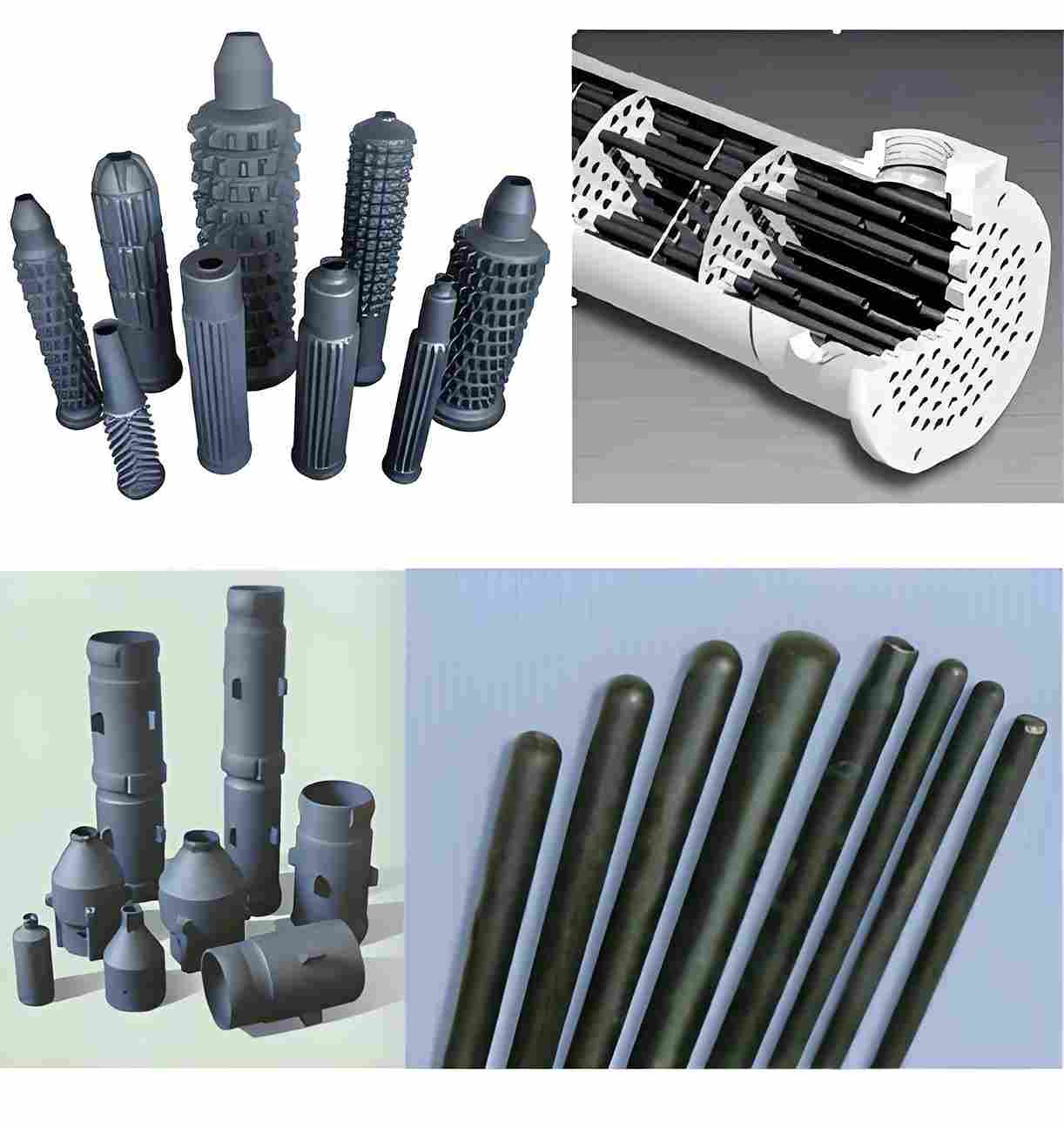
Designing equipment around silicon carbide (SiC) components means addressing extreme temperatures, aggressive chemicals, and high‑wear environments without sacrificing dimensional accuracy or delivery schedule.
Why SiC Matters in Modern Industrial Equipment
SiC offers a unique combination of >1500 °C continuous service temperature, compressive strength above 130 MPa, and chemical inertness to most acids and alkalis. Engineers who replace metal or Al₂O₃ parts with SiC often see a 30‑50 % reduction in maintenance cycles and a 20 % boost in energy efficiency because the ceramic’s low thermal conductivity keeps heat where it belongs.
Quick FAQ – Immediate Answers to the Most Common Concerns
- Can I use standard SiC dimensions off the shelf? Yes, ZIRSEC stocks a full line of standard‑size tubes, plates, and rings ready for 24‑hour shipment.
- What is the typical lead time for a custom part? Engineering review and prototype can be completed in 2‑4 weeks; full production usually ships in 4‑8 weeks.
- How do I verify material purity? Each batch is supplied with a Certificate of Analysis (COA) confirming SiC ≥ 98 % and bulk density > 3.1 g/cm³.
- Is SiC compatible with my existing sealing hardware? SiC rings can be paired with conventional metal backings or polymer O‑rings; design tolerances of ±0.1 mm are reachable with CNC grinding.
1. Thermal Management – The Core of SiC Integration
When a SiC component sits between a hot process stream and a cooler structural frame, thermal gradients can cause two failure modes:
- Thermal shock – rapid temperature changes generate tensile stresses that exceed the ceramic’s fracture toughness (≈ 3 MPa·m½).
- Heat sink overload – insufficient heat dissipation raises local temperatures above the material’s oxidation limit.
Best practice: design a graded interface using a thin metallic or graphite interlayer that bridges the CTE mismatch (SiC ≈ 4.5 × 10⁻⁶ K⁻¹ vs. steel ≈ 12 × 10⁻⁶ K⁻¹). For furnaces operating at 1500 °C, a 2‑mm Inconel sleeve reduces peak wall stress by up to 40 %.
2. Mechanical Fit – Tolerances, Surface Finish, and Mounting Loads
SiC parts are brittle; any edge chipping during assembly can become a crack initiation site. The following steps have proven reliable in the field:
- Specify a surface roughness (Ra) of 0.8‑1.5 µm for sealing rings that require fluid tightness; rougher finishes (Ra > 3 µm) are acceptable for wear liners where friction is the primary concern.
- Maintain dimensional tolerance of ±0.1 mm for high‑precision tube‑to‑flange interfaces. ZIRSEC’s CNC grinding can consistently hit ±0.12 mm on 25‑mm Ø tubes.
- Use compliant gaskets (e.g., PTFE‑filled silicone) on the outer side of the SiC component to absorb differential expansion.
Case Study: A German pump‑valve manufacturer reported a 12 % scrap rate when they first switched to off‑the‑shelf SiC rings with a tolerance of ±0.3 mm. After moving to ZIRSEC’s custom‑toleranced rings (±0.1 mm) and adding a thin graphite buffer, the reject rate fell to 0.8 % within two production cycles.
3. Chemical Compatibility – Knowing What Not to Expose SiC To
While SiC resists most acids, it is vulnerable to molten alkali salts above 1200 °C. In processes involving sodium hydroxide or potassium carbonate, protective coatings (e.g., Al₂O₃ or Si₃N₄) are mandatory. A thin (≤ 200 µm) plasma‑sprayed Al₂O₃ coating adds a barrier that extends component life by 3‑5 times in alkaline environments.
4. Designing for Serviceability – Reducing Downtime
In high‑value plants, an eight‑day shutdown caused by a missing SiC seal ring can cost upwards of $15,000, as reported by a European pump‑valve supplier. To avoid such losses, embed the following design features:
- Standardized part numbers across all equipment families so that inventory can be cross‑referenced.
- Quick‑release mounting brackets that allow the ceramic to be swapped without hammering or gluing.
- On‑site inspection kits with calibrated micrometers and a portable laser profilometer for verifying wear in the field.
5. Customization Workflow – From CAD to Production
Most of ZIRSEC’s B2B clients follow a five‑step process that guarantees design intent is preserved:
- Initial Consultation – Our engineers review the mechanical drawing, thermal profile, and chemical exposure.
- Feasibility Study – Finite‑element analysis (FEA) predicts stress distribution; we provide a cost‑benefit matrix.
- Prototype Production – A limited batch (5‑20 units) is machined, heat‑treated, and delivered for fit‑check.
- Qualification Testing – Thermal‑shock cycling (−200 °C to 1500 °C, 30 min soak) and wear testing (10 000 cycles) are performed per ASTM C1161.
- Series Production & Logistics – Once the prototype passes, we schedule full‑scale production and arrange FOB or DDP shipping.
All clients receive a full package of technical documentation: material certificate, dimensional inspection report, and a 1‑year warranty.
6. Economic Considerations – Balancing Up‑Front Cost and Lifecycle Savings
SiC parts typically cost 2‑5 times more than comparable metal components, but the total cost of ownership (TCO) tells a different story. For a 100‑tonne furnace line operating 6 000 h/year, a SiC tube (USD 120/unit) replaces a stainless steel tube (USD 30/unit) that would need replacement every 12 months. The ceramic’s 5‑year service life eliminates three replacement cycles, generating a net saving of roughly USD 2 400 per tube over its lifespan.
7. Real‑World Implementation – Success Stories
Case 1 – High‑Temperature Kiln Liner Upgrade (USA)
A petrochemical plant in Texas retrofitted its 1 500 °C calcination kiln with ZIRSEC’s SiC plates (200 mm × 200 mm × 25 mm). The plates were installed using a stainless‑steel frame with an Inconel spacer. After a six‑month trial, furnace downtime fell from 4 % to 0.5 % and energy consumption dropped by 7 % because the SiC’s low thermal conductivity kept the heating zone more uniform.
Case 2 – Pump Seal Ring Replacement (Germany)
For a high‑pressure chemical pump, the original metal‑on‑metal seals wore out after 8 000 h, causing unplanned shutdowns. Switching to custom‑machined SiC seal rings (Ø 45 mm, tolerance ±0.1 mm) doubled the mean‑time‑between‑failures (MTBF) to 18 000 h. The client reported a reduction in maintenance labor costs of € 22 000 per year.
Case 3 – Burner Nozzle for Waste‑Heat Recovery (Australia)
A waste‑heat recovery unit required a nozzle that could handle a silica‑rich flue gas at 1 200 °C. ZIRSEC supplied a SiC burner nozzle with a tapered bore and an integrated ceramic‑metal transition piece. Installation time was under 48 hours, and the unit achieved a 15 % increase in thermal efficiency during the first 30 days of operation.
8. Linking Design to Supply – Why Choose ZIRSEC
Our 20‑year track record in SiC ceramic production means you benefit from:
- In‑house sintering facilities that guarantee consistent grain size (≤ 1 µm) and high purity.
- 24‑hour stock of standard tubes, plates, and rings, ready to ship from our Chinese factory directly to your site.
- Dedicated engineering support: we review your CAD files, suggest material grades, and run FEA at no additional charge.
- Full supply‑chain transparency – COA, MSDS, and export documentation are provided with every shipment.
Explore our standard SiC tube catalog here: Silicon Carbide Tubes.
9. Checklist Before You Finalize Your Design
| Item | Consideration | Recommended Action |
|---|---|---|
| Operating temperature | Maximum continuous temperature and peak excursions | Confirm SiC grade ≥ 98 % and specify required heat‑treatment |
| Thermal gradient | ΔT across the component | Include graded metal interlayer or use CFD analysis |
| Mechanical load | Compressive vs. tensile stresses | Design for compressive loads; avoid bending moments > 30 MPa |
| Chemical exposure | Acid, alkali, oxidizing agents | Apply protective coating if > 5 % alkali exposure |
| Dimensional tolerance | ±0.1 mm for sealing, ±0.5 mm for structural | Specify CNC grinding; request inspection report |
| Serviceability | Ease of removal/replacement | Design quick‑release brackets and keep spare inventory |
10. Final Thoughts – Turning Knowledge Into Reliable Equipment
Integrating SiC components is not a plug‑and‑play exercise; it demands a disciplined approach to thermal design, mechanical fitting, and chemical protection. When you follow the practices outlined above and partner with a proven supplier like ZIRSEC, you gain a competitive edge: fewer unplanned stops, lower lifecycle costs, and the ability to push equipment into hotter, harsher regimes that traditional materials simply cannot survive.
Ready to start a project? Contact our technical team at info@zirsec.com or request a free feasibility study through our website. Let’s make your next high‑temperature system reliable, efficient, and future‑proof.