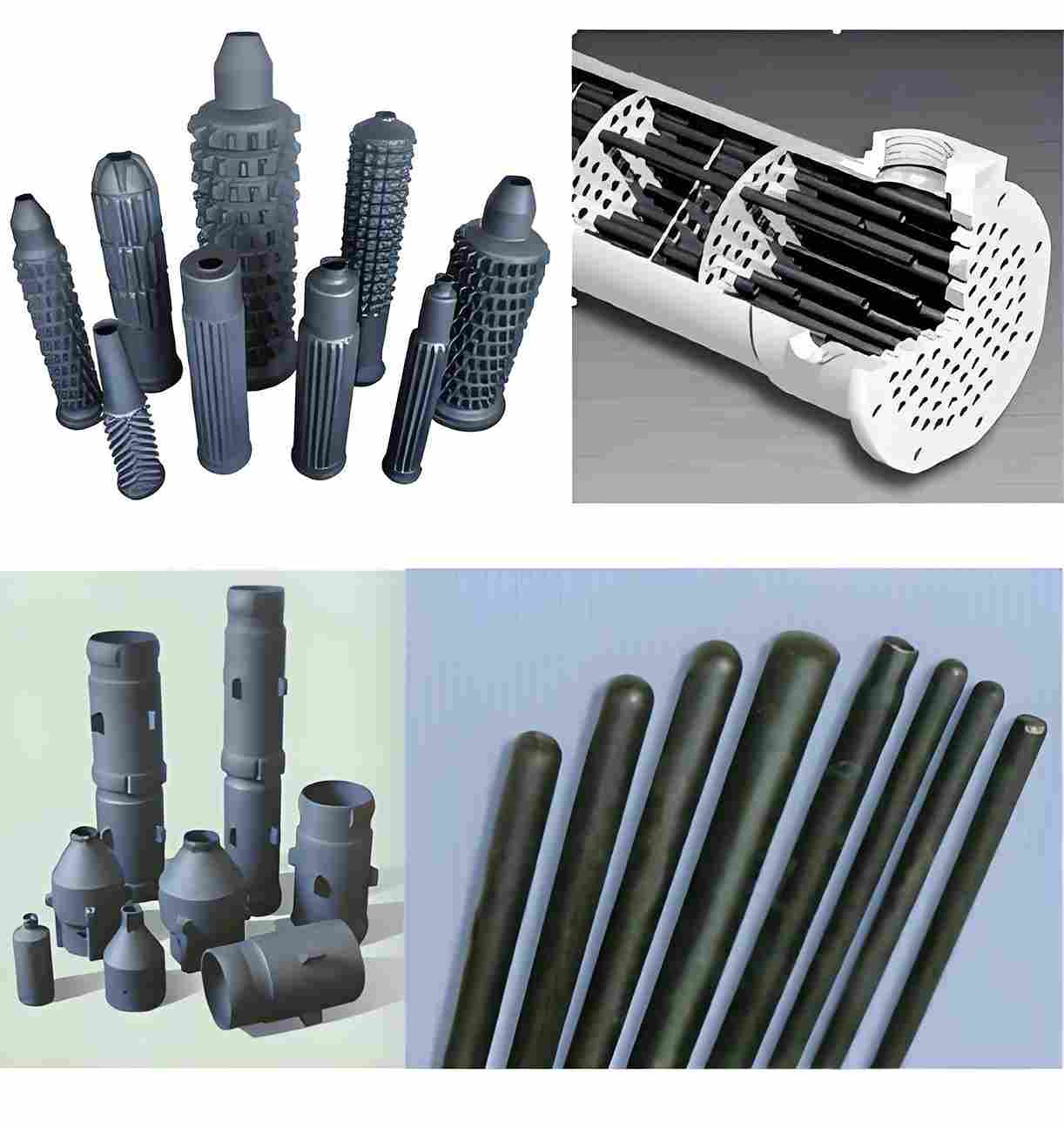
FGD spray systems are a brutal combination of abrasive slurry, chlorides, acidic conditions and continuous duty cycles. That is why “metal nozzles that look fine on day one” often become the hidden driver of scrubbing inefficiency, pump overload and unplanned shutdowns. The decision is not ceramic versus metal as a material debate, it is a reliability decision: which nozzle survives erosion, corrosion and scaling long enough to keep droplet size, spray pattern and pressure stable. This article explains why silicon carbide nozzles are often the most practical choice for industrial FGD service.
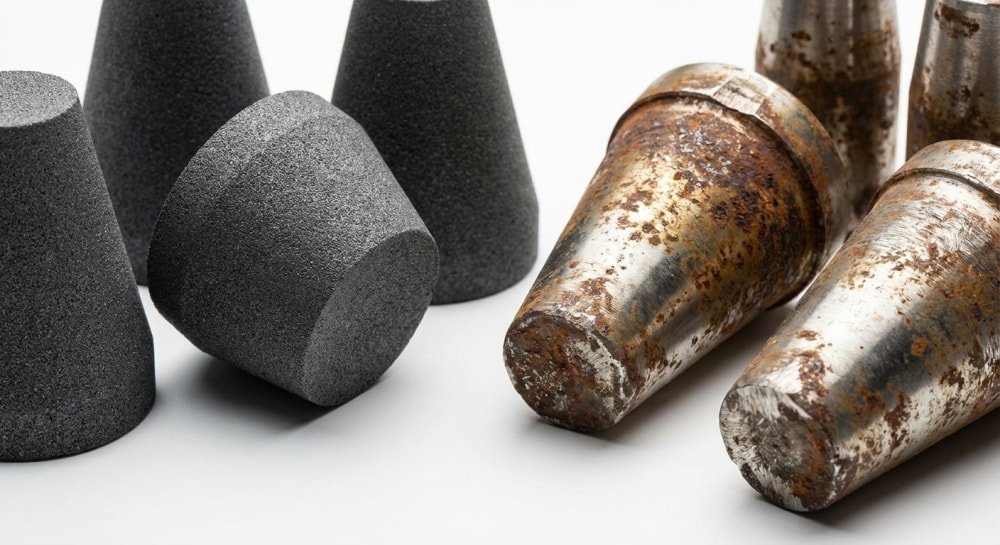
What FGD Nozzles Actually Need to Survive
In wet FGD, the nozzle is exposed to slurry erosion from solids, chemical attack from chlorides and acidic species, thermal cycling and scaling deposits that change the orifice geometry. Once the nozzle wears, spray droplet distribution shifts, coverage weakens and SO₂ removal efficiency drops. Once corrosion pits form, turbulence increases, plugging becomes frequent and pressure fluctuations accelerate pump wear. A “nozzle problem” quickly becomes a system problem.
Why Metal Nozzles Fail First in Real FGD Operations
Even corrosion-resistant alloys face two unavoidable failure modes in slurry service: erosion of the orifice and corrosion-driven surface degradation. Stainless steel and high-alloy metals rely on passive films that can break down in chloride-rich, acidic environments. When the film fails, pitting and under-deposit corrosion accelerate. At the same time, abrasive solids mechanically remove material at the orifice, widening the opening and changing the spray angle. The result is higher flow, lower atomization quality, uneven distribution and higher operating cost.
Why Silicon Carbide Wins: Failure-Mode-by-Failure-Mode
Extreme Wear Resistance Keeps Orifice Geometry Stable
Silicon carbide is significantly harder than metals, so it resists slurry erosion where steel and alloys gradually lose material. This matters because spray performance depends on precise orifice geometry. When the orifice stays stable, droplet distribution stays stable, and your scrubber performance stays predictable instead of drifting.
Chemical Inertness in Acidic and Chloride-Heavy Media
SiC offers excellent resistance in many acidic and alkaline environments and does not rely on a fragile passive film the way stainless steels do. In chloride-heavy slurries, this stability is a major advantage for long service life and lower maintenance frequency.
Lower Downtime and Lower Lifecycle Cost
Metal nozzles often look cheaper on the purchase order and expensive everywhere else: frequent replacement, inspection labor, lost uptime and scrubbing performance drift. SiC nozzles typically reduce replacement frequency and stabilize process performance, which is why many plants standardize ceramics once the system reaches steady operation.
Where Silicon Carbide Nozzles Deliver the Highest ROI in FGD
SiC nozzles deliver the most value in high-solids slurries, high flow velocities, chloride-rich streams, and systems where nozzle wear causes frequent recalibration or performance penalties. If your key symptom is “nozzle life is too short” or “spray pattern changes over time,” you are already paying the cost of metal nozzle wear, just not in one line item.
How to Specify SiC Nozzles for FGD Without Creating New Problems
Define the Real Wear Drivers
Provide solids content, particle size trend, slurry velocity and the location of erosion hotspots. In many systems, nozzle wear is dominated by local turbulence and impingement rather than average solids content.
Lock the Critical Dimensions
Orifice diameter, spray angle, nozzle-to-header interface and sealing surfaces are the dimensions that control spray distribution and maintenance convenience. Specify these clearly, and avoid over-tightening cosmetic tolerances that add machining cost without improving performance.
Match Material Route to Risk
For demanding FGD service, silicon carbide grades are selected based on wear and chemical exposure. Zirsec can recommend an appropriate route and provide inspection focus so your installation is consistent across batches.
Relevant Zirsec Product Options for FGD Systems
For spray headers and slurry atomization duty, review Zirsec Silicon Carbide Nozzles for common geometries and customization support. If your FGD system also suffers from wear in chutes, elbows or liners near the nozzle zone, consider adding sacrificial wear protection such as Silicon Carbide Plate in the highest erosion areas to reduce system-wide maintenance.
Engineering Case: Extending Nozzle Life and Stabilizing Scrubber Performance
A wet FGD unit experienced recurring nozzle replacements due to rapid orifice enlargement and under-deposit corrosion on alloy nozzles. Spray distribution drifted over time, leading to inconsistent SO₂ removal and pressure instability. Zirsec supported an upgrade to silicon carbide nozzles with controlled orifice geometry and improved wear stability. After implementation, replacement frequency dropped significantly, spray performance remained stable through continuous duty cycles, and maintenance downtime was reduced.
Practical Comparison Table: Ceramic vs Metal Nozzles in FGD
| Selection Factor | Silicon Carbide (SiC) Nozzles | Metal Nozzles (Stainless/Alloy) | Impact in FGD |
|---|---|---|---|
| Slurry Erosion Resistance | Excellent | Moderate to poor | Controls orifice wear and spray stability |
| Corrosion Resistance in Chlorides | Excellent in many FGD media | Film breakdown and pitting risk | Prevents performance drift and early failure |
| Spray Pattern Stability Over Time | High | Degrades as orifice wears | Directly affects SO₂ removal efficiency |
| Maintenance Frequency | Lower | Higher | Reduces downtime and labor cost |
| Lifecycle Cost | Typically lower | Often higher | Fewer replacements and fewer shutdowns |
FAQ: SiC Nozzles in FGD Systems
Will silicon carbide nozzles plug more easily than metal nozzles?
Plugging is usually driven by slurry quality, scaling and upstream filtration, not nozzle material. SiC’s wear stability can actually reduce turbulence-related deposit buildup that occurs after metal nozzles pit and roughen.
Do SiC nozzles fit existing headers and interfaces?
Yes in many cases. Zirsec can manufacture SiC nozzles to match existing connection dimensions based on drawings or samples.
How do I choose the right orifice size and spray angle?
Use your current nozzle specification as the baseline, then confirm whether wear has been changing effective diameter over time. Zirsec can help lock critical dimensions that preserve spray performance.
Are SiC nozzles suitable for high-chloride FGD slurries?
Yes. This is one of the most common reasons plants switch from metal to silicon carbide, because corrosion pitting and under-deposit attack can shorten metal nozzle life significantly.
What information should I send to get an accurate quote?
Send nozzle drawings or photos with dimensions, media chemistry (chloride level if available), solids content, operating pressure, temperature range and required quantity. If you have a worn nozzle sample, it accelerates selection.
Contact Zirsec for Silicon Carbide Nozzles for FGD
If your FGD system is losing efficiency or uptime due to nozzle wear, corrosion or frequent replacement, contact Zirsec with your nozzle drawing and operating conditions. We will recommend the right silicon carbide option and provide fast engineering feedback so you can stabilize spray performance and reduce maintenance cost.