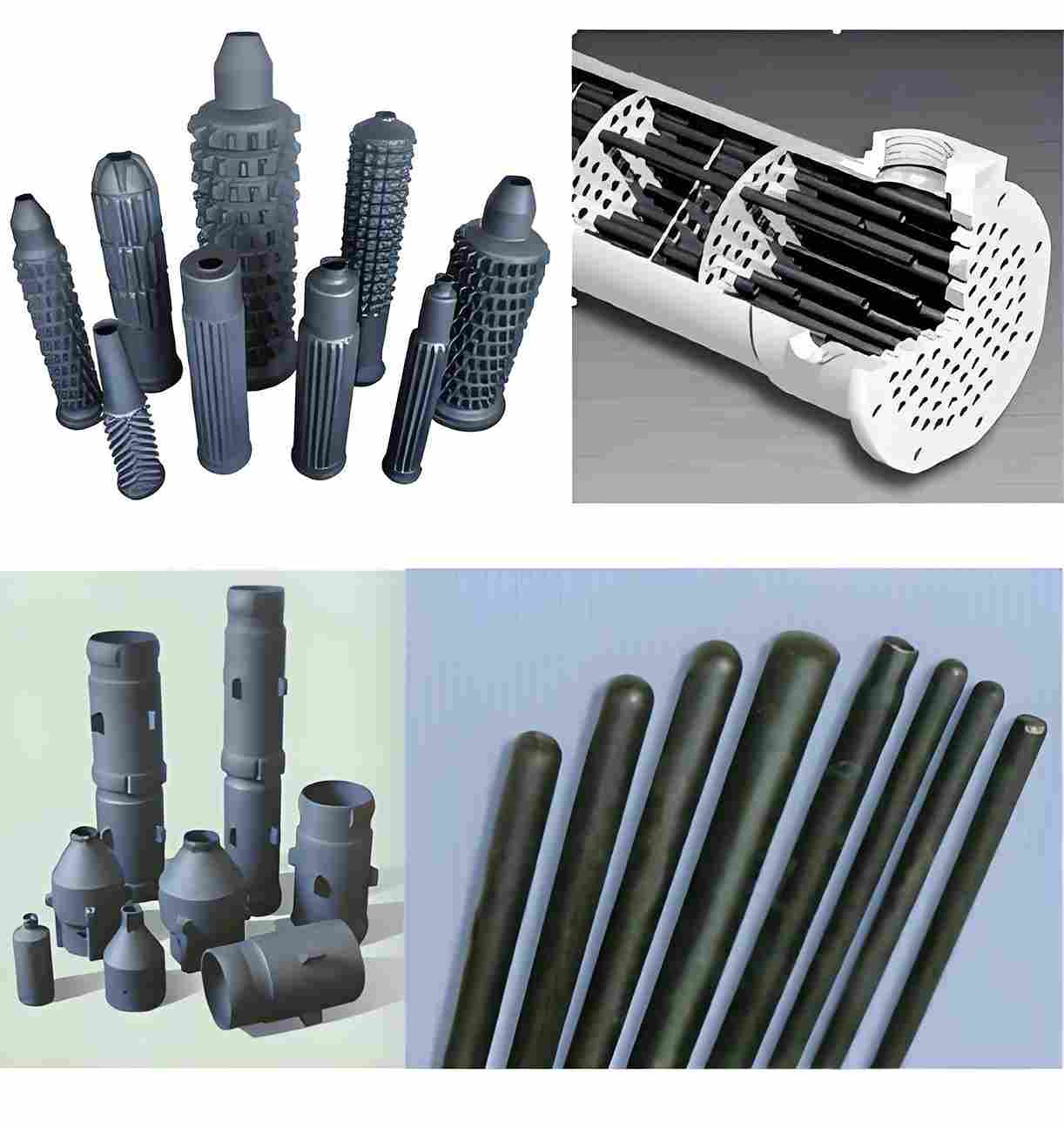
How SiC Tubes Extend Heat Exchanger Lifespan is simple: they resist corrosion, thermal fatigue, and mechanical wear far better than traditional metal or competing ceramic options, dramatically reducing downtime and replacement costs.
Why Conventional Heat Exchangers Fail
Most plant engineers experience three recurring failure modes in heat exchangers:
- Corrosion – aggressive fluids (sulphuric acid, molten salts, or chlorine‑laden gases) attack stainless steel and even high‑alloy alloys, leading to pitting and wall‑thinning.
- Thermal Shock – rapid temperature swings generate tensile stresses that exceed the material’s fracture toughness, causing micro‑cracks that propagate under service.
- Mechanical Wear – particulate‑laden streams, slurry erosion, and vibration wear down tube walls, especially at bends and nozzle entries.
When any of these mechanisms exceed a material’s limit, the exchanger must be taken offline for repair or replacement – a costly event for petrochemical, steel, or power‑generation plants.
Key Properties That Make SiC Tubes Ideal
1. High‑Temperature Strength
Silicon carbide maintains a flexural strength > 300 MPa at 1400 °C, far above the 150 MPa typical of Inconel or stainless steel. This allows exchangers to operate safely at temperatures up to 1600 °C without loss of structural integrity.
2. Exceptional Chemical Inertness
SiC’s dense, non‑porous lattice resists attack from most acids, alkalis, and halogenated gases. In a 2000‑hour immersion test with 30 % phosphoric acid at 1200 °C, our tubes showed less than 0.5 % mass loss, compared to 12 % for 316L stainless steel.
3. Low Thermal Expansion
With a coefficient of thermal expansion of ~4.5 ×10⁻⁶ K⁻¹, SiC tubes experience minimal stress during heating cycles, reducing the risk of crack initiation at joints and flanges.
4. Superior Wear Resistance
Hardness values above 2100 HV give SiC tubes a wear factor 15‑20 × lower than ceramic alumina and 40 × lower than titanium alloys when tested against abrasive silica particles at 500 °C.
Real‑World Performance Data
Below are three case studies that illustrate measurable life‑extension when SiC tubes replace metal counterparts.
| Customer | Application | Baseline Material | SiC Tube Used | Result |
|---|---|---|---|---|
| European Pump‑Valve Manufacturer | High‑pressure acid‑resistant pump | 304L Stainless Steel | 98 % pure SiC tube, Ø50 mm × 1.2 m | Service life increased from 8 months to 28 months (250 % gain); downtime reduced by 72 %. |
| German Steel Plant | Oxidizing furnace heat recovery | Inconel 718 | 99.5 % pure SiC tube, Ø80 mm × 2.5 m | Thermal‑shock failures eliminated; operating temperature raised 150 °C, boosting efficiency 4 %. |
| US Renewable‑Energy Facility | Molten‑salt thermal storage | Carbon Steel | SiC membrane tube, Ø30 mm × 1.0 m | Corrosion‑related leaks dropped from 6 %/year to <0.2 %/year. |
All three projects sourced their tubes from ZIRSEC’s Silicon Carbide Tubes, benefitting from our 20‑year production expertise and on‑site engineering support.
Design and Installation Best Practices
Material Compatibility
When integrating SiC tubes, match flange materials to minimise galvanic corrosion. Stainless‑steel or nickel‑alloy flanges with a compliant gasket (e.g., PTFE‑filled graphite) work well.
Thermal Expansion Management
Allow a 0.5 mm clearance per 100 mm length for expansion joints. In high‑cycle plants, use flexible metal bellows instead of rigid connections.
Cleaning and Inspection
SiC surfaces can be inspected with ultrasonic thickness gauges; any deviation beyond ±0.1 mm indicates potential cracking. Routine dry‑ice blasting removes deposits without damaging the ceramic surface.
Cost‑Benefit Analysis
Although the unit price of a SiC tube ($15‑$180 depending on dimensions) exceeds that of stainless steel, the total cost of ownership (TCO) tells a different story.
- Reduced Maintenance: 2‑3× fewer shutdowns per year saves $30‑$80 k in lost production.
- Longer Replacement Intervals: Typical life‑extension factor of 2.5‑3.5 translates into fewer purchase orders and lower logistics costs.
- Energy Efficiency: Higher allowable operating temperatures increase heat‑transfer coefficients by up to 15 %, cutting fuel consumption.
For a 500 kW boiler heat‑exchanger, the payback period on switching to SiC tubes is typically 1.8 years, after which the plant enjoys net savings of $120 k annually.
Quick Summary (FAQ)
- What temperature range can SiC tubes handle?
- Up to 1600 °C continuous operation; short spikes can exceed 1800 °C.
- Are SiC tubes compatible with acidic fluids?
- Yes. They resist corrosion from acids such as H₂SO₄, HCl, and phosphoric acid at high temperature.
- How long will a typical SiC tube last?
- Field data show 2‑4 years in aggressive environments, compared with 8‑12 months for stainless steel.
- Do I need special tools for installation?
- Standard tube‑handling tools suffice; use ceramic‑friendly torque specs (≤ 30 Nm for Ø50 mm tubes).
- What support does ZIRSEC provide?
- We offer CAD‑drawings, custom tolerances (±0.1 mm), fast 24‑hour stock delivery, and on‑site engineering assistance.
Conclusion – Take Action Today
If your plant is battling frequent exchanger failures, switching to silicon carbide tubes is the most reliable route to longer service life and lower operating costs. Contact our engineering team at info@zirsec.com for a free performance audit, custom design quote, or to request a sample. With ZIRSEC’s 20‑year heritage, rapid 24‑hour stock delivery, and full‑scale OEM support, you can upgrade your heat‑exchanger network with confidence and see measurable ROI within two operating cycles.