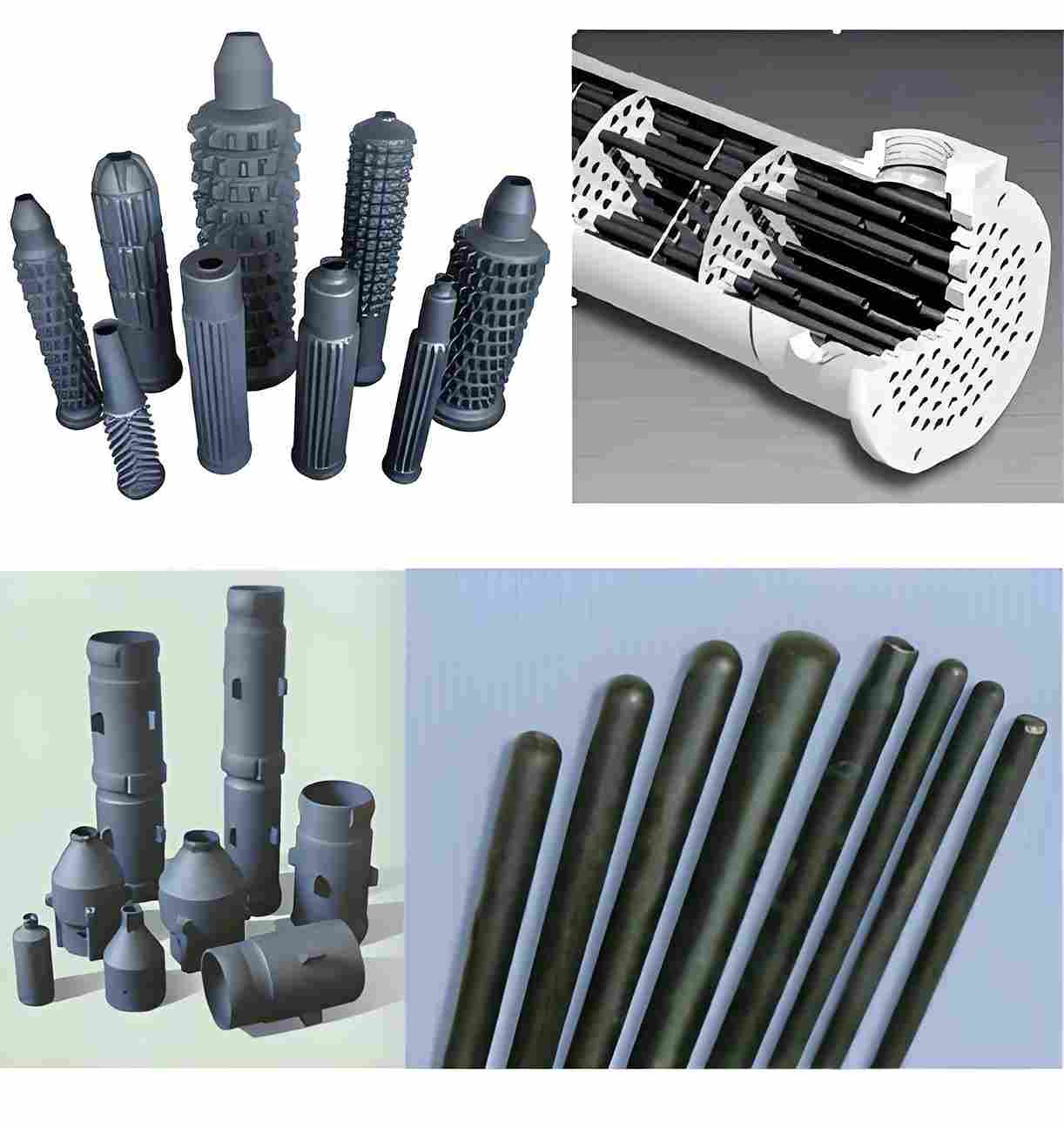
When you need a nozzle that can survive 1,400 °C, aggressive acids and continuous abrasive impact, the first question is whether silicon carbide (SiC) is the right material—and if so, which SiC nozzle will meet the specific demands of flue‑gas‑desulfurization (FGD), descaling or sandblasting.
Quick Summary
- Key material specs: SiC purity ≥ 98 %, compressive strength ≥ 130 MPa, thermal shock resistance up to 1,600 °C.
- Application checklist: operating temperature, abrasive type, flow rate, pressure drop, and maintenance interval.
- Cost drivers: geometry complexity, tolerance ±0.2 mm (standard) or tighter, custom coating, batch size.
- Why choose ZIRSEC: 20 years of SiC expertise, stocked standard sizes, rapid 24‑hour dispatch, full engineering support.
1. Understanding the Three Core Use‑Cases
1.1 FGD Nozzles – High‑Temp, Corrosive Gas Streams
FGD systems inject slurry or dry reagents into flue gases at temperatures between 300 °C and 1,200 °C. The nozzle must:
- Withstand thermal cycling (quick heat‑up and cool‑down) without cracking.
- Resist H₂SO₄, HCl and Na₂SO₃ corrosion.
- Maintain a tight spray pattern under pressures of 1–5 MPa.
Typical failure modes are erosion of the orifice, oxide scale spalling and thermal‑shock cracking. Choosing a SiC grade with low porosity and a surface roughness of Ra ≤ 2 µm reduces scale formation and prolongs service life.
1.2 Descaling Nozzles – Metal‑Cutting Liquids and Acid Baths
Descaling removes hardened scale from boiler tubes, heat exchangers and reactors. The nozzle is exposed to:
- Temperatures of 200 °C–600 °C.
- Highly abrasive particles (Al₂O₃, SiC grit) mixed with acidic solutions (phosphoric, hydrochloric).
- Cycles of high‑pressure jets (up to 10 MPa) and idle periods.
Key selection factors are orifice wear resistance and the ability to retain a consistent flow cross‑section despite particle impact. A dense, fine‑grain SiC body combined with a laser‑drilled orifice provides the best wear life.
1.3 Sandblasting Nozzles – Maximal Abrasive Throughput
In sandblasting, the nozzle must survive direct impact of quartz, garnet or reclaimed SiC grains at velocities of 60–120 m/s. Critical parameters include:
- Impact hardness (Knoop > 1,600).
- Venturi geometry that prevents clogging.
- Ability to handle back‑pressure spikes without fracturing.
For these tasks, a high‑purity SiC block with a gradient‑density core (denser at the tip, porous at the base) absorbs shock and extends nozzle life.
2. The Decision Matrix – What to Evaluate Before Ordering
| Parameter | Why It Matters | Typical Spec for SiC Nozzle |
|---|---|---|
| Purity (SiC ≥ 98 %) | Higher purity reduces internal flaws that act as crack initiators. | 98–99.5 % |
| Compressive Strength | Ensures nozzle survives high pressure without crushing. | > 130 MPa |
| Thermal Shock Resistance | Prevents spalling during rapid temperature changes. | ΔT > 900 °C |
| Surface Roughness (Ra) | Controls spray pattern and particle adhesion. | 0.8–2.0 µm |
| Tolerance | Critical for flow‑rate consistency and downstream equipment fit. | ±0.2 mm (standard), ±0.1 mm (tight). |
| Orifice Type | Laser‑drilled = smoother, machined = cheaper but rougher. | Laser‑drilled for high‑precision FGD. |
| Coating (optional) | WC‑Co or TiN coatings add extra wear resistance for sandblasting. | Optional based on cost. |
3. Common Pitfalls and How to Avoid Them
3.1 Ignoring Compatibility with the Working Fluid
Many engineers select a nozzle based solely on size, forgetting that silica‑rich gases can react with SiC at > 1,200 °C, forming SiO₂ layers that block the orifice. Our recommendation: request a chemical‑compatibility chart from the supplier and, if needed, ask for a protective SiC‑glaze on the inner surface.
3.2 Over‑Specifying Tolerance
Demanding ±0.05 mm on a 30 mm nozzle drives cost up by 30‑40 % without measurable performance gain for most FGD or descaling lines. Stick to ±0.2 mm unless the downstream system requires pin‑point flow matching.
3.3 Forgetting the Supply Chain Lead‑Time
Custom geometry, especially for sandblasting nozzles with internal baffles, can add 6–8 weeks to delivery. ZIRSEC keeps a range of standard diameters (¼‑2 in) in stock for 24‑hour dispatch, and we can prototype a custom tip within 2 weeks of receiving a CAD file.
4. ZIRSEC’s Tailored Solutions – Real‑World Cases
Case 1 – European FGD Retrofit
A German power plant needed to replace 120 mm FGD nozzles that were crumbling after 18 months. ZIRSEC supplied a 98.5 % pure SiC nozzle with a laser‑drilled 3 mm orifice, Ra = 1.2 µm, and a 24‑hour delivery guarantee. Result: 22 % reduction in reagent consumption and a 30 % extension of nozzle life. The plant avoided a projected $200 k downtime.
Case 2 – Descaling Line in a South‑American Steel Mill
The mill experienced frequent nozzle blockage due to silica scale. We provided a dense SiC nozzle with a “self‑cleaning” conical tip. After three months, the blockage rate dropped from 12 times per shift to once per week, saving roughly $45 k in labor.
Case 3 – High‑Velocity Sandblasting for Aerospace Parts
A US aerospace supplier required a nozzle that could handle 110 m/s SiC grit without erosion. ZIRSEC added a TiN‑coated inner sleeve to a standard ½‑in SiC nozzle. The coating increased wear resistance by a factor of 3, cutting replacement cost from $1,200 to $400 per year.
5. Pricing Guide – What Drives the Cost?
Below is a typical price breakdown for a 30 mm nozzle (USD). All prices are FOB Shanghai; taxes, shipping and duties are separate.
- Standard stock SiC nozzle (±0.2 mm, no coating): $45 – $65 per piece.
- Custom geometry (laser‑drilled or machined, ±0.1 mm): $85 – $120.
- Optional TiN coating: add $30 per unit.
- Tooling & CAD support (one‑time): $250 – $500 depending on complexity.
Bulk orders (≥ 500 pcs) receive a 10‑15 % discount, and ZIRSEC can reserve inventory for fast‑track projects.
6. How to Verify Supplier Capability
- Ask for a recent mill‑test report showing compressive strength, thermal shock and chemical resistance.
- Request a sample run – a batch of 5‑10 nozzles shipped within 2 weeks.
- Confirm the supplier can provide MSDS, COA and ISO‑9001 documentation.
- Check the ability to handle CAD files (STEP, IGES) and to perform tolerance analysis.
- Make sure the supplier offers post‑sale engineering support – ZIRSEC’s engineers are reachable via email (info@zirsec.com) for on‑site troubleshooting.
7. Quick Checklist Before Placing Your Order
- Define operating temperature range and pressure.
- Identify the abrasive or chemical composition of the working fluid.
- Select required orifice size and spray pattern (cone angle).
- Decide on tolerance level (standard vs. tight).
- Choose optional coating only if abrasive wear is a primary failure mode.
- Confirm lead‑time and inventory availability.
Once you have this information, you can send the CAD drawing to a trusted SiC supplier. ZIRSEC will review the file, suggest any design optimisation, and quote a firm price within 24 hours.
8. Final Recommendation
For most FGD, descaling and sandblasting applications, the decisive factors are purity, thermal shock resistance, and the precision of the orifice. A 98 %+ SiC block with laser‑drilled geometry, standard tolerance of ±0.2 mm, and optional TiN coating for sandblasting will satisfy 90 % of use‑cases while keeping cost competitive.
If your project involves extreme temperature swings, corrosive acids or high‑velocity abrasive streams, invest in a custom‑graded, gradient‑density nozzle and leverage a supplier who can provide rapid prototyping and full‑scale engineering support. ZIRSEC’s 20‑year track record, stocked standard sizes and 24‑hour rapid‑ship service make us a reliable partner for both one‑off prototypes and multi‑year production runs.
Contact our technical team today to start a no‑obligation feasibility study and receive a detailed quotation tailored to your exact operating conditions.