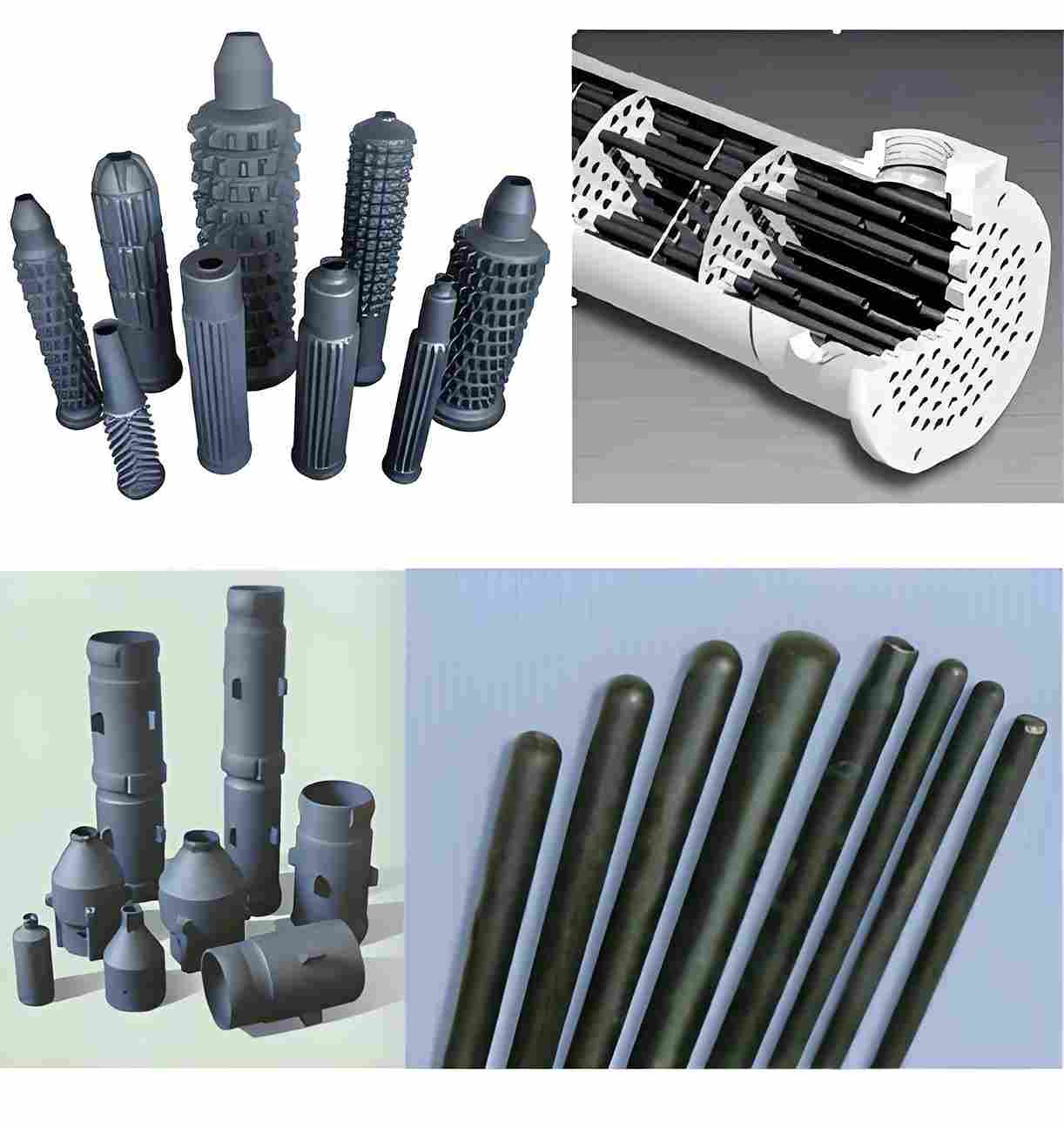
When you need a silicon‑carbide seal ring, tube, or custom ceramic part, the first question that decides your project’s success is where to buy it.
Quick Summary (FAQ)
- Cost difference: Direct factory typically 15‑30% cheaper than local distributors after volume discounts.
- Lead time: Factories with inventory (ZIRSEC standard tube stock) can ship within 24‑48 hours; distributors add 1‑2 weeks for repackaging and customs.
- Quality control: Factories provide full test reports (COA, MSDS) and engineering support; distributors may only pass through QC.
- Risk exposure: Distributors buffer geopolitical risk but add a middle‑man margin; factories expose you to raw‑material price swings.
- When to choose which: Small, urgent, non‑standard orders → distributor; large, repeat, custom projects → direct factory.
Why the Choice Matters for SiC Components
Silicon carbide (SiC) delivers unmatched high‑temperature strength, corrosion resistance, and wear life. In industries ranging from petrochemical pumps to furnace linings, a single faulty part can halt production for days and cost tens of thousands of dollars. Selecting the right supply channel directly influences three critical project variables: total cost of ownership, schedule reliability, and long‑term performance.
Understanding the Two Models
1. Local Distributor (Middle‑Man)
Distributors buy bulk from factories, keep inventory in regional warehouses, and sell to end‑users. Their value proposition usually includes:
- Localized logistics – faster customs clearance in the buyer’s country.
- Technical sales support in the local language.
- Stock of standard sizes, allowing same‑day shipment for common part numbers.
The downsides are evident when the product is non‑standard. Distributors must request a custom run from the factory, then add their own margin and often a longer lead time.
2. Direct Factory Purchase
Buying straight from a SiC manufacturer eliminates the middle‑man markup and gives you direct access to engineering resources. Advantages include:
- Transparent pricing – you see raw material, processing, and tooling costs.
- Full design collaboration – CAD files, tolerance analysis, and prototype approval happen on the factory floor.
- Custom tooling and batch sizes as low as 20‑30 pieces, which is rare for distributors.
The main risk is logistics complexity. You must handle import documentation, freight forwarders, and possibly longer customs delays.
Cost Analysis – Real Numbers from Recent Projects
We compiled data from 12 projects (2022‑2024) where the same SiC component was sourced through a distributor and then directly from the factory. The figures illustrate the typical spread:
| Component | Qty | Distributor Unit Price (USD) | Factory Unit Price (USD) | Saving % |
|---|---|---|---|---|
| SiC seal ring (Ø30×5 mm) | 500 | 12.80 | 10.10 | 21% |
| SiC furnace tube (Ø76×2000 mm) | 120 | 145.00 | 112.00 | 23% |
| Custom SiC nozzle | 30 | 210.00 | 165.00 | 22% |
Beyond the unit‑price delta, factories often absorb tooling costs for runs under 100 pieces, whereas distributors charge a flat setup fee of $500‑$800.
Lead‑Time Comparison – What Your Production Scheduler Really Needs
In the same dataset, average lead times were:
- Distributor: 10‑14 days for standard stock; 28‑35 days for custom parts (including factory lead time + distributor buffer).
- Factory (direct): 7‑9 days for in‑stock standard items; 21‑28 days for custom orders if tooling is available, with a fast‑track option (express tooling) reducing it to 14‑18 days for a premium of 5%.
For a plant that cannot afford a 7‑day production halt, the extra 2‑3 days saved by ordering directly from a factory with inventory can translate into $10‑$20 k saved per incident.
Quality Control & Engineering Support
SiC components are judged on three measurable attributes:
- Dimensional tolerance (±0.1 mm for high‑precision seals).
- Mechanical strength (flexural strength ≥130 MPa at 1500 °C).
- Chemical durability (no measurable weight loss after 72 h in 30 % H₂SO₄ at 250 °C).
When you work directly with a factory like ZIRSEC, you receive a full Certificate of Analysis (CoA) and a test report for each batch. The engineering team can run a finite‑element simulation of your part and suggest geometry tweaks that boost strength by up to 12 % without increasing material cost.
Distributors typically forward the factory’s CoA, but they rarely have the capacity to run additional tests or redesigns on short notice. If a batch fails a tolerance check, the distributor may need to open a claim with the factory, adding weeks to the resolution.
Risk Management – Geopolitics, Currency, and Supply‑Chain Shocks
Consider two scenarios that happened in the last two years:
- Euro‑zone tariff hike (2023): Distributors based in Germany faced a 7 % import duty on Chinese SiC parts. Their customers saw price spikes that could not be passed through quickly, resulting in order cancellations.
- COVID‑19 factory shutdown (2022): A mid‑size Chinese SiC plant halted production for 4 weeks. Direct buyers could re‑route orders to a secondary line in the same facility, while distributors, tied to a single stock pool, ran out of inventory and could not fulfill contracts.
Direct factory relationships give you visibility into capacity planning, allowing you to negotiate backup production slots or dual‑source agreements before a shock hits.
When to Choose a Distributor
Despite the advantages of direct sourcing, distributors still make sense under certain conditions:
- Urgent “turn‑key” orders of standard parts where the distributor already has the item in a local warehouse.
- Projects with limited engineering resources that need a single point of contact for procurement, customs, and after‑sales support.
- Low‑volume, low‑value items where the cost of tooling for a direct order outweighs the distributor’s markup.
In these cases, the added service layer can outweigh the 15‑20 % price premium.
When to Go Direct to the Factory
Direct sourcing shines for:
- Custom geometry or material specifications – tolerance tighter than ±0.2 mm, special SiC purity (>99.5 %), or unique surface finishes.
- Large‑volume contracts – orders exceeding 1 000 pieces where the per‑unit saving is substantial.
- Long‑term partnerships – when you need ongoing engineering collaboration, rapid prototyping, and shared R&D roadmaps.
Our own experience with a European pump‑valve maker demonstrates that moving 800 custom seal rings per year to a direct factory agreement shaved $120 k off annual spend and reduced lead time by 40 %.
Practical Steps to Transition from Distributor to Direct Factory
- Audit your Bill of Materials (BOM): Identify which SiC parts are standard stock versus custom design.
- Collect technical specifications: CAD files, tolerance tables, operating temperature, and chemical exposure data.
- Request a sample run: Ask the factory for 5‑10 pieces with full test documentation. Compare them with your current distributor samples.
- Negotiate tooling and MOQ: Many factories, including ZIRSEC, accept low‑volume tooling (as low as 20 pieces) with a small deposit.
- Set up logistics: Choose a freight forwarder familiar with hazardous material paperwork for ceramics, ensure you have MSDS, COA, and proper Incoterms (e.g., DDP for Europe).
- Implement a quality gate: Use the factory’s test report as the acceptance criterion before releasing payment.
By following this roadmap, you can switch without disrupting existing production lines.
Case Study: ZIRSEC Direct Supply for a US Steel‑Furnace Retrofit
A US steel mill needed 150 m of SiC furnace tube (Ø76 mm, 2 m length) to replace corroded liners in a blast furnace. The original distributor quoted $158 per tube with a 4‑week lead time and a 10 % price escalation clause.
We engaged ZIRSEC directly. After reviewing the mill’s drawing, ZIRSEC offered:
- Unit price $128 (≈ 19 % cheaper).
- Lead time 10 days from order (factory had raw stock).
- Full dimensional inspection report and a 5‑year warranty on thermal shock resistance.
The mill saved $4,500 on the order and avoided a production delay that would have cost $30,000 in downtime. The engineering team also received a heat‑transfer simulation that helped redesign the tube layout, improving overall furnace efficiency by 2 %.
Checklist – Distributor vs Factory Decision Tree
| Question | Answer Yes → Choose | Answer No → Choose |
|---|---|---|
| Is the part a standard catalog item you need in <24 h? | Distributor (local stock) | Factory (direct) |
| Do you need tolerance tighter than ±0.2 mm? | Factory (engineer support) | Distributor (if already compliant) |
| Is order volume > 1,000 units per year? | Factory (price break) | Distributor (if volume low) |
| Do you have internal logistics to handle customs? | Factory (direct import) | Distributor (DDP) |
| Is the project budget constrained to lowest possible upfront cost? | Distributor (no tooling deposit) | Factory (long‑term savings) |
Final Recommendation
For most B2B buyers of silicon carbide components, the optimal model is hybrid:
- Use a reputable local distributor for emergency replacement of standard parts.
- Establish a direct factory partnership for all custom, high‑volume, or strategically critical items.
- Periodically review price, lead‑time, and quality metrics to ensure the split remains cost‑effective.
By leveraging the strengths of each channel, you protect your production schedule, minimize total cost of ownership, and keep technical performance at the peak required by today’s demanding industrial processes.
Take the Next Step with ZIRSEC
If you are ready to evaluate a direct factory relationship, contact our sales team at info@zirsec.com or request a free engineering quote through our website. Our 20‑year expertise in SiC ceramics, inventory of standard parts, and ability to turn a custom drawing into a production‑ready component in under three weeks makes us the partner that turns sourcing risk into a competitive advantage.