Wet flue gas desulfurization systems operate in one of the most aggressive industrial environments, combining acidic slurry, abrasive particles and continuous operation. Spray nozzles play a critical role in ensuring uniform slurry distribution and efficient sulfur removal.

Why Spray Nozzle Failure Is a Common Problem in Wet FGD Systems
In wet FGD units, spray nozzles are exposed to acidic liquids, gypsum particles and high flow velocities. Metal nozzles often suffer from corrosion, erosion and blockage, leading to uneven spraying, reduced desulfurization efficiency and frequent maintenance shutdowns.
Material Selection as a Key Design Decision
Choosing the right nozzle material directly affects system reliability and operating cost. While alloy steels and plastics may offer lower initial cost, their service life in wet FGD environments is often limited, increasing replacement frequency and downtime.
Why SiC Spray Nozzles Are Preferred for Wet FGD Systems
Excellent Corrosion Resistance in Acidic Slurry
Silicon carbide remains chemically stable in acidic and chloride-rich slurry environments typically found in wet FGD systems, outperforming stainless steel and coated metal nozzles.
Superior Wear Resistance Against Gypsum Particles
High hardness allows SiC spray nozzles to resist erosion caused by solid particles, maintaining nozzle geometry and spray pattern consistency over long operating cycles.
Stable Spray Performance Over Time
Unlike metals that gradually deform or corrode, silicon carbide maintains dimensional stability, ensuring uniform droplet distribution and consistent desulfurization efficiency.
Typical SiC Spray Nozzle Applications in Wet FGD
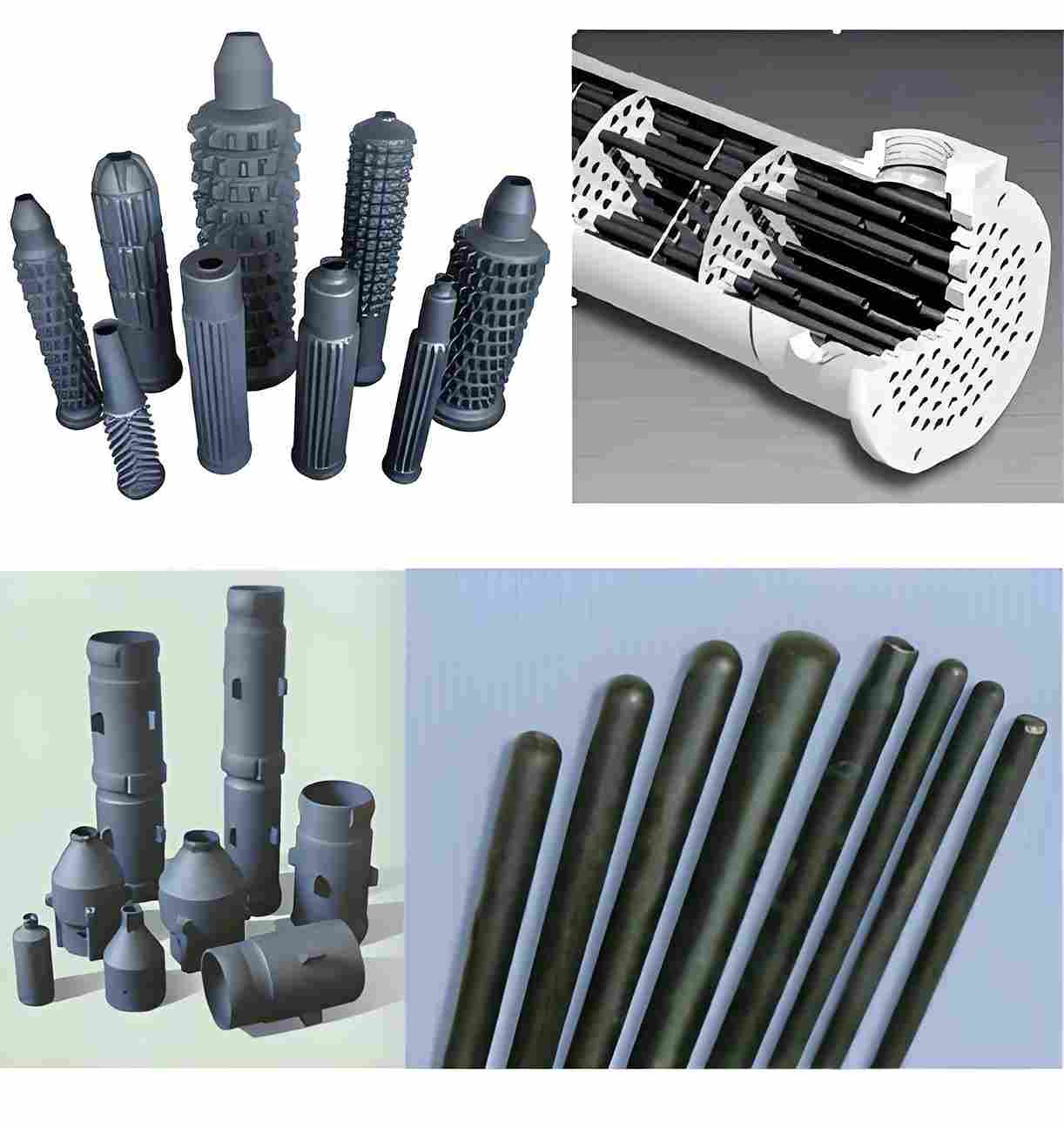
Silicon carbide spray nozzles are widely used in absorber towers, slurry recirculation systems and quench zones. Zirsec supplies Silicon Carbide Nozzles engineered for high flow rates, customized orifice sizes and long-term exposure to corrosive slurry.
Zirsec Engineering Solutions for Wet FGD Nozzles
Zirsec manufactures SiC spray nozzles using controlled sintering processes to achieve high density and consistent microstructure. With drawing-based customization and fast delivery, Zirsec supports both new FGD installations and retrofit projects requiring precise spray performance.
Case Example: Reducing Nozzle Replacement Frequency in a Power Plant FGD Unit
A coal-fired power plant experienced frequent replacement of metal spray nozzles due to erosion and clogging. Zirsec provided custom silicon carbide spray nozzles designed for slurry composition and operating pressure. After installation, nozzle service life increased significantly, reducing maintenance downtime and improving overall FGD system stability.
Material Comparison for Wet FGD Spray Nozzles
| Material | Corrosion Resistance | Wear Resistance | Service Life | Maintenance Frequency |
|---|---|---|---|---|
| Carbon Steel | Low | Low | Short | High |
| Stainless Steel | Moderate | Moderate | Medium | Medium |
| Silicon Carbide | Excellent | High | Long | Low |
FAQ: SiC Spray Nozzles for Wet FGD Systems
Are silicon carbide spray nozzles compatible with existing FGD systems?
Yes. SiC spray nozzles can be customized to match existing nozzle dimensions and connection types.
Do SiC nozzles reduce clogging in slurry applications?
Smooth surfaces and wear resistance help maintain consistent flow paths, reducing blockage risk.
Can Zirsec supply small batch replacement nozzles?
Zirsec supports small batch orders and fast delivery for maintenance and emergency replacement needs.
Are custom spray angles and orifice sizes available?
Yes. Zirsec provides engineering support to customize spray patterns based on system requirements.
Optimize Wet FGD Performance with Zirsec SiC Spray Nozzles
If your wet FGD system suffers from frequent nozzle wear, corrosion or unstable spray performance, Zirsec’s silicon carbide spray nozzles offer a reliable long-term solution. Contact our engineering team to discuss your operating conditions and customization needs.