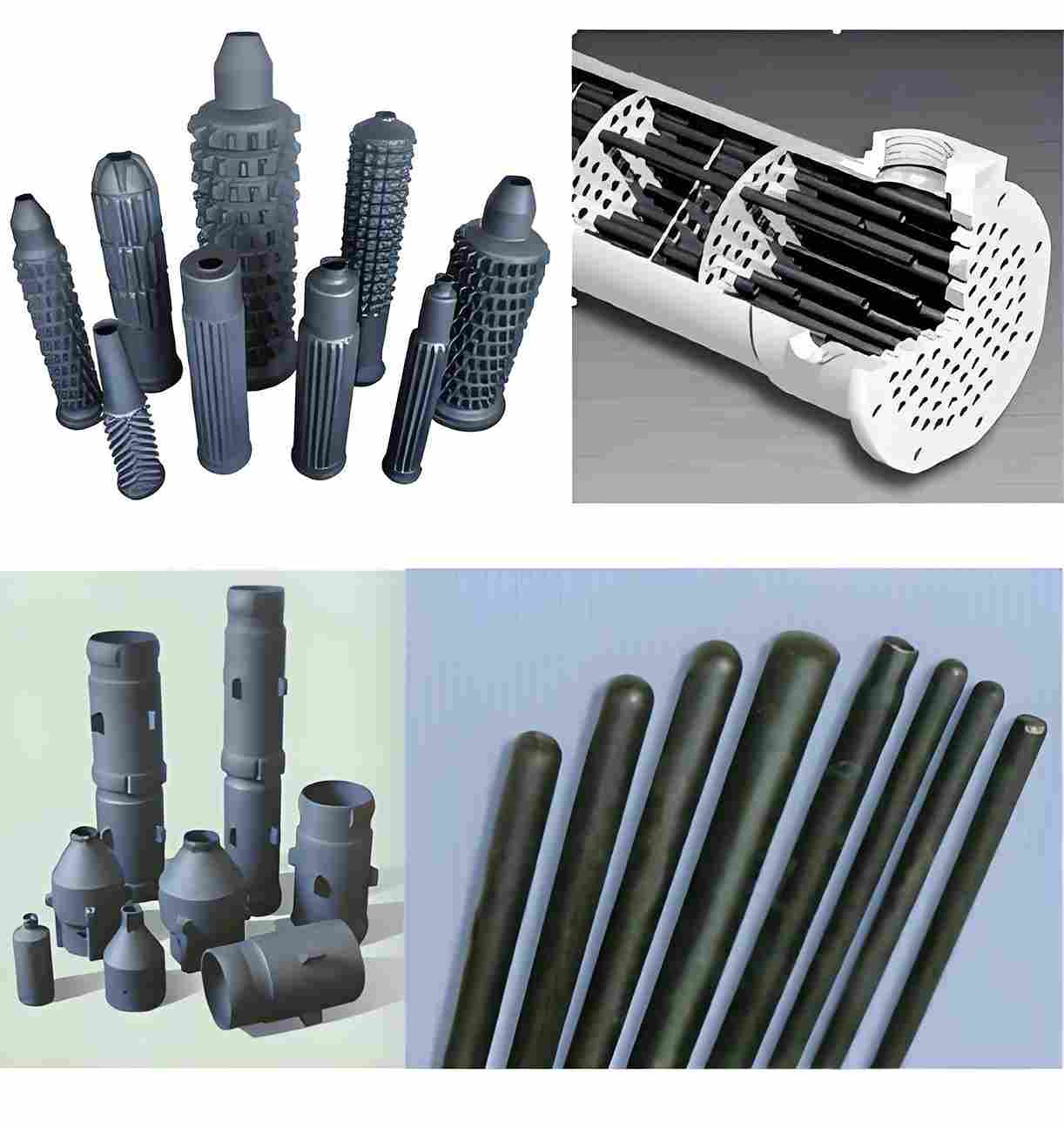
When you ask “How much will a silicon carbide (SiC) component cost?” you need a single answer that covers material, size, tolerance, volume and after‑sales support—all in one place.
Quick Summary (FAQ)
- What drives the base price of SiC parts? Raw material grade, geometry complexity and heat‑treatment steps.
- How much does a standard SiC tube cost? Typically $12‑$45 per piece for 25 mm‑diameter, 1 m length, depending on order size.
- Can I reduce cost by increasing order quantity? Yes—price per unit can drop 30‑60% after the first 500 units.
- Are there hidden fees? Tooling, inspection and logistics can add 5‑15% on top of the quoted price.
- What is the typical lead time? Stock items ship within 24‑48 h; custom parts need 4‑8 weeks.
Why SiC Pricing Looks Different From One Supplier to Another
In our 20‑year run at ZIRSEC, we have seen three pricing patterns that confuse buyers:
- Raw material premium. High‑purity SiC powder (≥ 98%) costs $5‑$9 kg, while lower‑grade material can be half that price but brings extra machining waste.
- Processing intensity. A simple cylinder requires only grinding and sintering. A complex nozzle with internal channels adds multi‑axis CNC, extra sintering cycles and post‑machining QA, driving cost up by 2‑3×.
- Supply chain reliability. Companies that keep a 20 % safety stock of standard sizes can promise 24 h dispatch. Those that manufacture on‑demand often quote lower unit prices but charge high freight and longer lead times.
Breaking Down the Cost Elements
1. Raw Material Cost
The baseline for any SiC part is the powder. Prices fluctuate with global silicon supply, energy costs in China and demand from the semiconductor sector. In the past 12 months the average price for 99.5 % SiC powder rose from $4.8 kg⁻¹ to $6.3 kg⁻¹, a 30 % increase that directly pushes part prices upward.
2. Geometry & Size
Every extra millimeter of diameter adds roughly 0.8 g of SiC. For a 30 mm tube (≈ 2.5 g per cm), material cost alone jumps $1‑$2 per cm compared with a 15 mm tube. Complex shapes—e.g., a multi‑hole burner nozzle—require additional CNC time; we typically add $15‑$40 per piece for each extra feature.
3. Tolerance & Surface Finish
Standard industrial tolerance (±0.5 mm) is priced for volume. Tighter tolerances (±0.1 mm) demand secondary grinding and stricter QA, increasing unit cost by 20‑35 %.
4. Heat‑Treatment & Sintering Cycle
High‑temperature sintering (up to 2100 °C) consumes up to 300 kWh per batch. Energy‑intensive cycles add $3‑$7 per part, especially for large furnace tubes that require longer soak periods.
5. Inspection & Certification
For critical applications (chemical plant, aerospace) customers request COA, MSDS and dimensional reports. Our in‑house X‑ray and ultrasonic testing adds $2‑$5 per component but avoids costly field failures.
6. Logistics & Customs
Shipping SiC from China to Europe or the U.S. typically costs $0.30‑$0.55 per kg. Small orders (<20 kg) incur a handling surcharge of $150‑$250. Consolidated containers for >5 tons cut unit freight to under $0.12 per kg.
Real‑World Pricing Scenarios
| Part Type | Typical Size | Qty (units) | Base Unit Price (USD) | Adjusted Price* (USD) |
|---|---|---|---|---|
| Standard SiC Tube (stock) | 25 mm × 1 m | 1‑100 | $18 | $18‑$22 (incl. 5‑15% logistics) |
| Custom Burner Nozzle | Ø 12 mm × 30 mm length, 3 internal channels | 50‑200 | $42 | $55‑$70 (complex geometry surcharge) |
| SiC Seal Ring (±0.1 mm) | Ø 30 mm × 5 mm thickness | 500‑1000 | $11 | $12‑$14 (tight tolerance premium) |
*Adjusted price includes tooling, inspection and average freight. Bulk discounts beyond the quantities shown can bring the unit price down another 10‑20 %.
How to Keep Your SiC Procurement Costs Under Control
- Leverage stock items. For applications that accept standard dimensions, order from our 24‑h inventory. This avoids tooling charges and reduces freight.
- Combine orders. Consolidate multiple component types into a single container; the freight saving per part can exceed $1‑$2.
- Define tolerances early. If a ±0.5 mm tolerance meets functional needs, request it upfront—tightening later will add cost.
- Plan for heat‑treatment cycles. Identify whether a part really needs the 2100 °C soak. In many cases a 1800 °C cycle gives sufficient strength at 15‑20 % lower energy cost.
- Use our engineering assistance. Our in‑house engineers can review CAD files, suggest design simplifications and run DFMA (Design for Manufacturing and Assembly) analysis that often reduces material waste by 10‑25 %.
Case Study: Avoiding a Costly Production Halt
A European pump‑valve OEM relied on a single sourced SiC seal ring with a 0.2 mm tolerance. When the supplier’s inventory ran out, the plant stopped for eight days, costing roughly $15,000 in lost production. By switching to ZIRSEC’s dual‑stock strategy—maintaining both a standard‑tolerance and a tight‑tolerance batch—we supplied the missing rings within 48 h. The total cost for the emergency shipment was $1,200, saving the OEM more than $13,800.
Frequently Asked Questions (Expanded)
Q: Does higher SiC purity always mean higher price?
A: Not necessarily. For most industrial wear applications, 98 % purity meets performance specs. Going to 99.9 % purity adds $0.80‑$1.20 per kilogram, which translates to a marginal unit price increase for large parts.
Q: How do I calculate total landed cost?
A: Start with the quoted unit price, add tooling (if any), inspection, freight (per kilogram), insurance (0.2‑0.5 % of CIF value) and any import duties (usually 0‑5 % for most countries). Our sales team can provide a detailed cost breakdown before you place the order.
Q: Can I get a sample before committing to a large order?
A: Yes. We produce a 5‑20 piece sample batch for most custom designs. Sample pricing is $30‑$80 per piece, depending on complexity, and we ship it as express air freight to let you evaluate fit and performance.
Where to Order Your SiC Parts
Visit our product catalog and request a quote directly—our online form captures drawing files, tolerance requirements and desired quantity. For immediate needs, our stocked silicon carbide tubes are ready to ship within 24 hours.
Bottom Line
SiC component pricing is a blend of material cost, geometry, tolerance, processing steps and logistics. By understanding each driver, you can negotiate smarter, avoid hidden fees and keep projects on schedule. Use the guidelines above, work with a supplier that offers both inventory and custom engineering support, and you’ll turn a potentially opaque cost structure into a predictable line item in your budget.