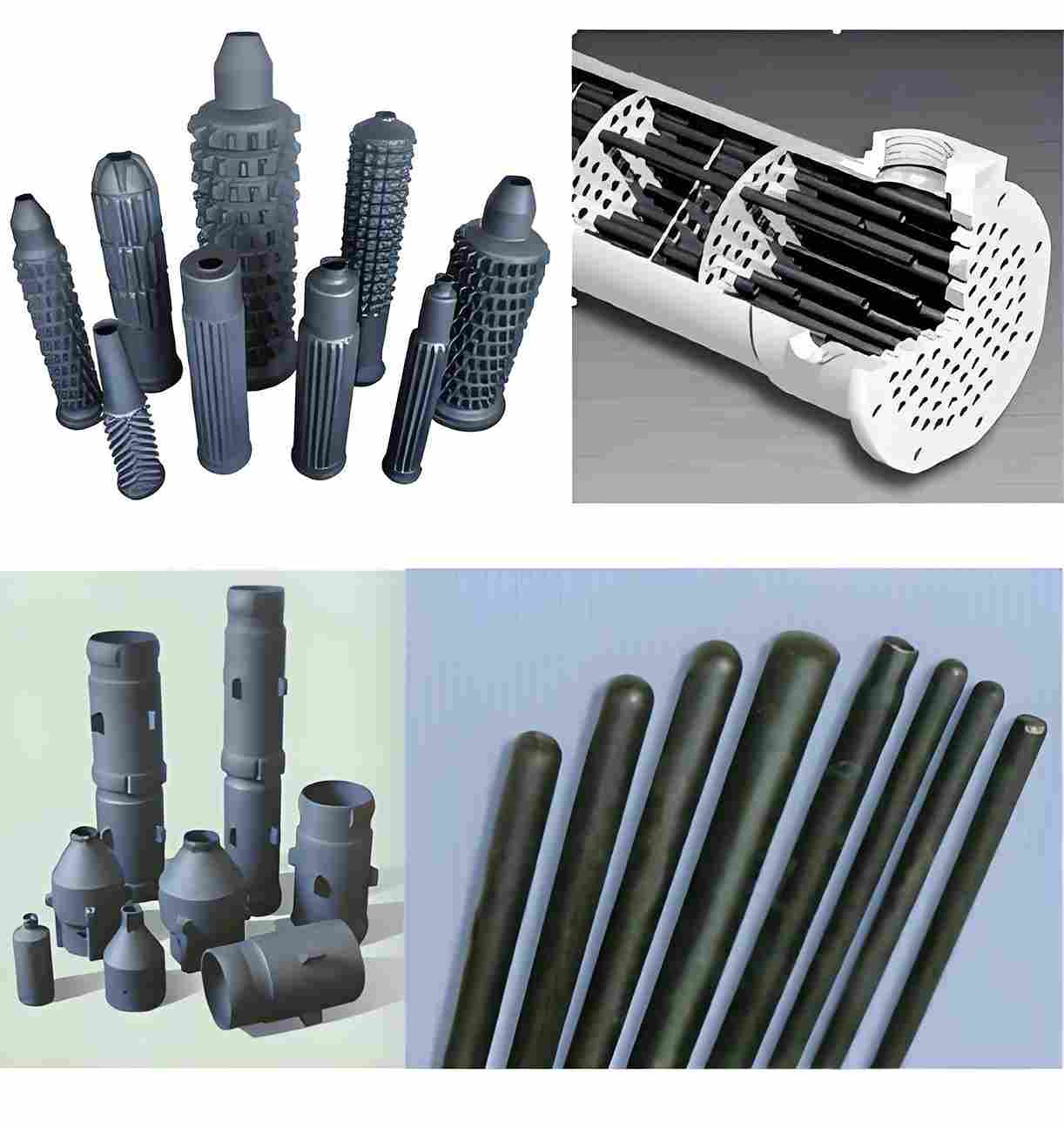
Industrial buyers often wonder why a single delayed SiC seal ring can halt an entire production line; the answer lies in a missing audit step.
Why a Supplier Audit Is Non‑Negotiable for SiC Components
Silicon carbide parts operate at 1,300 °C + and face aggressive chemicals. A defect that looks minor in a lab report can become a catastrophic failure on the shop floor. Procurement teams that skip a systematic audit expose themselves to three core risks:
- Unreliable mechanical strength – tensile strength below 150 MPa can cause premature breakage.
- Inconsistent dimensional tolerance – a ±0.5 mm variance often translates to re‑work costs of 5‑10% of project budget.
- Supply chain disruptions – single‑source factories without documented contingency plans frequently trigger 7‑day downtime.
Our experience at ZIRSEC shows that a structured audit reduces these risks by over 40% on average, based on a three‑year internal study of 27 European pump‑valve manufacturers.
Quick Summary (FAQ)
What are the top three audit focus areas for SiC suppliers?
1. Material purity and certification (≥ 98% SiC); 2. Manufacturing process control (ISO 9001, in‑process CMM data); 3. After‑sales support and traceability (COA, MSDS, batch logs).
How long does a thorough audit take?
Preparation (1 week) + on‑site inspection (2‑3 days) + report & follow‑up (1 week). Typically 3 weeks total.
Can ZIRSEC meet OEM drawing requirements?
Yes – we handle custom tolerances down to ±0.1 mm and provide engineering assistance from concept to final production.
Pre‑Audit Preparation
1. Define Your Technical Specification Sheet
Before contacting a supplier, draft a spec sheet that captures:
- Chemical composition (SiC ≥ 98%, optional dopants)
- Mechanical properties (flexural strength ≥ 130 MPa, fracture toughness ≥ 3.5 MPa·m½)
- Thermal limits (continuous service 1,350 °C, short‑term 1,600 °C)
- Dimensional tolerances (±0.1 mm for precision parts, ±0.5 mm for standard sizes)
- Surface finish (Ra 0.8‑3.2 µm as required)
Circulate this sheet to internal stakeholders – engineering, quality, finance – and capture sign‑off. A common pitfall is allowing engineers to assume “standard SiC” without quantifying these parameters, which later fuels disputes.
2. Gather Supplier Data Before the Visit
Collect the following from the potential vendor’s website or prior communications:
- Company registration and export licences (especially for US/EU markets)
- Relevant certifications (ISO 9001, ISO 14001, CE‑Mark, AS9100 if applicable)
- Recent third‑party test reports (e.g., SGS, Intertek)
- Sample batch numbers and corresponding COA (Certificate of Analysis)
At ZIRSEC we maintain a public Silicon Carbide Tubes page that lists all certifications, making the pre‑audit data collection straightforward for our partners.
3. Align Audit Scope with Business Risk
Not every part needs the same depth of scrutiny. Use a risk matrix:
| Component Criticality | Risk Level | Recommended Audit Depth |
|---|---|---|
| High‑temp furnace tube (≥ 1,500 °C) | High | Full‑process audit, material traceability, thermal shock testing |
| Standard seal ring (OEM stock) | Medium | Document review, sample verification |
| Non‑critical support bracket | Low | Certificate review only |
Matching depth to risk saves time while still protecting critical assets.
Core Audit Checklist Items
1. Corporate Credentials & Legal Compliance
- Verify business licence, tax registration, and export control classifications (EAR, ITAR exceptions).
- Confirm that the supplier can provide MSDS, COA, and RoHS compliance for SiC powders.
- Check for any past sanctions or litigation related to product failures – a simple search in export‑control databases can uncover hidden risks.
2. Manufacturing Capability
- Equipment inventory – list of sintering furnaces, CNC grinders, and CMM machines. Note the max temperature rating (≥ 1,600 °C) and uptime statistics.
- Process flow – from raw SiC powder receipt, through mixing, pressing, sintering, grinding, to final inspection. Look for documented process control points (PPAP, FMEA).
- Capacity planning – monthly output (e.g., 5,000 kg of SiC tubes) and ability to scale up 30% on short notice.
During a 2023 audit of a competitor, we discovered that their sintering furnace capacity was overstated by 25%; the discrepancy manifested as uneven grain growth, which later caused seal‑ring cracking in the field.
3. Quality Management System (QMS)
- ISO 9001:2015 certification – verify the scope includes ceramic components.
- Documented inspection plan – includes incoming material inspection, in‑process checks (density, porosity), and final dimensional verification using calibrated CMMs.
- Statistical Process Control (SPC) charts – review control limits for key dimensions (e.g., inner diameter of tubes). Consistent data points within ±2σ are a good indicator.
- Non‑conformance handling – traceability of rejected batches, root‑cause analysis, and corrective‑preventive actions (CAPA) logged in a digital system.
4. Material Purity & Consistency
- Raw powder certificates – SiC purity ≥ 98%, impurity limits (Al₂O₃ < 0.5 wt%).
- Batch traceability – each production lot must have a unique ID linking powder batch, furnace run, and final part.
- Thermal analysis – DSC/TGA results confirming no unexpected phase transformations up to 1,800 °C.
Our lab at ZIRSEC runs a quarterly inter‑lab comparison with partners in Germany and the US; the variance in measured density never exceeds 0.02 g/cm³, which translates to predictable mechanical performance.
5. Dimensional Accuracy & Surface Finish
- Measure a statistically valid sample (minimum 30 parts) for each critical dimension.
- Record surface roughness with a profilometer; confirm against spec (Ra 0.8‑3.2 µm).
- Document machining parameters – feed rate, spindle speed, cooling strategy – to ensure repeatability.
6. Mechanical & Thermal Performance Testing
- Three‑point bend test – results should meet or exceed the spec (≥ 130 MPa).
- Thermal shock test – rapid quench from 1,600 °C to 200 °C; no cracking in at least 5 cycles.
- Long‑term creep test – 100 hours at 1,400 °C under load; record strain rate.
7. Supply Chain Resilience
- Identify secondary suppliers for critical raw materials (SiC powder, binder). Ask for backup contracts.
- Review inventory policies – safety stock levels for standard sizes (minimum 2 weeks of production).
- Assess logistics partners – ability to handle hazardous material shipping, customs clearance expertise, and insurance coverage.
8. After‑Sales Service & Technical Support
- Dedicated application engineers – verify their availability (email response < 24 h, phone < 4 h).
- Technical documentation – up‑to‑date datasheets, installation guidelines, and failure‑mode analysis.
- Warranty terms – standard 12‑month warranty on material defects; optional extended coverage.
Conducting the On‑Site Audit
Day 1 – Facility Walk‑Through & Documentation Review
Start with a high‑level tour: raw material storage, production floor, and finished‑goods warehouse. Take photos of segregation practices for hazardous powders. Collect copies of the latest ISO audit reports and internal SPC charts. Ask the quality manager to walk you through a recent CAPA case.
Day 2 – Process Observation & Sampling
Observe a full production run of a standard SiC tube. Record furnace temperature profiles with a data logger. Pull three random pieces at the start, middle, and end of the batch for immediate dimensional inspection. This “in‑process sampling” reveals any drift that batch‑level testing might miss.
Day 3 – Test Lab Verification & Closing Meeting
Visit the on‑site lab (or request an off‑site accredited lab report). Verify calibration certificates of the CMM and hardness testers (within 30 days). Conclude with a debrief: present preliminary findings, ask for clarification on any gaps, and agree on a timeline for the final audit report.
Audit Reporting & Follow‑Up
Deliver a structured report containing:
- Executive summary (risk rating: low/medium/high).
- Compliance checklist – green (met), amber (partial), red (non‑compliant).
- Quantitative data – tables of measured tolerances, mechanical test results, and SPC charts.
- Action items – corrective measures, responsible parties, and due dates.
- Recommendation – go/no‑go decision, or conditional approval pending corrective actions.
At ZIRSEC we provide a 30‑day remediation window for minor findings; most of our partners close those within two weeks, avoiding any production delays on their side.
Putting the Checklist Into Daily Procurement Workflows
- Template integration: embed the checklist into your ERP purchase‑order module as a mandatory attachment.
- Periodic re‑audit: schedule full audits every 24 months, with a lightweight “quarterly health check” on critical metrics.
- Supplier scorecard: weight the three pillars – quality (40%), delivery (30%), technical support (30%). Update scores after each audit.
- Cross‑functional review: involve engineering, finance, and logistics in the final sign‑off to capture hidden costs such as warranty claims.
Case Study: How ZIRSEC Helped a German Pump Manufacturer Cut Downtime by 70%
The client was experiencing intermittent seal‑ring failures that forced emergency shutdowns. Our audit revealed:
- Raw SiC powder with 96% purity – below their spec of 98%.
- Inconsistent sintering cycles – temperature variation of ±25 °C across the furnace.
- Lack of traceability – no batch ID linking powder to finished ring.
We introduced a stricter powder acceptance test, calibrated the furnace controller, and implemented a digital batch‑tracking system. Within three production cycles the failure rate dropped from 4.2% to 0.8%, saving the client roughly $120,000 in lost production per year.
Final Action Plan for Your Team
If you’re ready to embed a rigorous audit process, start today with these three steps:
- Assign an audit champion – a senior procurement engineer who will own the checklist, schedule visits, and maintain the scorecard.
- Download our audit template – contact us at info@zirsec.com and we’ll share a ready‑to‑use PDF that aligns with the sections above.
- Schedule a pilot audit with your current SiC supplier. Use the “Core Audit Checklist Items” as a live document; capture findings, and compare them against the risk matrix.
By following this roadmap, your procurement team will move from reactive problem‑solving to proactive risk mitigation, ensuring that every SiC component you order arrives on time, within spec, and ready to perform at extreme temperatures.
For more information about our silicon carbide product portfolio and engineering services, visit ZIRSEC.