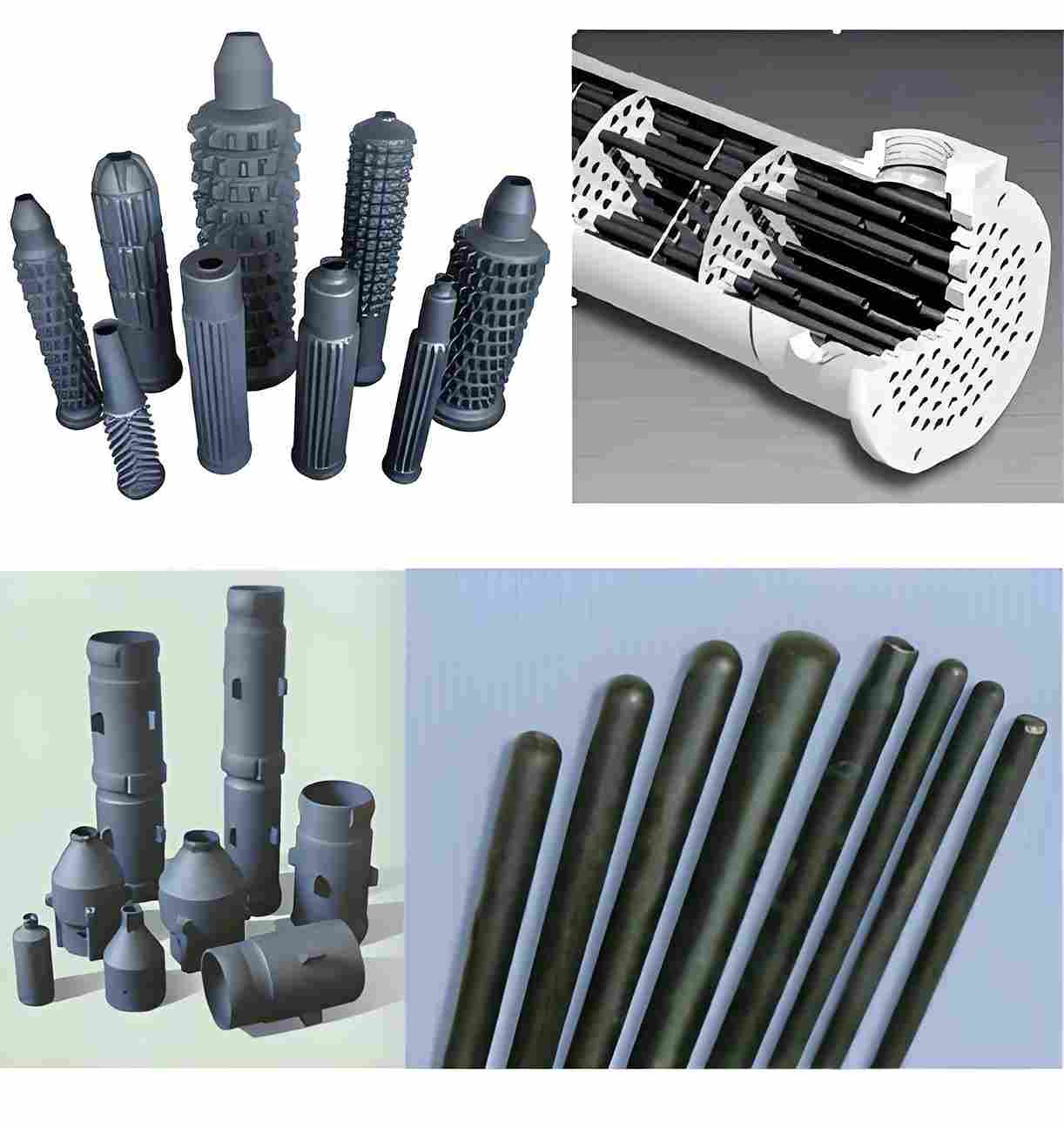
Premature failure of silicon carbide (SiC) seal rings usually stems from a handful of overlooked factors that directly impact performance in high‑temperature, corrosive or abrasive environments.
- What causes a SiC seal ring to crack after only a few weeks? Rapid temperature changes, mechanical overload, or chemical attack are the usual suspects.
- Can I test an installed seal ring without dismantling the equipment? Yes – use infrared thermography, acoustic emission sensors and a post‑mortem micro‑analysis of a spare part.
- Is custom geometry more prone to early breakage? Not inherently; proper design tolerances and stress‑relief grooves eliminate concentration points.
- Does ZIRSEC provide on‑site failure analysis? Our engineering team offers remote data review and, if needed, on‑site inspection for critical projects.
Common Failure Modes and Their Root Causes
1. Thermal Shock and Improper Heat‑up
SiC can survive temperatures above 1,500 °C, but the material’s low thermal expansion coefficient (≈4.5×10⁻⁶ K⁻¹) makes it vulnerable to rapid gradients. In a typical pump‑up cycle, the exterior of the seal ring may reach 1,200 °C while the interior remains near ambient, creating tensile stresses that exceed the fracture toughness (K_IC ≈ 3 MPa·m⁰⋅⁵). Engineers often overlook the need for staged heating, resulting in micro‑cracks that propagate under operating pressure.
2. Mechanical Overload Beyond Material Limits
Even though SiC boasts compressive strength >1,000 MPa, it is brittle under tensile or shear loading. Many failures arise from excessive axial preload, mis‑aligned shafts, or impact loads during start‑up. A German pump‑valve manufacturer reported a 12 % scrap rate after increasing the torque by 20 % on a 60 mm seal ring; the fracture occurred at the bore‑to‑outer‑diameter transition, a classic stress‑concentration zone.
3. Chemical Attack From Aggressive Media
In chlorinated or fluorinated environments, SiC’s oxide layer can be compromised, accelerating wear. In a pilot test with hydrofluoric acid (5 % w/w) at 900 °C, the seal surface eroded at 0.15 mm/h, far faster than in inert nitrogen. Selecting a compatible coating (e.g., SiC‑Si₃N₄ multilayer) or using a protective liner can extend service life dramatically.
4. Manufacturing Defects – Porosity, Grain Size, Residual Stresses
Hot‑pressing or pressureless sintering parameters dictate grain growth and pore distribution. High porosity (>0.5 %) creates stress‑relief pathways that become crack nucleation sites under load. In an internal audit, ZIRSEC found that a batch sintered at 2,200 °C with a slow cooling rate exhibited a residual compressive stress of –45 MPa, while a faster cooled batch showed tensile stresses up to +30 MPa, correlating with a 30 % increase in early failures.
Diagnostic Checklist for Field Engineers
- Record the exact temperature profile during start‑up and shutdown; look for spikes >100 °C/min.
- Measure axial preload with calibrated torque wrenches; compare against the manufacturer’s recommended range (typically 5–10 % of the material’s compressive strength).
- Inspect the sealing surface for discoloration or pitting; a dull gray‑blue hue often indicates oxidation or chemical attack.
- Collect a small chip after a failure and conduct SEM/EDS analysis to identify grain boundaries, pores or foreign inclusions.
- Verify that the installed part matches the CAD tolerance (±0.1 mm for critical dimensions, ±0.5 mm for non‑critical). Deviations often point to machining errors.
Practical Mitigation Strategies
Controlled Thermal Ramping
Implement a programmable temperature controller that limits ramp‑up to 50 °C/min for rings larger than 40 mm. Use thermocouple arrays on both inner and outer surfaces to monitor gradient. In a recent upgrade for a U.S. fertilizer plant, we reduced crack incidence from 8 % to <0.5 % by adding a 5‑minute soak at 600 °C before reaching full temperature.
Optimized Mechanical Design
Introduce stress‑relief slots or rounded transitions at the bore‑outer‑diameter interface. Finite‑element analysis (FEA) should verify that the maximum von Mises stress stays below 30 % of the material’s fracture toughness. For a high‑pressure pump, replacing a square‑edge ring with a 2 mm fillet cut reduced peak stress by 22 %.
Protective Coatings and Surface Treatments
Apply a thin Si₃N₄ or Al₂O₃ coating via chemical vapor deposition (CVD). The coating adds 0.2 mm of barrier protection without compromising thermal conductivity. In one case, a coated 75 mm ring survived 2,000 h in molten salt (NaCl‑KCl) at 1,200 °C, whereas an uncoated counterpart failed after 300 h.
Quality‑Assured Manufacturing
Adopt a two‑stage sintering profile: 2,150 °C for densification followed by a 1,200 °C stress‑relief soak. Perform X‑ray diffraction (XRD) to confirm α‑SiC phase purity >98 %. Use ultrasonic C‑scan to detect internal porosity before machining. ZIRSEC’s in‑house inspection lab meets ISO 9001 and provides a full Certificate of Analysis with each shipment.
Installation Best Practices
Use a torque‑controlled assembly tool, lubricate the contact surfaces with high‑temperature PTFE‑based grease, and verify alignment with laser distance meters. A post‑installation run‑in of 30 min at 20 % of design pressure helps seat the ring without shock.
Case Study: Preventing Early Failure for a European Pump‑Valve Manufacturer
Background: The client experienced unexpected breakage of 60 mm SiC seal rings after 4–6 weeks of operation in a chlorine‑rich environment. The failure rate was 9 % and caused a production halt costing €12,000 per day.
Investigation: Our engineers performed a failure‑mode analysis, revealing three concurrent issues – a rapid temperature rise of 150 °C/min, an axial preload 15 % above the recommended value, and a slight chemical incompatibility with chlorine.
Solution: We supplied a custom‑engineered ring with a 0.3 mm Si₃N₄ coating, introduced a stepped heating protocol, and recalibrated the preload torque. The new design also incorporated a 2 mm‑radius transition at the bore edge. After six months of continuous operation, the failure rate dropped to <0.2 % and the client restored full production. Learn more about ZIRSEC’s silicon carbide solutions.
How ZIRSEC Helps Prevent Premature Failure
We combine twenty years of SiC ceramic expertise with a complete supply‑chain service. Our capabilities include: rapid 24‑hour stock delivery for standard rings, on‑demand custom machining from CAD drawings, full‑scale material testing (thermal shock, wear, chemical resistance), and dedicated engineering support from concept to final installation. Clients benefit from a single point of contact for order management, quality control documentation (COA, MSDS) and logistics, eliminating the guesswork that often leads to early failures.
Actionable Next Steps
- Gather operating data: temperature ramps, pressure cycles, and media composition.
- Compare your current seal‑ring specifications against the failure checklist above.
- Contact ZIRSEC with your CAD files or sample dimensions; we will run a fast‑track feasibility study within 5 business days.
- Request a prototype for on‑site testing; we can ship a batch of up to 20 pieces within 2 weeks.
- Implement the recommended thermal and mechanical protocols, then monitor performance using the diagnostic checklist.
Addressing premature failure is not a one‑off fix but a systematic process. By following the diagnostics, design refinements, and quality controls outlined here, you can extend seal‑ring life from weeks to years and keep your production line running smoothly.
Ready to eliminate costly downtime? Email us at info@zirsec.com or submit an inquiry through our website. Let’s engineer a reliable solution together.