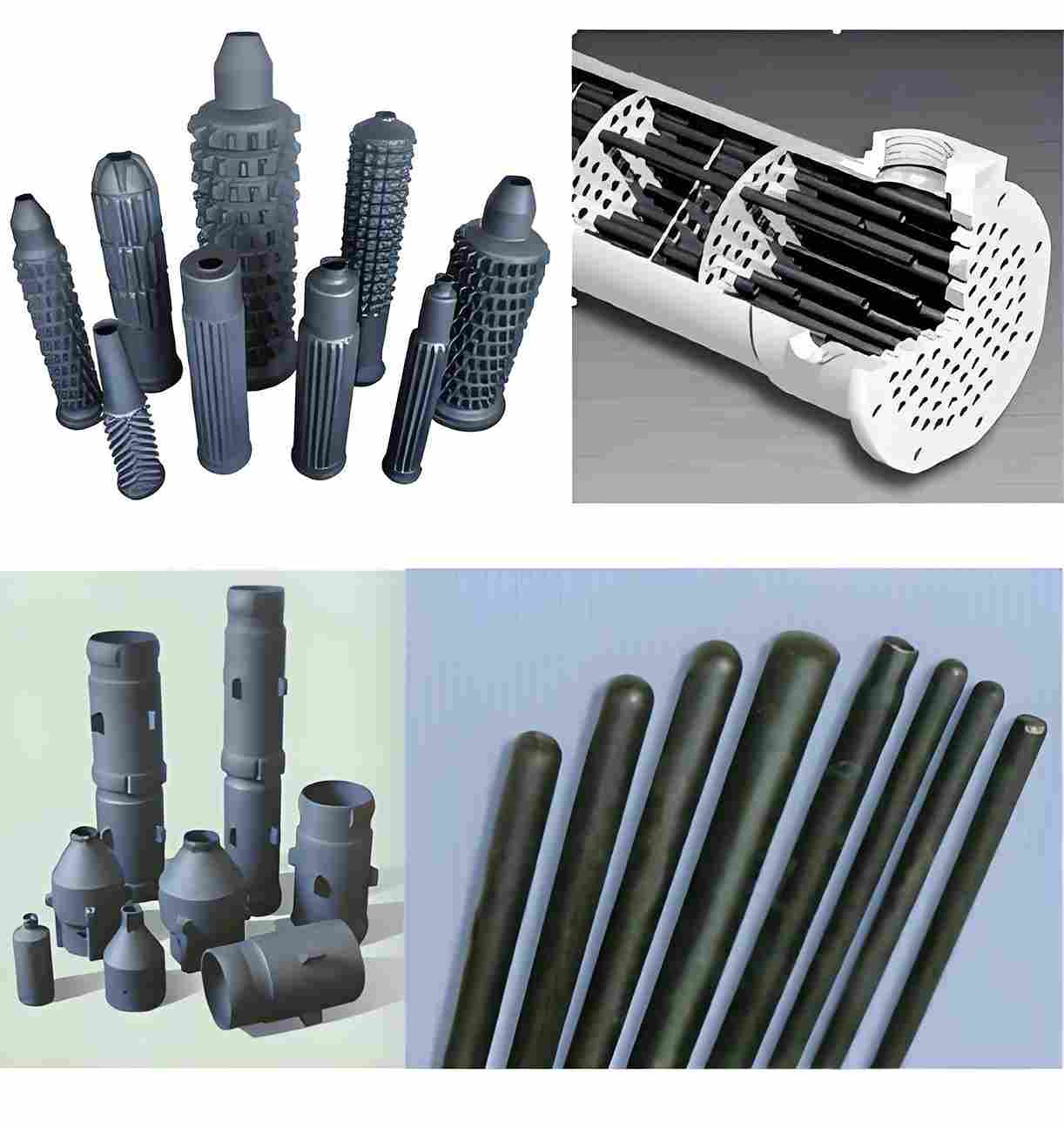
What Is a Silicon Carbide Liner for Slurry Pumps?
A silicon carbide liner for slurry pumps is a set of wear-resistant SiC ceramic components installed in the wet end
of a pump to protect metal casings, volutes, throatbushes and other areas exposed to high-velocity, abrasive slurry.
Instead of relying only on rubber, polyurethane or high-chrome iron, the pump uses sintered or reaction-bonded
silicon carbide liners as replaceable wear parts.
These liners are typically supplied as rings, tiles, cones or custom-shaped blocks. Each part is defined by:
silicon carbide grade (SSiC or RBSiC), geometry, wall thickness, dimensional tolerance, surface finish and the
interface to the metallic housing. For procurement engineers, a “SiC slurry pump liner” is therefore a fully
engineered component, not a commodity ceramic tile.
Zirsec manufactures silicon carbide liners according to customer drawings or jointly developed designs, with
tolerances and material data tailored to heavy-duty slurry services in mining, mineral processing, power plants and
chemical industries.
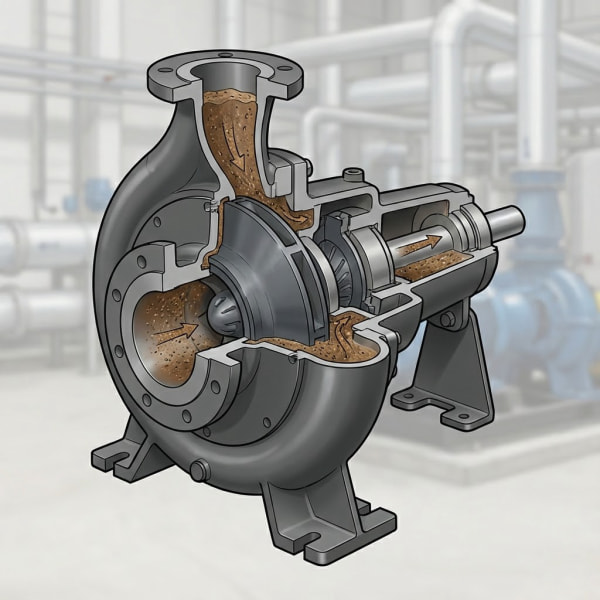
Why Silicon Carbide Liners Matter in Industrial Applications
In abrasive slurry services, pump life is dictated by how fast critical dimensions erode: impeller clearances,
throatbush diameters, volute profiles and suction liners. Short liner life leads to:
- Frequent unplanned shutdowns for liner and impeller replacement;
- Higher spare parts inventory and logistics cost;
- Reduced pump efficiency as clearances open up between inspections;
- Increased risk of leaks and safety incidents if casings wear through.
Silicon carbide liners provide a way to slow down this erosion, especially when slurries combine:
high solids content (>30 wt %), hard particles (quartz, ore, ash) and high velocities. With hardness
typically in the range of 20–26 GPa and excellent abrasion resistance, SSiC and RBSiC liners:
- Maintain critical clearances for longer operating periods;
- Reduce the frequency of pump overhauls and associated labor costs;
- Support more predictable maintenance planning and shutdown scheduling;
- Protect steel housings from catastrophic wear-through.
For operators in the US, Germany, Italy, the UK and other industrial regions, silicon carbide liners turn pump
wear from a constant emergency issue into a controlled, data-based maintenance item with measurable impact on total
cost of ownership.
Key Selection Factors / Technical Guide
Specifying silicon carbide slurry pump liners is a cross-functional task between process, maintenance and
procurement. The following factors help structure RFQs and technical evaluations.
1. Slurry Characteristics
The most important input for liner design and SiC grade selection is the slurry itself. Key parameters include:
- Solids concentration in wt % (for example 20–60 wt %);
- Particle size distribution (d50, d90 and maximum particle size);
- Particle hardness (for example presence of silica, alumina, ore, ash);
- Slurry density (kg/m³) and viscosity at operating temperature;
- pH and chemical composition (corrosive vs mainly abrasive);
- Operating temperature and any thermal cycling conditions.
With this data, Zirsec can recommend SSiC or RBSiC, target liner thickness and surface finish needed to achieve a
realistic wear life in the given service.
2. Pump Duty and Hydraulics
Liner wear is strongly linked to hydraulic loading and flow patterns. Procurement specifications should include:
- Pump type and size, including nominal casing and impeller dimensions;
- Flow range (m³/h) and differential head (m);
- Shaft speed (rpm) and expected operating envelope, not just design point;
- Duty cycle: continuous operation vs frequent start/stop;
- Known problem areas in current pumps (throatbush, volute cutwater, suction liner, etc.).
This information helps Zirsec and the pump OEM identify where silicon carbide liners will provide the most benefit
and whether any geometry adjustments are necessary to avoid localised velocity peaks or impact zones.
3. Liner Geometry, Wall Thickness and Attachment
Silicon carbide ceramics provide high wear resistance but require correct mechanical integration. Design decisions
include:
- Liner wall thickness and allowable wear allowance before replacement;
- Number of segments (single-piece vs multi-segment ring or tiles);
- Attachment concept: interference fit, bonding, mechanical clamping or a combination;
- Clearances to impeller and other wet-end components;
- Chamfers, radii and transitions to avoid stress concentrators.
Zirsec machines SSiC and RBSiC liners with tolerances typically down to ±0.02 mm on bore and outside diameter,
enabling reliable fits in metallic housings without overstressing the ceramic.
4. Choice Between SSiC and RBSiC
Both sintered silicon carbide (SSiC) and reaction-bonded silicon carbide (RBSiC) are used in slurry pump liners. A
practical selection guideline is:
- SSiC for combined abrasive and corrosive slurries, high temperature or when chemical attack on
free silicon would significantly shorten liner life; - RBSiC for predominantly abrasive but chemically mild slurries, where robust thermal shock
resistance and cost-efficiency are priorities.
Zirsec can map existing metallic or rubber-lined services to appropriate SiC grades based on the plant’s material
balance and corrosion data.
5. Thermal and Mechanical Limits
Silicon carbide ceramics handle high compressive loads and steady thermal conditions, but design must consider:
- Thermal shock: rapid cold water start-up on a hot pump casing;
- Mechanical shocks from large tramp particles entering the pump;
- Pressure peaks during start-up, shutdown or blocked discharge events;
- Misalignment or casing distortion caused by piping loads.
When these risks are identified early in the RFQ, Zirsec can propose segment layouts, radii and safety margins that
keep SiC stresses within allowable limits.
How Zirsec Solves These Engineering Challenges
Zirsec is focused on silicon carbide ceramics for industrial equipment and has a dedicated portfolio for slurry pump
liners. The aim is to convert wear problems into predictable, documented performance improvements.
For slurry pump projects, Zirsec typically supports engineering and procurement teams by:
- Providing application-specific SiC grades:
SSiC and RBSiC compositions characterised for abrasion resistance, flexural strength (≈250–450 MPa),
hardness and thermal conductivity relevant to slurry pumping. - Machining custom liner geometries:
Rings, cones, tiles and complex shapes produced by CNC machining with tolerances commonly down to
±0.02 mm on fit-critical features. - Co-developing liner designs:
Reviewing wear patterns on existing metal or rubber liners and suggesting SiC segment layouts, thickness and
transitions that address documented failure modes. - Aligning deliveries with shutdowns:
Planning production so that prototype and first serial liners arrive in time for scheduled outages, reducing the
need for emergency air-freight or excessive safety stock. - Supplying documentation for audits:
Material certificates, dimensional inspection reports and traceability data suitable for international mining,
power and chemical customers.
This combination helps plants and OEMs in the US, Germany, Italy, the UK and other markets justify the shift to
silicon carbide liners on both technical and financial grounds.
Application Scenarios
Silicon carbide slurry pump liners from Zirsec are suited for a range of abrasive services where existing rubber or
metallic liners have limited life. Typical applications include:
- Mining and mineral processing:
Mill discharge, cyclone feed, tailings and concentrate transfer lines with hard ore particles and high solids
loading. - Coal and ash handling:
Bottom ash, fly ash and coal slurry transfer in power plants, where both abrasion and occasional thermal shock
occur. - Sand and gravel operations:
Dredging and aggregate transport where silica-rich particles drive aggressive erosion of conventional liners. - Flue gas desulfurization (FGD):
Limestone and gypsum slurries with combined abrasion and mild corrosion in FGD recycle pumps. - Battery and advanced materials production:
Ceramic, graphite and metal oxide slurries where contamination from metal wear is unacceptable. - Ceramic and refractory production:
Slurries containing alumina, zirconia and other hard minerals that quickly erode metallic components.
In each case, silicon carbide liners are evaluated against current liner life, shutdown frequency and spare parts
cost to determine a realistic payback period.
Real Case Example
A mineral processing plant operating horizontal slurry pumps on a cyclone feed line reported average liner life of
3–4 months using high-chrome iron and rubber liners. The slurry contained >45 wt % solids with a
significant fraction of silica and hard ore particles. Unplanned liner failures led to lost production and urgent
liner replacements.
The plant’s engineering and procurement teams engaged Zirsec to evaluate a silicon carbide liner concept. Zirsec
responded by:
- Reviewing slurry data (solids loading, particle size, pH, temperature) and pump duty conditions;
- Inspecting worn liners to identify localised high-wear zones and impact regions;
- Proposing a segment-based SSiC liner design with increased thickness in critical areas;
- Preparing drawings with tolerances down to ±0.02 mm on fits and clearances;
- Manufacturing and delivering the first set of liners in alignment with the next planned shutdown.
After installation, the SSiC liners ran for more than 12 months before reaching the predefined wear limit.
During that period the line experienced fewer pump-related stoppages, and inspection reports showed significantly
lower wall loss in previously critical areas. The plant’s cost analysis indicated:
- A reduction in liner change-outs from 3–4 per year to 1 per year on the pilot line;
- Lower emergency maintenance and logistics costs;
- A clear business case to extend silicon carbide liners to additional pumps.
For the project team, the important points were Zirsec’s fast technical feedback, clear liner drawings, precision
machining and reliable delivery timing, which allowed the pilot project to be executed within existing shutdown
windows.
Specifications / Parameters
The table below summarises typical parameter ranges for Zirsec silicon carbide used in slurry pump liners. Exact
values are defined per project, drawing and grade.
| Parameter | SSiC (Typical) | RBSiC (Typical) |
|---|---|---|
| Density | ≥ 3.10 g/cm³ | ≥ 3.00 g/cm³ |
| Flexural strength (RT) | ≈ 400–450 MPa | ≈ 250–320 MPa |
| Hardness | ≈ 22–26 GPa | ≈ 20–23 GPa |
| Thermal conductivity (RT) | ≈ 80–120 W/m·K | ≈ 60–90 W/m·K |
| Linear thermal expansion (20–800 °C) | ≈ 4.0–4.5 × 10⁻⁶/K | ≈ 4.0–4.8 × 10⁻⁶/K |
| Typical liner size range | Up to ≈ 800 mm OD (project dependent) | Up to ≈ 800 mm OD (project dependent) |
| Typical dimensional tolerance (fit surfaces) | Down to ±0.02 mm | Down to ±0.02 mm |
| Typical surface finish on sealing/fit areas | Ra ≤ 0.8 µm (application dependent) | Ra ≤ 0.8 µm (application dependent) |
These values give procurement and engineering teams a basis to compare offers and to document the capability of
Zirsec silicon carbide liners in internal standards.
FAQ
1. When does it make sense to upgrade to silicon carbide liners in slurry pumps?
SiC liners are most attractive when existing metallic or rubber liners show short wear life, high unplanned
downtime or contamination issues. Services with high solids, hard particles or combined abrasion and mild corrosion
are typical candidates. A simple starting point is to review the shortest-life pumps and evaluate their business
impact.
2. Can silicon carbide liners be retrofitted into existing pump casings?
In many cases, yes. Zirsec can work from casing drawings or measurements of existing liners to design SiC segments
that fit within the current housing. In some projects, metallic backing pieces are used to adapt dimensions and
support the ceramic.
3. How should I specify silicon carbide liners in an RFQ?
An effective RFQ includes drawings or 3D models, slurry data (solids loading, particle size, pH, temperature),
pump duty (flow, head, speed) and current liner life. Indicating whether SSiC or RBSiC is preferred, or leaving the
grade open for supplier recommendation, helps Zirsec prepare a precise and relevant proposal.
4. Are silicon carbide liners resistant only to abrasion, or also to corrosion?
Both SSiC and RBSiC provide good chemical resistance in many slurries. SSiC is usually preferred where corrosive
attack is significant (for example low pH with chlorides), while RBSiC is suitable for mainly abrasive but
chemically moderate conditions. Zirsec can match grades to the plant’s corrosion data.
5. How do silicon carbide liners handle thermal shock?
Silicon carbide has good thermal conductivity, but like all ceramics it has limits under rapid temperature changes.
RBSiC generally has higher thermal shock tolerance than SSiC. Zirsec considers start-up and shutdown scenarios when
recommending grades and thicknesses, and can suggest operating practices to reduce thermal shock risk.
6. What is the typical lead time for custom silicon carbide liners?
Lead time depends on part complexity and quantity, but prototype or pilot batches are typically scheduled to match
planned shutdowns. Once a design is stabilised, serial production can be planned as part of the plant’s regular
maintenance cycle. Zirsec communicates realistic lead times so procurement teams can align orders with outages.
7. What minimum order quantities does Zirsec require?
Zirsec supports both single-piece prototypes and serial batches. For new projects, small pilot quantities are often
used to validate fit and wear behaviour before larger orders. Commercial terms are aligned with the project scope
and expected annual volume.
8. How can we evaluate the business case for switching to silicon carbide liners?
A simple evaluation compares current liner life, cost per liner set, change-out labor, lost production per
shutdown and risk of unplanned failures. Zirsec can provide estimated wear life ranges for the new design so that
maintenance and finance teams can estimate payback time and return on investment.
Contact Zirsec
If you are considering silicon carbide liners for slurry pumps in mining, power, chemical or other abrasive
services, Zirsec can support with material selection, liner design and manufacturing capability data.
Engineering and procurement teams in the US, Germany, Italy, the UK and other industrial regions are invited to
share drawings, slurry data and current wear records so that Zirsec can prepare a technically grounded proposal.
Need custom silicon carbide components for your project? Contact Zirsec for drawings, quotations, or technical consultation.