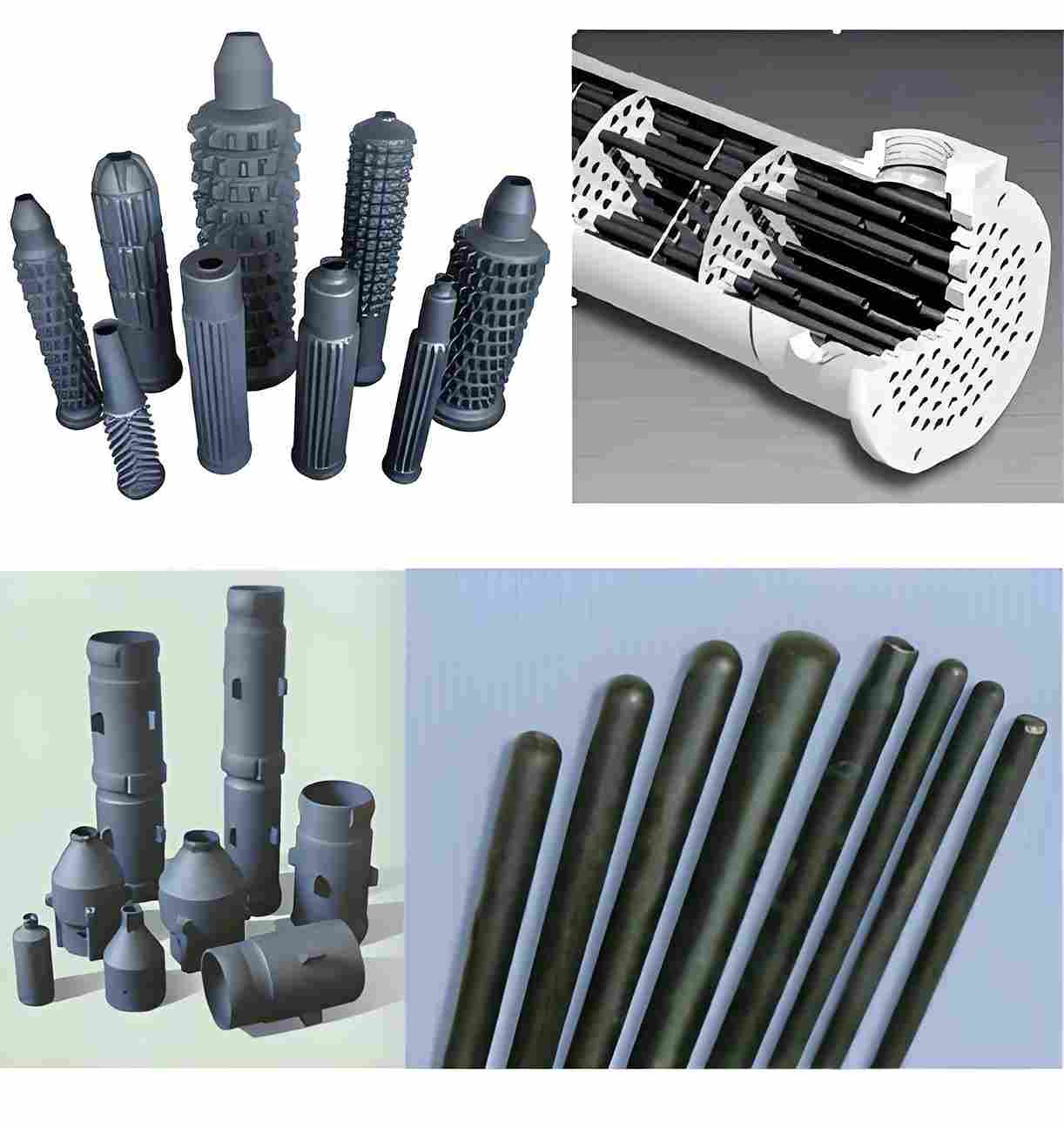
When you send a Request for Quotation (RFQ) for silicon carbide (SiC) parts, missing a single detail can add weeks to lead time or inflate cost – a reality we see every month with manufacturers and end‑users alike.
Quick Summary (FAQ)
- What minimum data does an RFQ need? Part name, dimensions, tolerance, material grade, quantity, intended operating temperature, and any required certifications.
- How much lead time is typical? Sample production 2‑4 weeks, bulk 4‑8 weeks for standard sizes; custom geometry may need 6‑12 weeks.
- Do I need to provide CAD files? Yes – 3D STEP or IGES files reduce interpretation errors dramatically.
- What testing reports are mandatory? Material certificate of analysis (COA), density, flexural strength, and high‑temperature oxidation data.
- Can ZIRSEC help with engineering support? Absolutely – our in‑house engineers review your drawings, suggest tolerances, and issue a full technical package.
Understanding the RFQ Process for SiC Parts
In practice, the RFQ is the first formal communication between a buyer and a supplier. It tells the supplier exactly what you need, and it tells you what you can expect in return – price, lead time, and compliance. For silicon carbide components, the stakes are higher because a single defect can cause catastrophic failure in high‑temperature or corrosive environments.
Why a Detailed RFQ Saves Money
Our experience with a German pump‑valve maker showed that vague tolerances caused a 12 % scrap rate during assembly, costing the client over $15,000 in re‑work. By tightening the RFQ language – specifying ±0.1 mm instead of a vague “tight tolerance” – the supplier adjusted its machining process and eliminated the scrap.p>
Essential Information to Include in Your RFQ
Below is the checklist we recommend to every buyer, whether you are ordering a single custom burner nozzle or a thousand standard SiC tubes.
1. Part Identification
- Product name (e.g., “SiC ceramic burner nozzle”)
- Standard part number (if applicable) or “Custom” designation
- Reference to any legacy part drawings
2. Quantity Breakdown
- Initial sample quantity (usually 5‑20 pieces)
- First production run (e.g., 200 pieces)
- Long‑term annual forecast (helps negotiate price breaks)
3. Geometry & Dimensions
Provide a clear 2D drawing or a 3D CAD model. Include:
- Overall length, outer/inner diameters, wall thickness
- Key features – holes, slots, flanges, chamfers
- Critical datum surfaces for assembly
4. Tolerance Requirements
Silicon carbide machining can achieve ±0.05 mm on simple cylinders, but complex shapes often settle at ±0.2 mm. State the tolerance per feature; where you can accept a larger range, note it to reduce cost.
5. Material Grade & Purity
Specify the exact SiC grade:
- Purity (e.g., ≥98 % SiC)
- Grain size (e.g., 5 µm, 12 µm)
- Any dopants or coatings (e.g., Al₂O₃ surface layer)
6. Mechanical & Thermal Requirements
- Maximum operating temperature (e.g., 1500 °C)
- Required flexural strength (e.g., ≥130 MPa)
- Thermal shock resistance – number of cycles at ΔT = 500 °C
7. Surface Finish & Coating
State the roughness (Ra) needed. Typical values:
- Machined – Ra 0.8 µm (smooth interior of a tube)
- Polished – Ra 0.2 µm (critical sealing surfaces)
- Coated – specify type, thickness, and post‑coating heat treatment
8. Testing & Certification
Ask for the following documents with your quotation:
- Certificate of Analysis (COA) confirming SiC purity
- Dimensional inspection report (CMM data)
- Mechanical test results (flexural, compressive strength)
- High‑temperature oxidation or corrosion test data relevant to your media
- ISO 9001 or TS 16949 compliance if required by your procurement policy
9. Packaging, Marking & Shipping
- Protective packaging – double‑wall corrugated, foam inserts, or vacuum‑sealed containers for delicate parts
- Labeling – part number, heat‑treatment batch, and handling instructions
- Incoterms – specify EXW, FOB, DDP, etc.
- Preferred carrier and insurance coverage
10. Lead Time & Milestones
Break down the schedule:
- Design review – 2 days after RFQ receipt
- Sample production – 2‑4 weeks (include tooling time)
- First‑article inspection – 3 days after sample delivery
- Full production – 4‑8 weeks depending on quantity
Technical Specification Details
Below we dive deeper into the most common engineering parameters buyers forget to mention.
Material Purity & Impurities
SiC with 98 % purity is the baseline for most high‑temperature applications. If your process involves aggressive chlorine or fluorine gases, ask for a low‑alkali grade (≤0.01 % Na₂O) to avoid premature corrosion.
Coefficient of Thermal Expansion (CTE)
Typical SiC CTE is 4‑5 ×10⁻⁶ K⁻¹. When mating SiC to metal flanges, include a compliant metal (e.g., Inconel) or a graded transition part to accommodate differential expansion.
Density & Porosity
Fully dense sintered SiC reaches 3.21 g/cm³. For filter or membrane applications, you might need controlled porosity (30‑60 % open porosity). State this clearly; otherwise the supplier will default to the densest form, which could raise cost unnecessarily.
Electrical Insulation
If the part will serve as an insulator in a high‑voltage furnace, request a dielectric strength of at least 10 kV/mm measured at operating temperature.
Sample Request & Validation Process
Most of our new clients start with a small batch of 10‑20 samples. Here is the workflow we recommend:
- Submit CAD and full spec list. Our engineering team acknowledges receipt within 24 hours.
- Prototype tooling quote. For simple cylindrical tubes the cost is often under $200; complex geometry may require $800‑$1,200 tooling.
- Production of samples. Turn‑around is 14‑21 days for in‑stock grade SiC, 30 days for specialty grades.
- First‑Article Inspection (FAI). We provide a full CMM report and a photographic log.
- Buyer approval. Once you sign off, we move to ramp‑up production.
Our transparent reporting eliminates surprise re‑work and aligns expectations before the first dollar changes hands.
Common Pitfalls and How to Avoid Them
- Pitfall: Leaving “high temperature” vague. Solution: State the exact temperature range and the fluid type (e.g., nitrogen at 1400 °C).
- Pitfall: Omitting surface‑finish requirements. Solution: Include Ra values and specify whether polishing is required for sealing surfaces.
- Pitfall: Forgetting to request certification. Solution: Add a line in the RFQ: “Provide COA, ISO‑9001 compliance certificate, and batch‑traceability report.”
- Pitfall: Assuming the supplier has standard inventory for custom dimensions. Solution: Ask for lead‑time projections for both stock and custom runs.
- Pitfall: Not accounting for packaging fragility. Solution: Specify “shock‑absorbing packaging” and request a packing test report for the first shipment.
Why Choose ZIRSEC for Your SiC RFQ
At ZIRSEC we combine 20 years of SiC ceramic manufacturing with a dedicated engineering support team. Here are the advantages you get when you send us an RFQ:
- Instant design review. Within 12 hours we comment on tolerances, suggest alternative grades, and flag any manufacturability issues.
- In‑stock standard catalog. Over 150 standard tube and plate sizes are ready for 24‑hour shipment – perfect for urgent replacements.
- Custom capability. We accept drawings in STEP, IGES, or PDF, and can produce batches as small as 20 pieces with the same quality control as our large orders.
- Full‑chain logistics. From order entry, quality inspection, to DDP delivery, our team handles customs paperwork, MSDS, and COA generation.
- Competitive pricing. Direct‑to‑factory sourcing eliminates middle‑man markup; most customers see a 10‑20 % cost reduction versus European suppliers.
Explore our range of Silicon Carbide Tubes to see the breadth of dimensions we already stock.
Actionable Checklist Before Sending Your RFQ
- Gather all mechanical drawings (2D & 3D) and annotate critical dimensions.
- Define operating environment – temperature, pressure, chemical exposure.
- Choose SiC grade – standard (98 % purity) or specialty (low‑alkali, doped).
- Specify tolerances for each feature; note where a broader tolerance is acceptable.
- List required certifications and test data (COA, flexural strength, oxidation test).
- Decide on packaging, labeling, and Incoterms.
- Provide a realistic quantity schedule (sample, pilot, full production).
- Include your target price range and ask for a price break table.
- Set a clear deadline for supplier response – typically 5‑7 business days.
- Send the RFQ to ZIRSEC via the contact form or directly to info@zirsec.com.
Following this guide ensures you get accurate quotes, predictable lead times, and the confidence that your SiC parts will perform under the harshest conditions. If you have any question while preparing your RFQ, our engineers are ready to help – just drop us a line.