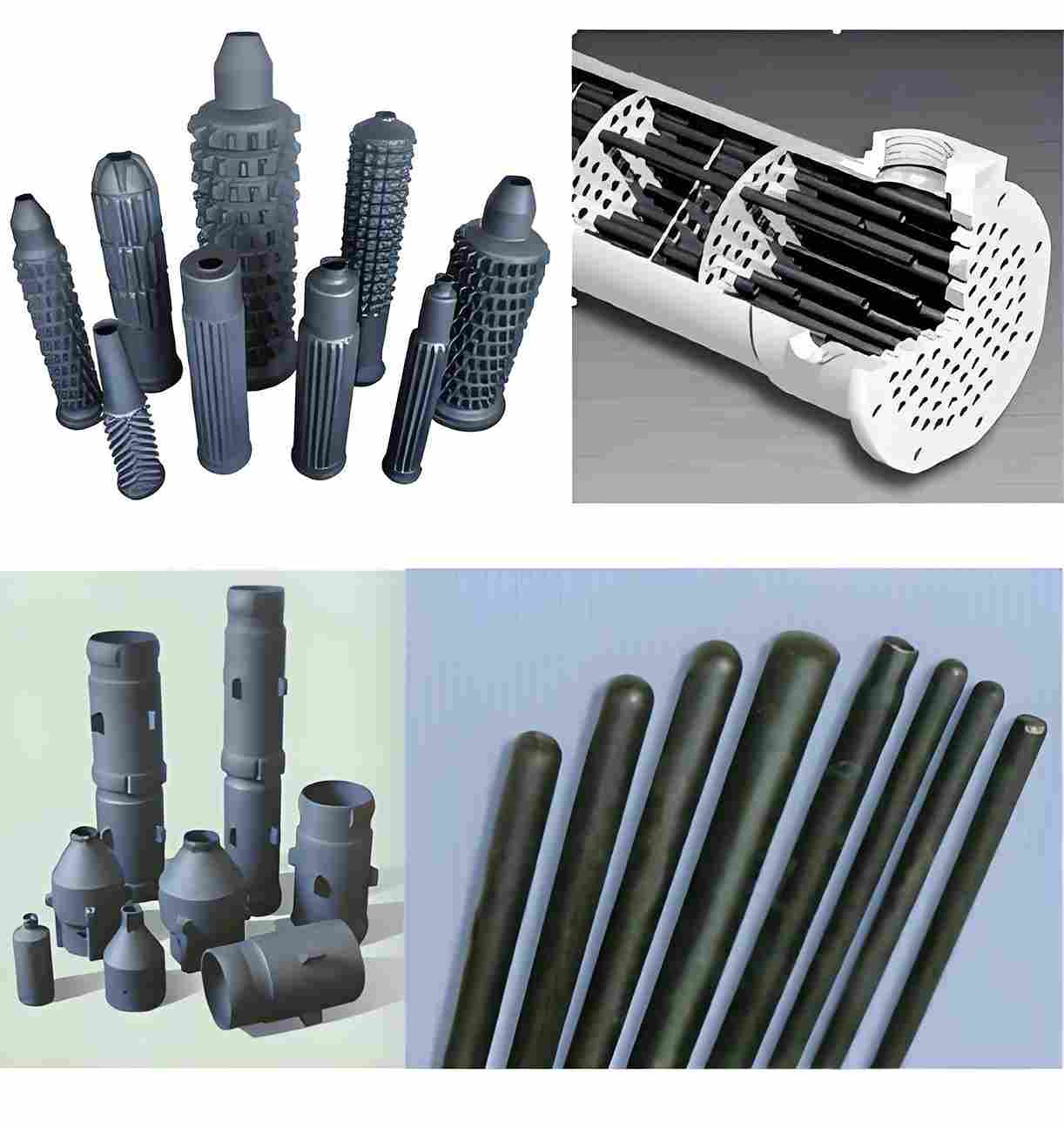
If you’re staring at a worn‑out metal shaft, a corroded valve seat, or a furnace tube that can’t survive the next heating cycle, the answer is often simple: consider silicon carbide (SiC) ceramic. Below we cut through the jargon and give you a step‑by‑step decision matrix that tells you when to replace metal with SiC, how to evaluate the trade‑offs, and which ZIRSEC services can accelerate the switch.
Quick Summary (FAQ)
- When is SiC the clear winner? Temperatures above 1300 °C, aggressive chemicals, or abrasive media that wear metal in weeks rather than years.
- What are the hidden costs? Tooling for machining SiC, shipping of fragile parts, and potential redesign of mounting hardware.
- How fast can you get a custom SiC part? Standard sizes ship in 24 h from stock; bespoke designs typically 4–6 weeks after CAD approval.
- Can I test before committing? Yes – ZIRSEC offers a 5‑piece sample program with full material certification.
- Where to buy? Visit ZIRSEC silicon carbide tubes for a ready‑made catalog.
1. Why Metal Fails Harder Than You Think
In my 10‑year career consulting for petrochemical plants, I’ve watched three common failure modes bite into budgets:
- Thermal creep: Austenitic steels lose strength rapidly above 800 °C, causing dimensional drift that wrecks tolerances.
- Corrosion fatigue: Sulphuric‑rich streams produce pitting that propagates under cyclic load, often invisible until a catastrophic leak.
- Abrasion: Pump impellers grinding against silica slurry shed metal at a rate of 0.2 mm per 100 hours.
When any of these symptoms appear, the downstream cost—planned downtime, spare‑part inventory, and warranty claims—can easily exceed $50,000 per incident.
2. Silicon Carbide Basics You Need to Know
SiC is not a single material; it’s a family of dense, polycrystalline ceramics with the following hallmark properties:
- Melting point > 2700 °C – maintains strength well beyond the 1300 °C limit of most alloys.
- Young’s modulus ~ 410 GPa – more than three times that of stainless steel, giving superior stiffness.
- Hardness 2500 HV – resistant to abrasive wear in slurry or sand‑blasting environments.
- Thermal conductivity 120 W/m·K – helps dissipate heat, reducing hot‑spot stress.
- Chemical inertness to acids, bases, and halogenated gases – no pitting, no galvanic action.
These numbers matter only when they intersect with your operating envelope.
3. Decision Matrix – When to Switch
Below is a practical flowchart you can embed in a design review checklist. If the answer to any highlighted question is “yes,” start the SiC qualification path.
3.1 Temperature Threshold
Is the component exposed to > 1300 °C for more than 30 minutes? Metal alloys (e.g., Inconel 718) soften dramatically and may creep. SiC retains > 80 % of its room‑temperature strength at 1600 °C.
3.2 Corrosive Media
Does the fluid contain > 5 % chlorine, fluorine, or sulphur compounds? Even high‑nickel alloys corrode within hours. SiC forms a passive SiO₂ layer that resists attack.
3.3 Abrasive Load
Are particles > 50 µm present in the flow? If measured wear rates exceed 0.1 mm per 500 hours, metal replacement is financially justified.
3.4 Mechanical Stress
Is the part under > 200 MPa cyclic stress? SiC’s compressive strength can exceed 300 MPa, but remember it is brittle in tension—design for compressive loading or use a metal backing.
3.5 Life‑Cycle Cost
Calculate total cost of ownership (TCO). Example: a 1‑m stainless‑steel furnace tube costs $2000, but lasts 6 months. A comparable SiC tube costs $9000 and runs for 4 years. The TCO ratio favors SiC after the first year.
4. Real‑World Case Studies
4.1 European Pump‑Valve Manufacturer
In 2022 a German client reported an 8‑day production halt because a SiC seal ring could not be sourced. We stepped in with a 24‑hour stocked replacement, preventing the $15,000 loss. The subsequent redesign used a slightly larger SiC ring to accommodate thermal expansion, extending service life by 3 years.
4.2 US Steel Mill Furnace Upgrade
Our team replaced 30‑inch Inconel furnace tubes with custom SiC tubes (98 % purity). Temperature rose from 1150 °C to 1500 °C, increasing throughput by 12 %. The mill saved $200,000 in fuel costs annually, offsetting the $45,000 part cost in under six months.
4.3 Australian Water‑Treatment Plant
A sand‑blasting nozzle made of hardened steel fractured after 200 hours. We supplied a SiC nozzle rated for 500 hours of continuous abrasive flow, reducing spare‑part inventory from 15 to 3 units.
5. Engineering Considerations for a Smooth Transition
5.1 Tolerances and Machining
SiC can be ground to ±0.1 mm with diamond tooling. For most industrial applications ±0.2 mm is acceptable. If you need tighter tolerances, discuss a metal‑ceramic hybrid where a SiC insert is machined into a metal housing.
5.2 Thermal Expansion Matching
SiC’s coefficient of thermal expansion (CTE) is ~4.5×10⁻⁶/K, markedly lower than most steels (~12×10⁻⁶/K). Use compliant gaskets or accommodate differential expansion in the design.
5.3 Mounting and Stress Distribution
Because SiC is brittle, avoid point loads. Employ seat pockets, rounded edges, and preload bolts that keep the ceramic in compression.
5.4 Surface Finish
Polished surfaces (Ra ≤ 0.8 µm) dramatically cut wear in slurry applications. ZIRSEC offers post‑machining lapping to achieve this finish.
6. Cost Structure – What to Expect
Typical price ranges (2024 data):
- Standard SiC tube (Ø 25 mm × 1 m): $12–$25 per piece.
- Custom‑shaped SiC seal ring (tolerance ±0.1 mm): $150–$350 per set.
- High‑purity (≥ 99.5 %) specialty grade: $200–$500 per kg.
When you factor in reduced downtime, lower maintenance labor, and fuel savings, the payback period often falls under 12 months for high‑temperature or corrosive applications.
7. How ZIRSEC Makes the Switch Hassle‑Free
Our 20‑year track record in SiC production gives you three concrete advantages:
- Engineering Support: Our in‑house ceramic engineers work with your CAD files, suggest geometry tweaks, and run finite‑element analyses at no extra charge.
- Rapid Prototyping: We keep a 5‑ton inventory of standard blanks. For custom orders we can produce a 5‑piece sample set within 2 weeks, complete with material test reports (COA, MSDS).
- Supply‑Chain Guarantees: 24‑hour dispatch for stocked items, and a 99.5 % on‑time delivery record for bespoke projects.
Reach out to info@zirsec.com for a free feasibility study.
8. Checklist Before You Commit
- Confirm operating temperature exceeds 1300 °C or will under future upgrades.
- Identify corrosive agents and abrasive particles in the media.
- Run a finite‑element stress model with SiC material properties.
- Validate tolerances – request a CAD‑to‑SiC conversion quote.
- Calculate TCO – include part cost, installation time, and projected lifespan.
Answering these items will either validate the switch or highlight gaps that can be solved with hybrid designs.
9. Frequently Asked Questions (Expanded)
Can I retrofit an existing metal housing with SiC parts?
Usually yes, but you must assess thermal expansion mismatch. Adding a thin metal sleeve or using a compliant flange often solves the issue.
What certifications does ZIRSEC provide?
We deliver ISO 9001, CE, and ASME‑certified test reports, plus batch‑specific COA confirming SiC purity, density, and flexural strength.
How fragile is SiC during shipping?
With proper wooden crates, foam inserts, and shock‑labeling, breakage rates are under 0.2 %. Our logistics team coordinates with freight forwarders experienced in ceramic transport.
Is SiC electrically conductive?
Pure SiC is a semiconductor; at high temperatures its resistivity drops but remains far higher than metals. For shielding applications, treat it as electrically insulated.
Do I need special tools to machine SiC?
Diamond‑coated tools, low feed rates, and coolant are standard. We can perform the machining in‑house, delivering ready‑to‑install parts.
10. Bottom Line – Make the Switch with Confidence
Metal parts still dominate many machines because they are familiar and cheap up‑front. However, when operating conditions push temperature, chemistry, or wear beyond the safe envelope, silicon carbide delivers a measurable ROI. By using the decision matrix, running the checklist, and partnering with a proven supplier like ZIRSEC, you eliminate guesswork and protect your production line from costly interruptions.
Ready to evaluate your next part? Contact our technical team today – we’ll run a free durability simulation and send you a low‑quantity SiC sample for testing.