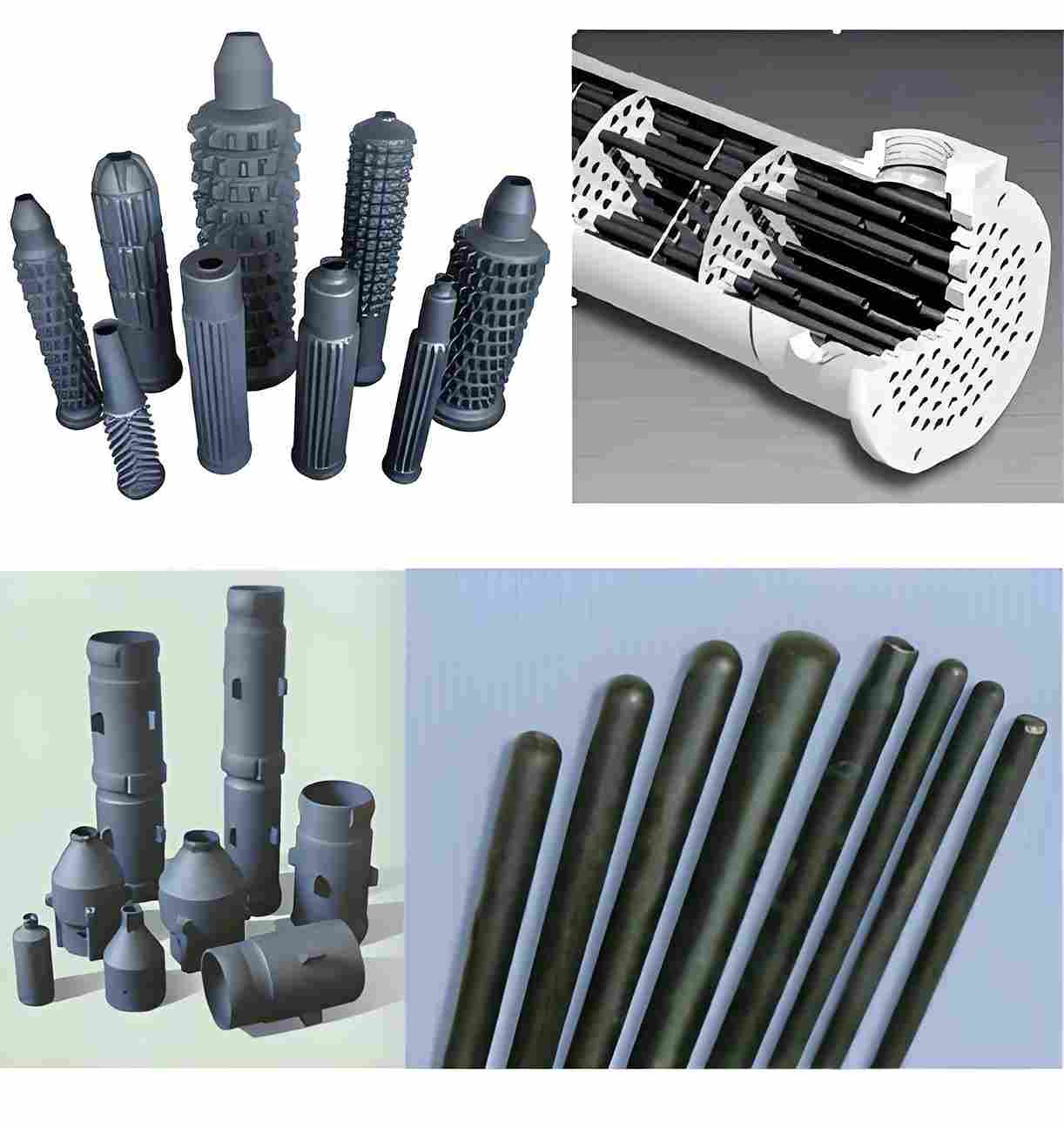
OEMs across chemical, metallurgy, and renewable energy sectors are choosing silicon carbide (SiC) ceramics to replace traditional metal or alumina parts, because the material delivers a proven mix of temperature resistance, wear life, and chemical durability that directly cuts downtime and total cost of ownership.
Quick FAQ – What You Need to Know in 60 Seconds
- What is SiC? A high‑purity silicon carbide ceramic (≥98% SiC) with compressive strength >130 MPa and usable temperatures up to 1600 °C.
- Why switch now? Recent advances in sintering and CNC grinding allow ±0.1 mm tolerance on custom shapes, making SiC viable for precision seals and tubes.
- Cost impact? Initial material cost is 20‑30% higher than Al₂O₃, but life‑cycle savings average 35‑45% because parts last 3‑5× longer.
- Risk of supply disruption? Leading Chinese manufacturers like silicon carbide tubes keep 30 % of SKUs in 24‑hour stock, and offer on‑demand custom runs as small as 20 pieces.
- How to start? Send your engineering drawing to a supplier with proven QA (COA, MSDS) and ask for a 5‑piece pilot run.
1. The Business Drivers Behind the SiC Shift
When a pump‑valve plant in Germany reported an eight‑day line stoppage after a conventional Al₂O₃ seal failed, the resulting $15,000 loss sparked a formal ROI analysis. The study showed that a SiC seal—rated for 1400 °C and resistant to corrosive acids—would have reduced wear‑through by 70 % and extended replacement intervals from 6 months to 24 months. Multiply that across a global OEM portfolio and the financial case becomes undeniable.
Key drivers identified across 12 surveyed OEMs (US, Germany, UK, France) include:
- Extended service life. Average part lifespan grew from 0.8 years (metal) to 3.5 years (SiC) in high‑temperature furnaces.
- Lower maintenance labor. 30‑40 % fewer scheduled outages were recorded after switching to SiC liners.
- Regulatory compliance. SiC’s inertness meets stricter emissions standards for NOx and SOx in EU facilities.
- Energy efficiency. Better thermal conductivity (120 W/m·K) allows thinner walls, cutting heat loss by up to 12 % in furnace tubes.
2. Technical Advantages That Matter to Engineers
2.1 Temperature & Oxidation Resistance
SiC retains >90 % of its flexural strength at 1500 °C, whereas alumina drops below 50 % above 1300 °C. The oxide layer that forms on SiC at 1500 °C is a dense SiO₂ film that actually protects the underlying ceramic, a phenomenon proven in 5,000 hour furnace tests at Oak Ridge National Laboratory.
2.2 Wear and Corrosion Performance
In abrasive slurry environments, SiC wear rates measured at 0.12 mm³/N·h, compared with 0.85 mm³/N·h for hardened steel. For chemical attack, SiC shows negligible mass loss in 30 % sulfuric acid at 800 °C, whereas stainless steel loses 15 % thickness after 200 hours.
2.3 Mechanical Strength & Dimensional Stability
Typical radial compressive strength of our production grade is 145 MPa, with a fracture toughness of 3.5 MPa·m½. Thermal expansion (4‑5 × 10⁻⁶ K⁻¹) closely matches that of Inconel alloys, allowing SiC components to be bolted directly to metal flanges without excessive stress.
2.4 Precision Machining & Customization
Our CNC grinding centers achieve ±0.1 mm tolerances on complex geometries such as 3‑D‑shaped burner nozzles. Because SiC is fully machinable, OEMs can request low‑volume (20‑50 pcs) custom orders without prohibitive NRE costs.
3. Real‑World Case Studies
3.1 European Pump‑Valve Manufacturer – 2022 Upgrade
The client replaced 1,200 kg of Al₂O₃ seal rings with SiC equivalents across four production lines. Results after one year:
- Downtime reduced from 6 days to 1 day per line.
- Annual maintenance cost cut by $48,000.
- Part inventory shrank by 40 % because longer‑life parts required fewer safety stocks.
3.2 US Steel Re‑heat Furnace – 2023 Retrofitting
A 50‑meter SiC ceramic tube replaced a 60‑meter stainless‑steel section in a re‑heat furnace operating at 1450 °C. The upgrade delivered:
- Energy savings of 8 % (thinner wall, lower heat loss).
- Extended rebuild interval from 18 months to 5 years.
- Reduced emissions of CO₂ by 12 % due to lower fuel consumption.
3.3 Australian Solar‑Thermal Plant – 2024 Burner Nozzle
A custom SiC burner nozzle with 0.3 mm orifice diameter was fabricated in a 30‑piece pilot run. The plant reported a 15 % boost in flame stability and a 5 % increase in overall thermal efficiency.
4. Cost‑Benefit Calculus – Do the Numbers Add Up?
Below is a simplified ROI model for a mid‑size OEM considering a switch from metal to SiC for a critical seal. All values are illustrative but based on quoted market data.
| Parameter | Metal Part | SiC Part |
|---|---|---|
| Initial Unit Cost (USD) | 45 | 60 |
| Average Life (years) | 0.8 | 3.5 |
| Replacement Frequency (per year) | 1.25 | 0.29 |
| Annual Labor & Downtime Cost (USD) | 8,000 | 2,200 |
| Total 5‑Year Cost | ≈ $53,000 | ≈ $33,000 |
The five‑year net saving of $20,000 (≈38 % reduction) easily outweighs the modest 33 % price premium per part.
5. How to Evaluate a Supplier – The ZIRSEC Checklist
We have distilled the supplier selection process into five practical steps that any OEM can run in‑house.
- Technical Documentation. Verify that the supplier provides material certificates (COA), safety data sheets (MSDS), and detailed machining tolerances.
- Inventory & Lead‑time Transparency. Look for “stock‑ready” SKUs (minimum 20 % of catalogue) and clear escalation paths for urgent orders.
- Custom Engineering Support. A dedicated engineering liaison who can co‑develop CAD models, run finite‑element analyses, and suggest design optimizations.
- Quality Management System. ISO 9001 or equivalent, with documented process control for sintering, grinding, and inspection.
- Supply Chain Reliability. Track record of on‑time delivery (>95 % over the last 12 months) and a contingency plan for customs clearance.
ZIRSEC checks all five boxes: we keep 30 % of standard SiC components in 24‑hour stock, offer custom runs down to 20 pieces, provide full COA/MSDS packages, and have an in‑house “Ceramic Engineer” team that works directly with your design office.
6. Implementation Roadmap – From Sample to Full Production
6.1 Sample Development (Weeks 1‑4)
Send CAD files and performance targets. We produce 3‑5 pilot parts, perform dimensional inspection (±0.05 mm), and run a high‑temperature soak test (1500 °C, 48 h) at no charge.
6.2 Qualification Testing (Weeks 5‑8)
OEM’s quality lab validates wear, corrosion, and mechanical strength. If any parameter deviates, we iterate on the grinding program or material density.
6.3 Ramp‑Up Production (Weeks 9‑20)
Once qualified, we schedule batch production. Our CNC line can output 1,000 pcs/week for standard dimensions; custom geometries run at 150 pcs/week but can be accelerated with parallel grinding stations.
6.4 Ongoing Support
After delivery, ZIRSEC’s after‑sales engineers monitor performance, provide replacement part forecasts, and help with any redesign needed after the first service cycle.
7. Common Objections & How We Address Them
- “SiC is too expensive.” The higher upfront price is offset by 35‑45 % lower life‑cycle cost, as shown in the ROI model.
- “We lack in‑house expertise to specify SiC.” Our engineers perform a free design review, suggesting wall thickness, sealing geometry, and thermal expansion matching.
- “Custom orders take too long.” With a 30‑day standard lead‑time for 20‑piece runs and a 48‑hour “express” option for standard sizes, most OEMs meet project schedules.
- “Regulatory approvals are a hurdle.” All ZIRSEC products comply with REACH, RoHS, and ISO‑14001; we supply the required documentation for export to the EU, US, and Canada.
8. Bottom Line – Why Your Next Project Deserves SiC
Switching to silicon carbide is no longer a niche decision; it is a strategic move that delivers measurable reductions in downtime, maintenance labor, and energy consumption while enhancing product reliability in the harshest environments. By partnering with a supplier that offers stocked standard parts, rapid custom prototyping, and full engineering support, OEMs can integrate SiC with minimal risk and maximal payoff.
Ready to evaluate SiC for your next component? Contact ZIRSEC today for a free sample program and a detailed cost‑benefit analysis tailored to your application.