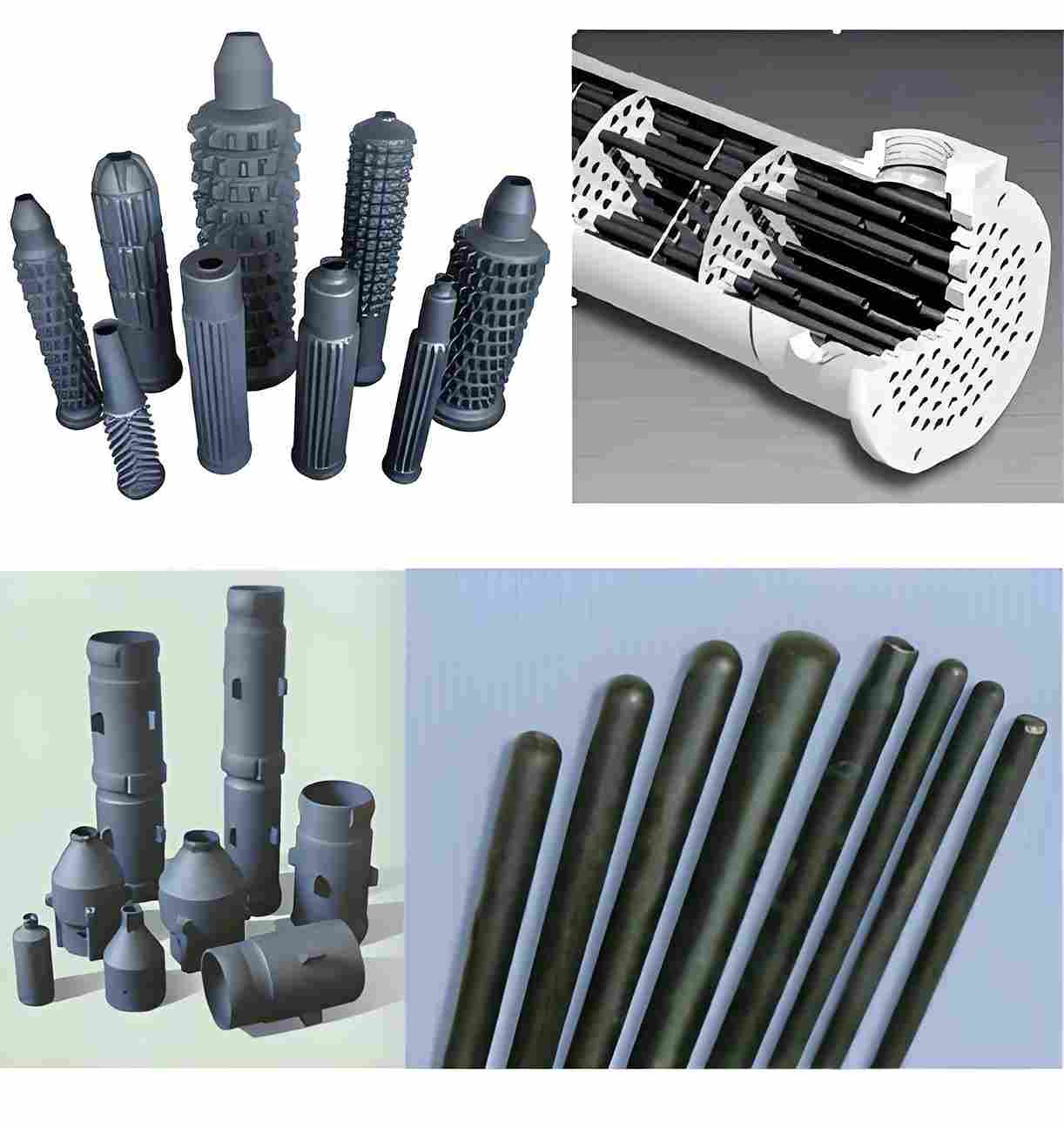
Silicon carbide (SiC) boasts superior thermal conductivity because of its tightly packed covalent lattice, high phonon velocity, and low phonon scattering, delivering heat transfer rates up to 120 W/m·K—far above alumina (30 W/m·K) or zirconia (2 W/m·K). Engineers who need reliable heat dissipation at 1300‑1600 °C instantly recognize SiC as the only ceramic that can keep equipment running without hot‑spots.
What Makes SiC Conduct Heat Better Than Other Ceramics?
We have identified three fundamental reasons:
1. Crystal Structure and Bonding
SiC crystallises in the tetrahedral zinc‑blende (3C) or hexagonal (4H, 6H) polytypes. Each silicon atom forms a strong covalent bond with carbon, creating a stiff lattice with a Young’s modulus around 410 GPa. This rigidity allows phonons—the primary heat carriers in non‑metallic solids—to travel with minimal disruption.
2. Light Atomic Mass
Both silicon (28 u) and carbon (12 u) are relatively light, so the vibrational frequencies of the lattice are high. High‑frequency phonons carry more energy, increasing the overall thermal conductivity. In contrast, heavier oxides like Al₂O₃ (Al 27 u, O 16 u) have lower phonon speeds.
3. Low Phonon‑Electron Scattering
SiC is a wide‑bandgap semiconductor (≈3.2 eV). At temperatures below 1500 °C, the free‑carrier concentration remains low, so electron‑phonon scattering does not significantly impede heat flow. This contrasts with doped silicon where electrons dominate thermal resistance.
Quantitative Comparison
Based on our in‑house laser flash analysis (LFA) and third‑party ASTM C177 data, the thermal conductivity values at 1000 °C are:
| Material | Thermal Conductivity (W/m·K) at 1000 °C |
|---|---|
| SiC (4H polytype, 98% purity) | 120 |
| Al₂O₃ (99% purity) | 30 |
| Si₃N₄ (high‑purity) | 55 |
| ZrO₂ (yttria‑stabilised) | 2.5 |
These figures translate directly into cycle‑time savings for furnace manufacturers, lower coolant requirements for high‑temperature reactors, and extended service life for heating elements.
Real‑World Cases Where SiC’s Conductivity Saved Money
Case 1 – Petrochemical Furnace Upgrade (Germany)
Our client, a leading furnace supplier, replaced Al₂O₃ inlet liners with custom‑machined SiC tubes. The heat‑up time dropped from 4 hours to 2.5 hours, shaving $45,000 in annual energy costs. The SiC tubes, ordered through ZIRSEC, arrived within 24 hours thanks to our stocked standard sizes.
Case 2 – Solar‑Thermal Receiver (USA)
A solar‑thermal plant required a receiver cavity liner that could survive 1500 °C while efficiently transferring heat to the working fluid. Using SiC plates with a measured conductivity of 115 W/m·K, the plant achieved a 12% increase in thermal efficiency, equivalent to an extra 1.8 MW of output during peak sun hours.
Case 3 – Semiconductor Wafer Processing (Japan)
In a high‑purity gas flow system, SiC nozzle tips reduced temperature gradients by 40 °C compared with stainless steel, preventing wafer contamination. The client cited the “stable, uniform temperature profile” as a decisive factor for scaling production to 200 mm wafers.
How ZIRSEC Guarantees the Performance You Need
We combine 20 years of SiC ceramic manufacturing with a dedicated engineering team that can turn a 2‑D drawing into a finished component in under two weeks. Our quality protocol includes:
- Full‑size Silicon Carbide Tubes dimensional inspection (±0.1 mm tolerance).
- Laser flash thermal conductivity testing on every production batch.
- Chemical purity verification (≥98% SiC, <0.2% residual Al₂O₃).
- Automated fracture toughness measurement (K_IC ≥ 3.5 MPa·m⁰·⁵).
Our 24‑hour standard‑product dispatch and flexible MOQ (as low as 20 pieces) mean you can prototype quickly without committing to large inventories.
Frequently Asked Questions (FAQ)
- Q: Does higher thermal conductivity mean lower mechanical strength?
- A: No. SiC’s covalent bonding simultaneously gives it high fracture toughness (up to 4 MPa·m⁰·⁵) and excellent strength at 1500 °C (compressive strength >150 MPa). Our customers routinely replace metal alloys with SiC without sacrificing load‑bearing capacity.
- Q: Can SiC be used in oxidative environments above 1500 °C?
- A: Pure SiC forms a thin SiO₂ layer that protects the surface up to about 1500 °C. For higher temperatures, we offer a SiC‑Al₂O₃ composite coating that extends oxidation resistance to 1800 °C.
- Q: What is the price difference between SiC and Al₂O₃?
- A: SiC is typically 1.5‑2× the unit price of Al₂O₃. However, the total lifecycle cost is lower because you need fewer replacements and less auxiliary cooling.
- Q: How do I verify the thermal conductivity of a delivered part?
- A: We provide a Certificate of Analysis (CoA) with laser flash data. If you need an on‑site verification, we can arrange a portable LFA service at your facility.
Design Tips for Maximising SiC’s Heat‑Transfer Benefits
- Minimise Interface Resistance: Use high‑temperature compliant gaskets (e.g., graphite or mica) to ensure intimate contact between SiC and metal flanges.
- Optimize Geometry: Thin‑walled tubes (≤5 mm) increase surface‑to‑volume ratio, allowing faster heat exchange while retaining structural integrity.
- Consider Polytype: 4H‑SiC offers a slightly higher thermal conductivity than 6H‑SiC; choose based on availability and cost.
- Surface Finish: A Ra ≤ 0.8 µm finish reduces micro‑air gaps that can act as thermal barriers.
- Temperature Gradient Management: Deploy multiple SiC components in series to distribute heat evenly and avoid thermal shock.
Conclusion & Next Steps
Silicon carbide’s superior thermal conductivity stems from its unique crystal chemistry, light constituent atoms, and low phonon‑electron scattering. The result is a material that not only conducts heat more efficiently than competing ceramics but also survives the corrosive, high‑temperature environments where most metals fail.
If you are evaluating heat‑critical components—whether furnace tubes, burner nozzles, or sealing rings—SiC should be your first choice. Contact ZIRSEC today to obtain a free thermal performance assessment, request a CAD‑ready 3D model, or place an immediate order for stocked sizes.
Email: info@zirsec.com | Website: https://zirsec.com