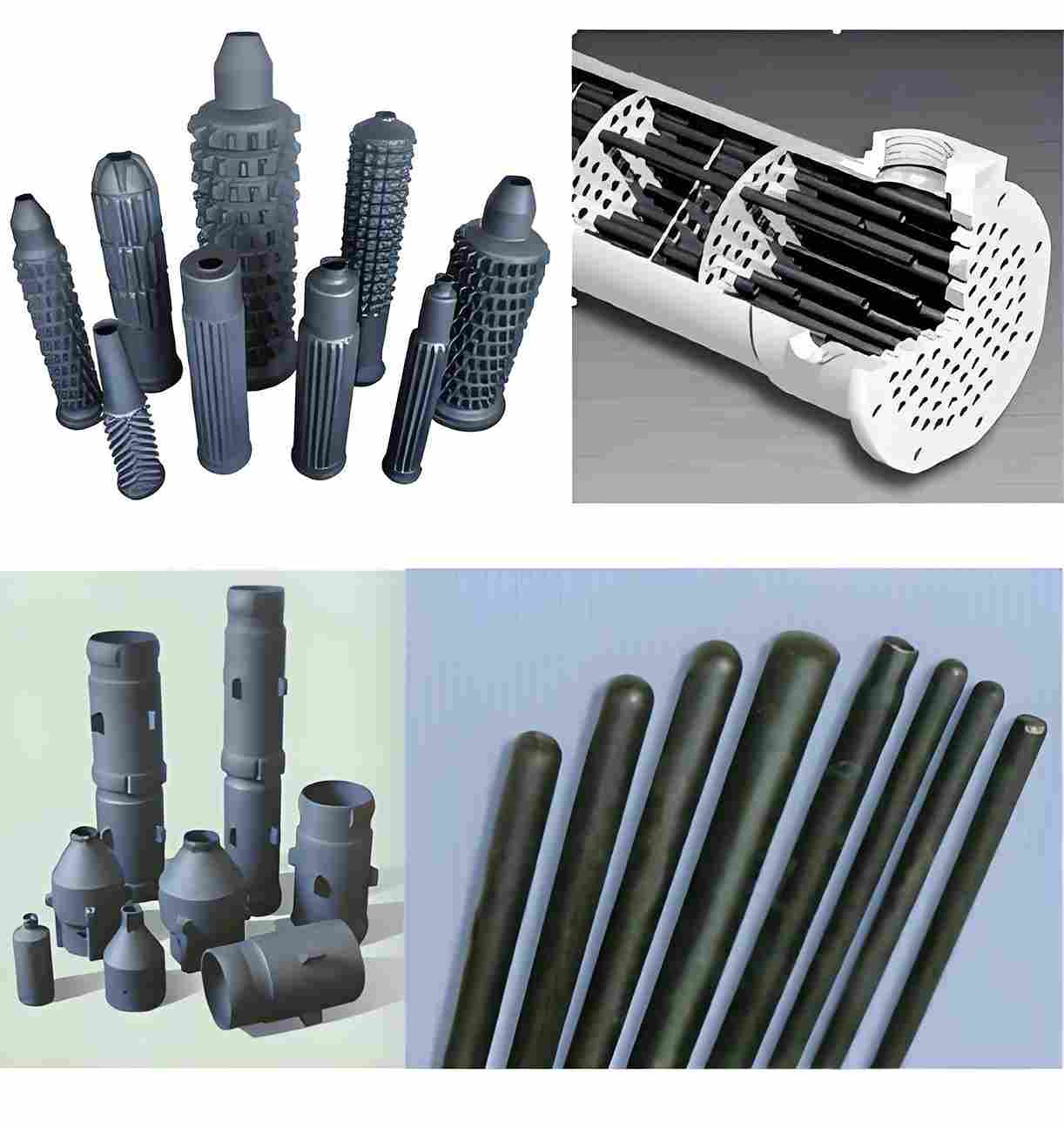
When you need a reliable answer to how silicon carbide (SiC) parts are made, the most critical question is whether the production line can guarantee the high‑temperature strength, chemical resistance, and dimensional precision you require for harsh industrial environments.
Quick Summary – FAQ
- What raw materials are used? High‑purity SiC powder (≥98% SiC), binder additives, and protective atmospheres.
- Which steps define the final properties? Powder synthesis, mixing, forming, drying, debinding, sintering, and precision machining.
- How long does a custom order take? Sample prototyping: 2‑4 weeks; Bulk production: 4‑8 weeks, with 24‑hour stock items shipped same day.
- What quality checks are performed? Chemical analysis (ICP‑OES), dimensional inspection (CMM), density & porosity testing, and high‑temperature performance trials.
- Why choose ZIRSEC? Direct Chinese factory supply, engineering support, small‑batch flexibility, and an international logistics network.
Why Understanding the Process Matters
Engineers often assume that any SiC component will behave the same, but the micro‑structure created during manufacturing decides whether a ceramic seal ring lasts 1,000 hours or 10,000 hours in a corrosive furnace. Knowing the steps lets you ask the right technical questions, avoid costly redesigns, and match the part to the right supplier.
1. Raw Material Preparation
1.1 SiC Powder Synthesis
We start with silicon powder and high‑purity carbon (often petroleum coke). In a carrier‑gas furnace, the mixture is heated to 1,600‑2,200 °C under an inert argon atmosphere. The reaction forms fine SiC grains ranging from 0.5 µm to 10 µm. Controlling the temperature profile and gas flow determines grain size distribution, which in turn influences sinterability and mechanical strength.
1.2 Additives and Binders
Typical binder systems include polyvinyl alcohol (PVA) for tape casting or phenolic resins for powders destined for hot‑isostatic pressing (HIP). Additives such as silicon nitride or alumina can be introduced in small percentages (≤5 wt %) to tailor thermal shock resistance. ZIRSEC sources powder from certified suppliers and routinely conducts ICP‑OES analysis to verify SiC content, carbon residuals, and trace contaminants.
2. Forming Techniques
2.1 Dry Pressing
For bulk parts like furnace tubes, the blended powder is loaded into a hardened steel die and compressed at 150‑250 MPa. The resulting “green” body retains the shape but is fragile. Green density typically reaches 55‑60 % of theoretical density.
2.2 Tape Casting and Lamination
Thin ceramic sheets are produced by casting a slurry onto a moving carrier film, then drying to a paper‑like consistency. Multiple sheets are stacked and laminated under heat and pressure to create multi‑layer components such as SiC membranes. This method yields tight thickness tolerances (±0.1 mm) crucial for burner nozzles.
2.3 Injection Molding
When complex geometries like rollers or custom seal rings are required, we use ceramic injection molding. The powder‑binder mixture is injected into a mold at 150 °C, cooled, then ejected. This process enables features as small as 0.3 mm and reduces post‑machining time.
3. Drying and Debinding
After forming, the green parts must be freed from binders without inducing cracks. A staged drying schedule (room temperature → 80 °C → 120 °C) removes moisture, and a controlled debinding furnace ramps up to 600 °C under a flowing nitrogen/hydrogen blend. The slow ramp (1‑2 °C/min) prevents internal pressure buildup.
4. Sintering – The Core of Property Development
4.1 Conventional Pressureless Sintering
Green parts are placed in high‑purity alumina crucibles and sintered at 2,100‑2,300 °C for 2‑4 hours. The atmosphere is either argon or a slight reducing mix to avoid SiC oxidation. Densification follows a grain‑boundary diffusion mechanism; achieving 95‑98 % of theoretical density provides the high flexural strength (>150 MPa) required for furnace tubes.
4.2 Hot‑Isostatic Pressing (HIP)
For the most demanding applications—e.g., SiC burner nozzles exposed to 1,600 °C oxidizing flames—HIP adds a 100‑150 MPa argon pressure during sintering. The extra pressure eliminates residual pores, pushing density above 99 % and improving thermal shock resistance by 30‑40 %.
4.3 Post‑Sintering Heat Treatment
After the main sinter cycle, a lower‑temperature anneal (1,200‑1,400 °C) relieves internal stresses and stabilizes the micro‑structure. This step is essential for sealing rings that experience cyclic loading.
5. Precision Machining & Finishing
Even with tight sintering control, final dimensions often require machining. We employ CNC grinding with diamond wheels, achieving surface roughness Ra 0.8‑3.2 µm and tolerances as tight as ±0.1 mm for critical sealing surfaces. For complex internal channels, ultrasonic drilling is used to avoid micro‑cracking.
6. Quality Assurance Workflow
Every batch passes a multi‑stage QA protocol:
- Material Certification: Certificate of Analysis (COA) for raw powder, including SiC purity, C content, and trace metals.
- Dimensional Inspection: Coordinate Measuring Machine (CMM) checks against engineering drawings.
- Mechanical Testing: Three‑point bend tests (ISO 6474) and compression tests for load‑bearing parts.
- Thermal Performance: Cyclic heating to 1,600 °C in air, monitoring weight change and crack formation.
- Surface Inspection: Scanning Electron Microscopy (SEM) for grain size distribution, and optical microscopy for surface defects.
Results are compiled into a detailed test report attached to every shipment, ensuring that downstream engineers have the data they need for design verification.
7. Customization Capability at ZIRSEC
Our factory can translate any CAD drawing into a production‑ready SiC part. Typical custom workflow:
- Client uploads 2D/3D drawing via our portal.
- Our engineering team performs a feasibility study (material limits, tolerances, cost).
- We issue a sample prototype within 2‑4 weeks, accompanied by a full material test sheet.
- After client approval, bulk production begins with a pre‑agreed schedule (4‑8 weeks for 100‑1,000 units).
- Final inspection, packaging, and global logistics coordination.
Because we keep a stock of standard SiC tube sizes (Ø 10‑200 mm, length up to 2 m) and plates (100 mm × 100 mm up to 500 mm × 500 mm), many customers receive immediate shipment; the same‑day dispatch option is available for orders placed before 12 pm GMT.
8. Pricing Factors and Cost Management
Price is driven by three primary variables:
- Material Purity: 98 % SiC powder costs about $30‑$45 /kg; high‑purity (≥99.5 %) can reach $80 /kg.
- Production Volume: Small‑batch (≤50 pcs) incurs a higher per‑unit tooling cost; for volumes >500 pcs, economies of scale reduce unit price by up to 30 %.
- Complexity: Intricate internal channels or tight tolerances require additional machining time, adding $10‑$30 per part.
Typical unit prices range from $12 for a standard SiC seal ring to $180 for a custom‑shaped burner nozzle with HIP treatment. ZIRSEC offers transparent quotations, and our sales team can work out payment terms that align with project cash‑flow cycles.
9. Real‑World Cases
Case 1 – European Pump‑Valve Manufacturer
After a supplier’s SiC seal ring inventory ran dry, a high‑temperature pump line shut down for 8 days, costing roughly $15,000 in lost production. ZIRSEC delivered a 24‑hour emergency batch of 200 mm Ø seal rings from our stocked inventory, restoring operation within 48 hours and preventing future downtime by establishing a safety stock agreement.
Case 2 – U.S. Steel Furnace Retrofit
A steel plant needed 150 m of SiC furnace tube capable of withstanding 1,550 °C and molten slag exposure. Using HIP sintering, we achieved 99.2 % density, resulting in a 25 % longer service life compared with conventional tubes. Total project cost was $42,000, 12 % lower than the quoted price from a European competitor.
Case 3 – German Solar‑Thermal Equipment
The client required a custom SiC burner nozzle with a 0.8 mm outlet and a complex internal swirl channel. Our injection‑molding‑plus‑CNC‑finishing process produced 30 prototypes in four weeks. After validation, the production run of 500 nozzles was completed in six weeks, enabling the client to meet a tight commissioning schedule.
10. Ordering and After‑Sales Support
To start a project, simply email us at info@zirsec.com or submit an inquiry through the Silicon Carbide Tubes product page. Our dedicated account manager will:
- Confirm technical specifications and tolerances.
- Provide a signed quotation with delivery milestones.
- Arrange sample production and accompany you through the test‑report review.
- Coordinate international shipping, customs paperwork, and insurance.
- Offer post‑delivery technical assistance, including installation guidelines and performance monitoring.
We keep a live tracking portal so you can monitor order status in real time, and our engineering team remains on call for any field adjustments.
11. Bottom Line – Why This Knowledge Empowers You
Understanding each manufacturing stage—from powder synthesis to final grinding—gives you leverage in three areas: selecting the right supplier, negotiating realistic lead‑times, and specifying tolerances that match real‑world performance. ZIRSEC’s 20‑year track record, in‑house engineering, and stocked inventory mean you won’t have to sacrifice quality for speed.
Ready to eliminate material‑related bottlenecks in your next high‑temperature project? Contact ZIRSEC today and let us turn your CAD model into a proven SiC solution that keeps your plant running at peak efficiency.