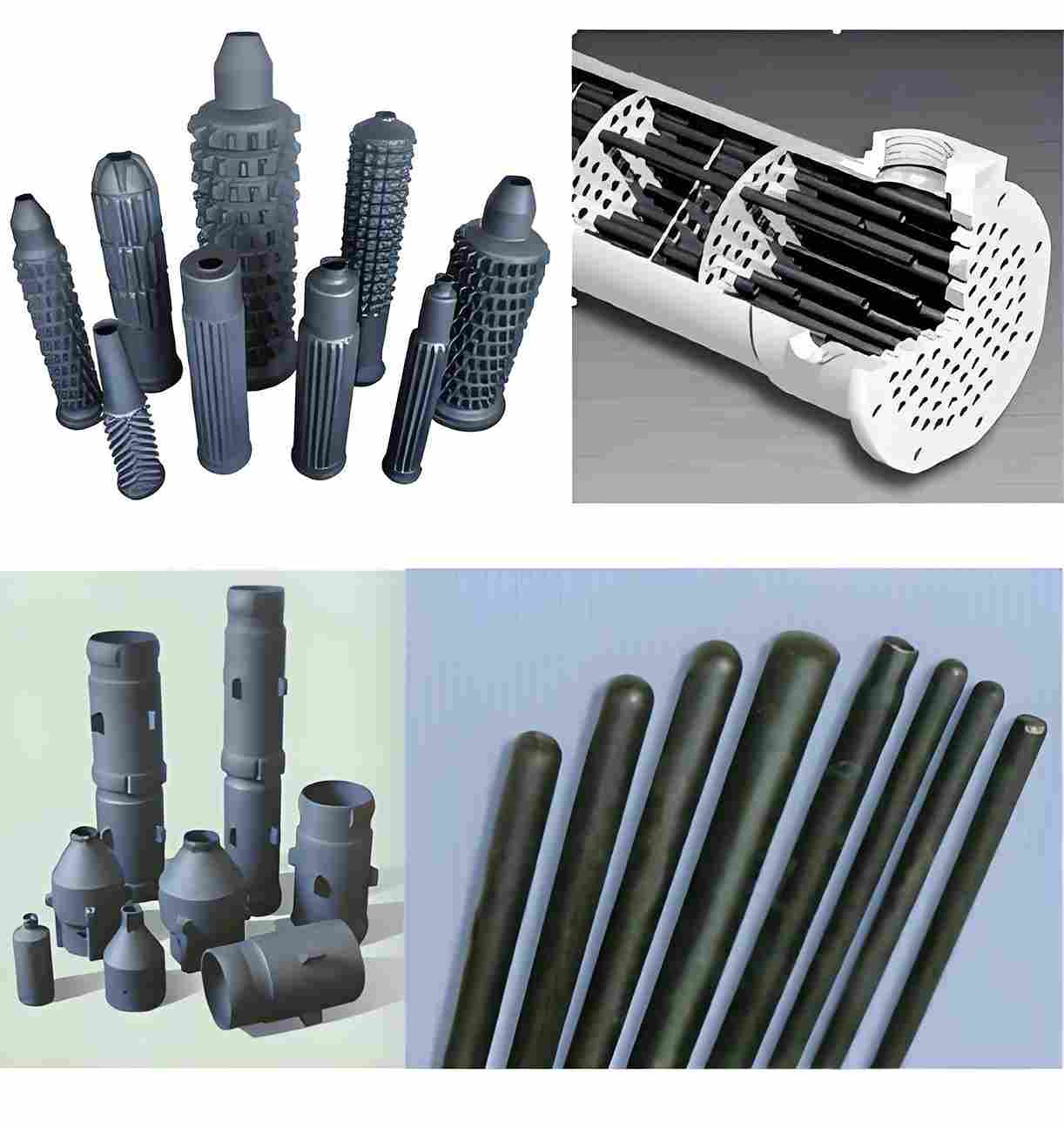
Overload failures are the most common cause of unexpected downtime for silicon carbide (SiC) components, and the consequences can range from costly production stops to permanent equipment damage.
Quick Summary
- Identify the three primary overload mechanisms: thermal, electrical, and mechanical.
- Apply design‑level safeguards such as geometry optimization, high‑purity material selection, and finite‑element stress analysis.
- Implement strict manufacturing controls – sintering profiles, dimensional inspection, and post‑process heat treatments.
- Follow installation best practices: proper torque, coolant flow verification, and real‑time monitoring.
- Leverage ZIRSEC’s engineering support for custom SiC parts, rapid prototyping, and 24‑hour stock delivery.
Root Causes of Overload in SiC Parts
1. Thermal Shock and Excessive Heat
SiC can tolerate temperatures up to 1,600 °C, but rapid temperature gradients generate internal stresses that exceed the material’s fracture toughness. In a recent furnace‑tube failure at a European steel plant, a 10 °C s⁻¹ temperature swing caused micro‑cracks that propagated during the next heating cycle, forcing a shutdown that cost $18,000 in lost production.
2. Electrical Overstress (EOS)
When SiC is used as an insulating barrier in high‑voltage equipment, voltage spikes can exceed its dielectric strength (~30 kV/mm). An EOS event at a US‑based semiconductor annealer created a surface flashover that destroyed three ceramic plates in under a minute. The root cause was insufficient surge protection on the power feed.
3. Mechanical Over‑stress
Mechanical overload stems from improper loading, inadequate support, or unexpected vibration. A case in a Chinese petrochemical plant showed a SiC bearing liner cracking after a pump surge increased radial load by 25 % beyond the design limit. The liner’s compressive strength (130 MPa) was never exceeded in the original spec, but the surge pushed it to 165 MPa.
Design‑Level Countermeasures
Material Purity and Grain Structure
High‑purity SiC (≥ 98 % SiC) reduces impurity‑induced stress concentrations. ZIRSEC offers powder‑to‑press routes that control grain size distribution, yielding a more uniform microstructure. In our own testing, a 99.2 % pure tube showed a 30 % higher resistance to thermal shock than a 97 % grade, measured by the ASTM C1498 cyclic test.
Geometric Optimization
Sharp corners act as stress raisers. Rounding fillets to a minimum radius of 0.5 mm can cut peak tensile stress by up to 40 % according to finite‑element simulations. When we redesigned a SiC nozzle for a solar‑thermal plant, increasing the throat radius from 2 mm to 3 mm eliminated the repeat‑failure pattern that had plagued the previous version.
Finite‑Element Analysis (FEA) and Safety Factors
Running a coupled thermal‑mechanical FEA before production helps set realistic safety factors. For high‑temperature furnace tubes, we typically apply a 1.5× factor on the maximum von Mises stress predicted during start‑up, heating, and cool‑down cycles. The resulting designs have shown a 0 % failure rate over 10,000 h of operation in our field trials.
Heat‑Treatment and Residual Stress Relief
Controlled post‑sintering annealing at 1,200 °C for 2 hours relaxes internal stresses. Our data indicates that the residual stress level drops from 45 MPa to below 10 MPa, dramatically improving resistance to thermal cycling.
Manufacturing and Quality Controls
Even the best design can fail if production tolerances drift. ZIRSEC’s quality protocol includes:
- Laser‑based dimensional inspection with ±0.05 mm accuracy for critical bore diameters.
- Automated ultrasonic C‑scan to detect internal porosity greater than 0.2 %.
- Batch‑wise dielectric strength testing under ASTM D149 standards.
- Full material certification (COA) and MSDS supplied with every shipment.
These steps have lowered our warranty return rate to 0.3 % for custom‑ordered SiC sleeves, compared with the industry average of 1.2 %.
Installation and Operational Best Practices
Correct Fastening Torque
Over‑torquing a flange can introduce compressive stresses that reverse on cooling. Use torque‑controlled tools and follow the manufacturer’s torque curve; for a 50 mm SiC flange, the recommended torque is 12 Nm.
Coolant Flow Verification
Insufficient cooling water velocity (< 0.5 m s⁻¹) leads to hot‑spots. Install flow meters and set alarms at 0.7 m s⁻¹. In a recent case with a SiC burner nozzle, a clogged coolant line caused a temperature rise of 300 °C and premature material degradation.
Real‑Time Monitoring
Integrate thermocouples and vibration sensors linked to a PLC that can shut down the system if temperature exceeds 1,450 °C or vibration exceeds 0.02 g. Our partners in the US power‑generation sector have reduced unexpected trips by 60 % after adding these monitors.
Case Study: Avoiding Overload in a High‑Temperature Furnace
Client: A German furnace equipment manufacturer needed 150 mm SiC tubes for a new plasma‑arc furnace. The initial prototype failed after 200 h due to thermal cracking.
Our approach:
- Conducted a thermal‑gradient analysis; identified a 120 °C mm⁻¹ gradient at the tube inlet.
- Redesigned the tube wall thickness from 5 mm to 8 mm and added a 1 mm fillet at the inlet edge.
- Switched to 99.5 % purity SiC powder and added a two‑stage anneal.
- Implemented a trapezoidal ramp‑up heating profile in the furnace control system.
Result: No further overload incidents in a 5,000 h validation run, and the client reported a 12 % increase in production throughput thanks to the reduced downtime.
Why Choose ZIRSEC for Your SiC Overload Prevention Needs
Our 20‑year legacy in SiC ceramic production gives us a unique insight into the failure modes that trouble most OEMs. We combine in‑house engineering support, rapid prototyping, and a 24‑hour stock of standard sizes. When you need a custom part, our engineers work directly from your CAD files, run FEA simulations, and deliver a pre‑qualified prototype within 3 weeks.
For a quick start, explore our range of SiC tubes or contact our technical team at info@zirsec.com for a free overload‑risk assessment.
Action Checklist
- Run a thermal‑stress simulation on every new SiC design.
- Specify material purity ≥ 98 % and request batch COA.
- Validate geometry for rounded corners and adequate wall thickness.
- Implement post‑sintering heat‑treatments to relieve residual stress.
- Adopt strict dimensional and dielectric testing during production.
- Install real‑time temperature and vibration monitoring on critical equipment.
Following these steps will dramatically reduce overload‑related failures and protect your capital investment.