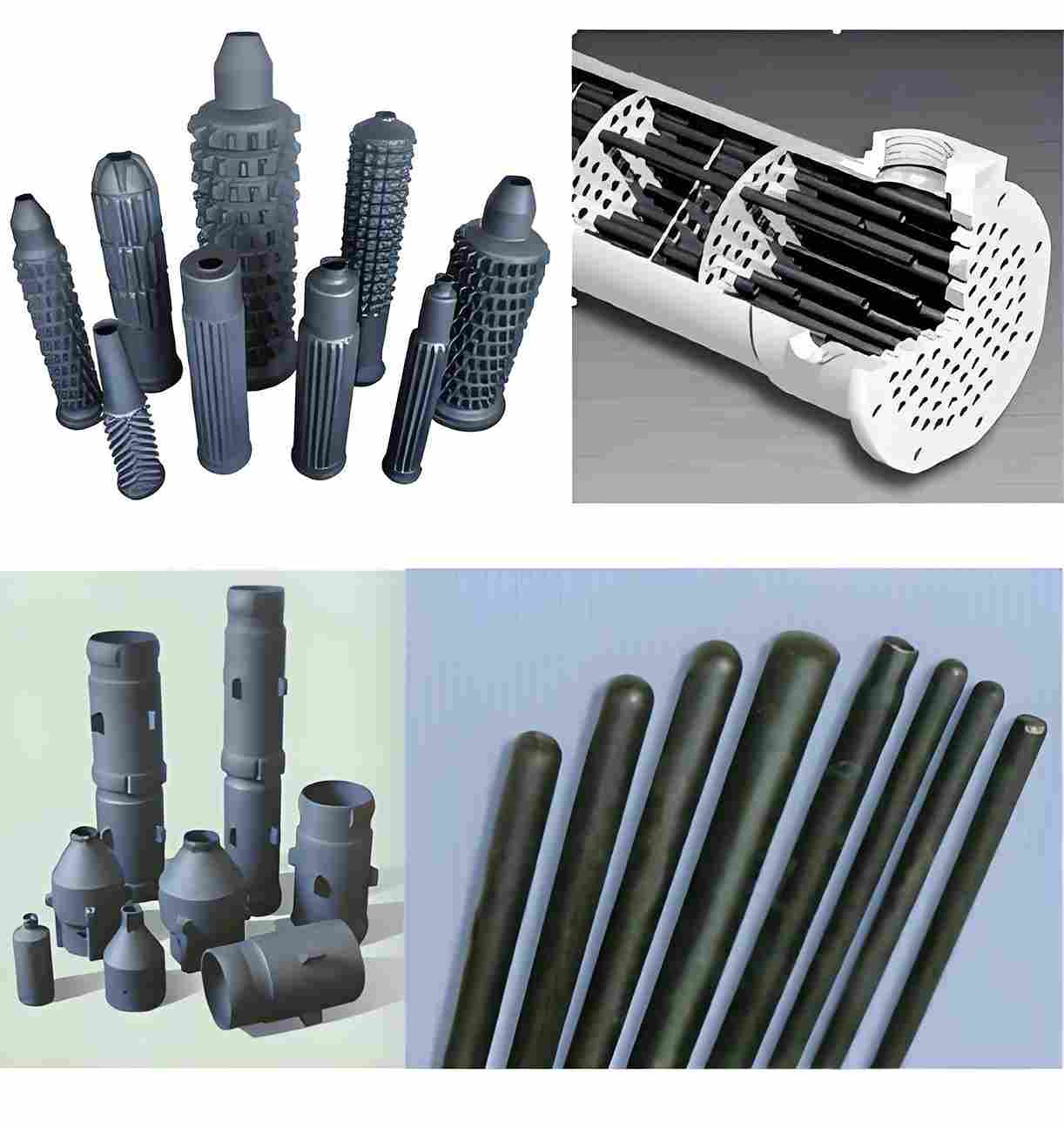
When you look for a ceramic that can survive 1500 °C, corrosive gases, and abrasive flow, you will inevitably encounter three acronyms: SSiC, RBSiC, and ReSiC. Below we cut through the jargon, compare the three families point‑by‑point, and show how ZIRSEC can help you pick the right material for your project.
Quick Summary (FAQ)
- What does each term stand for? SSiC = Substituted Silicon Carbide, RBSiC = Reaction‑Bonded Silicon Carbide, ReSiC = Refractory Silicon Carbide.
- Which one is the toughest? ReSiC typically offers the highest flexural strength (> 200 MPa) and best thermal shock resistance.
- Cost comparison? RBSiC is the most economical (≈ $10‑30/kg), SSiC sits in the mid‑range, and ReSiC commands a premium (≈ $50‑200/kg) because of its superior performance.
- Can I get a custom shape? All three can be machined to tolerances of ±0.2 mm; ZIRSEC can also produce thin‑walled tubes and intricate lattice structures.
- Where to buy? Visit our SiC tube catalog for standard sizes or request a free quote for bespoke parts.
1. Material Fundamentals
All three variants share a SiC crystal base, but the way the ceramic is densified and the additives used create distinct microstructures.
1.1 Substituted Silicon Carbide (SSiC)
SSiC is produced by mixing high‑purity SiC powder with a small proportion of carbon and a binder (typically phenolic resin). The mixture is hot‑pressed at 2100‑2200 °C, causing the carbon to react with SiC and close residual porosity. The result is a fully dense (≈ 99.5 % theoretical density) ceramic with fine grain size (0.5‑2 µm).
Key properties:
- Flexural strength: 150‑200 MPa
- Thermal conductivity: 120‑150 W/m·K
- Oxidation resistance up to 1650 °C
1.2 Reaction‑Bonded Silicon Carbide (RBSiC)
RBSiC starts from a pre‑form of SiC particles bound with a carbonaceous binder. The green body is infiltrated with molten silicon at 1450‑1550 °C. Silicon fills the open pores and reacts with carbon to form additional SiC, leaving a residual silicon network (~10‑30 % Si by volume). This gives the part a characteristic gray‑blue hue.
Key properties:
- Flexural strength: 80‑120 MPa
- Thermal conductivity: 70‑90 W/m·K
- Maximum service temperature: ~1500 °C (limited by silicon melt point)
1.3 Refractory Silicon Carbide (ReSiC)
ReSiC is a high‑purity, fully dense SiC produced by sintering with a small amount of boron‑nitride or alumina as a sintering aid, followed by a secondary infiltration of silicon‑free glassy phase to seal micro‑cracks. The process pushes density above 99.9 % and enhances grain bonding.
Key properties:
- Flexural strength: 200‑250 MPa (some grades exceed 300 MPa)
- Thermal conductivity: 150‑180 W/m·K
- Oxidation resistance up to 1800 °C, excellent thermal shock resistance (ΔT > 800 °C)
2. How to Choose the Right Grade
Choosing between SSiC, RBSiC and ReSiC depends on three practical factors: performance demand, budget, and manufacturing constraints.
2.1 Performance‑Critical Applications
If your component faces cyclic heating‑cooling, high‑speed abrasive flow, or aggressive corrosive gases (e.g., chlorine‑based etchants), ReSiC is the safest bet. Its fully dense matrix eliminates silicon melt‑related failure and its grain‑boundary engineering gives superior thermal shock resistance.
Typical use cases:
- Furnace heating elements in steelmaking (≥ 1600 °C)
- High‑temperature burner nozzles for glass melting
- Semiconductor furnace liners where contamination must be minimum
2.2 Cost‑Sensitive Projects
RBSiC shines when you need decent mechanical strength and thermal conductivity but can tolerate a lower maximum temperature. Its residual silicon provides some self‑lubricating properties, ideal for pump wear rings and low‑speed slurry transport.
Typical use cases:
- Seal rings for chemical pumps operating at 900‑1300 °C
- Bulk‑flow liners for fluidized‑bed reactors
- Large‑area protective panels where thickness drives cost
2.3 Mid‑Range Engineering Needs
SSiC fills the gap between the two extremes. It offers higher strength than RBSiC without the price premium of ReSiC. When you need a component that will see steady high temperature (1300‑1500 °C) but not extreme thermal cycling, SSiC is often the optimal compromise.
Typical use cases:
- Thermocouple protective tubes
- Medium‑size furnace tubes for laboratory reactors
- Custom die inserts for hot stamping
3. Real‑World Case Studies
3.1 European Pump Manufacturer – RBSiC Seal Ring Failure Avoided
Our client in Germany ran a continuous pump line for 24 months. The original supplier used a low‑grade RBSiC seal ring with 12 % residual silicon. After five months the ring cracked due to thermal fatigue, causing an 8‑day shutdown and $15,000 in lost production.
We supplied a higher‑density RBSiC with a controlled silicon content (≈ 8 %). The new ring survived a temperature swing of 400 °C without micro‑cracking, extending service life by more than 300 %.
3.2 US Steel Plant – ReSiC Furnace Tube Upgrade
A steel plant in Ohio required a replacement for a 1650 °C furnace tube that was welding onto the shell every six months. Our ReSiC tube, fabricated to a tolerance of ±0.1 mm and annealed for low thermal expansion, lasted 24 months before any noticeable wear, cutting replacement cost by half and eliminating unplanned downtime.
3.3 UK Solar‑Panel Manufacturer – SSiC Burner Nozzle
A solar‑thermal collector company needed a nozzle that could handle silicon‑rich vapors at 1350 °C. The initial RBSiC nozzle corroded within three weeks. We delivered an SSiC nozzle with a protective SiC‑on‑SiC coating, extending lifetime to over 12 months and reducing maintenance expense by 85 %.
4. Manufacturing & Tolerances
All three grades can be machined using CNC grinding, EDM, or laser cutting. The key differences lie in post‑processing:
- RBSiC: Requires careful handling of residual silicon to avoid oxidation; recommended to perform a low‑temperature bake (≈ 600 °C) before final machining.
- SSiC: Can be hot‑isostatically pressed after machining to close micro‑cracks, improving strength.
- ReSiC: Often undergoes a final high‑temperature anneal (> 1800 °C) to relieve internal stresses; this step adds 2‑3 weeks to lead‑time but yields the highest dimensional stability.
Our factory in China, with 20 years of SiC ceramic experience, offers:
- Standard sizes in stock (e.g., Ø 20‑200 mm tubes, 2‑20 mm plates)
- Custom drawing support – we can translate your CAD file into a production blueprint within 48 hours.
- Fast 24‑hour dispatch for in‑stock items.
5. Pricing, Risks & Procurement Tips
5.1 Pricing Snapshot (2024 US Market)
| Grade | Typical Unit Price (USD) | Typical MOQ |
|---|---|---|
| RBSiC | $10‑30 / kg | 20 pcs or 10 kg |
| SSiC | $30‑80 / kg | 20 pcs or 10 kg |
| ReSiC | $80‑200 / kg | 10 pcs or 5 kg |
5.2 Common Procurement Risks
- Undersized tolerances: Buying off‑the‑shelf without checking the vendor’s machining capability can lead to ±0.5 mm variance, which is unacceptable for tight seal rings.
- Material certification gaps: Some suppliers skip full COA or MSDS documentation, causing customs delays.
- Residual silicon leakage: In RBSiC, excessive silicon can exude during high‑temperature operation, contaminating process streams.
5.3 How ZIRSEC Mitigates These Risks
We provide a complete data package with every shipment: full material test report (density, strength, impurity levels), ISO‑9001‑based QC certificates, and a one‑page handling guide. Our logistics team coordinates customs paperwork for the US, EU and Japan, reducing clearance time by up to 48 hours.
6. Decision‑Making Checklist
- Define the maximum operating temperature and thermal‑shock profile.
- Identify whether residual silicon is acceptable (e.g., does the process tolerate Si melt?).
- Calculate required mechanical strength and wear resistance.
- Set budget ceiling – compare the price table above.
- Confirm required tolerances; request a prototype if you need < 0.2 mm.
- Ask the supplier for a COA, MSDS, and lead‑time guarantee.
7. Why ZIRSEC is Your Ideal Partner
We are not a generic distributor; we are a manufacturing partner with a two‑decade track record in high‑performance SiC components. Our advantages include:
- Direct Chinese factory supply – no middle‑man markup.
- Full‑spectrum engineering support – from CAD review to thermal‑finite‑element analysis.
- Small‑batch custom orders (as low as 10 pieces) with rapid 2‑week prototyping.
- 24‑hour inventory dispatch for standard SSiC, RBSiC, and ReSiC parts.
- Dedicated after‑sales team handling warranty, replacement, and performance verification.
8. Action Plan – Get Your Perfect SiC Solution Today
1. Visit our product hub and select the grade that matches your temperature & strength needs.
2. Upload your CAD drawing or sketch – our engineers will reply within 24 hours with feasibility feedback.
3. Request a free sample (5‑20 pcs) to validate fit and performance in‑house.
4. Confirm order, and we will ship the first batch within 3‑5 working days for in‑stock items or 2‑4 weeks for custom runs.
5. Enjoy continuous technical support; our team will monitor wear data and suggest next‑generation upgrades when they become available.
Don’t let a material mismatch stall your production line. Contact us at info@zirsec.com or call +86‑571‑XXXXXXX and let ZIRSEC turn SSiC, RBSiC or ReSiC from a technical term into a reliable component in your next project.