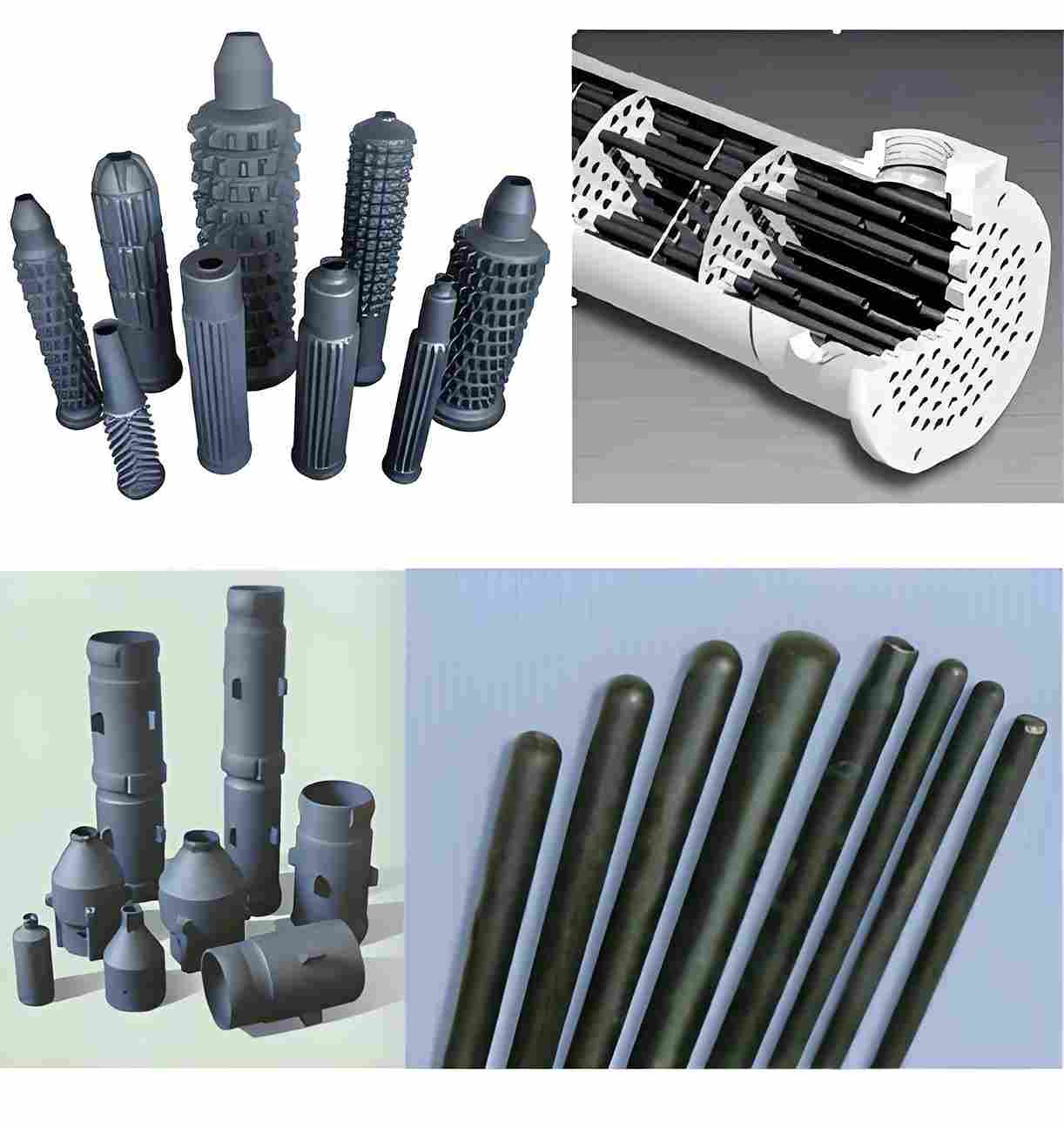
Silicon carbide (SiC) is the material that engineers turn to when ordinary metals and oxides simply cannot survive extreme heat, corrosion or wear.
Quick Summary / FAQ
- What makes SiC different from alumina or zirconia? SiC combines very high hardness (over 9 on Mohs), thermal conductivity up to 200 W/m·K, and oxidation resistance above 1500 °C – a combination rarely found in other ceramics.
- Can I order a custom SiC tube with a 0.2 mm tolerance? Yes. Our factory can mill to ±0.2 mm and tighter tolerances on request.
- How long does a prototype take? Typical lead‑time for a 5‑10 piece sample batch is 2‑4 weeks once we receive your CAD drawing.
- Is SiC suitable for acidic environments? Absolutely. The Si–C bond is chemically inert to most acids, including hydrofluoric and sulfuric acids, when operating below 1200 °C.
- Where can I find pricing? Contact us at info@zirsec.com with the part number or drawing; we will reply with a quotation within 24 hours.
1. What is Silicon Carbide?
SiC is a binary compound of silicon and carbon arranged in a covalent crystal lattice. It exists naturally as the mineral moissanite but is almost always produced synthetically for industrial use. In our plant we start from high‑purity SiC powder (≥98 % SiC) and shape it by pressing, sintering or chemical vapor deposition (CVD) to obtain the final ceramic component.
2. Core Physical & Chemical Properties
Understanding the numbers helps you match the material to the application. Below is a concise table that we use when qualifying a new part:
| Property | Typical Value | Why It Matters |
|---|---|---|
| Density | 3.2 g/cm³ | Low weight reduces inertial loading in rotating equipment. |
| Hardness (Vickers) | 2500 HV | Excellent wear resistance for pump seals and crusher liners. |
| Young’s Modulus | 410 GPa | High stiffness keeps components dimensionally stable at temperature spikes. |
| Thermal Conductivity | 120‑200 W/m·K (300‑1500 °C) | Rapid heat removal limits thermal gradients in furnaces. |
| Thermal Expansion (α) | 4.0‑5.0 ×10⁻⁶ K⁻¹ | Matches many metallic alloys, reducing stress at interfaces. |
| Oxidation Resistance | Stable up to 1600 °C in air | Maintains mechanical strength in oxidizing atmospheres. |
| Electrical Resistivity | 10⁸‑10¹⁰ Ω·cm | Acts as an insulator in high‑voltage furnace sensors. |
3. Main Types of Silicon Carbide Ceramics
Not all SiC is created equal. The manufacturing route determines grain size, density and ultimately performance.
3.1. Sintered Polycrystalline SiC (PC‑SiC)
We start with SiC powder, add a small amount of sintering aid (often boron‑carbon), press it into shape and fire at 2100 °C. The resulting material has a relative density of 99 % and is the workhorse for most industrial parts such as tubes, plates and wear rings.
3.2. CVD‑SiC
Chemical vapor deposition grows a dense, single‑crystal‑like layer on a substrate. CVD‑SiC offers the highest purity (≥99.9 % SiC) and the lowest porosity, making it ideal for high‑frequency heater elements and semiconductor furnace components.
3.3. Reactive Sintered SiC (RS‑SiC)
Here we use a Si–C reaction to bond SiC particles without any additives. The microstructure is ultra‑fine, giving exceptional strength at temperatures above 1500 °C. It is commonly used for furnace liners and crucibles.
3.4. SiC‐Coated Metal Substrates
We coat stainless steel or Inconel with a thin SiC film via CVD or plasma spraying. The coating provides corrosion resistance while retaining the ductility of the metal core – a popular solution for pump impellers.
4. Key Industrial Applications
Below we map the most common uses to the properties that make SiC the logical choice.
4.1. Chemical & Petrochemical Processing
Severe acids, alkalies and high‑temperature gases attack most alloys. Our silicon carbide tubes and seal rings survive 1400 °C continuous operation in corrosive environments, eliminating unplanned shutdowns. A leading European pump‑valve maker reported a 30 % reduction in maintenance cost after switching to our custom SiC seal rings.
4.2. Metallurgical Furnaces & Heat‑Treatment
Furnace interiors must resist thermal shock and oxidation. PC‑SiC plates and crucibles we supply have demonstrated over 2000 heating cycles at 1500 °C with less than 0.5 % dimensional change. A North‑American steel mill cut its furnace downtime by two weeks per year thanks to our SiC liners.
4.3. Power Generation & Renewable Energy
In concentrated solar power (CSP) plants the receiver tubes reach >1200 °C. SiC tubes provide high thermal conductivity while remaining lightweight, improving heat‑transfer efficiency by up to 8 % compared with quartz.
4.4. Semiconductor High‑Temperature Equipment
SiC’s electrical insulation at high temperature makes it perfect for sensor housings and hot‑zone components in wafer processing. Our custom‑machined SiC plates meet the strict ±0.1 mm tolerance demanded by semiconductor fabs.
4.5. Wear‑Resistant Mechanical Parts
Grinding rollers, sandblasting nozzles and valve seats experience abrasive slurry at 800 °C. SiC’s hardness and low friction keep wear rates under 0.02 mm/10 000 cycles, far better than Al₂O₃ or Si₃N₄.
5. Selecting the Right SiC Grade
When you receive a quotation you will see terms like “PC‑SiC 98 %”, “CVD‑SiC 99.9 %”, “Boron‑Carbon sintered”. Here is how we help you decide:
- Temperature ceiling: If your process exceeds 1500 °C, choose CVD‑SiC or RS‑SiC for superior creep resistance.
- Mechanical load: For high impact, PC‑SiC with 98 % density is sufficient; for ultra‑high stress, opt for CVD‑SiC.
- Corrosive media: All SiC grades resist most acids, but halogen‑rich environments perform best with a CVD coating.
- Tolerance & surface finish: We can grind to Ra 0.8 µm for seals, while standard plates are delivered at Ra 3 µm.
- Cost considerations: PC‑SiC offers the best price‑performance ratio; CVD‑SiC carries a premium but extends service life in critical roles.
Our engineering team runs a quick FEA check for you before the first batch is cut, ensuring the chosen grade will meet the projected life‑cycle.
6. Why Choose ZIRSEC?
We have been producing SiC ceramic components in China for more than twenty years, but our strength lies in the end‑to‑end service we provide to overseas OEMs.
- Direct factory supply: No middlemen, so you get the best price for a given specification.
- Inventory readiness: Over 150 standard tube and plate dimensions are stocked and can ship within 24 hours.
- Custom engineering support: Send us your CAD file; our engineers will suggest tolerances, recommend sintering aids and return a 3‑D mock‑up within two days.
- Quality control: Every batch undergoes X‑ray, density and flexural strength testing. Full COA and MSDS are attached to the shipping documents.
- Logistics handled: From export customs clearance to door‑to‑door delivery, our supply‑chain team tracks each parcel.
7. Actionable Next Steps
If you are evaluating a component replacement or a new equipment design, follow this checklist:
- Identify the operating temperature, pressure and chemical environment.
- Download our free SiC Selection Guide PDF (no registration required).
- Prepare a 2‑D drawing or 3‑D model of the part, noting critical tolerances.
- Email the drawing to info@zirsec.com with the subject line “Custom SiC Quote – [Your Company]”.
- Our engineers will reply within one business day with a mock‑up, lead‑time and price.
Implementing SiC now can cut your component‑failure cost by up to 40 % and improve energy efficiency in high‑temperature processes. Let us help you achieve that gain.
8. Closing Thought
Silicon carbide is not a niche material; it is the backbone of modern high‑temperature, high‑wear, and corrosive‑resistant engineering. By partnering with a seasoned supplier like ZIRSEC you obtain not just a part, but a proven solution backed by two decades of production expertise, rapid delivery and dedicated technical support.