Buying silicon carbide ceramics is not like buying standard steel fittings. Once a SiC component fails, the result is usually production stops, difficult replacement work and extra inspection. A bit of structure before you place the order saves a lot of trouble later.
This article walks through five key points you should consider before buying silicon carbide ceramics for industrial use – from understanding the application to evaluating the supplier and total cost of ownership.
1. Understand the Real Application and Operating Conditions
The first step is not the drawing; it is the application. Silicon carbide is a high-performance ceramic with excellent hardness, thermal stability and chemical resistance, but only if you match it to the real operating environment.
Clarify at least the following:
- Function: Is the part used for guiding, sealing, wear protection, heat transfer or structural support?
- Temperature: Normal operating temperature, maximum peak and any rapid temperature changes.
- Media: Gases, liquids or solids in contact with the part, including corrosive chemicals and slurries.
- Mechanical loads: Static load, bending, vibration, rotation or pressure.
- Wear mechanism: Sliding abrasion, erosion, impact, or corrosion combined with wear.
The better you describe the application, the easier it is for the supplier to propose the right grade and design. General background on the material can be found in references such as silicon carbide, but your own process data is far more important.
2. Choose the Appropriate Silicon Carbide Grade
Not all silicon carbide ceramics are the same. Different grades and sintering processes give different balances of strength, density, porosity and cost.
Common industrial-grade families include:
- SSiC – Sintered silicon carbide: high purity, dense structure, excellent corrosion resistance and high strength; often used in seal rings and demanding chemical services.
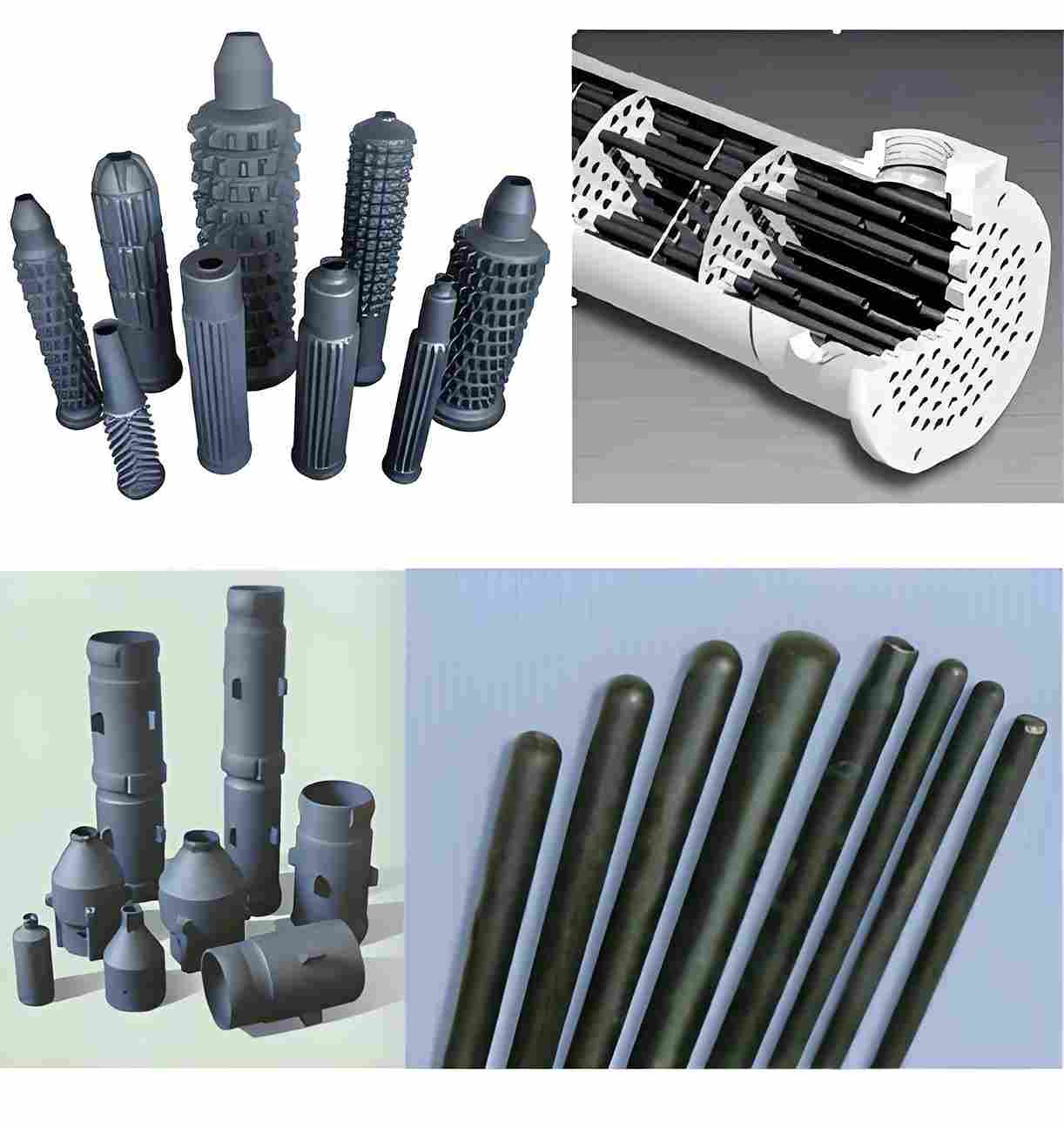
- RBSiC / SiSiC – Reaction-bonded silicon carbide: very good strength and thermal shock resistance; widely used for silicon carbide tubes, burners, beams and structural components.
- RSiC – Recrystallized silicon carbide: good behaviour at high temperature with strong thermal cycling; often used for kiln furniture and furnace parts.
Basic selection logic:
- Use SSiC when corrosion, high pressure or leakage risk is critical (for example, mechanical seal rings).
- Use RBSiC / SiSiC when you need strong, cost-effective structural parts (tubes, beams, nozzles) in furnaces and process equipment.
- Use RSiC when thermal cycling is extreme, such as in some high-temperature kilns.
If you are unsure, provide your process data and let the supplier propose a grade rather than guessing based on catalogue names.
3. Get the Design, Tolerances and Surface Finish Right
Even the best silicon carbide grade cannot fix a poor design. Geometry, tolerances and surface finish strongly influence both manufacturability and service life.
Geometry and wall thickness
- Avoid extremely thin walls over long lengths unless absolutely necessary.
- Keep wall thickness transitions smooth; avoid sharp steps and sudden changes.
- Check that long tubes, plates or beams can be supported properly at temperature.
Tolerances
- Mark which dimensions are critical on your drawing (bores, sealing faces, fit with metal housings).
- Use realistic tolerance levels; tighter tolerances require more grinding and raise cost.
- For non-critical dimensions, allow standard tolerances to keep the part economical.
Surface finish
- Define roughness for sealing, sliding or bearing surfaces.
- Allow standard “as-fired” surfaces where only strength and wear resistance matter.
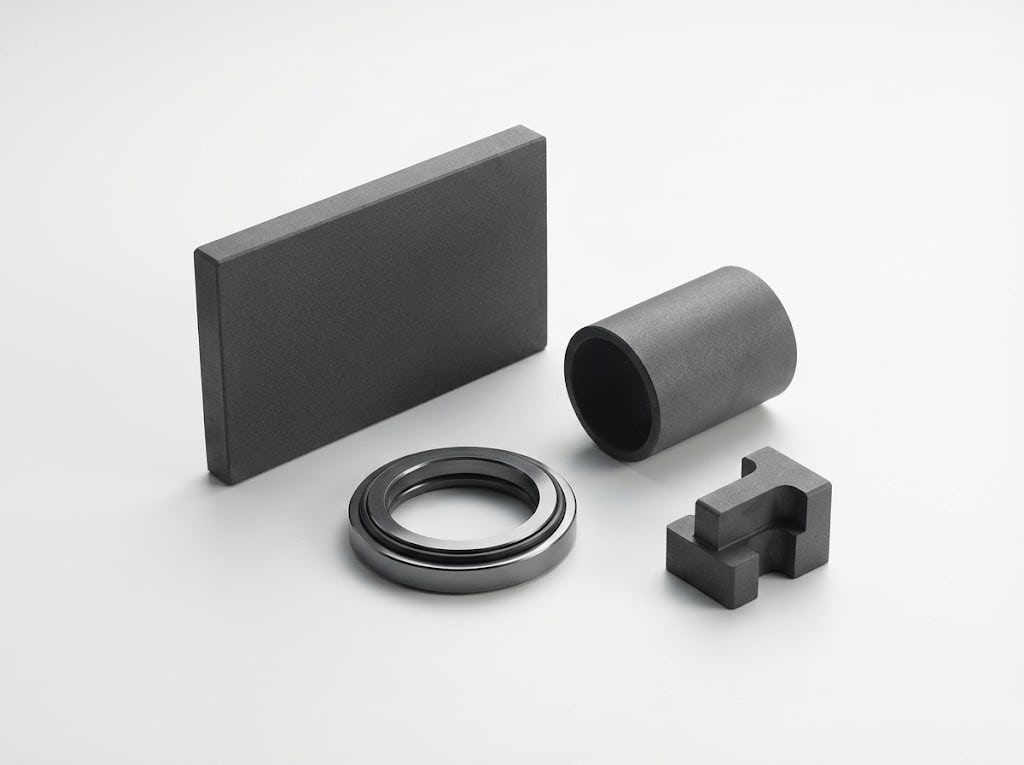
For flat wear protection, for example in hoppers or chutes, it often makes sense to standardise on a few plate sizes and thicknesses. Zirsec can supply silicon carbide plates in standard and custom options, but the most expensive parts are usually those with unnecessary complexity and over-specified tolerances.
4. Check Supplier Capability and Quality Assurance
Silicon carbide ceramics are only as good as the process that makes them. A low price does not help if the parts crack, leak or do not fit.
When choosing a supplier, look beyond the quotation sheet and check:
- Process scope: Do they control forming, sintering and CNC machining, or do they outsource critical steps?
- Engineering support: Can they review your drawings and suggest improvements, or do they only “make to print” with no feedback?
- Inspection and testing: How are dimensions, density and key properties checked? Are reports and certificates available when needed?
- Experience: Do they have real references in your industry (chemical, metallurgy, furnaces, pumps, etc.)?
For custom and small-batch projects, communication quality is as important as equipment. Clear, timely feedback about risks or limitations helps avoid delays during critical project phases.
5. Consider Total Cost of Ownership, Not Just Unit Price
In industrial use, silicon carbide ceramics are rarely a low-cost consumable. They protect far more expensive assets: furnaces, reactors, pumps, kilns and product streams.
When comparing options, look at:
- Expected lifetime: number of cycles, operating hours or tonnes of material processed per part.
- Downtime cost: how much each change-out or failure costs in lost production and labour.
- Consistency: whether performance is stable from batch to batch, or highly variable.
- Logistics: lead time, packing quality and reliability of international shipments.
In many cases, a higher-grade or better-engineered silicon carbide component reduces overall cost because it runs longer, fails less often and makes planning easier. A few extra dollars on the part can save thousands in avoided unplanned downtime.
Conclusion: Make Your SiC Purchase a Controlled Decision
Buying silicon carbide ceramics for industrial use is an engineering decision, not just a sourcing exercise. If you clearly define your application, choose a suitable SiC grade, design parts with manufacturability in mind, verify supplier capability and think in terms of total cost of ownership, you are far more likely to get components that perform as expected.
If you are planning to introduce silicon carbide into furnaces, chemical equipment or mechanical systems, prepare a short application brief with temperature, media, loads and lifetime expectations. Sharing this with your supplier at the RFQ stage is often the single most effective step you can take to get reliable, well-matched SiC components instead of surprises on site.
FAQ – Buying Silicon Carbide Ceramics for Industrial Use
Q1. What is the biggest mistake buyers make with silicon carbide ceramics?
The most common mistake is treating SiC like a simple metal part: sending incomplete application information, using generic drawings and focusing only on unit price. This often leads to designs that are hard to manufacture or do not match the real operating conditions.
Q2. Do I always need the highest grade of silicon carbide?
No. Premium grades such as very high-purity SSiC are essential in some applications, but in many industrial cases a well-chosen RBSiC or RSiC grade will perform very well at a lower cost. The key is matching the grade to the actual temperature, media and mechanical loads.
Q3. How early should I involve the SiC supplier in my project?
Ideally as soon as you know that a ceramic solution is needed. Early involvement makes it easier to adjust geometry, tolerances and material choices before tooling, testing or commissioning schedules become tight.
Q4. What information should I send with my first enquiry?
At minimum: application description, operating temperature range, media in contact, key mechanical loads, target lifetime, basic sketches or drawings and whether you need samples or full batch supply. This allows the supplier to provide a realistic recommendation instead of a generic quote.