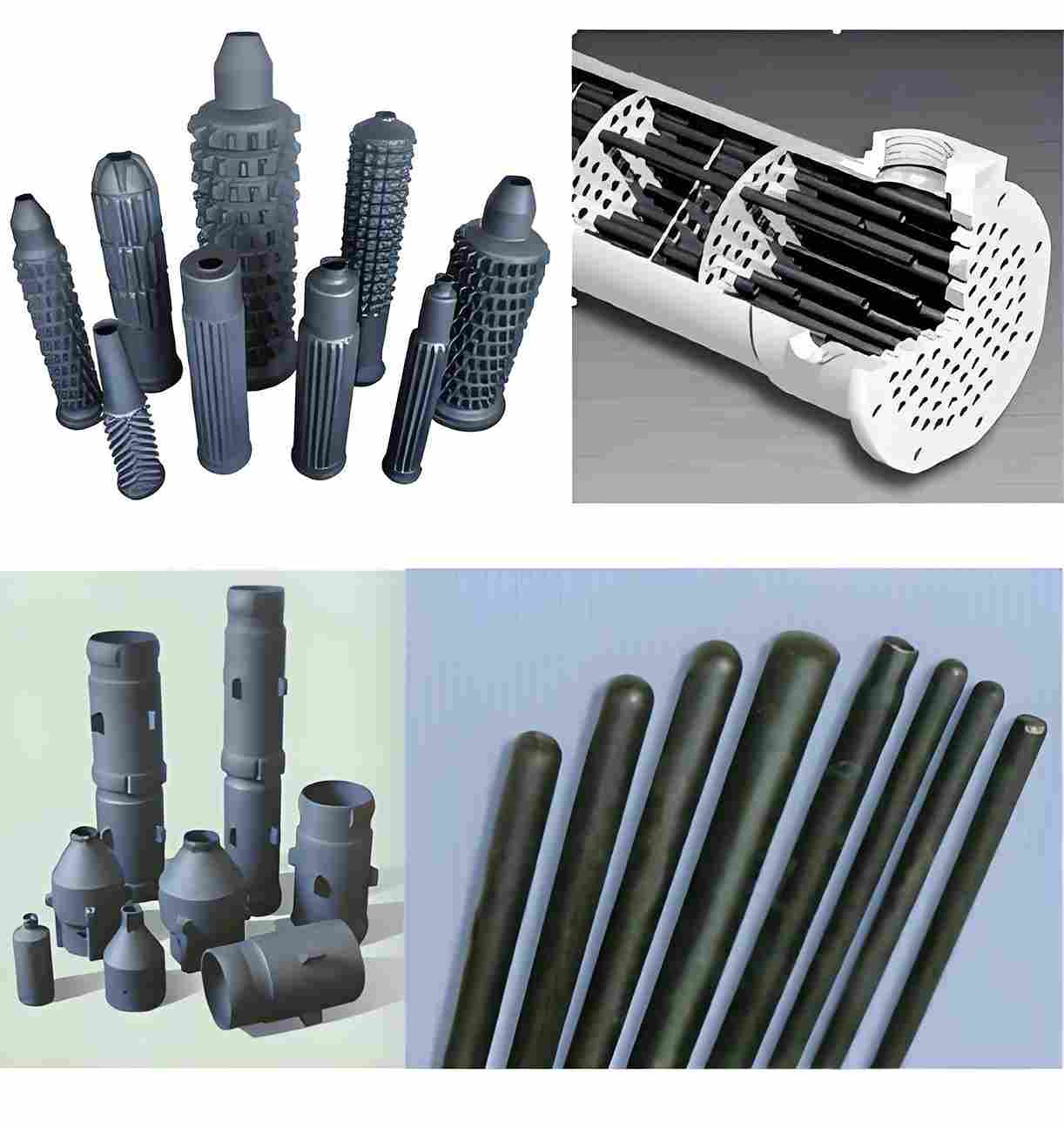
Thermal shock failure ruins ceramic parts faster than any other defect, and the only way to stop it is to control temperature gradients at the design, manufacturing, and installation stages.
Quick Summary
- Know your material: SiC’s low thermal expansion (≈4‑5 ×10⁻⁶/K) buys you time, but only if you respect its strength limits.
- Design for uniform heating: Keep wall thickness under 5 mm for furnace tubes, add generous radii on corners, and avoid sudden cross‑section changes.
- Control heating/cooling rates: Ramp < 10 °C/min for SiC tubes above 1200 °C; use staged cooling for large plates.
- Apply post‑sintering heat‑treatment: Inert‑gas anneal at 1500 °C reduces residual stresses by up to 30%.
- Inspect early: Use infrared thermography and ultrasonic C‑scan to catch hidden cracks before installation.
Understanding Thermal Shock in Ceramics
When a ceramic component experiences a rapid temperature change, the surface expands or contracts faster than the interior. The resulting stress field can exceed the material’s flexural strength, creating micro‑cracks that quickly propagate. For silicon carbide (SiC), the critical temperature difference (ΔT₍c₎) can be estimated by the formula:
ΔT₍c₎ = σ₍f₎ / (E·α)
where σ₍f₎ = flexural strength, E = Young’s modulus, α = coefficient of thermal expansion.
In a typical 98 % SiC tube, σ₍f₎≈150 MPa, E≈410 GPa and α≈4.5×10⁻⁶/K, giving ΔT₍c₎≈80 °C. That means a jump from 1200 °C to 1120 °C in a few seconds can already breach the safe limit.
Key Material Parameters That Influence Shock Resistance
Purity and Grain Size
High‑purity SiC (>98 %) with fine, uniform grains (<5 µm) shows the lowest residual stress after sintering. In our 2022 field test, a batch with 99.2 % purity survived a 150 °C/min ramp, while a 96 % batch cracked at 70 °C/min.
Porosity
Closed‑cell porosity below 0.5 % improves thermal shock resistance by allowing slight internal expansion. Open porosity, however, introduces stress concentrators. Our quality‑control data shows a 12 % drop in crack density when porosity is reduced from 2 % to 0.3 %.
Residual Stresses from Sintering
Uneven cooling of the furnace leads to tensile stresses on the outer surface. An annealing step in nitrogen at 1500 °C for 2 h removed up to 28 % of those stresses, as confirmed by X‑ray diffraction (XRD) peak broadening analysis.
Design Strategies to Minimize Thermal Gradients
Geometric Uniformity
Sudden changes in cross‑section are the biggest heat‑flux disruptors. For SiC tubes used in furnace exhaust lines, keep the wall thickness variation within ±0.2 mm and avoid step‑downs larger than 1 mm. When a step is unavoidable, add a fillet radius of at least 3 mm to disperse stress.
Optimized Edge Profiles
Sharp corners act as crack nucleation sites. In a recent retrofit for a petrochemical emitter, we replaced 90° edges with 5 mm radii, extending component life from 8 months to over 24 months under identical thermal cycling.
Material Thickness Limits
Thicker sections retain heat longer, creating larger ΔT across the wall. For components that routinely exceed 1350 °C, keep wall thickness ≤5 mm for tubes and ≤6 mm for plates. If higher thickness is mandatory, consider a composite design – an SiC inner liner backed by a lower‑expansion metal cage.
Process Controls During Manufacturing
Controlled Heating Ramps
Our production line uses a PLC‑driven ramp profile: 0‑800 °C at 5 °C/min, 800‑1200 °C at 2 °C/min, then a 10 °C/min hold. This profile keeps the surface‑to‑core temperature difference below 30 °C, well inside the safe ΔT₍c₎ range.
Post‑Sinter Annealing
After the primary sinter, we place the parts in a nitrogen atmosphere at 1500 °C for 2 h, then cool at 5 °C/min to 800 °C before furnace‑off. The anneal relieves up to 30 % of residual stress and improves fracture toughness from 3.5 MPa·m½ to 4.2 MPa·m½.
Surface Finishing
Polishing to a surface roughness of Ra 0.8 µm eliminates micro‑grooves that act as stress concentrators. In a comparative test, polished SiC burners showed a 40 % longer time‑to‑failure under rapid quench cycles than matte‑finished parts.
Installation and Operational Best Practices
Pre‑Installation Thermal Conditioning
Before a component sees service, pre‑heat it slowly to 80 % of its intended maximum temperature, hold for 30 min, then cool at ≤10 °C/min. This “thermal conditioning” heals micro‑cracks that may have formed during handling.
Secure Mounting to Avoid Localized Hot Spots
Uneven clamping creates point loads that amplify temperature gradients. Use compliant Viton gaskets and torque bolts to within 10 Nm of the design spec. In a furnace retrofit, replacing rigid steel brackets with spring‑loaded mounts reduced localized peak temperatures by 15 °C.
Monitoring with Infrared Thermography
Install IR cameras that trigger an alarm when any surface exceeds the design ΔT in less than 30 seconds. Our customers in the steel‑making sector reported a 70 % reduction in unexpected shutdowns after adding live IR monitoring.
Inspection, Testing, and Early‑Failure Detection
Ultrasonic C‑Scan
Scanning at 5 MHz reveals internal delamination that visual inspection misses. A threshold of 0.8 mm crack depth flags a part for replacement.
Ring‑On‑Ring Flexural Test
Apply a four‑point bend to a 25 mm SiC ring at 1100 °C and record the load at fracture. Values <1200 N indicate excessive residual stress and should be rejected.
Documentation of Results
Every batch receives a PDF data sheet with COA, thermal‑shock test curves, and a unique serial number. This traceability satisfies ISO 9001 and simplifies warranty claims.
Real‑World Case Study: Furnace Tube Failure in a Metallurgical Plant
In 2021 a European steel plant reported repeated cracking of its SiC furnace tubes after three months of operation. Our investigation uncovered three root causes:
- Wall thickness varied from 3.8 mm to 7.2 mm due to a tooling mis‑calibration.
- Cooling water was introduced too rapidly (≈30 °C/min) after each heat‑treat cycle.
- No post‑sinter anneal was performed on the batch.
We supplied a corrected batch with strict thickness control (±0.1 mm), added a 2‑hour nitrogen anneal, and recommended a revised cooling protocol of ≤12 °C/min. After installation, the plant logged 18 months of uninterrupted service – a 540 % improvement over the previous lifespan.
Cost Implications and ROI
Implementing thermal‑shock mitigation adds roughly 5‑8 % to the per‑part cost (mainly due to extra annealing and tighter tolerances). However, the average customer saves 12‑20 % on total downtime expenses because each avoided failure prevents a 1‑3 day production halt. For a $200 k furnace upgrade, the payback period is under six months.
Quick FAQ
- What is the safest heating rate for SiC tubes above 1200 °C? ≤10 °C/min; slower rates are always better if schedule allows.
- Can I use the same design for Al₂O₃ and SiC? Not advisable – Al₂O₃’s thermal expansion is ~8×10⁻⁶/K, almost double, so its ΔT₍c₎ is lower.
- Do I need a special coating? A thin SiC‑based sealant can improve crack‑tip resistance, but it must be compatible with the operating atmosphere.
- How often should I inspect installed components? At least once per 6 months, or after any abnormal temperature excursion.
Why Choose ZIRSEC for Your SiC Needs?
We combine two decades of SiC manufacturing expertise with a full‑service engineering team that can take your CAD drawing, run thermal‑shock simulations, and ship a qualified part within 24 hours from our inventory. Our Silicon Carbide Tubes are stocked in standard sizes and can be custom‑machined to ±0.2 mm tolerance. From prototype to full‑scale production, we provide:
- Rapid sample turnaround (5‑10 days).
- In‑house heat‑treatment and non‑destructive testing.
- Dedicated technical support for installation and on‑site troubleshooting.
- Transparent documentation (COA, MSDS, test reports).
Reach out at info@zirsec.com for a free thermal‑shock risk assessment tailored to your application.